So, you need to end your tenancy early. It’s a situation that crops up more often than you’d think—life happens, plans change, and suddenly you need to move on before your contract is up. The same criteria should apply whether it is a room to rent or complete property. However, please seek independent legal advice for your own particular circumstances.
The good news is, it's usually possible to end a tenancy early. But before you do anything else, the very first thing you need to do is dig out your tenancy agreement. That document is the rulebook for your rental, and it holds the key to a smooth and stress-free exit.
Your First Move When Ending a Tenancy Early
Whether it's a new job in another city, a change in your family situation, or something else entirely, the thought of breaking a rental contract can feel pretty daunting. But don't panic. You have options. The trick is to understand the legal ground you're standing on from the very beginning.
Forget about browsing for a new place or pricing up moving vans for a moment. Your absolute first port of call is to find and read your tenancy agreement cover to cover. It will tell you almost everything you need to know and will guide every step you take from here.
Locate and Understand Your Tenancy Type
Most tenancies in the UK fall into one of two camps, and knowing which one you have is fundamental.
- Fixed-Term Tenancy: This is the most common type, usually running for six or twelve months. During this period, the rent is locked in, and you're committed to paying it for the entire term—unless a specific clause says otherwise.
- Periodic Tenancy: This is a rolling contract that runs from month to month (or sometimes week to week). It often kicks in automatically after an initial fixed term ends. These are far more flexible, typically just requiring one month's notice from you.
Your agreement will state the tenancy type and its duration right at the start. Figuring this out is your launchpad.
To help you see the main differences at a glance, here’s a quick breakdown:
Key Differences Between Fixed-Term and Periodic Tenancies
This table summarises the defining features of the two main tenancy types and how they affect your ability to leave early.
| Feature | Fixed-Term Tenancy | Periodic Tenancy |
|---|---|---|
| Duration | A specific, agreed period (e.g., 12 months). | Rolls on a recurring basis (e.g., month-to-month). |
| Flexibility to Leave | Low. You're committed for the full term unless there's a break clause or you agree a surrender with the landlord. | High. You can give notice at any time, typically one rental period. |
| Notice Period | Defined by the break clause, if one exists (e.g., two months' notice). | Usually one month's written notice for tenants. |
| Rent Changes | Rent is fixed for the duration of the term. | The landlord can increase the rent, but must follow the correct legal procedure. |
Understanding these distinctions is crucial, as the path you take to end your tenancy will depend entirely on which type of agreement you're in.
The All-Important Break Clause
If you're in a fixed-term tenancy, your golden ticket is the break clause. This is a specific term written into your contract that allows either you or your landlord to end the agreement early, provided you give the required amount of notice.
Not every contract has one, so you’ll need to scan through yours carefully. The wording is critical. It might say something like:
"This agreement may be terminated by either party giving the other at least two months' written notice, such notice not to expire before the end of the sixth month of the term."
In this example, you can only use the clause after you've been in the property for six months, and you must give a full two months' notice. Getting these details exactly right is vital—any mistake could make your notice invalid.
This flowchart maps out these initial steps, starting with checking your contract.
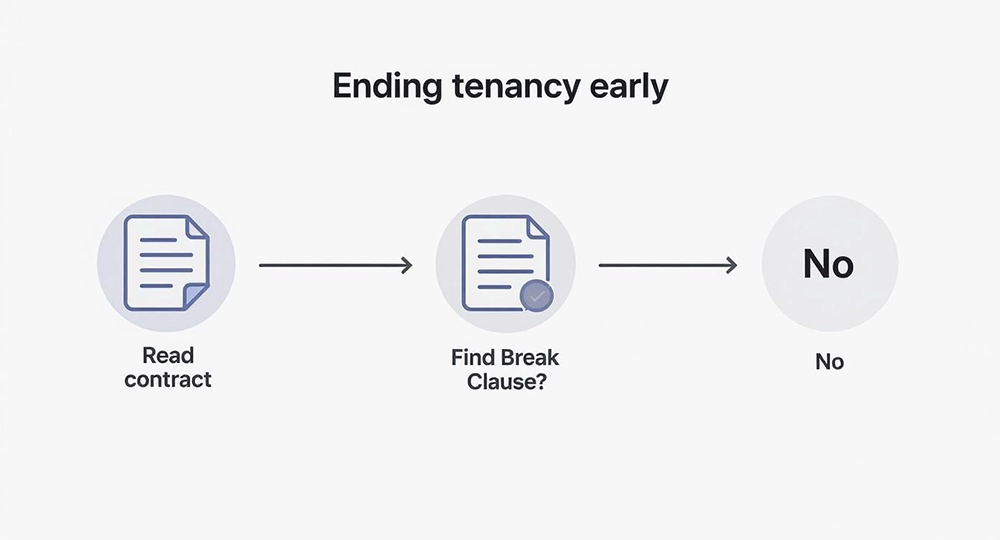
As the chart shows, whether you have a break clause is the first major fork in the road. It determines your immediate options. While finding a great property is exciting, understanding your exit strategy is just as vital. If you're a prospective tenant, you can get ahead by learning about tenancy terms while searching for rooms.
It’s also worth noting that the legal landscape is shifting. With changes from the Renters (Reform) Bill on the horizon, the rules are evolving. As of May 1, 2026, tenants will gain the right to end a tenancy at any time by giving two months’ notice, making fixed-term contracts far more flexible. This will undoubtedly increase early terminations, as tenants will no longer be locked in for long periods.
How to Negotiate an Early Exit with Your Landlord
So, your tenancy agreement doesn't have a break clause, or you need to leave before it kicks in. What now? Your next step is a direct conversation with your landlord. This isn't about finding a legal loophole; it’s about negotiation. The aim is to agree on a mutual surrender—a formal, written agreement to end the tenancy on terms that work for both of you.
This might sound daunting, but many landlords are surprisingly open to discussion. From their perspective, a planned and friendly departure is a thousand times better than a tenant who simply stops paying rent and vanishes. The key is to frame your request as a solution to a shared problem, not just your problem.

Opening the Conversation
Timing and tone are everything here. Get in touch with your landlord the moment you know you need to leave. Always do it in writing—an email is perfect because it creates a clear paper trail. Be honest, professional, and explain your situation without going into excessive personal detail.
Your first message should cover a few key points:
- State your intention: Clearly say you wish to end the tenancy early and suggest a potential move-out date.
- Acknowledge the contract: Show you're aware of your obligations by mentioning that you understand you're in a fixed-term agreement.
- Offer solutions upfront: Immediately propose ways you can help them avoid financial loss. We’ll get into those next.
A constructive opening sets the stage. Instead of a blunt "I have to leave," try something like, "I'm writing to discuss the possibility of ending my tenancy early and want to work with you to ensure a completely smooth transition."
This cooperative approach shows you respect their position as a property owner, which makes them far more likely to meet you halfway.
Finding a Win-Win Solution
Your landlord's biggest worry will be losing money on an empty property. Your entire negotiation should be built around preventing that. It's worth remembering that landlords have a legal duty to "mitigate their losses." This means they can't just sit back, leave the property empty, and keep charging you rent until your contract ends; they must make a reasonable effort to find a new tenant.
You can use this to your advantage by proposing a deal where you help them avoid any financial gap.
Common Negotiation Points
- Covering Re-letting Costs: Offer to pay for the reasonable costs of finding a replacement tenant. This might include advertising fees or a letting agent's commission. It’s often a far cheaper route for you than paying for several months of rent on a place you're not living in.
- Helping with Viewings: Be as flexible and accommodating as possible when it comes to showing the property to prospective tenants. A cooperative outgoing tenant can make a property much easier and faster to let.
- Agreeing to an Exit Fee: Some landlords might prefer a clean break. You could try negotiating a one-off "buy-out" fee, often equal to one or two months' rent, to surrender the tenancy immediately. This gives you certainty and lets them re-let on their own timeline.
Remember, everything is negotiable. The goal is to find a middle ground. You might agree to keep paying rent until a new tenant is found, but cap your liability at a maximum of two months. For landlords, finding a quality replacement tenant is just as important as filling a vacancy. The resources available in our blog for landlords can offer more insight into this process. You can learn more by exploring the various articles on the Rooms for Let blog.
Putting Your Agreement in Writing
Once you've shaken hands on a deal, it is absolutely essential to get it all down in writing. This formal document is usually called a Deed of Surrender.
A verbal agreement is simply not enough and can easily lead to "he said, she said" disputes down the line. Your written agreement must clearly state:
- The final day of your tenancy.
- The amount of any final payments you've agreed to (like re-letting fees).
- Confirmation that your liability for rent ends on that specific date.
- Arrangements for the return of your tenancy deposit.
Both you and your landlord must sign and date this document. Without it, your original tenancy contract remains legally binding. You could still be held responsible for the rent for the entire term, even after you've moved out. This signed agreement is your proof that a new arrangement was made, protecting you from any future claims.
Know Where You Stand: Your Legal Rights and Responsibilities

Successfully getting out of a tenancy early really comes down to knowing the legal framework that protects both sides. Trying to muddle through based on guesswork is a recipe for disaster, leading to anything from losing your deposit to ending up in court.
Knowing your rights isn't just about ticking boxes; it gives you the confidence to act fairly and effectively.
For tenants, the big thing to remember is that your tenancy agreement is a binding contract. You can't just walk away. For landlords, it means recognising you can’t just kick a tenant out without a very good reason and following the proper legal steps, no matter how much you need the property back.
The Tenant’s Right to a Habitable Home
One of the most fundamental rights a tenant has is to live in a property that is safe and in a reasonable state of repair. This is a landlord’s core duty. If they fall short on this, it can sometimes give you a legitimate reason to end the tenancy, even if there’s no break clause.
We're not talking about minor annoyances like a dripping tap. This is about serious issues that make the property unsafe or unliveable.
Examples of a landlord falling short:
- Ignoring essential repairs: This could be a boiler that’s been broken for weeks, serious damp and mould that isn’t being dealt with, or a leaking roof the landlord knows about but hasn't fixed.
- Safety failures: Every property with gas appliances must have a valid Gas Safety Certificate. Failing to provide one, or ignoring serious electrical faults, is a major breach.
- Entering without permission: Your landlord can’t just show up whenever they like. They must give you at least 24 hours’ notice. If they repeatedly enter without it, they are breaching your right to "quiet enjoyment."
If you’re in this situation, you can't just pack your bags and leave. Your first step is to formally notify your landlord in writing, giving them a reasonable deadline to sort the problem. If they still do nothing, you might have grounds to terminate the agreement, but it's always best to get advice from Citizens Advice or a housing solicitor before making any final moves.
Serving Notice the Right Way
When you do have the legal right to leave—whether it’s via a break clause or a mutual agreement—how you give notice is critical. A quick text or a phone call won't cut it. Get it wrong, and your notice could be invalid, leaving you on the hook for more rent.
Your notice has to be a formal, written document, and you must deliver it exactly as your tenancy agreement says. Often this means posting it—using recorded delivery is a smart move for proof—to the specific address listed in your contract.
Always, always double-check your agreement for the specific rules on serving notice. Getting this one small detail wrong can invalidate the whole thing, and you'll have to start the process all over again.
A Landlord’s Legal Obligations
Landlords also have to follow a strict set of rules. If you want a tenant to leave before the tenancy ends, you absolutely cannot just change the locks or shut off the water. That’s an illegal eviction, and it’s a serious criminal offence.
The only way a landlord can legally force a tenant out is to get a possession order from the court. This means serving the correct legal notice (like a Section 8 notice if the tenant is in rent arrears) and following the court procedure to the letter.
And remember, a landlord deciding they want to sell the property doesn't automatically give them the right to end a fixed-term tenancy. The agreement simply passes to the new owner, who has to honour it until it expires.
Ultimately, both parties have a duty to be reasonable. While the law provides the structure, honest communication and a bit of flexibility are often the fastest route to a good outcome for everyone.
Managing the Financial Impact of Leaving Early
Breaking a tenancy agreement early nearly always comes with financial strings attached, so it’s vital to get your head around the potential costs. Planning for these expenses can save you from a nasty shock and make the whole process a lot smoother. The key is knowing what a landlord can legally charge you for and what they can't.
Historically, not many UK tenants ended their tenancies early. But economic pressures can change things fast; recent data shows that a huge 47% of tenants now point to rent increases as a major reason for thinking about a move. You can dig into more of these trends by exploring the latest private rented sector stats from the Office for National Statistics.
Understanding Landlord Charges Under the Tenant Fees Act
The Tenant Fees Act 2019 was a game-changer for renters in England. This legislation is your main protection against unreasonable costs if you need to get out of a fixed-term tenancy before its official end date.
If you and your landlord mutually agree to end the tenancy (a surrender), they can only charge you for their actual, provable financial loss. They can’t just pluck a penalty fee out of thin air.
Here’s what you can reasonably expect to cover:
- Rent until a new tenant moves in: You're on the hook for the rent up until the day a new tenancy starts. Crucially, your landlord has a duty to "mitigate their loss," which means they have to make a real effort to find a replacement tenant. They can't just sit back and let the costs rack up.
- Reasonable re-letting costs: This could include things like advertising the property or the pro-rata fee for a letting agent to find someone new. These costs have to be genuine and backed up with invoices or receipts.
Your landlord is not allowed to charge you for any part of the tenancy once a new tenant has taken over. That would mean they're collecting rent twice for the same period, which is illegal.
Protecting Your Tenancy Deposit
Your tenancy deposit is often the biggest pot of money at stake, and getting every penny back is a top priority. It all comes down to the final check-out inspection, where the property's condition is compared against the inventory report from when you first moved in.
A massive part of managing your finances is putting in the effort and using effective strategies to maximize your security deposit return when you move. Preparation is everything.
Preparing for the Check-Out Inspection
- Dig out the original inventory: This is your bible. Go through it room by room, checking the condition of every single item against the report. This is your roadmap for getting the property back to its original state.
- Clean like a professional: Most deposit disputes are about cleaning. Even if you’re a tidy person, it’s often worth the money to hire a professional end-of-tenancy cleaning service to meet the incredibly high standards agents and landlords expect.
- Fix the small stuff: Tackle any minor damage yourself. Fill in picture hook holes, touch up scuffed paint, or replace a dead lightbulb. These little fixes are far cheaper for you to do than to have the cost deducted from your deposit at an inflated price.
- Gather your evidence: On your last day, after the property is empty and clean, take detailed, date-stamped photos and videos of every room. This is your proof if any disagreements pop up later.
Landlords can only make deductions for damage that goes beyond fair wear and tear. This is a crucial term. It acknowledges that a property will naturally deteriorate a bit with normal use. A slightly worn carpet in a hallway is likely wear and tear; a big red wine stain in the middle of it is definitely damage.
How to Challenge Unfair Deposit Deductions
So, what do you do if you get the check-out report and the proposed deductions seem completely unfair? Don't panic. If your deposit is protected in a government-backed scheme—which it legally has to be—you have access to a free and impartial dispute resolution service.
First, always try to sort it out directly with your landlord or agent in writing. Clearly state which charges you dispute and explain why, attaching your photographic evidence to back up your case.
If you can’t get them to see reason, you can raise a formal dispute with the deposit protection scheme. An independent adjudicator will look at all the evidence from both sides—the tenancy agreement, inventories, check-in and check-out reports, and your photos—and make a final, binding decision on how the deposit should be split. This process turns a stressful argument into a structured, evidence-based procedure.
Your Final Weeks: A Practical Move-Out Checklist
Once you've sorted the legal side of ending a tenancy early and have a leaving date locked in, your focus needs to shift. The last few weeks are all about the practicalities of a smooth handover, leaving on good terms, and—crucially—getting as much of your security deposit back as possible. A bit of planning here goes a very long way.
This isn't a time for negotiation anymore; it's about pure, diligent preparation. If you treat these final jobs like a mini-project, you’ll sidestep any last-minute chaos and protect yourself from potential disputes down the line.
The Inventory is Your Best Friend
First things first: find that original check-in inventory report. You know, the one with all the photos and notes from the day you moved in. This document is the absolute benchmark for how the property should look when you leave. Honestly, it's the single most important tool you have right now.
With the report in your hands, walk through the property, room by room. Compare how everything looks now—walls, floors, appliances, furniture—to how it was documented at the start. This simple exercise will give you a clear to-do list for cleaning and any minor fixes needed to get the place back to its original state, allowing for fair wear and tear, of course.
- Scuffs and Marks: Take note of any scuffs on the walls. A quick paint touch-up can make a world of difference.
- Fixtures and Fittings: Are all the lightbulbs working? Now's the time to replace any that have gone.
- Appliances: Make sure the oven, microwave, and fridge are cleaned to a professional standard. This is a classic point of contention and an easy win for you.
Think of it like this: the check-in inventory is the exam paper, and your final weeks are your revision time. When you know exactly what the landlord or agent will be checking, you can get ahead of any potential issues.
Document Everything When You Leave
On your last day, after the last box is out and the cleaning is done, it's time to build your own evidence file. This is your insurance policy against unfair deposit deductions.
Get your smartphone out and take detailed, date-stamped photos and videos of every single room. Don't be shy—be meticulous. Get wide shots of each room, then zoom in on the details that often get scrutinised, like the inside of the oven, behind the toilets, and the condition of the carpets. Better still, take a continuous video as you walk through the entire empty property. It’s hard to argue with clear, undeniable proof of the state you left it in.
The Final Bits of Admin
Aside from the cleaning and photo-taking, there are a few final admin tasks to tick off on your last day to officially cut ties with the property.
Meter Readings
Just before you hand over the keys, take final readings for your gas, electricity, and water. Snap a clear photo of each meter showing the final numbers. Send these readings straight to your utility suppliers to close your accounts. This ensures you only pay for what you've actually used.
Forwarding Address
Make sure you give your landlord or letting agent a forwarding address. They legally need this to return your deposit and send on any final post. It’s a simple step, but forgetting it can cause massive delays.
The rental market is definitely becoming more flexible, and we're seeing a shift towards periodic tenancies. This trend naturally means that ending a tenancy early is becoming more common. The National Residential Landlords Association (NRLA) has even noted that landlords may need to get used to planning for shorter notice periods from tenants.
To make sure nothing slips through the cracks during your move, you might find a comprehensive moving house checklist useful. Following a clear plan for these final weeks will help you close this chapter smoothly and get that deposit back where it belongs.
Common Questions About Ending a Tenancy Early
Navigating the end of a tenancy is rarely straightforward, especially when life throws a curveball and you need to leave early. It’s natural to have a lot of specific "what if" scenarios running through your mind.
Here, we'll tackle some of the most common questions we hear from both tenants and landlords, giving you clear, direct answers to help you handle your situation with confidence.

Let's clear up that confusion so you know exactly where you stand.
What Happens If I Just Leave and Stop Paying Rent?
Simply walking away from your tenancy without an agreement is known as abandonment. It's a seriously risky move. Your tenancy agreement is a legally binding contract, which means you're on the hook for the rent until the fixed term ends or the landlord manages to find a replacement tenant.
If you abandon the property, your landlord has every right to pursue you for the unpaid rent through the courts. This can lead to a County Court Judgement (CCJ) against your name, which will badly damage your credit score for up to six years. A CCJ makes it incredibly difficult to rent again, get a mortgage, or even a mobile phone contract.
Can My Landlord Refuse to Let Me Leave Early?
If you're in a fixed-term tenancy and there's no break clause in your contract, then yes, technically your landlord isn’t legally obliged to agree to an early surrender. The contract binds both of you.
However, most landlords are pragmatic. They know that forcing a tenant to stay who can't afford the rent is just asking for trouble. It’s often far more practical for them to negotiate a clean break rather than face months of rent arrears and a costly eviction process. This is exactly why an honest, cooperative approach is always your best first step.
Do I Still Need to Give Notice If I Have a Verbal Agreement?
Even if your landlord says "yes" on the phone or in person, you absolutely must get this confirmed in writing. A verbal agreement is notoriously difficult to prove if a dispute pops up later on.
A quick email summarising your conversation and asking the landlord to confirm they agree is a good start. But for complete peace of mind, a formal Deed of Surrender signed by both of you is the gold standard. It provides undeniable proof that the original contract has been officially terminated.
Without written proof, a landlord could later claim you abandoned the property and chase you for the rest of the rent. Always protect yourself by getting every agreement down on paper.
Can a Landlord Sell the Property Mid-Tenancy?
Yes, a landlord can sell their property whenever they like, but your tenancy agreement doesn't just disappear. The tenancy itself is effectively sold along with the property.
This means your existing contract—including the rent amount, the rules, and the end date—simply transfers to the new owner. They become your new landlord and must honour all the original terms until your fixed term is up. They cannot force you to leave just because they've bought the place.
What If My Circumstances Change Drastically?
Life happens. A sudden job loss, a serious illness, or a relationship breakdown can make staying in your rental home impossible. While these situations don't automatically cancel your contract, they are very strong reasons to open a negotiation with your landlord.
- Be Proactive: Don't wait. Tell your landlord what's happened as soon as you can. Honesty is key.
- Provide Evidence: If you feel comfortable, showing some proof (like a redundancy letter) can really strengthen your case for needing to leave.
- Negotiate Compassionately: Frame the chat around finding a sensible way forward for everyone, like agreeing on an exit fee to cover their costs or helping them find a new tenant quickly.
Many landlords will be sympathetic and would rather work with you to find a solution than resort to legal action. If you're facing a tough situation and need to talk through your options, professional advice can make all the difference. For any direct enquiries, feel free to get in touch with our team at Rooms for Let for guidance.
At Rooms For Let, we're dedicated to making the process of finding and letting rooms as simple and secure as possible. Whether you're a landlord with a room to fill or a tenant searching for your next home, our platform connects you with the right people across the UK. Find your perfect room or tenant today at https://www.roomsforlet.co.uk.