Finding a room you love starts with two simple things: knowing your numbers and knowing what you can’t live without. Get these right, and you’ll avoid the headache of falling for a place that’ll stretch your finances or just won’t fit your life. It’s all about making your search smart from the get-go.
Setting Your Budget and Rental Strategy

Before you even start scrolling through listings, you need to get real about what you can actually afford. This is hands down the most important step. It shapes every other decision you'll make and saves you from the stress of a budget that’s just not realistic.
The price you see in an advert is rarely the final figure. To avoid any nasty surprises down the line, you have to get your head around all the extra monthly costs.
- Council Tax: This can be a big one, and it changes massively depending on the local council and the property's band. Always check the council website for the area you're looking at.
- Utilities: Are gas, electricity, and water bills included, or will you be splitting them? You need to know this upfront.
- Internet and TV Licence: These are usually shared costs that get added on top unless the landlord has bundled them into the rent.
- Commuting Costs: Don't forget to add in the cost of a bus pass, train ticket, or petrol if the room's location is going to change your daily travel spend.
To help you map this out, here’s a simple breakdown of what your monthly housing costs might look like. It's a great starting point to make sure you've covered all the bases.
Sample Monthly Rental Budget Breakdown
| Expense Item | Estimated Monthly Cost (Low End) | Estimated Monthly Cost (High End) | Your Budget |
|---|---|---|---|
| Advertised Rent | £550 | £850 | |
| Council Tax | £40 | £80 | |
| Gas & Electricity | £50 | £100 | |
| Water | £15 | £30 | |
| Broadband/Wi-Fi | £10 | £20 | |
| TV Licence | £7 | £14 | |
| Commuting Costs | £50 | £150 | |
| Total Monthly Cost | £722 | £1,244 |
Use the "Your Budget" column to fill in your own numbers as you research. This gives you a true picture of your total monthly spend, not just the rent.
Rethinking the 30 Percent Rule
You’ve probably heard the old advice that rent shouldn't be more than 30% of your gross income. It’s a decent rule of thumb, but in expensive cities like London or Manchester, it's often not practical. The reality is, with such high demand for housing, many people—especially students and young professionals—have to spend a bigger chunk of their pay on rent.
With the ONS UK mean rent for a one-bed private rental approaching £1,344 per month in mid-2025, sticking to a 30-40% benchmark would mean you'd need a gross annual income of roughly £40,320 to £53,760. That's a big reason why affordable rooms in shared houses are still so incredibly popular.
The best budget is an honest one. Figure out your total monthly income after tax, take away all your essentials like food and travel, and then decide on a realistic number you can truly afford for your total housing costs.
Defining Your Must-Haves and Deal-Breakers
Once your budget is sorted, it’s time to get clear on what you actually need in a home. This is how you stop wasting hours scrolling through places that will never work for you.
Think about what really matters:
- Location: Is being close to work or uni your number one priority? Or would you rather have a quieter spot with good transport links?
- Housemate Dynamics: Are you looking for a social house where everyone is friends, or a more independent setup where everyone does their own thing? Be honest with yourself.
- Room and Property Features: Is an en-suite a must? Do you need a furnished room? Is a garden a deal-breaker, or do you need a pet-friendly place?
A great way to get ahead of the game is to let landlords come to you. By creating a profile outlining your budget and what you're looking for, you can attract the right kind of offers. You can easily post a 'room wanted' advert on Rooms For Let to put yourself out there.
And if you’re looking further afield, understanding the local support systems is vital. For example, a rent allowance Netherlands calculator can be a massive help for budgeting in a different country. Nailing down these details first turns a massive, stressful search into a focused, manageable mission.
Finding Great Listings and Avoiding Scams

With your budget sorted and priorities clear, you’re ready to dive into the search. This is where the groundwork really pays off, helping you cut through the noise and zero in on the listings that genuinely tick your boxes. Knowing where to look is half the battle.
The UK rental market moves at lightning speed, so putting all your eggs in one basket just won't cut it. To cast the widest net, you’ll need a multi-channel approach, combining dedicated room-letting sites with broader property portals and even social media.
Where to Find the Best Room Listings
Your first port of call should be websites built specifically for house shares. Platforms like Rooms For Let are brilliant because they connect you straight to live-in landlords or current housemates trying to fill a spare room. This often leads to a much quicker and more personal process.
To see what’s out there in your chosen area, you can easily search for rooms to rent on Rooms For Let and apply your filters.
But don’t stop there. Widen your search with these other valuable avenues:
- Major Property Portals: The big names like Rightmove and Zoopla are mostly for whole properties, but their house share sections are still worth a regular check.
- Social Media Groups: Facebook is a goldmine for local housing groups, often right down to a specific neighbourhood. You’ll find rooms advertised directly by the people living there, which can be a great way to get a feel for the household vibe early on.
- University Accommodation Services: If you’re a student, your uni’s housing office is a safe bet. They usually keep lists of accredited local landlords and private halls.
Getting familiar with the full range of platforms where landlords advertise rental properties gives you a bit of an inside edge, helping you understand where the freshest listings are likely to pop up first.
Speed is everything in a competitive market. Set up instant email or app alerts on every platform you use. The best rooms can be gone in a matter of hours, and being the first person to get in touch gives you a massive advantage.
How to Spot and Sidestep Rental Scams
Unfortunately, where there’s high demand, there are scammers. Staying vigilant is non-negotiable if you want to protect yourself and your hard-earned money. Rental fraud usually plays on people's sense of urgency, so learning the red flags is your best line of defence.
A classic scam involves a "landlord" who claims they're out of the country and can't do a viewing. They’ll pressure you to pay a deposit to "secure" the room, promising to courier the keys over. Stop right there. This is almost always a scam. Never, ever hand over money for a property you haven't seen in person.
Be instantly suspicious of anything that looks too good to be true. A luxury room in a prime spot for a bargain-basement price is a huge warning sign. Scammers often lift photos from legitimate adverts, so doing a quick reverse image search on Google can sometimes expose the fraud.
Crafting an Introduction That Gets Noticed
Once you find a listing that looks promising, your first message is your chance to make a brilliant first impression. Think about it: landlords and potential housemates get flooded with generic "Is this still available?" messages. A little bit of effort goes a long way.
Your opening message should be a short, friendly pitch that gets straight to the point:
- Who you are: Keep it brief (e.g., "Hi, I'm a 25-year-old marketing professional...").
- Show you've read the ad: Mention something specific you liked about the room or the house. It shows you’re paying attention.
- Your situation: Let them know your ideal move-in date and confirm you’re in a stable position to rent.
- The next step: Finish by asking to arrange a viewing.
This simple formula shows you're serious, organised, and respectful of their time—all qualities that make for a great tenant or housemate.
What to Look for During a Room Viewing
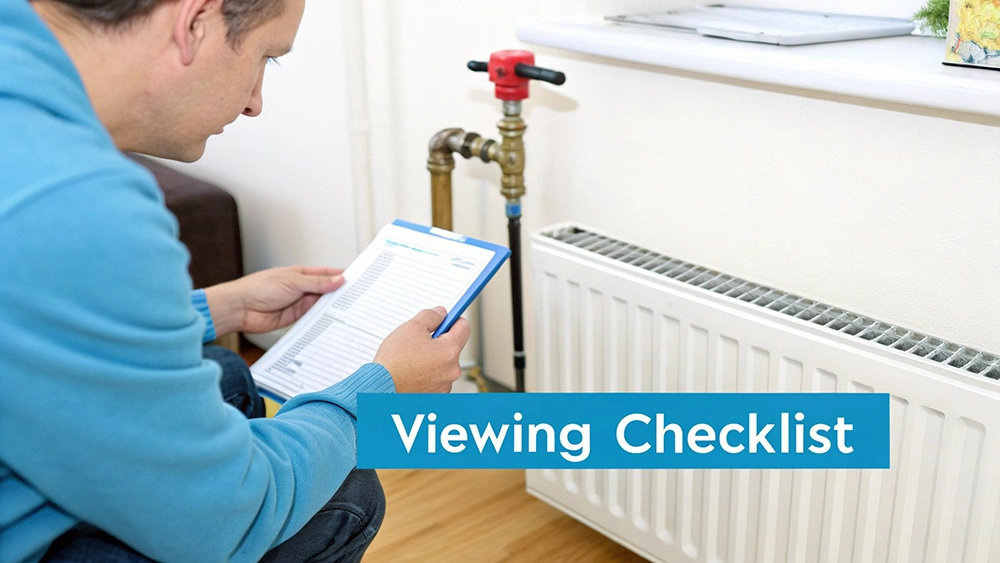
The viewing is your one real chance to see if the reality of a room lives up to the polished photos in the advert. This is your detective phase. It’s about more than just checking if your bed will fit; you’re looking for clues about how the house is run, the true condition of the property, and the general vibe.
Whether you're there in person or doing a video tour, going in with a mental checklist is the best way to spot potential problems before you’ve signed anything. Rushing this stage is a classic mistake that can easily lead to months of regret.
Assessing the Physical Space
First impressions are important, but you absolutely have to look beyond the surface. A fresh coat of paint can hide a multitude of sins, so don't be shy about getting a closer look at the basics.
Pay attention to the little details that scream "well-maintained home" versus one with ongoing issues. A musty smell or flaky paint, especially in corners or around window frames, is a massive red flag for damp. You should also check for proper ventilation in bathrooms and the kitchen to avoid future problems with mould.
Here’s a practical list to run through while you're there:
- Water Pressure: Don't be afraid to turn on the taps and the shower. Trickling water pressure is a daily frustration you don’t want to discover on your first morning.
- Windows and Locks: Do all the windows open, close, and lock securely? Check the lock on your potential bedroom door as well as the main house doors.
- Noise Levels: If you can, try to schedule your viewing for a time you’d normally be home, like an evening or weekend. This gives you a much better feel for noise from traffic, neighbours, and the housemates themselves.
- Appliance Check: Politely ask if you can see the main appliances switched on – the washing machine, oven, or microwave – just to be sure they’re in good working order.
A property viewing is an interview where you are also the interviewer. Your questions are just as important as the landlord's. Don't leave with unanswered doubts—it's your future home on the line.
Gaining Insight from Housemates and Landlords
The people are every bit as important as the place itself. If the current tenants are around, they are your best source of unfiltered information. A few friendly, casual questions can reveal a huge amount about what it's really like to live there.
Ask them how responsive the landlord is to maintenance issues. A simple, "How quickly do things usually get fixed around here?" will tell you more than the landlord ever will. You should also try to get a sense of the house dynamic – is it a social hub where everyone hangs out, or a quiet space where people keep to themselves?
When you speak to the landlord or letting agent, your questions need to be more direct and focused on the tenancy itself. This is your chance to clarify the official rules and your financial commitments.
Crucial Questions for the Landlord or Agent
Coming prepared with specific questions shows you’re a serious and organised applicant. More importantly, it ensures you have all the critical info before you make a decision.
- Deposit Protection: Ask which government-backed tenancy deposit scheme (TDP) they use. In the UK, this is a legal requirement, and they should have an answer for you instantly.
- Bills Breakdown: Get a clear, ideally written, confirmation of exactly which bills are included in the rent and which are extra. Ask for an estimate of the average monthly cost for any shared utilities that aren’t included.
- Notice Periods and Break Clauses: Make sure you understand the notice period you'd have to give if you wanted to move out. If it’s a fixed-term contract, ask if there’s a break clause that would let you leave early.
- House Rules: Are there any specific rules about having guests stay over, cleaning rotas, or using the common areas? Knowing this stuff upfront prevents arguments later.
Approaching a viewing with this structured mindset transforms you from a passive looker into an active investigator. It’s this proactive stance that will help you find a room where you can be happy, safe, and financially comfortable.
How to Secure Your Room in a Competitive Market
So, you’ve finally found a room that ticks all the boxes. Great! The only problem is, you’re not the only one who thinks so. In the UK's fast-paced rental market, the best rooms can be gone in a matter of hours, not days. Being ready to move decisively is what separates the people who get the keys from those left endlessly scrolling through listings.
The trick is to make the jump from viewing to application as smooth and quick as possible. This all comes down to having your paperwork sorted and ready to fire off before you even step through the door for a viewing. Think of it as your personal “renter’s profile.”
Build Your Renter's Profile in Advance
Imagine leaving a viewing, loving the place, and being able to email over a complete application pack on your way home. It shows you’re serious, organised, and respectful of the landlord's time. This simple act immediately puts you leagues ahead of everyone else who’ll spend the next 24 hours digging out old payslips and chasing references.
Your profile should be a neat digital folder on your phone or laptop, containing clear scans or photos of these key documents:
- Proof of ID: Your passport or a UK driving licence is the gold standard.
- Proof of Employment and Income: Your last three months of payslips are perfect. An employment contract or a letter from your HR department confirming your job and salary also works a treat.
- Previous Landlord Reference: An email or a short letter from your last landlord confirming you were a solid tenant who paid rent on time is invaluable.
- Right to Rent Share Code: If you're not a British or Irish citizen, you'll need a share code. You can get this from the government's website—have it saved and ready.
Getting these documents together before you start your search is the single most effective thing you can do. It changes the game, turning you from a casual looker into a prepared, serious applicant—and that’s exactly who landlords want to rent to.
Understanding the Application Process
Once you’ve told the landlord you want the room, things tend to move very quickly. The first financial step you'll likely take is paying a holding deposit. This is usually the same as one week's rent and its purpose is to take the room off the market while the landlord runs their checks.
It’s crucial to understand this isn't some extra fee. If your application goes through, this money will be put towards your first month's rent or your security deposit. But, you could lose it if you decide to pull out, fail a Right to Rent check, or have provided misleading information.
Next up is the referencing check. Landlords usually use a third-party company for this. They'll verify your income, look at your credit history, and get in touch with your employer and previous landlord. It’s a standard part of the process designed to give everyone peace of mind.
The rental market has been incredibly fierce recently. Some agents have reported getting 12–20 enquiries per property, and with 58.5% of landlords having raised rents in the last year, you need every advantage you can get.
Making a Lasting Impression
When a landlord has a handful of great applicants on paper, the final decision often boils down to a simple gut feeling. Who made the best impression? This is especially true when you’ll be sharing a home with the landlord or other housemates. Your personality and how well you seem to fit in can be the deciding factor.
During the viewing and in any follow-up messages, just focus on being:
- Punctual and Polite: It sounds basic, but good manners really do go a long way.
- Engaged and Interested: Ask thoughtful questions about the house, the area, and the people living there. It shows you’re genuinely considering it as a home.
- Authentic: Let your personality come through. Housemates aren’t just looking for someone to help pay the bills; they're looking for someone they’ll actually enjoy sharing a space with.
Being organised and proactive from day one is a true game-changer. One of the smartest moves you can make is to get your details in front of landlords before they even advertise. To make sure you’re on the radar for homeowners and agents looking for new tenants, you can register your tenant profile with Rooms For Let. It’s a simple step that means you’re ready to be contacted the second the right room opens up.
Decoding Your Tenancy Agreement

You’ve navigated the viewings, made a great impression, and the landlord wants you. Brilliant news! Now for arguably the most important piece of paper in your entire search for a room to rent: the tenancy agreement.
It's easy to get swept up in the excitement and just skim through it, but hitting the pause button here is crucial. This isn't just a formality; it's a legally binding document that sets out the rulebook for your new home. Taking an hour to properly read it now is one of the smartest things you can do to avoid headaches down the line.
Key Clauses You Cannot Ignore
Most tenancy agreements in the UK follow a standard format, usually an Assured Shorthold Tenancy (AST). But landlords can—and often do—add their own specific clauses. You need to hunt for the details that will directly affect your life and your bank balance.
Zero in on these critical areas:
- Rent Amount and Due Date: First things first, does the rent match what you agreed? Check the exact date it’s due each month and make a note. Also, look for any mention of late payment fees – they should be reasonable and clearly stated.
- Tenancy Length and Break Clause: Confirm the fixed term of the tenancy, whether it's 6 or 12 months. The golden ticket here is the "break clause." This little gem allows you or the landlord to end the tenancy early after a certain period (say, after six months of a 12-month contract) by giving notice.
- Rent Increases: The agreement must be clear about how and when the rent might go up. A landlord can’t just increase the rent whenever they feel like it during a fixed term unless there’s a specific rent review clause in the contract.
Never, ever sign an agreement that has blank spaces or bits you don’t understand. Ask for clarification in writing before your pen touches that paper. An ambiguous clause almost always works in favour of the person who wrote it, not you.
Understanding Your Responsibilities
Beyond simply paying the rent, the agreement will detail what's expected of you as a tenant. This is where you’ll find the day-to-day house rules, so it's vital to know if they gel with your lifestyle before you commit.
Here are the usual suspects:
- Maintenance: You'll typically be responsible for the small stuff, like changing light bulbs or the batteries in the smoke alarm, and generally keeping the place clean. The landlord is on the hook for major repairs to the property's structure, heating, and plumbing.
- Landlord Access: The contract should state how much notice the landlord needs to give before entering your room. The standard is 24 hours' written notice, and they can't just pop in without your permission unless it’s a true emergency.
- House Rules: This bit can cover everything from guests and noise levels to smoking and pets. Make sure you’re comfortable with these rules, because breaking them could put your tenancy on the line.
Protecting Your Deposit
The security deposit is a big chunk of cash, and the law is very clear on how it must be handled. In the UK, it is a legal requirement for your landlord to protect your deposit in a government-backed Tenancy Deposit Protection (TDP) scheme within 30 days of receiving it.
Your tenancy agreement must state which of the three approved schemes your money will be held in:
The landlord also has to give you the official paperwork (known as 'prescribed information') about the scheme. Once you’ve paid up, you absolutely should go onto the scheme’s website and check for yourself that your money is safe and sound. Think of it as your insurance policy against unfair deductions when you eventually move out.
Got Questions About Renting a Room? We’ve Got Answers.
Jumping into the rental market can feel like you’re trying to crack a code. What’s a Right to Rent check? Can the landlord just put my rent up whenever they feel like it? It’s completely normal to have these questions, and getting clear answers is the best way to feel confident in your search.
Think of this as your rental FAQ. We're cutting through the jargon to give you straight-up, practical answers to the queries we see most often from UK renters. Let's get you up to speed.
What Exactly Is a Right to Rent Check?
When a landlord asks to do a Right to Rent check, don’t panic. It’s a standard, legal step they have to take for every single tenant in England. It's simply their way of confirming you have the legal right to rent a property in the UK.
For British or Irish citizens, this is usually as simple as showing your passport. If you're from another country, the process is just as straightforward, but you might need to show a combination of documents, such as:
- Your passport along with a valid visa
- A biometric residence permit (BRP)
- A 'share code' from the Home Office's online service, which lets the landlord check your status directly and securely.
My tip? Have these documents scanned and ready before you even start viewings. It shows you’re on top of things and helps speed up the paperwork once you find the perfect room.
Can a Landlord Just Increase My Rent?
In short, no. A landlord can’t just decide to increase your rent on a whim. The rules are pretty strict and depend entirely on the type of contract you’ve signed. It's all designed to protect you from unexpected and unfair price hikes.
If you’re on a fixed-term tenancy (say, for 12 months), the rent is set in stone for that period. The only way it can go up is if there’s a specific ‘rent review clause’ in your agreement, or if you both mutually agree to a new price.
For a periodic tenancy that just rolls from one month to the next, the landlord can propose a rent increase, but usually only once a year. They also have to give you at least one month's written notice.
It's crucial that any proposed increase is fair and in line with what similar rooms in your area are going for. If you think it’s unreasonably high, you can challenge it. Always, always check your tenancy agreement—that’s your rulebook.
What’s the Difference Between a Landlord and a Live-in Landlord?
This is one of the most important things to get your head around, because it completely changes your rights. The difference seems small, but the legal implications are huge.
A standard landlord is someone who rents out a property they don’t live in. When you rent from them, you're a tenant, and you'll almost certainly have an Assured Shorthold Tenancy (AST). This contract gives you a strong set of legal protections.
A live-in landlord, on the other hand, is someone who owns the property and lives there with you, sharing spaces like the kitchen or living room. In this setup, you are legally classed as a lodger.
Being a tenant versus a lodger is a night-and-day difference legally. Here’s a quick breakdown of what that means for you:
| Feature | Tenant (Landlord lives elsewhere) | Lodger (You live with the landlord) |
|---|---|---|
| Legal Status | Full tenant rights under an AST. | An 'excluded occupier' with fewer rights. |
| Deposit Protection | Your deposit must be protected in a government scheme. | Deposit protection is not legally required. |
| Notice to Leave | A formal notice period is required, often needing a court order. | The landlord only needs to give 'reasonable notice' (e.g., one month). |
| Eviction Process | A formal legal process through the courts is needed. | No court order is required for eviction. |
You absolutely need to know which situation you’re walking into. Living with your landlord can be fantastic, but you need to be aware that your legal standing as a lodger is very different. Clarify this from the first message to make sure there are no surprises down the line.
Finding the perfect room is all about knowing what to look for and what to ask. At Rooms For Let, we’re here to connect you with thousands of listings across the UK, from busy city-centre house shares to quiet rooms in suburban homes. Start your search today and find a place that feels right.