Finding a room to rent in the UK all comes down to good preparation and a smart strategy. Getting your budget sorted and documents lined up before you even start looking puts you miles ahead of the competition. It means you can move fast when that perfect room pops up.
Preparing for Your UK Rental Search

Jumping into a room search without a plan is like trying to find your way around a new city without a map. You might get there in the end, but it’s going to be stressful and take far longer than it needs to. Taking some time to get yourself organised, both financially and with your paperwork, turns the whole process from a frantic scramble into a focused mission.
This groundwork is about more than just numbers on a page. It’s about showing landlords you're a reliable, organised, and ideal tenant from the very first email. When they're sifting through dozens of enquiries, a well-prepared applicant immediately stands out from the crowd.
Building Your Realistic Rental Budget
First things first: you need a crystal-clear picture of what you can actually afford. The advertised monthly rent is only the beginning of the story. A realistic budget has to account for all the other living costs to make sure you’re not left struggling down the line.
Start with the rent, then add on solid estimates for these common expenses:
- Council Tax: This varies massively depending on the local authority and property band. It's worth checking the council's website for the area you're looking at.
- Utilities: Don't forget to factor in gas, electricity, and water. Some 'bills included' deals cover these, but many don't.
- Broadband and TV Licence: These are often separate costs you'll need to split with your housemates.
- Commuting and Transport: Work out your daily or monthly travel costs from potential neighbourhoods to your work or university.
Once you’ve got those figures, you can set a maximum rent that won't leave you short each month.
A good rule of thumb is that your total monthly housing costs (rent plus essential bills) shouldn't be more than 30-40% of your take-home pay. This leaves you with enough money for food, socialising, and hopefully some savings.
Understanding the Current Market
The rental market is always changing, and knowing what's happening right now is a huge advantage. Data from early 2025 shows a tricky picture for room hunters. On the one hand, the supply of rental homes has actually grown by 18% compared to last year. But on the other, competition is still fierce, with an average of 12 enquiries for every available property.
Average asking rents outside London have also hit a new record, which tells us that even with more options, prices are staying high across the country. Knowing these trends helps you set realistic expectations for both price and how quickly you’ll need to act when you see something you like.
Gathering Your Essential Documents
Picture this: you find the perfect room, but you miss out because you couldn’t get your paperwork together in time. You can easily avoid this by creating a 'rental application pack' before you start. Having digital and physical copies of these documents ready will make your life so much easier.
Before you start your search, it pays to have a complete file ready to go. This checklist covers the key documents and financial details landlords and agents will ask for.
Your Pre-Rental Checklist
| Category | Essential Items | Why It Matters |
|---|---|---|
| Identification | Valid passport or UK driving licence | Proves who you are. This is a non-negotiable first step for any application. |
| Right to Rent | Visa or Biometric Residence Permit (if applicable) | Landlords in England are legally required to check that you have the right to rent. |
| Income Proof | Last 3 months of payslips, employment contract, or a letter from your employer | Shows you have a stable income and can reliably afford the rent. |
| Rental History | Contact details for previous landlords | Provides a reference that you are a responsible and reliable tenant. |
| Financial Prep | Funds for security deposit and first month's rent | Demonstrates you are financially ready to secure a room immediately. |
Having this organised in one place shows landlords you’re serious and efficient. When you have all your information ready, you can get a head start by creating a tenant profile to showcase your readiness to potential landlords.
Mastering Your Search to Find the Ideal Room

With your budget sorted and paperwork in order, the real hunt begins. Finding a great room isn't about endlessly scrolling through listings; it's about being strategic. Knowing where to look and how to focus your search will save you heaps of time and help you spot the best places before they get snapped up.
Your mission is to go from a massive list of possibilities to a tight shortlist of rooms that actually fit your life. This means using the right websites, getting clever with filters, and knowing how to introduce yourself so landlords actually want to reply.
Choosing the Right Search Platforms
Not all rental websites are the same. Different platforms serve different purposes, so it’s smart to spread your search across a few key places instead of putting all your eggs in one basket.
A balanced approach gives you the sheer volume of the big property portals combined with the focus of specialist sites. Here's where to start looking:
- Specialist Room-Sharing Sites: Platforms like Rooms For Let are built specifically for finding rooms in shared houses. They're brilliant because they often have detailed profiles on potential housemates, which is perfect if the vibe of the house is as important to you as the room itself.
- Major Property Portals: You can’t ignore the giants like Rightmove and Zoopla. They list thousands of properties, including some rooms for rent. Their map-based search is fantastic for zeroing in on specific neighbourhoods you’re interested in.
- Social Media Groups: Don't write off Facebook. A quick search for groups like "Rooms to Rent in [Your City]" can unearth some real gems. You'll often find listings directly from landlords or current tenants looking for a replacement, which can mean a less formal process.
Using a mix of these gives you a much clearer picture of what's out there. To get a feel for the market, you can start to browse thousands of nationwide listings on a dedicated site and see what's available in your target areas.
Setting Up Smart Alerts and Filters
The rental market moves at lightning speed. The best rooms are often gone in a matter of hours. If you’re just checking websites when you remember to, you're going to miss out. This is where automated alerts become your secret weapon.
By setting up alerts, you get an email or a text the second a new room that fits your criteria is listed. That instant notification lets you be one of the first people to get in touch, which can make all the difference.
When you're setting up alerts, be specific but not too specific. For instance, if your absolute maximum budget is £750, set your alert for that rather than £749. You’d be surprised how many great options you might miss otherwise, and some landlords are open to a little negotiation.
Beyond alerts, you need to master the advanced filters. Go deeper than just price and location. Look for filters that let you specify things like:
- Housemate Preferences: Such as 'professionals only', 'students welcome', or whether there's a 'live-in landlord'.
- Furnishing: Is the room furnished, unfurnished, or part-furnished? This is a big one.
- Amenities: Drill down into the details, like an 'en-suite bathroom', 'parking available', or the golden ticket: 'all bills included'.
Filtering properly cuts through all the noise, making sure you only spend your valuable time looking at listings that are a genuine fit.
Creating a Compelling First Impression
So you've found a promising listing. That first message you send is your audition. In popular areas, landlords can get flooded with dozens of replies. A lazy "Is this still available?" message is the quickest way to get ignored.
Your goal is simple: stand out by showing you're a serious, responsible, and all-round great potential housemate. Your message should be a short but informative introduction that makes their life easier.
What to Include in Your Initial Message
| Section | Example Content | Why It's Important |
|---|---|---|
| Introduction | "Hi [Landlord's Name], My name is Sarah and I'm very interested in the double room on Elm Street." | Personalises your message and proves you've actually read the advert. |
| Brief Bio | "I'm a 28-year-old graphic designer working full-time in the city centre. I'm a tidy, respectful, and non-smoking professional." | Quickly tells them who you are and highlights all the right qualities. |
| Availability | "I'm available for viewings this Tuesday or Thursday evening after 6 pm. Please let me know what works for you." | Shows you’re organised and makes it incredibly easy for them to schedule you in. |
| Polite Closing | "The room looks perfect for my needs. I look forward to hearing from you soon. Best regards, Sarah." | A professional and friendly sign-off leaves a great final impression. |
This clear, concise approach immediately positions you as an ideal tenant, massively boosting your chances of getting a reply and securing that all-important viewing.
Making the Most of Every Property Viewing
A viewing is your chance to look past the flattering online photos and see if a property truly feels like home. This is where the search gets real. It’s not just about inspecting the room; it's an opportunity to gauge the atmosphere, meet the people you might be living with, and ask the questions that really matter.
Going in with a clear plan helps you spot potential issues and make a confident decision. Whether you're there in person or dialling in for a virtual tour, this is your prime opportunity to gather intel. A great viewing experience is a two-way street—you're assessing them just as much as they're assessing you.
What to Inspect Beyond Your Own Room
It's easy to focus solely on the bedroom, but you'll be using the shared spaces every single day. Pay close attention to the condition and cleanliness of these crucial areas, as they often tell the real story of what it's like to live there.
Don't be shy about checking things properly. Run the taps to test water pressure, flick light switches, and open and close windows. Here's a quick checklist of what to look out for:
- The Kitchen: Is there enough fridge and cupboard space for everyone? Is it generally clean and well-maintained, or are there signs of old food and grime building up?
- The Bathroom: Look for any signs of damp, mould, or mildew, especially around the shower and windows. Check if the shower is powerful and if there's good ventilation – a weak, dribbly shower is no fun.
- Living Areas: If there's a shared lounge, does it feel like a usable, comfortable space? Or has it become a dumping ground for forgotten items and drying laundry?
- Overall Property Condition: Keep an eye out for peeling paint, worn-out carpets, and any general signs of disrepair. These small things can indicate a landlord who is slow to fix problems.
Asking the Right Questions
The answers you get during a viewing can be more revealing than the property itself. This is your chance to talk to the landlord, agent, or current housemates and get a handle on the practicalities of the household.
Don't leave without asking about the financials and the house rules. Your goal is to build a complete picture of the costs and the culture of the home.
A key question to ask is, "Why is the current tenant leaving?" Their reason can sometimes be a subtle red flag. If they're vague or mention issues with the landlord or housemates, it’s worth noting.
Prepare a list of questions beforehand so you don't forget anything important in the moment.
Key Questions for the Landlord or Tenants
| Category | Questions to Ask | Why It Matters |
|---|---|---|
| Financials | "What's the typical monthly cost for council tax and utilities per person?" | "Bills included" can mean different things. Get a precise figure to avoid budget surprises. |
| Household Vibe | "What's the general atmosphere like? Is it a social house or do people keep to themselves?" | This ensures your lifestyle and social expectations align with the current tenants. |
| House Rules | "Are there any specific rules about guests, cleaning rotas, or noise?" | Understanding the house rules upfront prevents future conflicts with your housemates. |
| Landlord Issues | "How responsive is the landlord when something needs fixing?" | A quick-to-respond landlord is invaluable. Slow repairs can make life very frustrating. |
Understanding the Local Market Context
Knowing the local rental landscape can give you a significant advantage. The UK rental market has intense regional differences, which affects everything from price to how quickly you need to move.
For instance, recent Q2 2025 data highlights just how varied the market is. While the average monthly rent in Greater London hovers around £1,960, it's a much lower £733 in the North East. Understanding these trends is crucial when finding rooms to rent, as demand remains incredibly high, with landlords in London often receiving 15 to 20 serious enquiries per property. This context helps you appreciate why you need to be prepared and decisive after a viewing. You can get more details on regional UK rent data to see how your area stacks up.
This information helps you understand if the rent being asked is fair for the area and how much competition you might be up against.
Spotting Potential Red Flags
Finally, trust your instincts. Sometimes a place looks great on paper, but something just feels off. These gut feelings are often picking up on subtle red flags that your logical brain might have missed.
Be particularly wary if the person showing you around seems overly keen to rush you through the viewing or avoids answering direct questions. If they are pressuring you to pay a deposit on the spot without giving you time to think, consider it a major warning sign. A legitimate landlord will understand you need time to make a considered decision.
Securing Your Room and Understanding the Paperwork
You’ve navigated the viewings, dodged a few bullets, and found a room that feels just right. Brilliant. Now for the final hurdle: locking it down and making sure all the paperwork is in order.
This part can feel a bit intimidating, with its legal jargon and talk of deposits, but getting your head around the process is the best way to protect yourself from headaches down the line. It's not just about signing on the dotted line; it's about knowing your rights, the landlord's obligations, and setting clear expectations from day one.
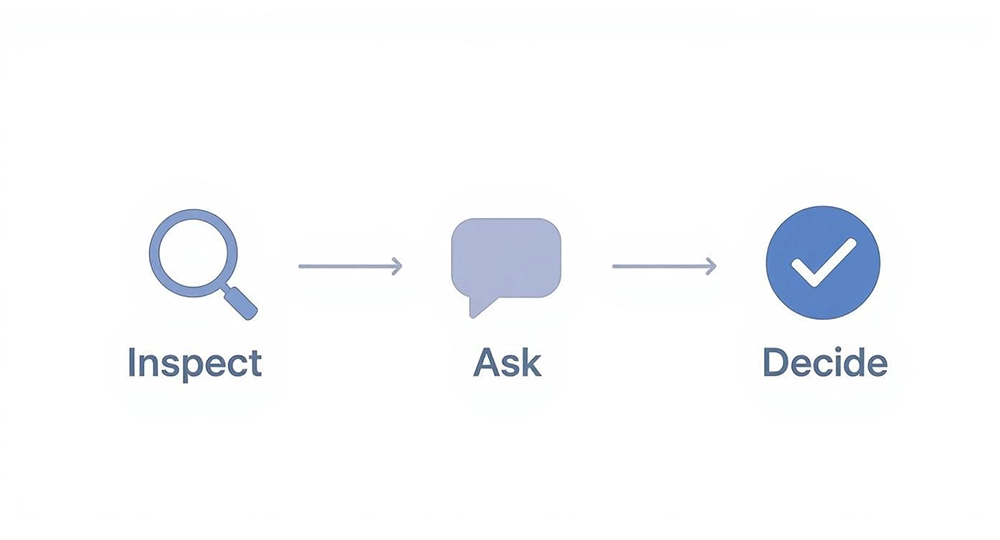
Getting this stage right means your tenancy starts on a secure, transparent footing. After a viewing, it really boils down to three simple actions to make a confident decision.
Tenancy Agreements Explained
The first piece of paper you’ll come across is the tenancy agreement. This isn't just a formality—it’s a legally binding contract that lays out the ground rules for your stay. The type of agreement you're given is incredibly important, as it dictates your rights as an occupant.
When renting a room, you'll almost certainly encounter one of two types:
- Lodger Agreement: This is what you'll get if you’re living with your landlord (often called a 'resident landlord'). These agreements offer fewer legal protections. For instance, your landlord only needs to give 'reasonable notice' to ask you to leave, which might only be a month.
- Assured Shorthold Tenancy (AST): This is the standard for most private rentals where you don't live with the landlord. An AST gives you much stronger rights, including formal, court-led eviction procedures and longer notice periods.
It's absolutely vital to know which one you’re signing. If something in the agreement seems off or you're just not sure, it’s always best to get a second opinion before putting pen to paper. If you've got a specific query, you can always contact our support team for some friendly guidance.
When you're renting a room, the type of tenancy agreement you sign has a big impact on your rights. Here's a quick comparison of the two most common types you'll come across in the UK.
Tenancy Agreement Types Compared
| Feature | Lodger Agreement | Assured Shorthold Tenancy (AST) |
|---|---|---|
| Who it's for | Renting a room in your landlord's home (resident landlord). | Renting a room in a shared house where the landlord lives elsewhere. |
| Deposit Protection | Landlord is not legally required to protect your deposit. | Landlord must protect your deposit in a government scheme. |
| Notice Period | Landlord only needs to give 'reasonable notice' (e.g., one month). | Landlord must follow formal procedures and provide a set notice period. |
| Ending the Tenancy | Much easier for the landlord to end the agreement. | You have stronger legal protections against eviction. |
Understanding these differences is key. An AST offers significantly more security, especially regarding your deposit and how the tenancy can be ended, so make sure you know exactly what you're signing.
Demystifying Deposits and Payments
Before you get your hands on the keys, you'll need to sort out a couple of payments. It's crucial to know what they're for and what the legal limits are, so you don't get overcharged.
First up is the holding deposit, which you pay to reserve the room while the landlord does their reference checks. By law, this can’t be more than one week's rent. If everything goes ahead, this money should be put towards your first month's rent or the main security deposit.
Then there's the security deposit (or tenancy deposit). This is a larger sum held by the landlord to cover any potential damage or unpaid rent. Thanks to the Tenant Fees Act 2019, this is capped at five weeks' rent for properties where the total annual rent is under £50,000.
One thing you absolutely must know: if you have an Assured Shorthold Tenancy, your landlord is legally required to protect your security deposit in one of three government-approved schemes. They have 30 days to do this and must give you official proof of where it's protected. No excuses.
The Art of Respectful Negotiation
While things like rent are often set in stone, sometimes there's a little wiggle room. The trick is to be reasonable, polite, and realistic. You're not trying to haggle at a market stall; you're trying to find a common-sense solution that works for everyone.
A few things you might be able to discuss include:
- Move-in Date: If you need to move in a bit earlier or later than advertised, it’s always worth an ask. Landlords often appreciate the flexibility.
- A Few Furnishings: Is the room unfurnished but you’re desperate for a bed? You could politely ask if the landlord would be willing to provide one. The worst they can say is no.
- The Rent: This is a long shot in a competitive market, but if a room has been advertised for a while, a polite offer slightly below the asking price might be considered, especially if you can commit to a longer stay.
Before you finalise everything, it’s a good move to familiarise yourself with an ultimate rental property maintenance checklist. Knowing what you're responsible for versus what the landlord should handle will save a lot of arguments later on.
Your Move-In Day and Settling In Checklist

The finish line is in sight. You’ve navigated the search, aced the viewings, and signed the paperwork. A smooth move-in day is the final piece of the puzzle, and getting it right sets the tone for a positive, stress-free tenancy from the word go.
This isn’t just about unpacking boxes. It's about establishing good habits, protecting your deposit, and laying the groundwork for a great relationship with your new housemates and landlord. Let's walk through the essential jobs for your first day and the weeks that follow.
The All-Important Inventory Check
Before you even think about unpacking, your first job is to tackle the inventory report. This document, provided by your landlord or agent, lists every single item in the property and its condition. It might seem tedious, but this is your single most important tool for getting your full security deposit back when you leave.
Go through it with a fine-tooth comb. Seriously, don’t just glance at it – check everything.
- Document Everything: Note down any discrepancies, no matter how small. A tiny scratch on the desk, a faint stain on the carpet, or a chip on a mug – if it's there, write it down.
- Take Photographic Evidence: Your phone is your best friend here. Take clear, well-lit photos and videos of any existing damage or wear and tear. Make sure the images are date-stamped as proof.
- Test Appliances: Check that the oven, microwave, washing machine, and any other supplied appliances are actually in good working order.
Treat the inventory check like you're a detective building a case. Your future self will thank you when it's time to move out. Being thorough now prevents any arguments later about what damage was already there when you arrived.
Once you’re happy, sign and return the inventory report to the landlord or agent within the specified timeframe (usually seven days). Always keep a copy for your own records.
Getting Connected and Organised
With the inventory sorted, it’s time to get the practicalities in order. Setting up your share of the household bills and establishing clear lines of communication from day one will prevent a lot of potential friction down the line.
First, take meter readings for gas and electricity as soon as you get the keys. Photograph them for your records. This simple step ensures you're only paying for the energy you use from the moment you move in.
Next, have a chat with your new housemates about how bills are managed. Find out who is responsible for paying the council tax, utilities, and broadband, and agree on how and when you'll transfer your share each month.
The financial side of renting has become a major part of the UK economy. In fact, total income from UK property for landlords grew by 17% between 2019 and 2024, reaching a record £55.53 billion. This growth highlights just how active the rental market is, and for tenants, it underscores the importance of being organised with your finances. You can explore more statistics about the property rental market on GOV.UK.
Settling into Your New Home
Now for the fun part: making the space your own and getting to know the people you live with. A little effort in the first few weeks goes a long way towards building a positive, friendly household atmosphere.
When personalising your new space, you might want to look for renter-friendly curtain hanging methods that won't damage walls and risk your security deposit. Simple touches like plants, photos, and your own bedding can quickly make a rented room feel more like home.
Finally, invest some time in your new housemates. Suggest a house meal, a trip to the local pub, or just hang out in the communal area for a chat. Understanding each other’s schedules and preferences early on helps everyone live together more harmoniously.
Common Questions About Renting a Room
Finding a room can throw up a lot of questions, especially if you're new to the game. Let's tackle some of the most common queries that pop up, giving you clear, straightforward answers to help you rent with confidence.
How Can I Spot and Avoid Rental Scams?
Sadly, rental scams are a real risk, but they tend to follow the same old script. The number one rule is simple: never, ever pay any money before you’ve seen the property with your own eyes and met the landlord or a proper letting agent.
Be on high alert for anyone claiming they're out of the country and asking you to wire money for a deposit. It's a classic red flag.
Another tell-tale sign is pressure. A genuine landlord will give you breathing room to make a decision. Scammers, on the other hand, create a false sense of urgency, trying to rush you into paying a deposit on the spot. Always insist on seeing a formal tenancy agreement and ask for proof that your deposit will be held in a government-approved scheme. Trust your gut – if it feels off, it probably is.
What Is a Right to Rent Check?
Yes, this is a standard and legal part of the process. In England, landlords are required by law to carry out a 'Right to Rent' check before your tenancy starts. It’s their way of verifying that you, and anyone else over 18 living in the property, have the legal right to rent in the UK.
You'll need to show them original documents, like a valid passport or a Biometric Residence Permit. The key thing is that the landlord or agent must check these documents with you physically present. It’s a straightforward procedure just to make sure everything is above board.
It's the landlord's legal duty to perform the Right to Rent check, not yours. Your responsibility is simply to provide the necessary documents to prove your status. If you can't, your application will likely be rejected.
What Are My Rights as a Lodger Versus a Tenant?
This is a really important one, as the difference between being a lodger and a tenant drastically changes your rights. It all comes down to where the landlord lives.
You’re a lodger if you rent a room in your landlord’s own home and share living spaces with them, like the kitchen or bathroom. A tenant rents a room in a property where the landlord doesn't live.
Here’s how that plays out in reality:
- Tenant (with an Assured Shorthold Tenancy): You get strong legal protections. A landlord needs a court order to evict you and must protect your deposit in a government-backed scheme.
- Lodger: Your rights are more limited. A landlord only needs to give you 'reasonable notice' to leave, which could be as short as your rent payment cycle (e.g., one month). They also aren't legally required to protect your deposit.
Can a Landlord Increase My Rent at Any Time?
No, landlords can't just hike up your rent on a whim. The rules are tied to your tenancy type.
If you're on a fixed-term tenancy, the rent is locked in. It can only be increased if you agree to it, or if there's a specific 'rent review clause' written into your contract from the start.
For those on a periodic (rolling) tenancy, landlords can typically only increase the rent once a year. They have to give you at least one month's notice, and the new amount has to be fair and in line with what similar local properties are going for.
Ready to find your perfect room without the hassle? At Rooms For Let, we connect you with thousands of listings across the UK. Start your search today and find your next home.