Think of a house share tenancy agreement as the official rulebook for your shared home. It’s a legally binding contract that spells out the rights and responsibilities for both the landlord and every single tenant, making sure everyone is on the same page and protected. This document is your first line of defence against the common arguments that can crop up over rent, bills, and house rules.
Why Your House Share Agreement Is So Important
Moving into a shared house is an exciting step, but let's be honest—it also means mashing together the finances, habits, and lifestyles of several people under one roof. Without a clear set of ground rules, that arrangement can quickly turn sour over misunderstandings and petty conflicts. A well-drafted house share tenancy agreement is designed to stop these problems before they even start, giving everyone clarity and security from day one.
This document is so much more than a bit of formal paperwork; it's the foundation for a peaceful and respectful home. It takes all those verbal chats, assumptions, and "I thought we agreed..." moments and puts them into concrete, enforceable terms. This means if a disagreement does pop up—say, over a late rent payment or who’s responsible for a bit of damage—you have a legal document to fall back on, rather than relying on hazy memories or goodwill.
Setting Clear Expectations for All Parties
At its heart, the agreement is all about setting crystal-clear expectations. It makes sure every tenant knows exactly what’s expected of them, both individually and as a group, before they’ve even unpacked their bags. The key areas it usually covers are:
- Financial Responsibilities: How rent gets paid, the way bills are split, and what happens if someone falls behind.
- Property Upkeep: The rules on cleaning communal areas, how to report maintenance issues, and general care for the property.
- House Rules: Simple guidelines on things like noise levels, having guests stay overnight, and how shared spaces like the kitchen and living room should be used.
- Exit Procedures: The proper way to give notice, what can be deducted from a deposit, and the process for finding a replacement tenant if someone needs to leave early.
By getting all of this down in writing, a house share tenancy agreement massively reduces the chances of small disagreements blowing up into big problems. It creates a single source of truth that everyone—landlord and tenants alike—can turn to throughout the tenancy.
Ultimately, this agreement helps create a living environment that is both respectful and legally sound. For landlords, it's about protecting their investment. For tenants, it's about securing their rights and ensuring a decent standard of living. Of course, finding the right people to share with is the first step, and platforms like Rooms For Let are brilliant for connecting landlords with responsible individuals all across the UK.
Choosing the Right Type of Tenancy Agreement
Picking the correct type of house share tenancy agreement isn't just a bit of admin; it’s a decision that fundamentally shapes the rights and responsibilities of everyone under one roof. Think of it like choosing to be part of a team or working as a solo contractor—each setup comes with very different rules on liability and commitment. Getting this right from the start is absolutely crucial for both landlords and tenants.
Shared housing and Houses in Multiple Occupation (HMOs) are a massive part of the UK's private rented sector, which makes getting the paperwork right more important than ever. The private rented sector accounted for 19% of all UK households in the year ending March 2024, which is equivalent to around 5.5 million dwellings. With that many people sharing homes, clarity is king. You can take a deeper dive into the UK's rental landscape with stats from the Office for National Statistics.
This simple decision tree can help you quickly figure out which agreement most likely fits your situation.
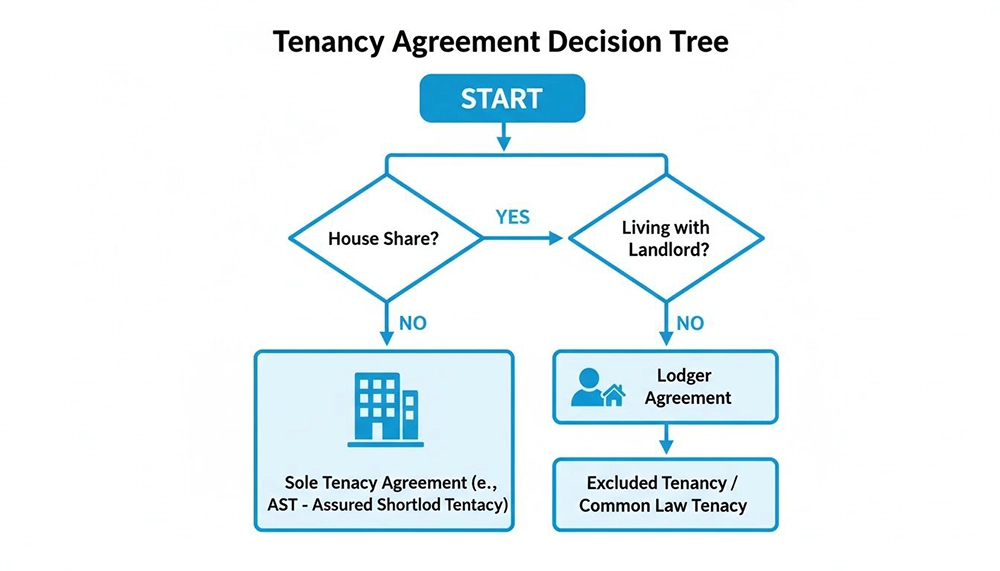
As the flowchart shows, the first and most important question is whether the landlord lives in the property with you.
Joint Tenancy Agreements
A joint tenancy is the go-to arrangement for a group of friends or students who decide to rent a property together as a single unit. Under this model, all tenants sign one single agreement, making them collectively responsible for the entire property and the total rent.
- Shared Responsibility: This is the big one. If one person can't pay their share of the rent, the landlord has the right to chase the other tenants for the shortfall. Legally and financially, everyone is in it together.
- Unified Tenancy: The tenancy is treated as a single entity. If you want to end it, all joint tenants typically have to give notice at the same time, unless a specific break clause allows otherwise.
This agreement works brilliantly for groups who know and trust each other, as it’s built on mutual accountability.
Individual Room Agreements
On the other hand, an individual room agreement is what you’ll usually find in professional house shares or HMOs where tenants might be complete strangers. Each person signs their own separate contract for their private bedroom, with shared access to communal areas like the kitchen and living room.
This setup offers far more flexibility and independence. Each tenant is only on the hook for their own rent and their specific contractual duties, with no financial ties to what the other housemates do.
For landlords, this model can make life much simpler when tenants come and go, as one person leaving doesn't disrupt the other tenancies in the house.
Joint Tenancy vs Individual Room Agreement at a Glance
To make the distinction crystal clear, here’s a quick comparison of the two main agreement types you'll encounter in a house share.
| Feature | Joint Tenancy Agreement | Individual Room Agreement |
|---|---|---|
| Liability | All tenants are jointly and severally liable for rent and damages. | Each tenant is only liable for their own rent and room. |
| Rent Payment | One total rent amount is due for the whole property. | Each tenant pays their individual rent directly to the landlord. |
| Ending the Tenancy | All tenants must usually give notice together to end the tenancy. | An individual tenant can give notice without affecting others. |
| Best For | Groups of friends or students who know and trust each other. | Professionals or individuals who don't know their housemates. |
Choosing between these two really depends on the relationship between the tenants and how the landlord wants to manage the property.
Lodger Agreements
Now, a lodger agreement is a completely different kettle of fish. This only applies when you rent a room in your landlord's own home and you share living spaces like the kitchen or bathroom with them. As a lodger, you have far fewer legal rights than a tenant.
For instance, the landlord doesn't need a court order to evict you. They only need to give you 'reasonable notice' to leave, which is often just the length of your rental payment period (e.g., one month). It’s a much less formal arrangement, reflecting the fact that you’re sharing someone’s personal home.
Key Clauses Every Agreement Must Contain
Think of your house share tenancy agreement as the rulebook for your shared home. Its real power comes from being crystal clear and detailed, leaving no grey areas that could spark arguments down the line. Just like a building needs solid foundations and walls, your agreement needs specific, non-negotiable clauses to be legally sound and genuinely useful.
Without these core components, you’re leaving the rules of the house open to individual interpretation. That’s a classic recipe for disputes. Let's break down the essential clauses every single agreement needs to protect both landlords and tenants.

Core Legal and Financial Details
First things first, the agreement has to nail down the fundamental legal and financial terms. This information is the legal backbone of the contract and the first thing anyone will look at if a formal issue arises.
- Full Names and Address: It must list the full names of the landlord (or their letting agent) and every single tenant, plus the full address of the property being rented.
- Tenancy Term: Get specific with the exact start and end dates. This defines the fixed term, making it perfectly clear how long the initial agreement is for.
- Rent Amount and Due Date: State the precise amount of rent each person is responsible for (in an individual agreement) or the total joint rent. The due date—for example, the 1st of every month—and how you want to be paid must be written down.
- Deposit Information: The contract must state the exact deposit amount. Crucially, it must also name which government-approved tenancy deposit scheme will protect it. This isn’t optional; it’s a legal requirement in the UK.
A house share agreement without these basic facts is fundamentally incomplete. Getting this stuff down in writing provides the essential legal framework that protects absolutely everyone involved.
Tenant and Landlord Obligations
Beyond the money, the agreement needs to clearly map out the day-to-day responsibilities for both sides. This is all about managing expectations and defining who’s in charge of what, which stops any confusion over keeping the property in good shape.
A solid agreement should detail:
- Tenant Obligations: This covers duties like keeping the property clean and tidy (especially communal areas), telling the landlord about any repairs needed as soon as possible, and not being a nuisance to the neighbours.
- Landlord Responsibilities: This section outlines the landlord's legal duties. Things like carrying out repairs to the building's structure and exterior, getting gas and electrical safety checks done, and making sure the supply of water, gas, and electricity is all in working order.
House Rules for Harmonious Living
Finally, a truly great house share agreement goes beyond the legal bare minimum and gets into the social side of living together. Laying out a simple set of house rules can head off the most common flatshare conflicts before they even start.
This clause should offer simple, reasonable guidelines on things like:
- Guests: What are the rules for having guests stay overnight? How often is okay, and do they need to ask permission first?
- Noise Levels: Set clear expectations for noise, particularly late at night, to make sure everyone can enjoy the property peacefully.
- Communal Areas: A clear policy on things like cleaning rotas and how shared spaces like the kitchen, living room, and bathroom should be used and left.
By weaving these clauses into your agreement, it transforms from a simple contract into a comprehensive and practical guide for a happy, successful tenancy.
Understanding Your Legal Rights and Responsibilities
When you sign a house share tenancy agreement, you’re not just agreeing to a set of house rules. You’re entering into a legally binding contract that’s governed by UK housing law.
This means both landlords and tenants have specific duties and protections that everyone needs to respect. Getting your head around this legal landscape is the first step towards a secure, hassle-free tenancy.
For landlords, the responsibilities are serious and absolutely non-negotiable. They have a fundamental duty of care to make sure the property is safe and liveable for everyone under its roof. This isn’t just a friendly suggestion—it’s a legal requirement that involves several crucial actions.
Landlord Legal Obligations
A landlord's duties are all about keeping the property safe and the tenants secure. Dropping the ball on any of these can lead to hefty legal and financial penalties, so staying on top of compliance is essential.
Here are the key responsibilities for a landlord:
- Safety Checks: Arranging for a Gas Safe registered engineer to conduct a gas safety check every year, and ensuring all electrical systems are professionally inspected at least once every five years.
- Deposit Protection: Taking the tenant's deposit and placing it into a government-approved tenancy deposit scheme within 30 days of receiving it.
- Fire Safety: Fitting and maintaining smoke alarms on every storey of the property, plus carbon monoxide alarms in any room that has a solid fuel-burning appliance, like a wood-burning stove.
Things get even stricter for properties classified as a House in Multiple Occupation (HMO). These often come with extra fire safety rules, minimum room size requirements, and sometimes need a special licence from the local council to operate legally.
Just how important are these standards? Well, government statistics from 2023 revealed that around 10% of private rented homes in England had a Category 1 hazard—a serious threat to health or safety. You can read more about housing quality standards on the official government statistics page.
Tenant Legal Rights
While tenants absolutely have responsibilities—like paying rent on time and looking after the property—they are also protected by some significant legal rights. These safeguards are there to make sure you can live peacefully and securely in your home.
Your main rights as a tenant include:
- Right to Quiet Enjoyment: This is a legal term that means you have the right to live in your home without unnecessary or unreasonable disturbances from your landlord or anyone they send on their behalf.
- Protection from Unfair Eviction: A landlord can’t just change the locks or kick you out. They have to follow a strict legal process to end a tenancy, which involves giving you proper notice and, if it comes to it, getting a court order.
- To Live in a Safe Property: You have the right to a home that is kept in a good state of repair and is free from any hazards that could affect your health.
Beyond the agreement itself, it's a smart move for students to think about their own insurance. Protecting your personal belongings is vital, and there are specific student insurance options designed just for shared living.
Getting to grips with these legal frameworks is the foundation of a successful tenancy. You can find more practical advice for both landlords and tenants over on the Rooms for Let blog.
Common Mistakes That Lead to Tenant Disputes
Knowing what to leave out of a house share tenancy agreement is just as critical as knowing what to put in. Most disputes don't erupt from major legal dramas, but from small, completely avoidable oversights that leave things open to interpretation. A vague contract is just a conflict waiting to happen.
It’s often the simple errors that snowball. For instance, a clause that just says "utility bills will be shared" is practically asking for trouble. It doesn't explain how they’ll be split (per person? by room size?), who’s in charge of collecting the money, or when it's due each month. This is the kind of ambiguity that breeds resentment.
Overlooking Key Details
When it comes to tenancy agreements, precision is your best friend. Time and time again, we see landlords and tenants fall out because they didn't formalise the little things that seemed trivial at the start.
Here are a few of the most common pitfalls:
- Vague Guest Policies: Not having clear rules for overnight guests is a classic source of tension. How long can they stay? How often? Do other housemates need to be asked first? Get it in writing.
- Unclear Cleaning Responsibilities: Without a clearly defined cleaning rota or standard for shared spaces like the kitchen and bathroom, things can get messy—fast. This is one of the quickest ways for resentment to build.
- No Inventory Report: Skipping a detailed, photographic inventory at the beginning of the tenancy makes resolving deposit disputes at the end nearly impossible. It just becomes one person's word against another's.
"The best agreements anticipate potential friction points and address them head-on. Clarity on day one is what prevents costly and stressful disputes on day three hundred."
Failing to Document Everything
Another massive mistake is relying on verbal agreements. That quick chat in the hallway about who’s going to mow the lawn or how to handle a broken toaster has zero legal standing. If it’s not written down in the agreement or an official addendum, it might as well have never happened.
This becomes a real issue when situations change. Someone moves out, a new person moves in, or relationships simply turn sour. Suddenly, those informal "understandings" are either forgotten or deliberately disputed.
The only way to protect everyone is to make sure your agreement is thorough and crystal clear from the get-go. Every single rule, responsibility, and financial arrangement needs to be spelled out in black and white. This isn't about being difficult; it's about building the foundation for a respectful and harmonious home. Get these common mistakes sorted, and you'll dramatically reduce the chances of arguments down the line.
Your House Share Agreement Questions Answered
Even with the most watertight house share tenancy agreement, real-life questions are always going to pop up. Shared living throws up unique curveballs that you just don't find in standard rental guides.
Here, we're going to tackle the most common questions we hear from both tenants and landlords. Think of this as your go-to FAQ for navigating the day-to-day realities of a house share.
What Happens If a Tenant Leaves a Joint Tenancy Early?
This is probably the most critical question for any group sharing a single, joint contract. If one person decides to leave before the fixed term is up, things can get messy because, in the eyes of the law, you're all a single entity.
When this happens, the tenants who stay behind are legally on the hook for the entire rent, not just their own slice. While the person who left is still legally bound to the contract, the landlord has the right to chase any or all of you for the full amount.
The tenancy can only be brought to an end if every single joint tenant and the landlord agree to it. This is usually done through a formal document called a 'deed of surrender' or by finding a suitable replacement person that everyone, including the landlord, is happy with.
Can a Landlord Add New Rules During the Tenancy?
A landlord can't just decide to change the fundamental terms of a signed house share agreement halfway through. The contract you all signed—covering the big stuff like rent, the length of the tenancy, and key responsibilities—is legally binding for the whole term.
That said, minor house rules for keeping the peace in communal areas, like tweaking the cleaning rota, can sometimes be updated. This is usually only possible if the agreement specifically allows for it and the changes are reasonable. Any major changes, like a sudden ban on overnight guests, would need the written agreement of every single tenant. No exceptions.
Who Is Responsible for Finding a Replacement Tenant?
The answer here comes down entirely to what kind of agreement you’re on. Getting this distinction right is the key to a smooth transition when someone decides to move out.
- In a joint tenancy: The responsibility almost always falls on the shoulders of the whole group. Because you’re all treated as one legal tenant, it's up to you collectively to find a new housemate that the landlord approves of.
- In an individual room tenancy: This one is much simpler. It's the landlord's job to find a new tenant for the empty room. Your contract is separate from the person who left, so their departure doesn't legally affect your tenancy at all.
Is an Unsigned Tenancy Agreement Still Valid?
While a signed, written agreement is always the gold standard, a tenancy can legally exist without one. The moment a tenant moves in, starts paying rent, and the landlord accepts that payment, a verbal tenancy agreement has been created.
The huge problem here is proof. Without a written document, it becomes a messy "he said, she said" situation, making it incredibly difficult to prove the specific terms you originally agreed on. This can lead to massive arguments over everything from the deposit to how much notice is needed to leave. A written house share tenancy agreement is your best form of protection.
Getting through these issues boils down to clear communication from everyone involved. If you find yourself in a tricky spot and you're not sure about your rights or responsibilities, it's always smart to get some professional advice. For more specific questions, you can always reach out to experienced teams like ours by getting in touch via the Rooms for Let contact page.
Ready to find the perfect tenant or your ideal room? Rooms For Let makes it simple to advertise your spare room or search thousands of listings across the UK. Join our community of landlords and tenants today at https://www.roomsforlet.co.uk.