Successfully renting out a spare room breaks down into three simple stages: preparing the room and figuring out a competitive price, creating a cracking advert that people actually want to click on, and finally, sorting out the tenancy with proper viewings and paperwork. Get this process right, and you'll find the right person quickly and sidestep the usual headaches.
Your Guide to Renting a Room in the UK Market
In today's rental market, where good rooms are snapped up in a flash, a mediocre advert just won't cut it. You need to stand out. This guide is your roadmap to doing just that, walking you through everything from getting the room looking its best and setting the right rent, to taking photos that stop the scroll and writing a description that brings in reliable people.
Think of it as your practical playbook. We're cutting through the noise to give you a clear strategy, helping you create a listing that doesn't just get seen but gets you the right kind of enquiries, fast.
Understanding the Rental Process
The journey from an empty room to a signed agreement isn't complicated, but each step builds on the last. Nailing each of the three core phases is the secret to a stress-free experience and helps you handle everything like a pro, from start to finish.
The flowchart below breaks down this simple yet effective three-step approach for letting your room.
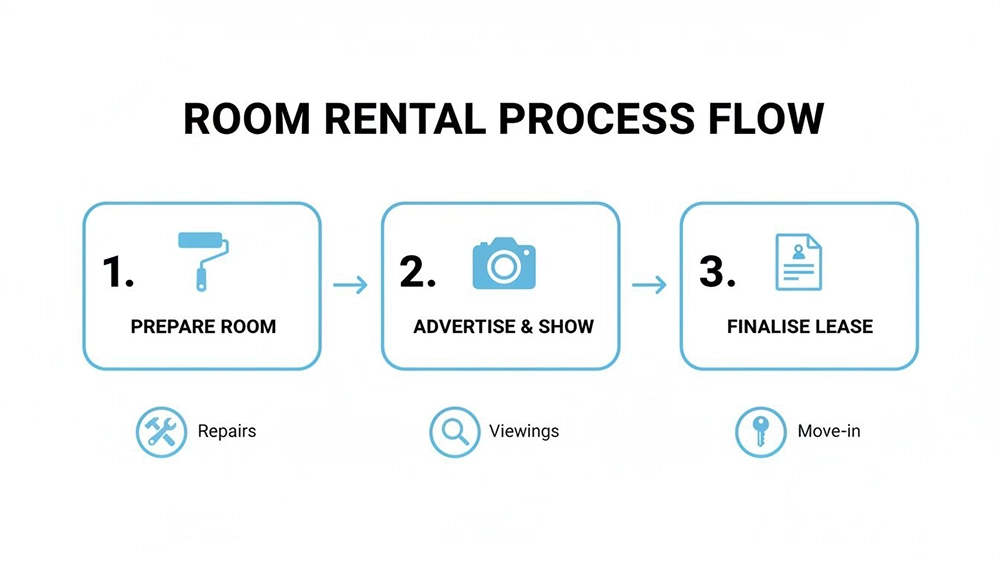
As you can see, the real work starts long before you post your advert online and continues well after you think you've found someone. The prep work and the final legal checks are just as crucial as the ad itself. They're what ensure you attract quality applicants and meet all your obligations as a landlord.
Key Takeaway: A great rental outcome is about more than just a well-written advert. It’s the result of a solid plan that covers preparation, marketing, and legal diligence. Rushing any of these stages is a false economy—it often just leads to longer void periods or problems down the line.
Whether you've done this a dozen times or you're a homeowner letting a room for the first time, this structured approach takes out all the guesswork. We’ll dive into each of these areas in detail, giving you actionable tips and checklists to guide you every step of the way.
Preparing Your Room and Setting the Right Rent
Before you even think about taking photos or writing a single word of your advert, the real work begins. Getting the foundations right—that is, preparing the physical space and pricing it smartly—will make all the difference. It directly impacts the quality of applicants you attract and, crucially, how quickly you can fill the room.
This first stage is all about presenting a clean, safe, and genuinely desirable home while setting a rent that reflects its true market value. The goal isn't just to find any tenant; it's to find a responsible person who sees the value in what you're offering. A bit of effort here pays off massively down the line, saving you a world of time and potential headaches.
Get Your Room Viewing Ready
First impressions are everything. When a potential tenant walks through the door, you want them to be able to immediately picture themselves living there. That means creating a space that feels neutral, inviting, and absolutely spotless.
Forget a quick hoover and a wipe-down. A deep clean is non-negotiable. We’re talking about tackling those often-overlooked areas: skirting boards, inside wardrobes, light fittings, and behind furniture. If the paintwork is looking a bit tired or scuffed, a fresh coat of a neutral colour like off-white or light grey is probably the most cost-effective upgrade you can make.
Next up, it’s time to focus on repairs and security.
- Fix the little things. That dripping tap, a sticky drawer, or a light switch that doesn't quite work? Get them sorted. These minor issues can signal poor overall maintenance to a sharp-eyed applicant.
- Declutter completely. The room needs to be a blank canvas, not a storage space for your personal bits and pieces. Removing your clutter not only makes the room feel bigger but also allows people to imagine their own belongings in the space.
- Check the locks. A secure lock on the bedroom door is a must for privacy and peace of mind. As a landlord, understanding typical locksmith costs for a house is useful, as you might need to change or upgrade locks before a new person moves in.
The Art of Setting the Right Rent
Pricing your room is a delicate balancing act. Go too high, and your phone will stay silent. Price it too low, and you'll leave money on the table and might attract less serious applicants. You're aiming for that market sweet spot.
It’s a great time to be a landlord. The UK's private rented sector has seen a huge surge in demand, completely reshaping the market since the pandemic. Supply is still about 20% lower than pre-pandemic levels, while tenant demand has rocketed by 60% in the same period. This imbalance creates a strong opportunity for anyone advertising a room.
So, how do you find your price? You need to become a local market expert, fast. Start by diving into platforms like Rooms For Let and seeing what similar rooms in your postcode are actually renting for. Don't just glance at the headline price; dig into the details to see what's included.
Pro Tip: When you're comparing your room to others online, be brutally honest with yourself. A modern en-suite, a bigger-than-average room, or an "all-bills-included" package can easily justify a higher price tag. On the flip side, if your room is on the smaller side or shares a bathroom with several others, your price needs to reflect that reality.
Bills Included or Separate?
Deciding whether to offer an all-inclusive rent or charge for bills on top is a major strategic decision. Each approach has its pros and cons.
- All-Inclusive: Tenants absolutely love this option. It gives them certainty over their monthly outgoings and makes life simpler. It's the go-to model for most HMOs and house shares and allows you to advertise a higher, more attractive headline rent. The catch? You carry the risk if energy costs suddenly shoot up.
- Bills Separate: This gives the tenant more control over their energy usage and protects you from being hit with unexpectedly high bills. It’s a perfectly common approach but can be less appealing in a market where all-inclusive deals are the norm.
To make the right call, dig out your utility bills from the last year, work out a monthly average, and maybe add a small buffer for peace of mind. It’s also a smart move to see what the standard practice is for similar adverts in your neighbourhood. For more ideas on how to reach the right audience, you can also explore our different advert pricing options.
Room Rental Pricing Checklist
Use this checklist to honestly evaluate your room's features. This will help you benchmark against other local listings and land on a price that’s both competitive and fair.
| Feature / Factor | Consideration | My Room's Value (Low/Average/High) |
|---|---|---|
| Room Size | Is it a small single, a standard double, or a large double with extra space? | |
| En-suite Bathroom | Does the room have its own private bathroom? | |
| Shared Bathroom Ratio | How many people will be sharing the main bathroom? (1-2 is high value) | |
| Condition & Decor | Is the room freshly painted with modern furnishings, or is it a bit dated? | |
| Furnishings | Is it fully furnished with quality items (bed, wardrobe, desk)? | |
| Property Location | Is it in a desirable area with good transport links and amenities? | |
| Transport Links | How close is it to a train station, tube stop, or major bus route? | |
| Bills Package | Are all bills included (gas, electric, council tax, Wi-Fi, water)? | |
| Communal Areas | Is there a shared living room? Is the kitchen modern and well-equipped? | |
| Property Extras | Does the property have a garden, parking, or fast fibre broadband? |
Once you've run through this list, you'll have a much clearer picture of where your room sits in the market. By preparing diligently and pricing intelligently, you're setting the stage for a smooth and profitable rental right from the very start.
Creating an Irresistible Room Rental Advert
You’ve done the hard work of getting the room ready and figuring out the right price. Now it’s time to create an advert that actually stops people scrolling. A great listing really comes down to two things: the photos and the description. This is where you shift from preparing a product to telling a story—selling a lifestyle, not just four walls.
Forget about needing a professional camera. Your smartphone is more than capable of capturing fantastic images that will get you noticed. Likewise, the words you choose can mean the difference between finding your ideal housemate and getting buried under a mountain of unsuitable enquiries. Let’s break down exactly how to get it right.
Taking Photos That Get Clicks
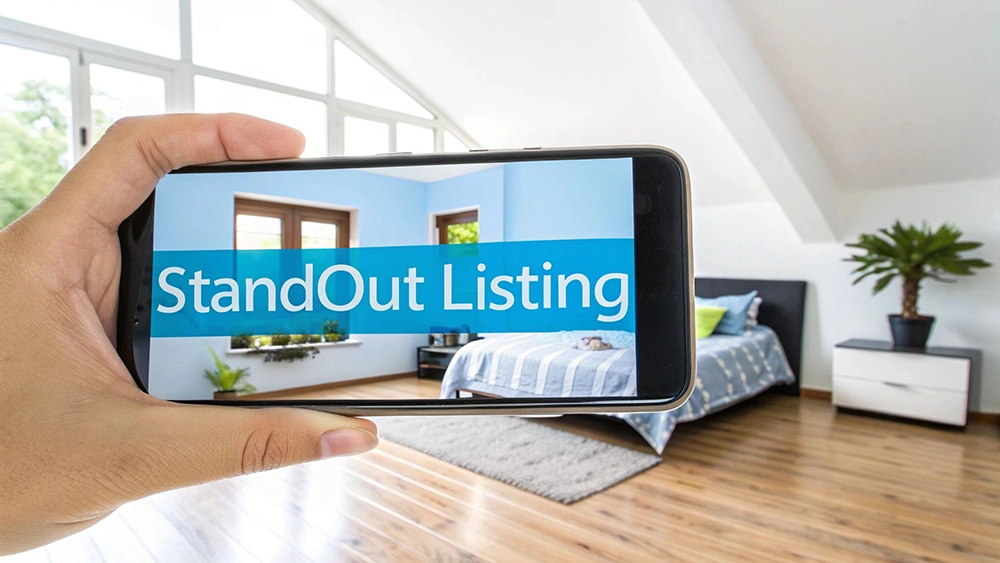
Your photos are the first, and most important, part of your advert. It’s that simple. Poor, dark, or cluttered pictures are an instant red flag for potential tenants, subconsciously suggesting the property itself is uncared for. Great photos, on the other hand, build trust and create an emotional connection before they’ve even read a word about the rent.
The aim is to make the space feel bright, clean, and as spacious as possible. You can absolutely achieve a professional look with any modern smartphone by sticking to a few golden rules.
- Embrace Natural Light: Throw open all the curtains and blinds, then turn on every single light in the room. Always shoot during the daytime, ideally on a bright but slightly overcast day to avoid those harsh, unflattering shadows. Whatever you do, never use your phone's flash—it just makes everything look cold and sterile.
- Shoot from a Corner: This is an old estate agent trick for a reason. Stand in the corner of the room, holding your phone around chest height. This angle captures more of the room in one go, creating a sense of depth that makes the space feel much bigger than it is.
- Tidy Up Relentlessly: This goes beyond just a quick clean. Hide all your personal bits and bobs, tuck away any visible cables, and make the bed perfectly. Think minimalist hotel room. This allows viewers to imagine their own things in the space, rather than being distracted by yours.
Key Insight: Your photo gallery needs to tell the whole story of the property, not just the bedroom. Make sure you include high-quality shots of the kitchen, bathroom, living room, and any outside space like a garden or balcony. These shared areas are often the deal-maker for a potential housemate.
To really stand out from the crowd, you could even consider using engaging video content to elevate your listings, applying the same principles of light and space to a short walkthrough.
Crafting a Compelling Advert Description
Once your fantastic photos have grabbed their attention, your description needs to seal the deal and convince them to get in touch. The goal is to be informative, honest, and just a little bit enticing. Ditch the generic phrases and focus on painting a clear picture of what it's actually like to live there.
Start with a powerful headline that instantly summarises the best bits. Instead of the flat "Double Room for Rent," go for something much more descriptive, like, "Bright Double Room with En-suite, 5 Mins from Victoria Station."
Your opening paragraph should hook them straight away by highlighting the key features. From there, it's best to structure your advert with clear subheadings so it’s easy for people to scan.
The 'Before and After' of Ad Copy
Let's look at how a few simple tweaks to your writing can make a world of difference.
Before (Generic and Uninspiring):
Double room for rent in a shared house. Furnished. Shared bathroom. Close to public transport. Bills extra. Looking for a professional.
It gets the basic facts across, but it’s completely forgettable. It lists features without creating any sense of desire.
After (Detailed and Appealing):
Enjoy your own quiet space in this bright and airy double room, located in a friendly and relaxed professional house share just a short walk from Clapham Common.
The Room
You'll have a fully furnished double room with a comfortable bed, large wardrobe, and a desk perfect for working from home. The large window floods the room with natural light and overlooks the garden.The House
You’ll share a modern, well-equipped kitchen and a clean, tidy bathroom with just two other professional housemates. We also have a comfortable shared living room with a smart TV—perfect for relaxing after work—and a lovely garden for summer BBQs.The Location
The house is just a 5-minute walk from the tube station (Zone 2), with direct links into the city. You're also moments away from a great local pub, an artisan coffee shop, and a large supermarket.
See the difference? The "after" version tells a story. It highlights the lifestyle, mentions the other housemates respectfully, and gives specific, valuable details about the location. It actively sells the experience, which is far more powerful when you want to advertise a room for rent effectively. By nailing both the visuals and the words, you create an advert that doesn’t just get seen—it gets the right person to click "enquire."
Choosing Your Platform and Posting Your Listing
You've got your stunning photos and a compelling description ready to go. Now for the critical part: getting your advert in front of the right people. Knowing where to advertise your room can be the difference between a flood of quality enquiries and a trickle of time-wasters. The platform you choose directly shapes the audience you reach and how quickly you'll find a great housemate.
The big question is whether to use a broad, generalist site or a dedicated rental platform. Social media marketplaces might seem tempting because of their sheer size, but they often attract a less serious crowd. You can end up drowning in "Is this still available?" messages that go nowhere. This is where specialised websites built for the rental market really come into their own.

Dedicated Rental Platforms vs General Marketplaces
Think of it like this: you wouldn't go to a car dealership to buy groceries. The same logic applies here. Dedicated room rental sites like Rooms For Let are built for one purpose—connecting landlords with tenants who are actively and seriously looking for a room right now.
Dedicated Rental Platforms:
- A Targeted Audience: The users are specifically searching for rooms, which means the enquiries you get are generally higher quality and from more motivated people.
- Purpose-Built Tools: These sites have features designed for landlords, like structured listing forms and secure messaging, making the whole process much smoother.
- Less Noise: You get to avoid the casual browsers and low-intent messages that are so common on the bigger, broader platforms.
General Marketplaces (e.g., Social Media):
- Massive Reach: Your advert can be seen by a huge number of people in your local area, that’s true.
- Higher Volume of Enquiries: The downside is that this volume is often filled with irrelevant or non-serious messages, costing you valuable time.
- Lack of Vetting: There's no inherent filtering, so you have to do all the pre-screening yourself from scratch.
Key Takeaway: For a more efficient and targeted search, a specialised platform is almost always the better choice. It pre-qualifies your audience, ensuring the people who see your advert are the people you actually want to reach.
Optimising Your Listing for Maximum Impact
Once you’ve picked your platform, just uploading your content isn't enough. You need to fill out your profile and listing meticulously to build trust with potential tenants and rank higher in search results. An incomplete listing can look unprofessional or, even worse, a bit suspicious.
The private rental market is bigger than it’s ever been. Recent census data shows that 20.3% of the population in England and Wales now rents privately, which is a pool of around five million tenants. With similar growth in Scotland and Northern Ireland, there's no shortage of people looking for a good room. You can discover more about the expanding UK rental market on hiscox.co.uk.
To grab the attention of this massive market, here are a few best practices to follow:
- Complete Every Single Field: Don't skip anything on the listing form. Fill out all the details about amenities, house rules, and who else lives there. The platform's algorithm often favours complete listings, pushing them higher up the search results.
- Use Keywords Naturally: Put yourself in a tenant’s shoes. What terms would they be typing into the search bar? Weave phrases like "double room for professional," "all-inclusive rent," or "close to train station" into your description where it feels natural.
- Set Your Preferences Clearly: Make good use of the platform’s filters to specify your ideal tenant—for example, "professionals only," "non-smoker," or "no pets." This saves everyone a lot of time.
Ultimately, a detailed, honest listing is your best tool. It works as your 24/7 salesperson, attracting the right people and filtering out the wrong ones before a message even lands in your inbox. Platforms like Rooms For Let make this simple, and if you're ready to get started, you can easily register as a landlord to post your advert and connect with thousands of active room-seekers today.
Fielding Enquiries, Running Viewings, and Vetting Applicants
Once your perfectly crafted advert is live, the enquiries should start rolling in. It's an exciting moment, but it can quickly get chaotic if you don't have a system. The goal here is to efficiently move from a long list of interested people to your ideal housemate, saving yourself a ton of time while making sure you’re ticking all the legal boxes.
A smart, organised approach starts the moment that first message lands in your inbox.
Handling the First Wave of Enquiries
The key is to be quick and professional without writing a unique, lengthy reply to every single person. This is where a simple, semi-personalised template becomes your best friend. Forget a blunt "Yes, it's available." You need something that answers common questions and subtly starts the screening process.
This approach shows you're a serious landlord and helps weed out anyone who isn't a good fit right from the start.
Here’s a template that actually works:
"Hi [Applicant's Name],
Thanks for getting in touch about the room. Yes, it's still available.
Just to confirm the details, the rent is [£XXX] per month, and that includes [list included bills, e.g., council tax, Wi-Fi, water]. The deposit is [£XXX], which will be protected in a government-approved scheme.
We're looking for a tidy and respectful professional to join the house. So we can see if we're a good fit, could you tell me a little bit about yourself, what you do for work, and when you're looking to move?
If that all sounds good, we can arrange a viewing.
Best regards,
[Your Name]"
This response is polite, packed with info, and immediately asks for the key details you need. It cuts down on the back-and-forth and helps you prioritise the most serious applicants.
Pre-Screen Before You Schedule Viewings
Before blocking out your diary for viewings, a quick pre-screening call is an absolute must. This short phone or video chat can save you a mountain of time by filtering out unsuitable candidates early. It's your first chance to get a real sense of the person behind the messages.
Here are a few essential questions to have ready:
- "Just to confirm, are you a non-smoker with no pets?" (Assuming these are your house rules).
- "The room is available from [Date]. Does that timeline work for you?"
- "Just to be transparent, the final stage involves references, a credit check, and a Right to Rent check. Are you comfortable with that?"
That last question is a big one. Any hesitation to agree to standard checks is a massive red flag. A serious, reliable tenant will not only expect these checks but will be completely fine with them.
Running Effective and Safe Viewings
Whether you’re meeting in person or doing a video call, the aim is the same: present your home honestly while sizing up the applicant. Be prepared, be professional, and always trust your gut.
During the viewing, show them the good stuff but don't hide the quirks. Honesty builds trust. Pay close attention to the questions they ask—are they thoughtful queries about the local area and house dynamics, or are they just trying to haggle on the rent?
Little things can tell you a lot. Did they show up on time? Are they polite and respectful as you show them around? These details often reflect what they'll be like as a housemate. After you've wrapped up, let them know what the next steps are and when they can expect to hear from you.
The Vetting Process: Your Non-Negotiable Safety Net
You've found someone you really like, and they're keen on the room. Fantastic. But now comes the most critical stage of all: the formal vetting. Never, ever skip this step, no matter how great they seem. Relying on gut feeling alone is a recipe for a future headache.
Right to Rent Checks
This isn't a suggestion; it's the law in England. You are legally required to check that any adult tenant has the right to rent a property in the UK before their tenancy begins. This means checking their original ID documents with them in person. Get this wrong, and you could face a hefty fine.
References are Your Best Friend
Always get references from their current employer and their previous landlord. It's not being nosy; it's just smart.
- Employer Reference: This confirms they're employed and their salary is sufficient to cover the rent comfortably.
- Landlord Reference: This is gold. It gives you a real insight into what they’re like as a tenant. Ask direct questions: "Did they pay their rent on time?" and "Was the property left in good condition?"
The All-Important Credit Check
A credit check offers an unbiased look at someone's financial reliability. It will show you if they have a history of paying their bills on time and flag any County Court Judgements (CCJs) for debt. This simple check is one of the most powerful tools you have to protect your investment and ensure a stress-free tenancy.
Finalising the Tenancy and Nailing Your Legal Responsibilities
You’ve found the perfect person, they love the room, and you’re ready to hand over the keys. Not so fast. Before anyone moves in, it’s absolutely vital to get the right paperwork sorted. Getting this right from the start isn’t just about looking professional; it’s about meeting your legal duties and protecting yourself.

Tenancy Agreements vs. Lodger Agreements
The first bit of admin is figuring out which agreement you need. This really hinges on your living situation. If you’re a live-in landlord renting out a spare room, you’ll likely need a lodger agreement. If you’re renting out a room in a property where you don’t live, it’s a standard tenancy agreement.
- Standard tenancy agreements give the tenant much stronger legal protections and "exclusive possession" of their room.
- Lodger agreements are more flexible, grant fewer rights, and are designed for when you're sharing your home with the person renting the room.
- Either way, the document must clearly state the rent amount, payment dates, the length of the term, and any specific house rules you’ve agreed on.
This table breaks down the key difference:
| Agreement Type | Key Feature | Best For |
|---|---|---|
| Standard Tenancy | Grants exclusive possession | Rooms in a separate house or flat (where you don't live) |
| Lodger Agreement | A simple ‘licence to occupy’ | Sharing your primary home with a lodger |
Once the agreement is sorted, your next job is handling the deposit—and this is one area where you can't afford to make a mistake.
Protecting the Deposit (This is Non-Negotiable)
If you take a deposit from a tenant on an Assured Shorthold Tenancy (AST), you are legally required to protect it in a government-backed scheme. Skipping this step can land you in serious hot water, with potential fines of up to 3 times the deposit amount.
These schemes hold the money independently, which protects both you and the tenant and helps resolve any disputes fairly at the end of the tenancy. You must provide the tenant with the official "prescribed information" about where their deposit is held within 30 days of receiving it. Miss that deadline, and you could face legal action.
I always tell new landlords: use a deposit protection scheme without fail. It's not just a legal box to tick; it builds immediate trust and shows you're a serious, compliant landlord.
Meeting Safety Regulations
Next up are the essential safety checks. These are not optional extras; they are your legal responsibility to ensure the property is safe for someone to live in.
- Gas Safety Certificate: This needs to be done every single year by a Gas Safe registered engineer. Give your tenant a copy before they move in.
- Electrical Installation Condition Report (EICR): This is a thorough check of the property's wiring and electrical fittings, required every five years.
- Smoke and Carbon Monoxide Alarms: You must have at least one working smoke alarm on every floor, plus a carbon monoxide alarm in any room with a solid fuel-burning appliance (like a log burner or coal fire).
Keeping good records of these certificates is crucial. It’s your proof that you’ve done everything by the book to keep your tenant safe.
Keeping Your Paperwork in Order
With all these documents flying around, you need a simple system to keep track of everything. A dedicated folder on your computer or even a physical ring binder will do the trick.
Make sure you have organised copies of:
- The signed tenancy or lodger agreement (one for you, one for them).
- Proof of the deposit protection, including the scheme details.
- The latest Gas Safety Certificate and EICR.
- Evidence that you have completed a Right to Rent check.
Having this ready to go means you can handle any queries quickly and prove your compliance if ever asked.
A Few More Legal Bits and Bobs
There are a few other obligations to keep on your radar before you’re fully in the clear.
You must carry out Right to Rent checks on every adult who will be living in the room to confirm they have the legal right to rent in the UK. This means checking and taking copies of their passport or identity documents before the tenancy begins.
Getting proper landlord insurance is also a must. Your standard home insurance probably won’t cover you for renting out a room, so you need a policy that includes things like property damage, loss of rent, and liability cover.
Don't forget about tax! Your rental income needs to be declared to HMRC on a Self Assessment tax return. The good news is you can deduct allowable expenses like repairs, insurance, and a portion of your utility bills to reduce your tax bill.
Finally, check with your local council. If you’re renting to multiple people, your property might be classed as a House in Multiple Occupation (HMO), which comes with its own set of licensing rules and regulations.
Tackling these duties head-on sets the stage for a smooth, stress-free tenancy. A proper, legally sound start is the best foundation for a great landlord-tenant relationship.
Got Questions? We've Got Answers
When you're figuring out how to advertise a room for rent, a few questions always pop up. Let's tackle some of the most common ones so you can move forward with confidence.
What's the Best Day to Post a Room Advert?
People often think there’s a magic day of the week to post an advert. While it's true that searches can spike on Sundays and Mondays as people get organised for the week ahead, a brilliant advert will get noticed any day.
What really matters is being responsive. Being ready to reply to messages as they land in your inbox is far more important than the exact day you post. On a busy platform, a great listing will always find its audience.
Do I Need a Special Licence to Rent Out a Room?
For most homeowners simply taking in a single lodger, the answer is no, you typically don't need a special licence.
The situation gets more complicated if your property becomes what's known as a House in Multiple Occupation (HMO). An HMO is usually defined as a property rented out to three or more people from different households who share facilities like a kitchen or bathroom.
An HMO licence is often mandatory for properties with multiple tenants from separate households. The rules can vary wildly between councils, so it is absolutely crucial to check your local authority's specific HMO requirements to make sure you're fully compliant.
How Can I Make My Advert Stand Out from the Crowd?
In a competitive market, you need to do more than just list a room. To really cut through the noise, focus on nailing three key areas: fantastic photos, a description that tells a story, and a fair, well-researched price.
- Stunning Photos: This is your first impression, so make it count. Use bright, clear images of a tidy, well-lit room and all the shared spaces. Throw open the curtains—natural light is your best friend.
- A Compelling Description: Don't just list the features. Sell the lifestyle. Mention the great local coffee shop, the nearby park for a weekend stroll, or the super-quick bus route into the city centre.
- Set the Right Vibe: Be upfront about the dynamic of the house and the sort of person who would be a good fit. This kind of honesty saves everyone time and helps you attract the right people from the very start.
For a deeper dive into crafting the perfect advert and loads more practical tips, have a look through the articles on our Rooms For Let landlord advice blog.
Ready to find your ideal tenant? With Rooms For Let, you can post your advert and connect with thousands of active room-seekers across the UK. List your room for free today!