Letting a room in your house can be a fantastic way to bring in some extra cash. Thanks to the UK's Rent a Room Scheme, you can earn up to £7,500 per year tax-free. But it’s not just a simple financial transaction. It means sharing your personal space, getting to grips with your legal duties as a landlord, and, most importantly, finding the right person to live with.
This guide will walk you through everything you need to know, from the initial decision to the day your new lodger moves in.
Should You Rent a Room in Your Home?
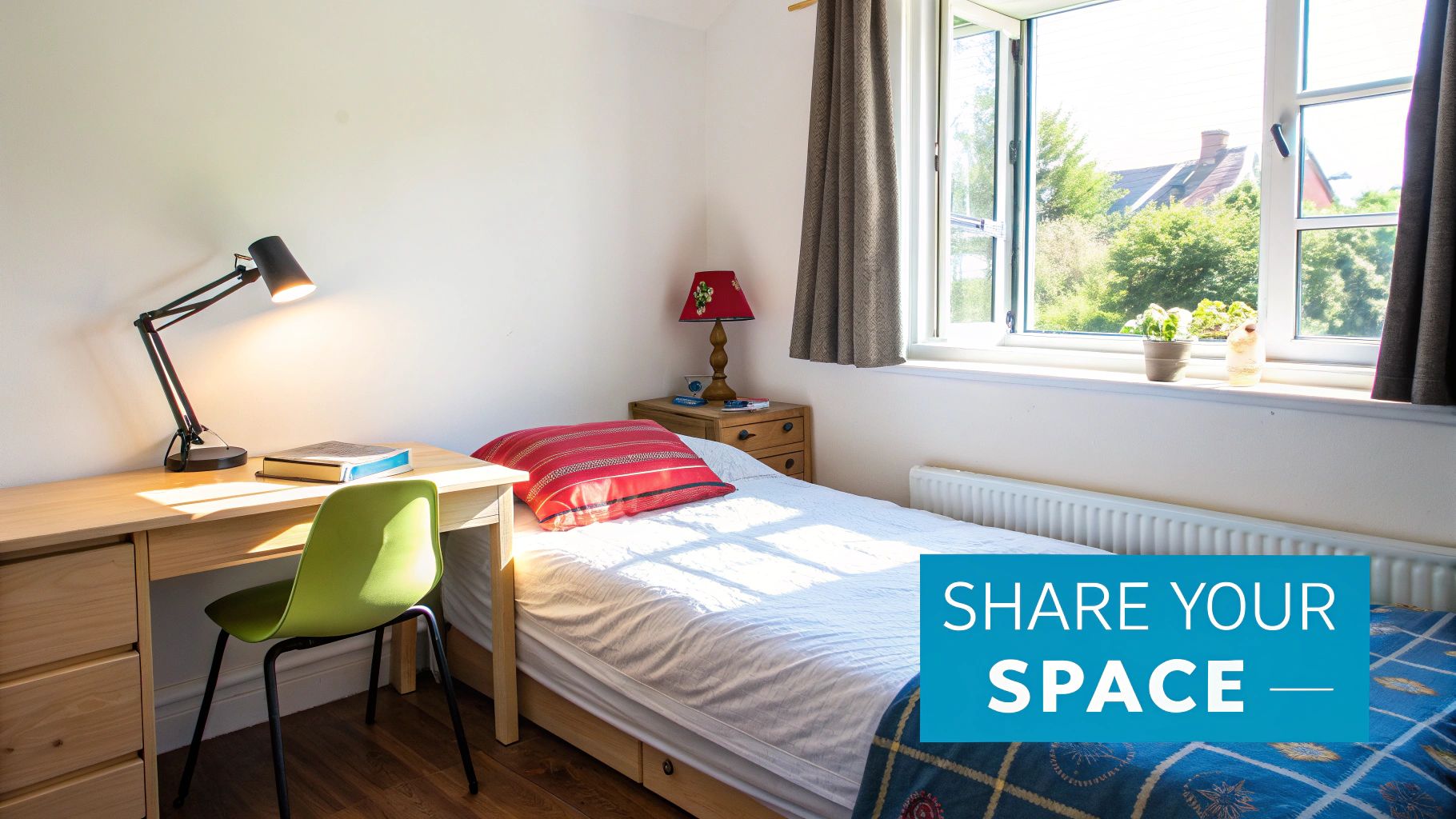
Before you even think about writing an advert, it’s worth taking a moment to weigh the pros and cons. The financial upside is obviously compelling, but you need to be realistic about the day-to-day reality of sharing your home. It’s a decision that affects your privacy, your daily routine, and even your mortgage and insurance policies.
The Financial Benefits
The biggest draw is, of course, the extra income. It can make a real difference, helping to cover the mortgage, bills, or other living costs. The UK Government's Rent a Room Scheme is a major perk, giving you a tax-free allowance of £7,500 annually (£3,750 if you share the income) for letting out a furnished room. This makes the whole prospect much more financially attractive and simplifies your tax return.
With private rents soaring across the UK, rooms offered by live-in landlords have become a vital part of the market. They are often around 13% cheaper than a standard flatshare, which helps ease the pressure on renters. That said, the tax-free threshold has been frozen since 2016, a point of frustration for many homeowners. You can discover more insights about the UK rental market trends in our dedicated post.
Understanding Lodgers vs Tenants
One of the first things you absolutely must get your head around is the difference between a lodger and a tenant. This distinction is crucial, as it dramatically affects your rights, your responsibilities, and how you can end the arrangement.
- A lodger (also known as an 'excluded occupier') lives in your main home and shares common areas like the kitchen or bathroom with you. This setup gives you far more flexibility and fewer legal hoops to jump through.
- A tenant usually lives in a self-contained property you own but don’t live in yourself. They have much more extensive legal rights, and ending the tenancy is a far more formal and lengthy process.
To put it simply, if you’re letting a room in the house you live in, you want a lodger. Here’s a quick breakdown of the key differences:
Lodger vs Tenant Key Differences for UK Homeowners
| Aspect | Lodger (Excluded Occupier) | Tenant (Assured Shorthold Tenancy) |
|---|---|---|
| Legal Status | Lives in the landlord's home and shares facilities. Has a licence to occupy. | Has exclusive possession of a self-contained property. Has a tenancy agreement. |
| Deposit Protection | No legal requirement to use a government-approved deposit protection scheme. | Deposit must be protected in a government-approved scheme within 30 days. |
| Eviction Process | Can be ended by giving 'reasonable notice' (usually one rent period). No court order needed. | Landlord must follow a strict legal process (e.g., Section 21 or Section 8 notice) and may need a court order. |
| Repairs | Landlord has a duty to keep the property safe and in reasonable repair. | Landlord has more extensive, legally defined repair obligations. |
| Landlord Access | Landlord can enter the lodger's room without permission (though it's polite to give notice). | Landlord must give at least 24 hours' written notice to enter and cannot enter without permission. |
This table makes it clear why the lodger arrangement is the sensible choice for anyone renting a room in their own home.
The ability to end the agreement with just 'reasonable notice' and without needing a court order is the single biggest advantage of taking on a lodger. It gives you peace of mind and control over your own home.
Key Practical Considerations
Beyond the legal stuff, there are a few practical matters you need to sort out before you commit. Getting these wrong can cause serious headaches down the line.
Your Mortgage Lender
Take a look at your residential mortgage agreement. It almost certainly contains a clause that requires you to get "consent to let" before you rent out any part of your home. Give your lender a call to let them know what you’re planning – failing to do so could put you in breach of your contract.
Your Home Insurance
A standard home insurance policy is not designed to cover paying lodgers. You absolutely must inform your provider. They will likely need to update your policy to one that includes cover for a lodger, protecting you against potential liability or damage claims. If you keep them in the dark, you could invalidate your entire policy if you ever need to make a claim.
This initial soul-searching is really about being honest with yourself. Can you genuinely share your space comfortably? Are you ready for the responsibilities that come with it? If the answer is a confident yes, then letting a room can be a genuinely rewarding experience.
Getting Your Property and Paperwork Ready
So, you’ve weighed up the pros and cons and decided that letting a room is the right move for you. Excellent. Now comes the practical part – getting your house and all the necessary paperwork in order.
This stage might not be the most exciting, but it’s absolutely non-negotiable. Getting this foundation right protects you, your property, and your future lodger. More importantly, it sets the stage for a smooth, legally sound arrangement, giving you complete peace of mind from day one.
Essential Safety Checks and Certificates
Your number one responsibility as a live-in landlord is to provide a safe home. The law is crystal clear on this, and there are specific checks you must complete before a lodger moves in. This isn't just about being a good homeowner; it's a legal requirement that carries hefty penalties if ignored.
- Gas Safety Certificate (CP12): If you have any gas appliances – a boiler, hob, or even a gas fire – you must get them inspected every year by a Gas Safe registered engineer. They’ll issue what’s known as a CP12 certificate, and you need to give a copy to your lodger.
- Electrical Safety: The rules here are a bit softer for lodgers compared to tenants. While a formal Electrical Installation Condition Report (EICR) every five years isn't mandatory for lodgers, you are still legally bound to ensure all electrics are safe. My advice? Get a qualified electrician in anyway. It’s also wise to get any electrical items you provide, like a kettle or lamp, PAT tested.
- Smoke and Carbon Monoxide Alarms: This one’s simple. You must have at least one working smoke alarm on every floor of your home that's used as living space. You'll also need a carbon monoxide alarm in any room with a solid fuel appliance, like a wood-burning stove. I’d recommend putting one near your gas boiler, too, just to be safe.
Preparing the Room Itself
Once the official safety checks are ticked off, it's time to focus on the room. Think clean, secure, and inviting. First impressions count for a lot and will directly impact the quality of people who apply.
Most homeowners find they first need to declutter your bedroom and remove personal items to create a neutral space. Make sure the room is furnished with the essentials, is in a good state of repair, and, crucially, has a lock on the door to give your lodger proper privacy.
A well-presented, clean, and safe room not only attracts better lodgers but also sets a standard for how you expect your property to be treated from the outset.
Understanding Right to Rent Checks
This is a big one. Every landlord in the UK, including those with a single lodger, has a legal duty to check that their prospective occupier has the right to rent in this country. Don't skip this. The fine for getting it wrong can be up to £10,000 per lodger.
The process is straightforward and must be done in person with the applicant present.
- Ask to see their original documents. For a UK citizen, a passport is usually enough. For others, you’ll need to see their visa or biometric residence permit.
- Check the documents are genuine. Look at the photos to ensure they match the person in front of you and check that nothing has expired.
- Take copies and keep them safe. Make a copy of the documents, write the date you performed the check on them, and store them securely for the entire time the lodger lives with you, plus one year after they leave.
It can feel a bit formal, but this simple check saves you from potentially massive legal headaches.
Does HMO Licensing Apply to You?
The term HMO (House in Multiple Occupation) often causes a bit of panic, but for most people letting a single room, it’s a non-issue.
An HMO is typically a property where at least three people from different ‘households’ (i.e., not a family) share facilities like a kitchen or bathroom. As a live-in landlord renting a room to one or two lodgers, your home will almost certainly not be considered an HMO.
However, be careful if you plan on taking in more than two lodgers. Local councils can have their own rules and 'additional licensing' schemes. If that’s your plan, you absolutely must check your local council’s website to understand their specific requirements.
Once you've handled these preparations, you'll be in a great position to start looking for the right person. A great next step is to place an advert and find your ideal lodger with us.
Pricing Your Room and Crafting the Perfect Advert
With the legal and safety groundwork out of the way, you can get stuck into the more creative side of letting a room: setting the right price and writing an advert that gets noticed by the right people. How you price and present your room will have a huge impact on both the number and the quality of enquiries you get.
This part is all about striking a delicate balance. You need a competitive rent that truly reflects what your room is worth, but you also need an honest, appealing advert that helps filter out unsuitable applicants right from the start.
How to Set the Right Rent Price
Figuring out how much to charge is probably the biggest question on any new live-in landlord's mind. Go too high, and you'll be met with silence. Go too low, and you're not only losing out on income but you might attract people who aren't the best fit for your home.
The answer is to do your homework. The first step is always to research what similar rooms are fetching in your immediate neighbourhood.
- Scout the online platforms: Websites like SpareRoom, Rightmove, and of course, our own listings right here on Rooms For Let, are your best friends. Pop in your postcode and filter the results to compare rooms of a similar size and standard to yours.
- Factor in your best features: Does the room have its own en-suite? Is it a spacious double or a cosy single? Freshly decorated? These are the details that can justify a higher price tag.
- Location is king: Being close to a train station, a university campus, or even just a good parade of local shops can significantly boost your room's rental value.
Your goal is to find that pricing sweet spot. You want your rent to be attractive enough to pique interest, but not so low that it raises suspicions or brings the wrong crowd knocking.
Deciding What to Include in the Rent
Another key decision is whether to offer the room with bills included. For a lodger, an all-inclusive price is usually the simplest and most attractive option. It gives them total clarity on their monthly outgoings and saves you from having any awkward chats about splitting the gas bill.
When working out your all-in price, make sure you add up a contribution for:
- Council Tax
- Gas and Electricity
- Water
- Broadband/Wi-Fi
- TV Licence (if you have one)
Just total up these monthly costs, add them to the base rent you want to achieve, and you’ve got your final figure. Being crystal clear about what is and isn't covered is a great way to build trust from day one.
Creating an Advert That Stands Out
Once you've landed on a price, it's time to build an advert that does the selling for you. This is your very first chance to show someone what it's like to live in your home, so you’ve got to make it count.
A brilliant advert really comes down to two things: fantastic photos and a well-written, honest description.
Taking Inviting Photos
We're all visual creatures. Poor-quality, dark, or messy photos will make people scroll right past your listing without a second thought. You don't need a pro photographer, just a decent smartphone and a little bit of effort.
- Tidy up! Before you even pick up your phone, make the room absolutely spotless. Declutter every surface.
- Let there be light: Open the curtains and blinds and take your photos during the day. Natural light makes any space feel bigger, brighter, and more welcoming.
- Show it all off: Get shots of the bedroom from different corners. And don't forget the shared spaces – people want to see the kitchen, bathroom, and living area they'll be using.
Writing a Compelling Description
Your description needs to be both practical and personal. It’s where you lay out the facts but also give a little glimpse into the personality of the household.
Start with the essentials:
- Room size (e.g., "Bright and spacious double room")
- Furnishings (e.g., "Comes furnished with a double bed, wardrobe, and desk")
- Rent amount and what’s included
- Deposit amount
- Available move-in date
Next, add a human touch. A brief line about yourself and the general vibe of the house works wonders. Are you a quiet, early-to-bed household or a bit more social? Do you work from home? This context is invaluable for helping people decide if they’ll fit in. For more tips on getting your listing seen, check out our advertising options and see how you can boost your advert's visibility.
The infographic below really nails down the key steps you need to take before you even get to this stage.
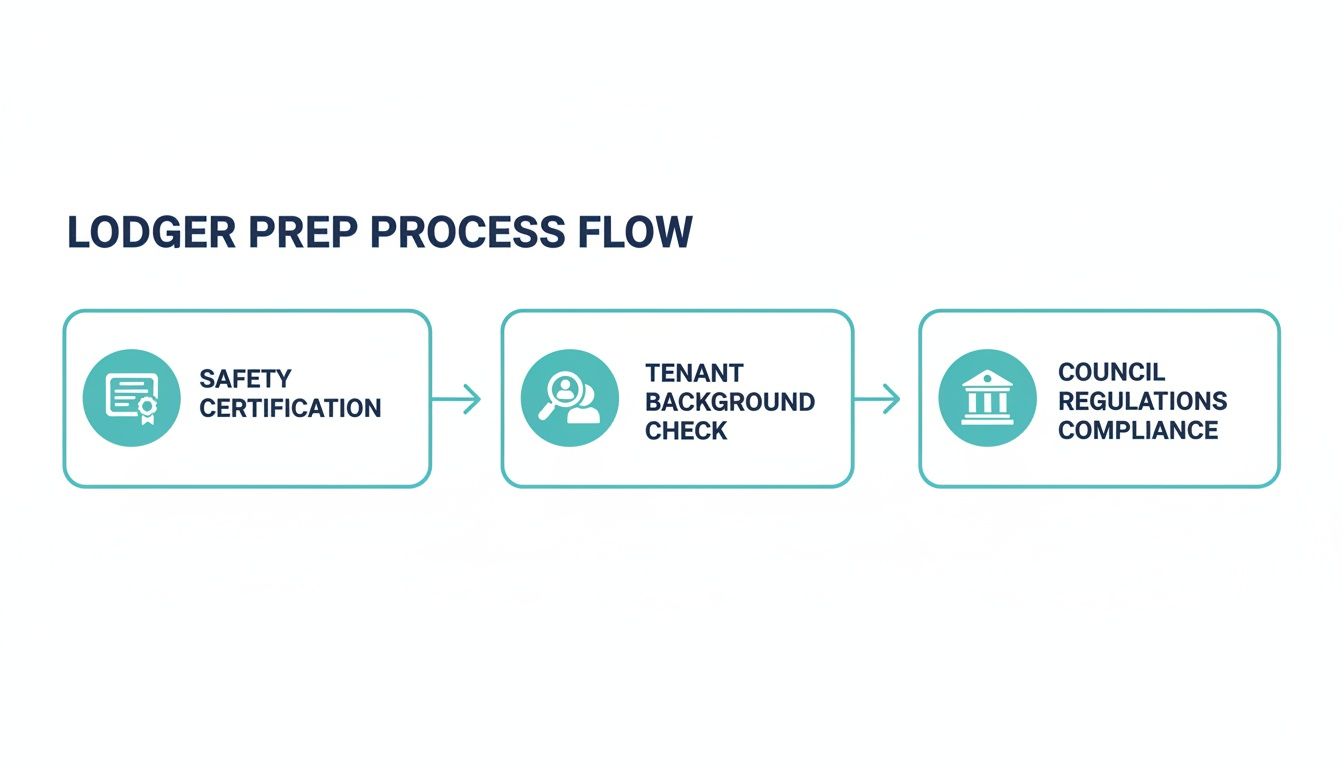
As you can see, getting your safety certificates sorted, understanding council rules, and planning for checks are the foundations of a successful let.
Finally, be upfront about your house rules. It is so much better to state your expectations clearly in the advert. Mention your policies on things like smoking, pets, or overnight guests. This honesty saves everyone a huge amount of time and ensures you only hear from people who are genuinely on board with the way your home runs.
How to Find and Screen Potential Lodgers
Once your advert is live, the enquiries should hopefully start rolling in. This is, without a doubt, the most critical part of the process—choosing the person who will be sharing your home. A proper vetting process that goes beyond a simple "gut feeling" is your best bet for finding someone you can comfortably and happily live with.
The aim here is to gather enough information to make a solid, informed decision. This isn't about being nosy; it’s about being practical and protecting the atmosphere of your home.
Managing Enquiries and Arranging Viewings
Those first interactions you have with potential lodgers are often very revealing. As you respond to messages, pay attention to the tone and clarity of their writing. A polite, well-written message is usually a good early sign of a responsible person.
When you find a promising candidate, the next step is a viewing. I'd always recommend having a quick chat on the phone first. It helps build a bit of rapport and lets you ask a few initial questions, which can save you from conducting a full viewing with someone who is clearly not the right fit. To make things easy, offer both in-person and virtual viewings.
A viewing is a two-way street. It’s as much about them seeing the room as it is about you getting a feel for their personality and character. Use this time to have a friendly, informal chat.
Key Questions to Ask During the Viewing
During the viewing itself, your conversation should be geared towards figuring out if your lifestyles will actually mesh. Remember, you're not just renting a room; you're gaining a housemate. Forget a formal interview—think of it as a compatibility check.
Here are a few essential questions to weave into the conversation naturally:
- Lifestyle and Routine: "What's your typical weekly routine like? Are you an early bird or more of a night owl?"
- Work Situation: "Do you work from home, and if so, what are your hours?" This is absolutely vital for understanding things like daytime noise and internet usage.
- Cleanliness: "How do you feel about a cleaning rota for shared spaces like the kitchen?" This opens the door to a straightforward chat about tidiness.
- Social Habits: "Do you tend to have friends over often, or are you generally quieter during the week?"
The point isn't to judge their answers but simply to check for a good match with your own household. If you treasure quiet evenings, someone who loves hosting midweek get-togethers probably isn't going to be the right person.
The Referencing and Vetting Process
Once you’ve met someone you feel good about, it's time for the formal checks. This crucial step transforms your gut feeling into a fact-based decision, giving you that all-important peace of mind. Never be tempted to skip referencing, even if someone seems absolutely perfect.
There are three main pillars to a solid referencing process.
- Previous Landlord Reference: Get in touch with their most recent landlord. Ask if they paid rent on time, looked after the property, and were a considerate person to have around.
- Employer Reference: This is a simple check to confirm their employment and that their income is what they say it is. It shows they have a stable way to pay the rent.
- Credit Check: A credit check gives you a snapshot of their financial responsibility. It will highlight any County Court Judgements (CCJs) or a history of non-payment, which are major red flags.
You can use dedicated online referencing services that handle all this for a small fee, which really simplifies things. By the end of these checks, you'll have a complete picture of your applicant, allowing you to offer them the room with confidence.
And don't forget, you can proactively find potential lodgers by browsing our extensive Rooms Wanted listings to connect with people actively looking in your area.
Managing a Smooth Move-In and Beyond

You’ve done the hard work of vetting and have found the right person to share your home. Fantastic. Now the focus shifts to making sure move-in day is a success and setting the stage for a positive living arrangement. A well-organised start really does pave the way for a respectful, stress-free experience for everyone.
It all starts with getting the right paperwork signed and sealed before a single box comes through the door. This isn't just bureaucracy; it's the foundation of a successful lodging arrangement, leaving no room for misunderstandings down the line.
The Lodger Agreement and Inventory
While you're not legally required to have a formal written agreement for a lodger, I can tell you from experience that proceeding without one is a huge mistake. A solid lodger agreement is your single most important document. It’s a clear, written reference point for both of you, setting out the ground rules and protecting you if disagreements crop up.
Your agreement doesn't need to be full of legal jargon. Keep it straightforward and easy to understand. It just needs to cover the essentials:
- Who: Full names of both you (the landlord) and the lodger.
- Where: The property address and which specific room is being let.
- When: The start date and the notice period for ending the arrangement (usually one month is standard).
- How Much: The rent amount, the date it's due, how it should be paid, and details of the deposit.
- House Rules: A simple summary of key expectations on things like guests, cleaning, smoking, and using shared spaces.
Alongside the agreement, an inventory is completely non-negotiable. This is simply a detailed record of the room's condition and all the items you're providing—from the mattress to the light fittings. Walk through the room together on move-in day, take dated photos of everything, and get both of you to sign the document. This simple step is your best defence against disputes over the deposit when your lodger eventually moves out.
A signed lodger agreement and a detailed, photo-backed inventory are not just formalities; they are the bedrock of a secure and professional arrangement. They prevent misunderstandings and provide a clear framework for resolving issues.
The Move-In Day Checklist
A bit of structure on move-in day helps your new lodger feel welcome and ensures all the practicalities are covered. A simple checklist can turn what could be a chaotic day into a smooth, positive experience.
To make sure nothing gets missed in the excitement, here's a handy checklist to run through on the day.
Move-In Day Checklist for Landlords
| Task | Details | Status |
|---|---|---|
| Sign Documents | Get the lodger agreement and inventory signed by both parties. Provide your lodger with a copy. | ☐ |
| Hand Over Keys | Provide a set of keys for the front door and their bedroom. Note how many keys were given. | ☐ |
| Collect First Month's Rent | Ensure the first month's rent and the deposit have been paid and cleared before handing over keys. | ☐ |
| Provide Safety Certificates | Give them copies of the current Gas Safety Certificate (CP12) and any other relevant safety docs. | ☐ |
| Home Tour & How-Tos | Walk them through the house, explaining how to use appliances like the washing machine and thermostat. | ☐ |
| Explain Practicalities | Cover important details like the Wi-Fi code, bin collection days, and any security alarm codes. | ☐ |
This organised approach shows you're a responsible landlord from the get-go and helps your lodger settle in quickly and feel right at home.
Ongoing Management and Ending the Agreement
Once your lodger is settled in, the key to a happy household is open and respectful communication. It’s always best to address small issues as they arise, rather than letting them fester and build into bigger problems. Often, a quick, friendly chat is all it takes to sort out minor niggles about cleaning or noise.
And remember to respect your lodger’s privacy. While you have the right to enter their room, it’s always good practice to give them reasonable notice unless there's a genuine emergency.
When the time comes for the arrangement to end, the process should be just as professional as the move-in. Your lodger needs to provide notice as laid out in your agreement. On their last day, conduct a final inspection of the room together, using the original inventory as your guide. If everything is in good order, minus fair wear and tear, you should return their deposit in full and promptly.
Common Questions About Letting a Room
Once you’ve got the main steps sorted for letting a room, it’s the smaller, specific questions that often pop up. Even seasoned homeowners can have lingering queries about the finer details. Here are some straightforward answers to the most common concerns we hear.
Do I Need Special Insurance to Let a Room?
Yes, and this is an absolute must-do. Your standard home insurance policy is almost certainly not designed for a paying lodger and won't cover you.
You must inform your insurer before anyone moves in. They’ll likely switch you to a more appropriate landlord or home-sharing policy. This is critical—it protects you from things like accidental damage your lodger might cause or any potential liability claims. If you keep your insurer in the dark, you risk voiding your entire policy, leaving you completely exposed if something goes wrong.
What if My Lodger Stops Paying Rent?
This is where being a live-in landlord gives you more straightforward options compared to a standard tenancy. The first port of call should always be a calm, reasonable conversation to understand what’s going on. Life happens.
If they still don’t pay, you can give them 'reasonable notice' to leave. This is usually one rental period – so if they pay monthly, you give one month's written notice. Because they are a lodger (an ‘excluded occupier’), you don't need a court order to evict them. If they haven’t left by the end of the notice period, you are legally allowed to change the locks while they are out. You do, however, have to make arrangements for them to retrieve their belongings.
This legal distinction between a lodger and a tenant is never more important than in situations like rent arrears. It gives you a much faster and more direct process to regain possession of the room in your own home.
Can I Set House Rules for My Lodger?
Absolutely, and we strongly recommend you do. Laying out clear expectations from the very beginning is the single best way to prevent misunderstandings and friction down the line.
Get these rules down in writing and make them a part of your lodger agreement. It’s a great way to cover the basics like:
- Cleaning expectations for shared spaces like the kitchen and bathroom.
- Your policy on having overnight guests.
- Acceptable noise levels, especially in the evenings.
- Rules around smoking or vaping inside.
Agreeing on these points upfront helps build a respectful and harmonious living arrangement for everyone.
Do I Have to Protect My Lodger's Deposit?
Legally speaking, no. As a live-in landlord, you aren't required to use a government-backed tenancy deposit protection (TDP) scheme. That rule applies to landlords letting out separate, self-contained properties.
That said, choosing to use one is still considered best practice. It immediately shows you're a fair and responsible homeowner. More importantly, it provides a clear, impartial process to handle any disputes over deductions when your lodger moves out, giving both of you peace of mind.
Ready to find the perfect person for your spare room? At Rooms For Let, we've been connecting homeowners with lodgers since 2000. Advertise your room and browse our 'Rooms Wanted' listings to find your ideal housemate quickly and safely. Start your journey by visiting https://www.roomsforlet.co.uk.