Renting a room in the UK for the first time? The whole process can feel a bit overwhelming. You'll be jumping onto platforms like SpareRoom or Rooms For Let, lining up viewings, and trying to get your head around the difference between being a 'lodger' and a 'tenant'.
Before you know it, you’re faced with paying a deposit and signing a formal agreement that sets out all your rights and responsibilities. It's a lot to take in.
Decoding the UK Room Rental Landscape
Jumping into the UK rental market can feel like trying to learn a completely new language. This guide is your translator. We'll start by exploring the real-world differences between being a lodger (renting a room in your landlord's home) versus a tenant in a house share.
It’s a distinction that goes far beyond just a title—it fundamentally affects your rights, your deposit protection, and even how much notice your landlord has to give you.
Lodger vs Tenant: Which One Are You?
The biggest question is this: will you be living with your landlord? A lodger shares the property with a resident landlord. In contrast, a tenant lives in a property where the landlord lives somewhere else.
This single factor changes your legal standing in a huge way.
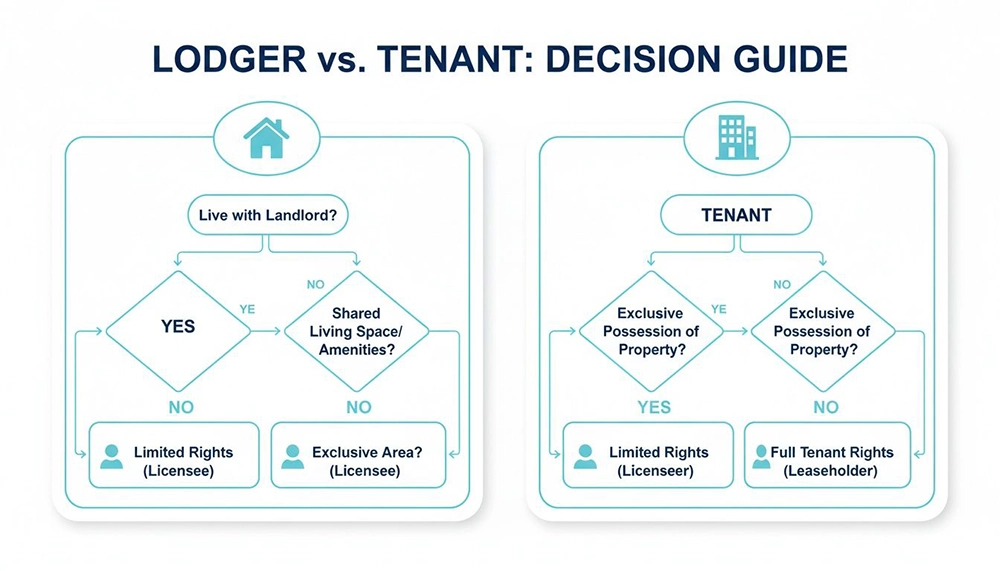
As the flowchart shows, tenants get far greater legal protections, like mandatory deposit protection schemes, whereas lodger arrangements are often a bit more informal.
Getting your head around these differences is the first step to knowing your rights and handling any issues that might pop up down the line. For more deep dives and practical tips, check out the other guides on our blog at https://www.roomsforlet.co.uk/blog/.
Lodger vs Tenant At a Glance
Understanding your legal standing is crucial. This table breaks down the key differences between being a lodger and a tenant in the UK, so you know exactly where you stand.
| Aspect | Lodger (Live-in Landlord) | Tenant (House Share) |
|---|---|---|
| Legal Status | Licensee with permission to occupy a room. Fewer legal rights. | Holds an Assured Shorthold Tenancy (AST) with robust legal protection. |
| Landlord's Home | Yes, you share the property with your landlord. | No, the landlord lives elsewhere. You share with other tenants. |
| Deposit Protection | Not legally required to be protected in a government scheme. | Mandatory. The landlord must protect it in a government-approved scheme. |
| Notice Period | Landlord only needs to give 'reasonable notice' (usually the rent period). | Landlord must follow a formal legal process and provide specific notice periods. |
| Eviction | Simpler process for the landlord; they can just end the agreement. | Landlord must obtain a court order to evict if the tenant doesn't leave. |
As you can see, the protections you have as a tenant are much stronger. Always clarify the living situation before you sign anything!
The Cost of Renting a Room
Budgeting is, of course, a massive part of your search, and prices swing wildly depending on where you're looking.
According to SpareRoom's latest Rental Index, the average cost of renting a room in the UK hit a new record high of £753 per month in October 2025. That’s a modest but significant 0.8% increase from the previous year.
This figure really highlights the constant pressure on the UK rental market, especially for people choosing the more affordable 'rent a room' route in a shared home.
When you're browsing listings, remember that even simple-looking ads have a lot going on behind the scenes. It's also interesting to see how properties are marketed these days; for example, understanding real estate drone photography in the UK gives you a glimpse into how some high-end properties are showcased, even if it's more common for sales.
Hopefully, this initial briefing gives you the confidence to kick off your search like you’ve done it a dozen times before.
Nailing Your Search Strategy for a Room to Rent
If you want to find a great room in the UK, you have to do more than just mindlessly scroll through listings. The rental market is competitive, so a smart, organised approach is your best bet for finding a place that actually fits your life and your budget.
Think of it less like browsing and more like a project. Instead of just seeing what pops up, you need to define what you're looking for, build a profile that makes you stand out, and get technology to do the heavy lifting for you.
Create a Standout Renter Profile
Let's be honest: landlords and potential housemates are looking for more than just someone who can cough up the rent on time. They want a person who's going to be a reliable, respectful, and generally decent addition to the home. Your online profile is your first impression, so make it a good one.
A great profile tells a little story. Don't just say your job title; briefly mention what you do and your typical work hours. Talk about your hobbies and what you get up to on the weekends—it helps them picture you as a person and see if you’ll fit the vibe of the house.
Here’s what to include for the best results:
- A friendly, clear photo of yourself (no sunglasses, please!).
- Your profession and your schedule (e.g., "9-5 office-based," "hybrid worker," "shift pattern").
- A quick, positive line about your living habits (e.g., "clean and considerate," "happy to socialise but also respect people's space").
- Your ideal move-in date and how long you're looking to stay.
A solid profile is your digital handshake. It signals that you're organised, serious about your search, and someone a landlord can trust. Putting in a bit of effort here makes a huge difference in getting your viewing requests accepted.
Master the Art of the Search Alert
In this market, the best rooms can be gone within hours. If you’re just manually checking websites once a day, you’re already falling behind. Setting up really specific search alerts is absolutely essential.
Don't just create an alert for "room in Manchester." You need to get granular to stop your inbox from being flooded with places that are a total mismatch.
Fine-tune your alerts with filters like these:
- Maximum Rent (always specify if this should include bills).
- Specific Postcodes or neighbourhoods you’re actually interested in.
- Must-Have Amenities like an en-suite, parking, or just a room big enough for a desk.
- Household Preferences such as "live-in landlord," "professionals only," or "no pets."
Platforms like SpareRoom, Rightmove, and our own nationwide room search tool all let you save these detailed searches. You'll get instant notifications straight to your phone or email, meaning you can be one of the first to respond. That head start is crucial.
Spotting Red Flags in an Advert
Learning to spot the warning signs in a listing will save you a world of time, hassle, and potential scams. Some adverts are deliberately vague, hiding issues behind glossy language or terrible photos.
Be immediately suspicious of listings that use generic, stock-style images, or photos that are blurry and dark. It either means the landlord is lazy or, worse, they’re hiding something. Vague descriptions that skip over details about housemates, bills, or the room itself are also a big red flag. A good landlord is transparent and gives you all the info upfront.
Turning Room Viewings into Your Advantage
Think of a room viewing as much more than a quick look around; it’s really a two-way interview. You’re checking out the property, the landlord, and the housemates, and you can be sure they’re checking you out too. To really get the most out of this crucial step, you need to go in with a plan that covers what to look for, what to ask, and how you come across.
The first few minutes are your chance to just absorb the general feel and condition of the place. Try to look beyond the immediate furniture and focus on the fundamentals. Are the common areas like the kitchen and living room generally clean and tidy? It doesn't need to be a show home, but a state of constant chaos can be a big clue about a lack of respect among the people living there.
Keep an eye out for the practical details. Can you spot any signs of damp, like flaky paint or a lingering musty smell? What’s the water pressure like in the shower? These seemingly small things can quickly become major daily frustrations.
Questions That Reveal the True House Culture
Once you’ve got a feel for the physical space, it’s time to dig a bit deeper into the house dynamics. The answers you get here will tell you far more than a simple tour ever could. This is where you uncover the unspoken rules and the day-to-day reality of what it’s like to live there.
Your goal is to ask questions that gently probe the house's social rhythm and expectations. This isn't about being nosy; it's about making sure you’re a good fit for them and, just as importantly, that they’re a good fit for you.
Try asking the current housemates or the landlord a few things like:
- "What's the general vibe on a typical weeknight? Is it more of a quiet, early-to-bed house, or is there usually something social going on?" This is a great way to gauge if their lifestyle will clash with yours.
- "How do you all handle the cleaning rota and buying shared supplies like toilet paper or cleaning products?" You’re looking for a clear, fair system. A vague answer like, "Oh, we just sort of do it," can be a red flag for future arguments.
- "What's the policy on having guests over, both during the day and overnight?" It's always best to know the house rules on this upfront to avoid any awkward situations down the line.
A viewing is your best chance to spot potential friction points before they become your problem. Asking direct but friendly questions about cleaning, guests, and noise levels helps you understand the house culture before you commit, preventing a world of future conflict.
Making a Memorable Impression
While you're busy gathering all this information, don't forget that you're also being sized up. You want to present yourself as the ideal housemate: responsible, friendly, and low-drama. This isn't about putting on an act, but simply highlighting your best qualities as a potential resident.
It sounds obvious, but make sure you arrive on time, be polite, and show genuine interest in both the property and the people. Landlords and housemates aren't just looking for someone who can pay the rent; they want someone who will contribute positively to the home.
Come prepared with your own information ready to go. Casually mention your job, your typical schedule, and that you're a clean and considerate person. Having references and proof of income ready to share can signal that you’re organised and serious. Making the process easy for them immediately puts you ahead of other candidates and shows you’d be a hassle-free person to live with.
Getting to Grips with Deposits and Agreements

You’ve found the perfect room—congratulations! Now for the final hurdles: the deposit and the rental agreement. This paperwork can feel a bit daunting, but it's genuinely your best friend in this process, protecting your money and your rights before you even get the keys.
You'll most likely be asked to sign one of two types of contracts. If you’re renting a room in a shared house with other tenants, it will probably be an Assured Shorthold Tenancy (AST). If you’re moving in with the homeowner (a resident landlord), it’s usually a lodger agreement. Both are legally binding, but an AST gives you far more legal protection, especially when it comes to your deposit.
Your Deposit Must Be Protected
If you have an AST, this is non-negotiable: your landlord is legally required to protect your deposit in a government-backed Tenancy Deposit Scheme (TDP). They must do this within 30 days of you handing over the money.
If a landlord ever suggests just keeping it in their personal bank account to "keep things simple," it's a massive red flag. Walk away.
These schemes are there to hold your money independently and fairly, making sure it can’t be unreasonably kept when your tenancy ends. The three government-approved schemes in England and Wales are:
- The Deposit Protection Service
- MyDeposits
- Tenancy Deposit Scheme
Once paid, your landlord has to give you official paperwork confirming exactly which scheme your money is in. This protection is a cornerstone of your rights as a tenant in the UK, so make sure it happens. The schemes also offer a free dispute resolution service if you disagree with any deductions the landlord wants to make when you move out.
Don't Skim, Scrutinise Your Agreement
Never, ever sign an agreement without reading every single word. It might be tedious, but paying close attention to certain clauses will define your flexibility, privacy, and responsibilities for the entire time you live there.
The following table breaks down the essential clauses you should always look for in your tenancy or lodger agreement. Understanding these terms before you sign is crucial for a smooth and fair rental experience.
Essential Clauses in Your Rental Agreement
| Clause | What It Means | Why It Matters |
|---|---|---|
| Break Clause | A term that allows either you or the landlord to end a fixed-term tenancy early, usually after the first six months. | Without this, you are legally tied in for the full term, even if your circumstances change. It offers vital flexibility. |
| Landlord Access | This clause specifies how much notice a landlord must give before entering your private room. | It protects your privacy. The standard and legally required notice for tenants is 24 hours' written notice. |
| Rent Review Clause | Outlines if, when, and by how much your landlord can increase the rent during the tenancy. | This prevents unexpected and unreasonable rent hikes. The terms should be clear and fair. |
Understanding these details empowers you to sign on the dotted line with confidence. Getting ahead of the game shows you're an organised and serious applicant. You can easily register your details as a prospective tenant, which helps landlords see you're ready to go when the right place comes along.
How to Spot and Avoid Common Rental Scams
When you’re trying to find a room in a competitive market, it’s all too easy to feel pressured into making a snap decision. That sense of urgency is exactly what scammers prey on. Protecting yourself as you rent a room in the UK is all about learning to spot the warning signs before you get emotionally or financially tangled up.
A classic and alarmingly frequent trick is the 'landlord abroad' scam. The story has a familiar ring to it: they claim to be out of the country for work or family reasons and, conveniently, can't show you the room in person.
They’ll often build a friendly rapport over email, then ask you to transfer a deposit to "secure" the room, promising to courier the keys over afterwards. Let's be clear: never send money for a property you haven't seen in person with a legitimate landlord or agent.
The Tell-Tale Signs of a Fraudulent Listing
Scammers are lazy. They often create fake listings using photos stolen from genuine property websites or even from Airbnb. The rent will almost always be suspiciously low for the area and the quality of the room shown. This 'too good to be true' price isn't a bargain; it's bait, designed to attract a flood of interest and manufacture a false sense of urgency.
Keep an eye out for these red flags, both in the advert and in your communications:
- Pressure to act immediately: Scammers will spin tales about other people being interested and insist you must pay a deposit right now to avoid losing out. Real landlords have processes; they don't rush you into bank transfers.
- Vague or evasive answers: Ask specific questions about the property, like the council tax band or who the current housemates are. If you get vague, slippery answers, be suspicious.
- Unusual payment requests: No legitimate landlord will ask you to pay via Western Union, MoneyGram, or cryptocurrency. They use standard UK bank transfers or secure platform payments, nothing else.
The single most important rule is this: never pay any money before you have viewed the property in person and met the landlord or a verified letting agent. A flat-out refusal to allow a viewing is the biggest red flag of them all.
Beyond Outright Financial Scams
Not all rental problems are illegal scams, but they can still cost you a huge amount of time, money, and stress. Be particularly cautious of vague agreements about bills. If the landlord says bills are "shared," you need to know exactly how. Always get it in writing how utilities, council tax, and other shared costs are calculated and paid.
Unresponsive landlords are another major headache. Before you sign anything, try to have a quick, quiet word with the current tenants. Ask them about their experience with getting repairs done.
A little bit of due diligence at this stage can save you months of frustration trying to get a leaky tap or a broken boiler fixed down the line. Your search to rent a room in the UK should be secure and transparent from the very beginning.
Your Top Questions About Renting a Room

When you're looking for a room, a few key questions always seem to pop up. Let's get them answered so you can move forward with total confidence.
What Is the Right to Rent Check in the UK?
Put simply, the Right to Rent check is a mandatory process where landlords must confirm you have the legal right to rent property in the UK. Don't be surprised when you're asked for original documents, like your passport or visa, for them to inspect in person.
This isn’t just red tape; it's a legal requirement. Landlords face hefty fines if they skip this, so expect it to be a standard and non-negotiable part of the process for everyone before a tenancy officially begins.
Can a Landlord Increase My Rent Whenever They Want?
Absolutely not. Rent increases are tightly regulated and can't just happen on a whim. The specific rules hinge on your tenancy type and what’s written in your agreement.
- Fixed-Term Tenancy: During the fixed term, your rent is locked in unless there's a specific 'rent review clause' in your contract, or if you both mutually agree to an increase.
- Rolling Tenancy: For periodic tenancies (month-to-month), landlords must give you at least one month's notice. The proposed increase also has to be fair and in line with local market rates.
- Lodgers: If you're a lodger living with your landlord, the terms are more flexible. Everything depends on what you both agreed to in your lodger agreement from the outset.
A landlord cannot simply demand more money without following the proper procedure. Knowing which type of tenancy you have is key to understanding your rights regarding rent increases.
What Happens to My Deposit at the End of the Tenancy?
Understanding how your deposit is handled is one of the most important things for any renter. If you have an Assured Shorthold Tenancy (the most common type for flatshares), your deposit must be protected in a government-approved scheme. This is a crucial safeguard for your money.
When your tenancy ends, the landlord can only propose deductions for specific things like damage or unpaid rent, and you have to agree to them. If you can't resolve a dispute, the deposit scheme offers a free and impartial resolution service to make the final call.
It's a different story for lodgers, though. Their deposits aren't legally required to be protected, which makes having a clear, written agreement about its return absolutely essential from day one.
Ready to find your perfect room? With thousands of listings across the UK and instant alerts, Rooms For Let makes your search simple and secure. Start browsing today and find your next home at https://www.roomsforlet.co.uk.