Big changes are coming to the private rental market in the UK, and they’re all wrapped up in a landmark piece of legislation: the Renters Rights Bill 2025. This isn't just a minor tweak to the rules; it's a fundamental overhaul designed to create a fairer, more secure system for tenants, representing one of the biggest shifts in the landlord-tenant relationship we’ve seen in years.
What the Renters Rights Bill 2025 Means for You
Think of the Renters Rights Bill 2025 as a major system update for how renting works in the UK. It’s out with the old, sometimes confusing rules and in with a modern framework that gives tenants much-needed stability and makes landlords' responsibilities crystal clear. At its heart, the legislation is about rebalancing the scales, moving the focus towards long-term security and higher professional standards.
For decades, the rental landscape has been shaped by fixed-term contracts and the often-controversial Section 21 ‘no-fault’ eviction process. This new Bill takes that old structure apart, building a new one based on three core pillars of reform that will touch millions of renters and landlords across the country.
The Core Pillars of Reform
The changes coming in are substantial, affecting everything from how tenancy agreements are structured to the way disputes are handled. Getting your head around these key areas is absolutely essential for anyone involved in renting property.
- Abolition of Section 21 Evictions: This is the big one. The Bill gets rid of 'no-fault' evictions. From now on, landlords will need to provide a valid, evidenced reason if they want to regain possession of their property.
- Introduction of Periodic Tenancies: Say goodbye to fixed-term contracts. All new tenancies will be periodic from day one, rolling on a monthly basis. This gives tenants more flexibility to move when they need to, without being locked into a renewal.
- Creation of a Landlord Ombudsman: A new, independent body is being set up to settle disputes between landlords and tenants. The idea is to find fair and quick resolutions, saving everyone the stress and expense of going to court.
The primary goal here is to professionalise the private rented sector. By bringing in a clear set of rules and a mandatory Ombudsman, the Bill aims to hold all landlords to a higher standard, making sure properties are managed properly and disagreements are sorted out justly.
A More Secure and Transparent System
On top of these changes, the legislation will also launch a national Property Portal. This will be a central database where every landlord must register themselves and their properties. It’s a simple move, but one that creates a huge amount of transparency and gives local councils a powerful tool to identify and tackle rogue landlords.
While getting to grips with your new rights is vital, it’s also a good time to think about practical improvements for your rental home. You might consider modern security options like smart locks designed for apartment dwellers to give you extra peace of mind. For landlords, keeping up with these reforms isn't just good practice—it's a legal necessity. Our guides on the https://www.roomsforlet.co.uk/blog/ are here to help you navigate your new obligations and keep your tenancies running smoothly.
Before we dive into the details, the table below gives a quick summary of the most significant changes.
Key Changes from the Renters Rights Bill 2025
| Legislative Change | What It Means for Landlords and Tenants |
|---|---|
| End of Section 21 Evictions | Landlords can no longer evict tenants without a specific reason. Tenants gain significant security, knowing they can't be asked to leave without cause. |
| Rolling Periodic Tenancies | Fixed-term contracts are replaced by monthly rolling agreements, giving tenants the flexibility to end a tenancy with two months' notice. |
| New Landlord Ombudsman | A mandatory, independent body will resolve disputes, offering a cheaper and faster alternative to court proceedings for both parties. |
| National Property Portal | Landlords must register themselves and their properties on a central database, increasing transparency and helping councils enforce standards. |
This table provides a snapshot of the new landscape. Now, let's explore what each of these changes means for you in more detail.
The End of Section 21 and New Grounds for Eviction
The single biggest shake-up from the Renters Rights Bill 2025 is the total removal of the Section 21 notice, what everyone knows as the ‘no-fault’ eviction. For decades, this was the go-to tool for landlords wanting to regain their property at the end of a tenancy, and they didn't have to give a reason. While it offered flexibility, it left tenants in a state of constant uncertainty, living with the possibility of being told to leave with just two months' notice.
That’s all changing. The new law throws out the 'no-fault' model completely, replacing it with a system where a landlord must have a valid, legal reason to end a tenancy. It’s a huge shift designed to give tenants the security to actually put down roots without the nagging worry of a sudden move. For landlords, particularly those running HMOs or letting out rooms, it means getting to grips with a new, more structured way of getting your property back.
Understanding the New Section 8 Grounds
With Section 21 gone, the old Section 8 notice is stepping up. It’s been beefed up and expanded to become the only legal route to eviction. The best way to think of the new Section 8 is as a clear rulebook. It lists every legitimate reason a landlord can use to end a tenancy, and these 'grounds for possession' are now much more detailed.
The updated grounds cover a whole host of situations, giving landlords clear pathways when they have a genuine need to take back their property. For instance, there are now much clearer rules for landlords who want to sell up, or for those who need to move themselves or a close relative into the home.
The government knew this reform was needed, especially after seeing some alarming trends. In the run-up to the Renters' Rights Bill getting Royal Assent on 27 October 2025, the UK saw a massive spike in no-fault evictions. A staggering 30,729 households in England were hit with a Section 21 notice since July 2024. These figures from the Ministry of Justice paint a stark picture and show exactly why a more stable system was so urgently needed. You can discover more insights about eviction trends from Crisis UK.
The flowchart below gives a good visual breakdown of who will be affected by these sweeping changes.
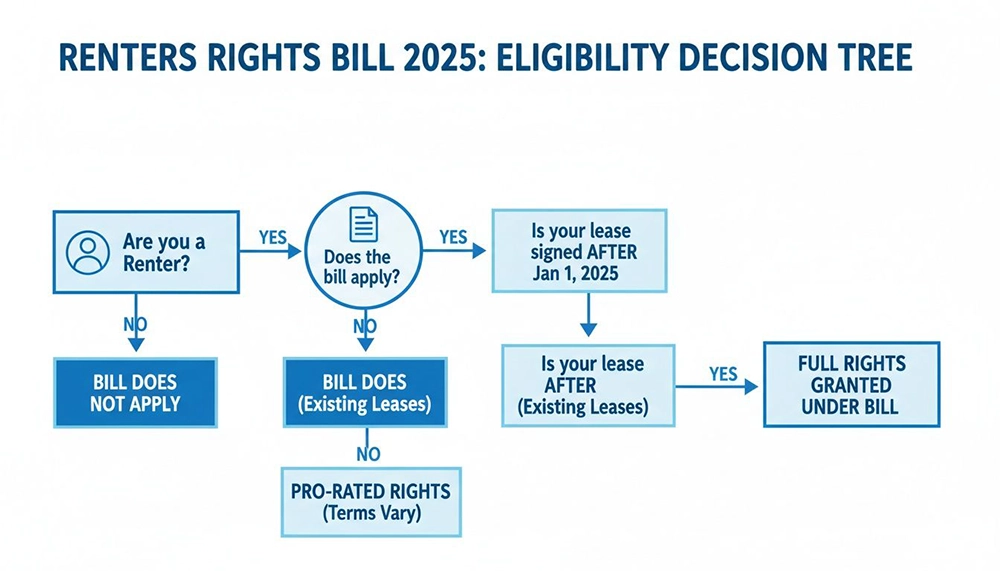
As the decision tree makes clear, if you're renting from a private landlord, this new bill will almost certainly apply to your tenancy.
How the New Eviction Process Works
Getting your head around the new eviction process means knowing the valid grounds inside-out, along with the evidence you'll need to back them up. You can't just decide you want the property back anymore; you have to prove your situation fits one of the updated Section 8 grounds.
Here’s a simple breakdown of the new drill for landlords:
Identify a Valid Ground: First, you have to pinpoint which of the new Section 8 grounds applies. Is it serious rent arrears? Do you plan to sell the property? Has the tenant breached their agreement?
Gather Sufficient Evidence: Every ground has its own proof requirements. For example, if you're selling, you might need to show a listing with an estate agent or a memorandum of sale as evidence.
Serve the Correct Notice: You must issue a proper Section 8 notice, clearly stating the ground(s) you're using and giving the right amount of notice, which now varies depending on the reason.
Key Takeaway: The burden of proof is now squarely on the landlord's shoulders. Keeping meticulous records and having a solid grasp of the new grounds isn't just good practice—it's absolutely essential to stay compliant and successfully regain possession.
New Grounds for Landlords Selling or Moving In
Two of the most crucial new grounds bring much-needed clarity for landlords who need their property back for personal reasons. They’ve been designed to strike a fair balance between the landlord's rights and the tenant's security.
Intention to Sell: A landlord can now regain possession if they plan to sell. Crucially, though, this ground can't be used within the first year of a tenancy, which stops it from being used as an easy loophole. You'll need to provide evidence that you genuinely intend to sell.
Landlord or Family Member Moving In: If you or a close family member needs to live in the property as your main home, that’s now a valid reason. Just like the selling ground, you can't use this in the first year and you have to follow a strict legal process.
These changes are at the very heart of the Renters Rights Bill 2025, fundamentally redrawing the map for how tenancies are ended in the UK.
Navigating New Rules for Rent Increases

The Renters Rights Bill 2025 is set to completely change the financial rhythm of tenancies in the UK. We're moving away from the familiar fixed-term model and into a more flexible future. One of the biggest changes is the end of the Assured Shorthold Tenancy (AST) as we know it. From now on, every new tenancy will start as a periodic agreement, rolling month-to-month right from day one.
Think of it like swapping a rigid 12-month phone contract for a flexible monthly plan. For tenants, this brings a huge amount of freedom to move on with just two months' notice, taking away the pressure of a long-term commitment. For landlords, it means a more continuous rental income without the admin headache of chasing renewals every six or twelve months. This new structure is the foundation for a completely new way of handling rent adjustments.
The New Standard for Rent Reviews
Under the new law, rent increases are becoming a much more formal and transparent affair. Landlords will only be allowed to increase the rent once per year, and they must use a specific legal document called a Section 13 notice. This notice has to give tenants at least two months' warning before the new rent comes into effect.
This structured approach is all about getting rid of sudden, out-of-the-blue rent hikes. It gives tenants the clarity and time they need to budget properly. The days of informal negotiations or rent rises slipped into renewal contracts are over, replaced by a clear, standardised procedure for everyone.
The need for this reform is crystal clear when you look at recent market trends. While average monthly private rents in the UK shot up by 8.1% in the 12 months to February 2025, a separate survey found that a staggering 26% of tenants reported increases of over 20%. The Bill is designed to stop these sharp hikes by limiting reviews to once a year and giving tenants new powers to push back. You can read the full research about these rent control statistics to get a better sense of the market pressures.
Justifying Increases and Challenging Unfair Hikes
A crucial part of the renters rights bill 2025 is that landlords must now be ready to justify any proposed rent increase. The new rent must be fair and in line with current market rates for similar properties in the same area. Simply wanting to increase profits won't cut it anymore; the figure needs to be backed by solid evidence.
This is where the tenant's new power really comes into play. If a tenant gets a Section 13 notice for a rent they believe is unfairly high, they can now challenge it by applying to a First-tier Tribunal. This independent body will look at the case and decide on a fair market rent based on the evidence from both the landlord and the tenant.
Key Takeaway: The tribunal's decision is final and binding. If it decides the market rent is lower than what the landlord asked for, that lower figure will be set. Crucially, the tribunal cannot set a rent that is higher than what the landlord originally requested.
This new system introduces a vital check and balance. Early polls suggest that 22% of tenants are planning to use their new right to appeal, which could lead to a significant number of tribunal cases from May 2026 onwards.
Practical Steps for Landlords and Tenants
Getting used to these new rules means a bit of preparation is needed on both sides. Landlords will have to tweak their financial planning, while tenants need to get to grips with how to protect their interests.
For Landlords:
- Do Your Homework: Before sending a Section 13 notice, research rent prices for similar properties in your local area. Save dated screenshots from portals like Rightmove or Zoopla to use as evidence.
- Keep Good Records: Document everything. Keep records of any improvements you've made to the property that could justify a higher rent.
- Get Your Timing Right: Make sure you give the full two months' notice and only try to increase the rent once in any 12-month period.
For Tenants:
- Know Your Local Market: If you get a rent increase notice, check what similar properties are going for in your area.
- Understand the Process: Get familiar with how to apply to the First-tier Tribunal if you think the increase is unreasonable.
- Talk First: Before jumping straight to a tribunal, it’s often worth having a conversation with your landlord to share your research and discuss your concerns.
Ultimately, this reformed process aims to create a fairer and more predictable rental market, making sure that any price changes are reasonable and based on real-world market values.
How to Stay Compliant with New Landlord Obligations

The Renters Rights Bill 2025 is set to usher in a new era of landlord accountability, giving local councils some serious teeth to enforce the rules. Getting compliant isn't just about ticking boxes to avoid fines; it's about adapting to a rental market that's becoming more professional and transparent by the day.
At the heart of this shift are three core pillars of compliance. Think of these not as optional extras, but as the fundamental building blocks of your legal duties as a landlord from now on.
The three key pillars are:
- Mandatory Property Portal Registration: Every landlord and all of their properties must be registered on a new national database.
- Compulsory Landlord Ombudsman Membership: You'll be required to join a new, independent ombudsman scheme to handle tenant disputes.
- Adherence to the Decent Homes Standard: All rental properties must meet a clear, enforceable standard for quality and safety.
The New Property Portal and Ombudsman
Your first port of call for compliance will be registering on the new national Property Portal. In simple terms, this is a central database of landlords and their properties, created to bring some much-needed transparency to the sector. For local councils, it's a game-changer, giving them a clear view of who's operating in their area so they can target rogue landlords effectively.
If you manage more specialised properties, like HMO licensed properties suitable for students, you'll need to pay close attention to how these new registration rules apply to your portfolio.
At the same time, every landlord must join the new Landlord Ombudsman scheme. This body will be the independent referee for disagreements you can't resolve directly with your tenants. It's designed to be a quicker, cheaper alternative to going through the courts, funded by landlords through membership fees. This new system really highlights how crucial it is to maintain clear, professional communication with your tenants from the get-go.
Key Takeaway: The Property Portal and the Ombudsman are designed to work in tandem. The portal creates the official record of who is letting property, while the ombudsman provides a structured path for tenants to get help when things go wrong, ensuring every landlord is held accountable.
Ending Discrimination and Embracing Fair Lettings
One of the most significant changes—and one many have been waiting for—is the ban on blanket discrimination against certain tenant groups. Landlords and their agents can no longer have policies that automatically reject applications from tenants with children or those receiving benefits.
This doesn't take away your right to run affordability checks. What it does mean is that your decisions must be based on an individual's financial situation, not where their income comes from.
This requires an immediate review of how you advertise your properties and vet potential tenants. You need to ensure your listings are inclusive and welcoming. If you need a hand creating compliant and effective listings to find great tenants, it's worth using a platform designed for the job; you can find more information when you register as a landlord on our site.
The Financial Cost of Non-Compliance
The government has been crystal clear: these new rules are not optional. Local councils have been armed with serious powers to make sure everyone toes the line.
Starting from 27 December 2025, the Renters' Rights Act 2025 introduces hefty civil penalties of up to £7,000 for more minor breaches. For more serious offences, the fines can jump to £40,000—or even be unlimited in the worst cases.
On top of that, the Act expands Rent Repayment Orders. This allows tenants and councils to claim back up to 24 months' rent from a non-compliant landlord, which is double the previous limit. With Stage 1 of the rollout requiring all private landlords to be on the national database by late 2026, there’s no time to waste. Understanding these obligations and getting prepared is absolutely vital.
Actionable Steps for Landlords and Tenants
Knowing the theory behind the Renters Rights Bill 2025 is one thing, but actually putting it into practice is what really counts. This legislation isn’t just a minor tweak; it demands a real shift in how landlords, managers, and tenants approach the rental process. It's time to get practical and look at the clear, concrete steps you need to take to stay compliant and build better rental relationships.
Whether you're a landlord with one property, an HMO manager juggling multiple occupants, or a tenant wanting to understand your new protections, getting ahead of these changes is smart. Being proactive now will save you a world of stress and potential legal headaches down the road.
Your Essential Landlord Checklist
For landlords, the first job is a top-to-bottom review of your paperwork and procedures. Let's be blunt: the old way of doing things is no longer fit for purpose. Updating your approach isn't optional, it's essential.
Here’s where you need to focus your attention right away:
- Review Your Tenancy Agreements: Your current AST templates are now history. You must switch to agreements that are built for the new periodic tenancy model. That means removing any clauses about fixed terms or specific break clauses, as they simply won't be valid anymore.
- Update Your Advertising Copy: Go through every single one of your property listings, on every platform. You have to strip out any language that could be seen as discriminatory. Phrases like "no DSS," "professionals only," or "no children" are out. Your adverts need to be inclusive, focusing on the property's features, not who you think should live there.
- Formalise Your Rent Increase Process: Those informal chats about raising the rent are a thing of the past. From now on, your process must rigidly follow the Section 13 notice procedure. This means only one increase per year, and you must give a full two months' notice. Start gathering market evidence now to justify any future adjustments.
- Master the New Section 8 Grounds: With Section 21 gone, the updated Section 8 grounds are your new toolkit. You need to understand them inside and out. It's a good idea to create a system for gathering the specific evidence needed for each ground, whether it's for rent arrears, anti-social behaviour, or because you genuinely need to sell the property.
Specific Guidance for HMO Managers
Managing a House in Multiple Occupation (HMO) already comes with its own set of challenges, especially with tenant turnover and the dynamics of shared living. The end of Section 21 means you'll need a much more strategic game plan for managing your properties.
The biggest change for HMO managers is the shift from a reactive eviction model to proactive tenancy management. Your success now hinges on crystal-clear communication and knowing how to use the strengthened Section 8 grounds to solve problems before they spiral out of control.
Think about putting these actions in place for your HMOs:
- Strengthen Your Vetting Process: Since evictions are becoming more complex, getting the right mix of people in the first place is more critical than ever. Your referencing process should go deeper than just a credit check; you need to assess a person's suitability for a shared living environment.
- Use the Anti-Social Behaviour Ground Effectively: In a shared house, one person's behaviour can ruin things for everyone. The updated Section 8 grounds for anti-social behaviour (Ground 14) and nuisance (Ground 7A) are now your go-to tools. You absolutely must keep a detailed log of all incidents—dates, times, what happened, and statements from other tenants—to build a solid case if you need it.
- Manage Tenant Turnover Carefully: When one tenant hands in their two months' notice, you need a slick process for finding their replacement. Make sure your tenancy agreements for individual rooms are rock-solid and that all tenants are clear on the house rules to keep things harmonious.
Empowering Tenants with New Rights
For tenants, the Renters Rights Bill 2025 brings a level of security and empowerment we haven't seen before. The key is knowing how to use these new rights to make sure you're treated fairly and your home is secure.
Here’s how you can take action:
- Challenge Unfair Rent Hikes: If you get a Section 13 notice for a rent increase that you feel is way above the local market rate, you now have the power to challenge it at a First-tier Tribunal. Do your homework—gather evidence of what similar properties in your neighbourhood are renting for to build your case.
- Understand the Eviction Process: You can no longer be asked to leave your home without a legitimate reason. If you receive a Section 8 notice, check carefully that the landlord has provided a valid ground and given you the correct notice period. If you believe the eviction is unfair, you have the right to defend your position in court.
- Know Your Right to a Secure Home: The Bill gives you more power to demand a safe and decent place to live. If your landlord is ignoring serious issues like damp or mould, you can now turn to the Landlord Ombudsman for help, without that lingering fear of being evicted in retaliation.
By getting to grips with these practical steps, everyone involved in the rental sector can navigate this new landscape. If you're a tenant looking for your next home under these improved conditions, you can start by exploring your options and registering for property alerts to find a room that fits your needs.
Got Questions About the Renters Rights Bill? We’ve Got Answers.
Any big change in the law is bound to stir up questions, and the Renters Rights Bill 2025 is no different. Landlords and tenants across the country are trying to get their heads around what these reforms will actually mean for them day-to-day. This final section cuts through the noise to tackle the most common questions we're hearing.
Think of this as your quick-fire FAQ. It’s here to clear up any lingering confusion without you having to trawl back through the whole guide. We’ll cover everything from the all-important start dates to how the new rules affect live-in landlords.
When Do These Changes Actually Kick In?
This is the big one, and the short answer is: not all at once. The government is planning a phased rollout to give everyone a chance to prepare after the Bill gets its final approval, known as Royal Assent.
A gradual introduction makes sense, giving the industry time to adapt. Here’s the timeline we’re expecting:
- Phase One (Around 6 months after Royal Assent): The ban on Section 21 evictions and the shift to rolling periodic tenancies will kick in for all new tenancies first.
- Phase Two (Around 12-18 months later): All existing tenancies will then be brought into the new system.
- Ongoing Rollout: The new mandatory Landlord Portal and the Property Ombudsman scheme will be launched and scaled up during this period.
It’s absolutely crucial to keep an eye on official government announcements for the final, confirmed dates. The best thing you can do is start getting your paperwork and processes in order now, rather than being caught in a last-minute scramble.
I Rent a Spare Room in My Home. Does This Bill Affect Me?
This is a really important distinction. Most of the Bill’s major changes, like the end of Section 21, are aimed at Assured Shorthold Tenancies (ASTs). But if you’re a resident landlord and you share living spaces like a kitchen or bathroom with the person renting a room, the situation is completely different.
In that scenario, the person renting from you is legally considered a ‘lodger’ (or an 'excluded occupier'), not a tenant. Lodger agreements aren't covered by the main parts of the Bill. You'll still be able to end a lodging agreement by giving 'reasonable notice'—which is usually just one rental period.
Important Note: To keep this legal separation clear, you must use a proper lodger agreement, not a tenancy agreement. While the big eviction changes won't apply to you, you'll still need to follow general principles like non-discriminatory advertising.
How Can I Prove a Rent Increase Is Fair?
Under the new system, if a tenant challenges a rent increase, you'll need solid evidence to back it up at a tribunal. Simply stating what you think the property is worth won’t cut it. You have to prove it matches the local market rate.
Here’s how to build a solid case:
- Collect Comparables: Find at least 3-5 similar properties currently being advertised in your immediate area on the main rental websites. Save dated screenshots of the listings, making sure they show the property's size, condition, and location.
- Get a Professional Valuation: A local letting agent can give you a formal rental valuation letter, which is powerful, independent evidence.
- Document Your Upgrades: Keep a clear record of any significant improvements you’ve made to the property—like a new kitchen or bathroom—that genuinely increase its value and justify a higher rent.
Having this evidence ready to go before you issue the Section 13 notice for a rent increase will put you on much firmer ground.
What Happens if My Tenant Refuses to Leave After a Valid Section 8 Notice?
This is a legitimate worry for many landlords. If you’ve served a valid Section 8 notice on legitimate grounds (like serious rent arrears) and the tenant doesn't move out, you cannot take matters into your own hands. Changing the locks or trying to remove them yourself is an illegal eviction, with severe penalties.
You have to follow the correct legal process. The next step is to apply to the court for a possession order. If the judge agrees your grounds for eviction are valid, they will grant the order.
If the tenant still doesn't leave, your final step is to apply for a warrant of possession. This authorises court-appointed bailiffs to carry out the eviction legally and safely. Sticking to this process is the only lawful way to regain control of your property.
Finding the right tenant or the perfect room is always easier with a platform built for the UK rental market. Rooms For Let has been connecting landlords and tenants for over two decades, making it simple to advertise a spare room or find your next home share. Whether you're an HMO manager, a homeowner with a room to spare, or a tenant on the move, our tools are designed to help. Visit Rooms For Let today to see how easy renting can be.