Let's be honest, a simple handshake deal is never going to cut it when you're renting out a room. Your best tool for a smooth, conflict-free arrangement is a clear, well-written room rental agreement – often called a lodger agreement here in the UK. It’s all about setting clear expectations for everyone involved, right from day one.
Why a Solid Room Rental Agreement Is Essential
Staring at a blank page and wondering where on earth to begin can feel a bit daunting. But trust me, relying on an informal chat is a massive risk for both live-in landlords and lodgers. This isn't about being overly formal; it’s about creating genuine clarity and security for everyone sharing the property.
A proper agreement protects you from the most common arguments over things like late rent, deposit deductions, or notice periods. It takes all those vague assumptions and turns them into concrete, agreed-upon terms that you can both refer back to. This is absolutely crucial, whether you're a homeowner using the government's Rent a Room scheme or a landlord managing a House in Multiple Occupation (HMO).
The Growing Need For Formal Agreements
The sheer size of the UK's rental market just amplifies how important a formal document is. The private rented sector is a huge part of our housing landscape, with recent data showing around 5.5 million dwellings in Great Britain fall into this category.
With over 20% of households in England and Wales now renting privately, the need for clear, legally sound agreements has never been more critical. You can dig into the numbers yourself over on the ONS website. This growing reliance on private rentals means more people are living in shared homes, making a solid room rental agreement template an indispensable tool for a respectful living arrangement.
Before we dive into the nitty-gritty of creating your own agreement, here’s a quick overview of the key pieces of the puzzle we'll be covering.
Key Components of a UK Room Rental Agreement
This table summarises the essential elements that every room rental agreement needs to be effective and legally sound.
| Component | Why It's Crucial | Where to Find Guidance in This Article |
|---|---|---|
| Landlord & Lodger Details | Identifies all parties involved, ensuring legal clarity. | Coming up in our template section |
| Rent & Deposit Terms | Prevents disputes over payment dates, amounts, and deposit return. | Detailed breakdown in 'The Essentials' |
| House Rules & Obligations | Sets clear expectations for day-to-day living (guests, cleaning, etc.). | Covered in 'Customising Your Agreement' |
| Notice Periods & Termination | Defines the process for ending the agreement fairly for both sides. | Explained under 'The Essentials' |
| Signatures | Makes the document legally binding and confirms mutual consent. | Guidance in 'Finalising the Agreement' |
Having these components locked down provides a framework for a positive and professional relationship from the get-go.
Key Benefits Of a Written Agreement
A well-drafted agreement offers a ton of advantages that go way beyond just stating the rent. Think of it as a proactive measure to prevent future headaches.
- Sets Clear Expectations: It spells out everything from cleaning duties and guest policies to how the utility bills will be split. No more guessing games.
- Provides Legal Protection: A signed document is legally binding proof of the terms. If a dispute does end up happening, this piece of paper is vital.
- Defines Responsibilities: It clearly separates the landlord's duties (like fixing the boiler) from the lodger's duties (like looking after the property).
- Ensures Financial Clarity: It specifies the rent due date, how you want to be paid, and the exact conditions for getting the security deposit back in full.
By putting everything in writing, you create a single source of truth that wipes out any ambiguity. It’s the most effective step you can take to build a harmonious and professional landlord-lodger relationship right from the start.
Get Your Free UK Room Rental Agreement Template
Right then, here’s what you came for: a solid, customisable room rental agreement template. We’ve set it up in both Microsoft Word and Google Docs formats, so you can easily tweak it to fit your exact situation.
Think of this document as a strong starting point. It’s been drafted with UK law in mind—specifically for England and Wales, but we’ve included notes on the key differences for Scotland and Northern Ireland. This isn't a rigid, one-size-fits-all contract. It’s designed for you to adapt to your property and the specific arrangement you've made with your new lodger.
What to Expect from Our Template
We've worked hard to create a document that's thorough but still easy to digest, stripping out the confusing legal jargon wherever we can. The whole point is clarity for both you and your lodger.
- Easy-to-Use Formats: Grab the downloadable .docx file to edit offline, or use the Google Doc for simple online collaboration.
- Fully Customisable Sections: Every part, from the house rules to how utilities are split, can be tailored to match your living arrangement.
- UK-Specific Wording: The template covers common UK scenarios, especially for live-in landlords and shared houses.
Here’s a quick look at a couple of the key clauses to give you a feel for the language. You’ll see how it clearly sets out everyone's responsibilities.
Clause Preview: Rent Payment
“The Lodger agrees to pay the Landlord a rent of £[Amount] per calendar month, payable in advance on the [Day] of each month. Payment shall be made via bank transfer to the account details provided separately by the Landlord.”
Clear, simple wording like this heads off potential arguments about when and how rent is due, which is honestly one of the most common friction points.
Download Your Template Now
Go on, download the version that works best for you. In the next few sections, we'll walk through how to fill out each part of your room rental agreement template together, making sure you feel completely confident with the final document.
Once that’s sorted, you can focus on the important job of finding the right person for your room. If you're ready to start advertising your space, you can create a free landlord listing and connect with thousands of potential lodgers across the UK.
Breaking Down Your Agreement, Clause by Clause
So, you've got your template. Now, let's cut through the jargon. A contract is only as good as the understanding behind it, so it's vital both you and your lodger know exactly what you're agreeing to. This is where we get into the nitty-gritty of the most important clauses, explaining not just what they mean, but how they play out in the real world.
We'll cover everything from the basics of who’s who and where you are, right through to the crucial financial bits like rent, deposits, and splitting the bills. By tackling it piece by piece, you’ll be able to build a fair, clear, and solid agreement that protects everyone involved.
The Opening Lines: Who and Where
The very first part of your agreement simply sets the stage. It needs to clearly name everyone involved and pinpoint the exact property. You'd be surprised how often getting these simple details wrong can cause headaches down the line.
This section must include:
- The Landlord's Full Name: This should be you, the legal owner of the property, or whoever has the authority to let the room.
- The Lodger's Full Name: Make sure this matches their official ID to avoid any mix-ups.
- The Full Property Address: Don't just put the street name; include the house number, street, town, and postcode. Be precise.
It’s also crucial to define exactly what the lodger is renting. A good agreement will specify the particular room (e.g., "the second-floor front bedroom") and clarify that it includes access to shared areas like the kitchen, bathroom, and living room. This simple step prevents future arguments about which spaces are private and which are communal.
The Essentials: Rent, Deposit, and Term
This is the financial core of your agreement and, let's be honest, the part that needs to be absolutely watertight. Any grey areas here are a recipe for conflict. This section spells out the fundamental financial obligations.
You must clearly state:
- Rent Amount: Be specific. Write the exact monthly rent, for instance, "£650 per calendar month."
- Payment Date: Define when rent is due. "On the 1st day of each month" is common, but agree on whatever date works for you both.
- Payment Method: Outline how you want to be paid. A bank transfer is usually best as it creates a clear digital trail for everyone.
- Deposit Amount: State the security deposit amount. Remember, in England, this is legally capped at five weeks' rent if the annual rent is under £50,000.
- Deposit Protection: If you're letting under an Assured Shorthold Tenancy (AST), you must protect the deposit in a government-approved scheme. For a lodger agreement where you live in the property, this isn't a legal must-do, but it's still best practice and goes a long way in building trust.
Real-World Scenario: Let's say your lodger gets into the habit of paying their rent a week late every month. Without a clause specifying the due date and the consequences for late payment (like a small, legally allowed interest charge), you've got very little ground to stand on. A clear clause gives you a firm basis for that difficult conversation.
Deciding between a Word document you can edit offline or a Google Doc for easy collaboration can be a sticking point. This little flowchart should help.
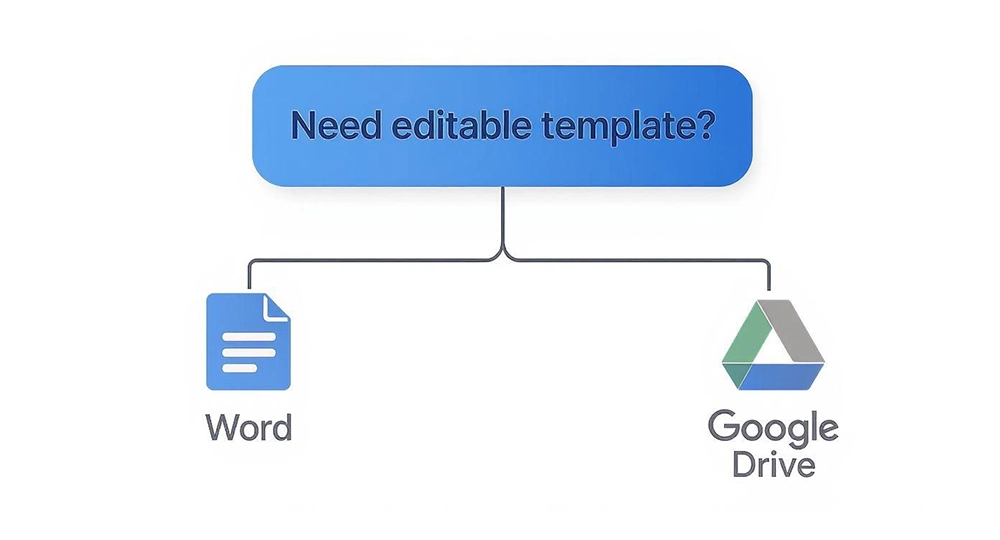
It’s a quick visual guide to help you pick the format that suits how you like to work.
Splitting the Bills and Other Costs
After rent, utilities and council tax are the next major financial points to sort out. Your agreement needs to be crystal clear on how these costs are handled to prevent any arguments later.
You generally have two ways of doing this:
- All-Inclusive Rent: The monthly rent covers everything—gas, electricity, water, internet, and council tax. It's simple and offers predictability for the lodger.
- Rent Plus Bills: The lodger pays their rent and then contributes a share of the actual bills as they come in.
If you go for the second option, get specific in the agreement. For example: "The Lodger agrees to pay 50% of the total gas, electricity, and water bills within seven days of the Landlord presenting the bill." List out exactly which bills are included.
And what happens if the council tax goes up? A good clause will state that any increases in shared bills will be split according to the agreed shares. It keeps everything transparent and fair.
Setting House Rules for Harmonious Living
Sharing your home requires mutual respect and a clear understanding of what’s expected from day one. The "House Rules" section of your room rental agreement template is where you formalise these practical living arrangements. This isn't about being bossy; it's about making life more pleasant for everyone.
Common house rules often cover:
- Guests: Are overnight guests okay? Is there a limit on how often they can stay?
- Cleaning: Will there be a cleaning rota for the kitchen and bathroom, or do you just expect everyone to be generally tidy?
- Noise: It's a good idea to specify quiet hours, maybe from 10 pm to 7 am, especially during the week.
- Smoking/Vaping: Be direct. Is smoking or vaping allowed inside the property or not?
- Pets: Is the house strictly pet-free, or are there conditions under which a pet might be considered?
Being upfront about these things from the start can stop small annoyances from turning into big problems. For more tips on managing a shared home, you might find some useful articles on our blog.
Landlord and Lodger Obligations
This part of the agreement lays out the basic duties for both of you. It’s all about defining who is responsible for what, ensuring the property is looked after, and that everyone's rights are respected.
A Landlord's Responsibilities typically include:
- Making sure the property is safe and in a liveable condition.
- Taking care of necessary repairs to the structure, heating, and plumbing.
- Respecting the lodger’s privacy and their right to enjoy their room peacefully.
- Giving proper notice before entering the lodger's room (unless it's an emergency).
A Lodger's Responsibilities often cover:
- Paying the rent on time, every time.
- Keeping their room and any shared spaces clean.
- Not causing damage to the property or furniture.
- Letting the landlord know promptly if anything needs fixing.
- Not being a nuisance to neighbours or anyone else in the house.
This section really drives home that the agreement is a two-way street. It’s not just a list of rules for the lodger; it’s also your commitment as a landlord to provide a decent and well-maintained home.
Navigating Market Changes and Rent Setting
Setting the right rent from the start is key, and that means knowing your local market. In early 2025, for instance, the UK rental scene had some interesting regional quirks. Data from SpareRoom showed the average room rent in a London HMO actually dipped by 1% to £982 a month. Meanwhile, outside the capital, things were heating up, with East Anglia seeing a 4% rise. With 56% of contracts now being fixed-term, these local trends matter more than ever when you're deciding on a price.
Termination and Notice Periods
Finally, every good agreement needs a clear exit plan. The termination clause explains how either you or the lodger can bring the arrangement to an end. For a lodger agreement, the notice period is usually much more flexible than in a standard tenancy.
A standard clause would require "one month's written notice" from either person to end the agreement. It's really important to specify that this notice must be in writing (an email is fine) to create a clear record. This simple step protects both of you from a sudden departure or eviction and provides a fair amount of time to find a new lodger or a new place to live.
Making the Agreement Your Own

Your property isn’t a carbon copy of someone else’s, so why should your rental agreement be? A good template gives you the essential legal skeleton, but the real strength comes from tailoring it to your specific home and the kind of living environment you want to create. This is where you add the custom clauses that reflect the practical realities of sharing a space.
Adding these conditions isn't about being overly strict; it’s about heading off the small misunderstandings that can snowball into major headaches. By thinking ahead and defining the rules clearly, you protect your property and help foster a respectful, harmonious atmosphere for everyone under your roof.
Adding Specific Clauses for Your Property and House Rules
Every shared home has its own rhythm and unique quirks. Your agreement is the perfect place to set clear boundaries on common points of friction, making sure everyone is on the same page from day one. These details are what turn a generic document into a truly effective room rental agreement template.
Consider adding clauses that cover:
- Overnight Guests: A clear guest policy is an absolute must. Define how often a lodger can have someone stay over. For instance, you might state, "no more than two consecutive nights or a total of eight nights per calendar month without prior written consent."
- Smoking or Vaping: Don't leave this to chance. Be explicit about whether smoking or vaping is allowed anywhere on the property, including outside areas like gardens or balconies.
- Pet Policy: If you're open to pets, this clause is non-negotiable. Specify the type, size, and number of pets allowed, and clearly outline the lodger's financial responsibility for any damage they might cause.
- Inventory List: For furnished rooms, an inventory is vital. This should be a detailed schedule, attached to the main agreement, that lists every item in the room (e.g., "one pine double bed frame," "one oak-effect wardrobe") and its condition. Both you and the lodger should sign it when they move in to prevent any deposit disputes down the line.
It's crucial that any custom clauses you add are fair and reasonable. Under the Consumer Rights Act 2015, any term creating a significant imbalance between you and your lodger could be deemed an 'unfair term' and become unenforceable.
Leveraging the Rent a Room Scheme
For live-in landlords, getting to grips with the UK's 'Rent a Room' scheme is a financial game-changer. This government initiative lets you earn a significant amount from a furnished room completely tax-free.
It's a huge incentive for homeowners thinking about taking in a lodger. Currently, you can earn up to £7,500 per year tax-free—that’s £625 per month. This is a massive benefit, especially when you consider the scale of the private rental market; recent HMRC data showed property rental income for unincorporated landlords hit a staggering £55.53 billion in the 2023-2024 tax year. Using a formal room rental agreement is essential in this context, as it clarifies the arrangement and helps with your tax records. You can find more insights in the 2025 state of the lettings industry report.
Optional Clauses for Your Rental Agreement
Beyond the essentials, there are other clauses you might want to consider depending on your property's specific features. This table breaks down a few common ones.
| Clause Type | What It Covers | When to Include It |
|---|---|---|
| Gardening Clause | Defines who is responsible for maintaining the garden, lawn, or outdoor spaces. | When the property has a garden and you want to clarify maintenance duties. |
| Parking Clause | Specifies any designated parking spaces and rules for vehicle storage. | If parking is limited or you need to manage space between multiple residents. |
| Redecoration Clause | Sets rules on whether the lodger can paint or make alterations to their room. | To protect your property and prevent unauthorised changes to the décor. |
| Noise Policy | Outlines specific quiet hours and rules about excessive noise from music or TVs. | In properties where noise travels easily or if you work from home. |
By thoughtfully customising these areas, your agreement evolves from a legal document into a practical, day-to-day guide for living together, perfectly suited to your home.
Finalising and Signing Your Agreement
You've put in the work to customise your room rental agreement, and now it’s time for the final, crucial step: making it official. A contract is only worth the paper it’s written on (or the pixels it's displayed on) once it's properly signed and all legal paperwork is in order.
Getting this part right isn't just about ticking a box. It's about setting a professional tone from day one, building trust with your new lodger, and making sure you’re fully compliant with UK regulations. A little care here can save you a world of headaches later on.
The Traditional Pen and Paper Method
There's a reason the classic pen-on-paper approach is still so popular—it's simple, tangible, and reliable. Just print two identical copies of the final agreement, one for you and one for your lodger. It’s always best to sit down together to go over it one last time, giving them a chance to ask any final questions.
Once you’re both happy, sign and date both copies. This part is absolutely essential: you must both walk away with a signed original. A photocopy just doesn't carry the same legal weight. This physical document is your go-to reference if any issues ever pop up.
Embracing Digital Signatures
If you prefer a more modern route, digital signatures are a fantastic, legally-recognised alternative in the UK. Platforms like DocuSign or Adobe Sign make the whole process quick and painless.
It’s a straightforward process:
- Upload the finalised agreement to your chosen service.
- Drag and drop the fields where you and your lodger need to sign and date.
- Send it over to them via email. They can review and sign it digitally in minutes.
The great thing about this method is that the platform automatically creates a secure, tamper-proof audit trail. Both of you receive a final, legally binding digital copy, creating an easily accessible record for everyone involved. It's fast, efficient, and saves on paper.
Whether you sign with a pen or a click, the goal is the same: to create a verifiable record that both parties have read, understood, and consented to the terms of the room rental agreement.
Providing the Essential Accompanying Documents
Your job isn't quite done once the agreement is signed. As a responsible landlord in the UK, you also need to provide your lodger with a few other critical documents right at the start of their stay.
Don’t forget to hand over copies of these:
- The property's current Gas Safety Certificate.
- Details of the deposit protection scheme you've used (this is a legal must-have if the room is let on an Assured Shorthold Tenancy, and it's simply best practice even for lodger agreements).
- The government's official 'How to Rent' guide.
Skipping this step can lead to hefty penalties, so treat it with the same importance as the main contract. Handing over a complete pack of documents shows you're a trustworthy landlord who takes their responsibilities seriously. If you need any specific advice on your legal obligations, feel free to get in touch with our team for some guidance.
Your Pre-Tenancy Final Checklist
Before you hand over the keys and your new lodger moves in, pausing for one last review is one of the smartest things you can do. It’s a simple step, but it’s amazing how often small details get missed in the excitement of it all. This final check helps prevent common oversights and ensures you both start things off on a positive and crystal-clear note.
Think of it as your last line of defence against future misunderstandings. It’s that final opportunity to confirm every detail has been handled correctly, cementing the foundation for a smooth and hassle-free arrangement.
For Landlords: The Final Review
Just before your lodger arrives, take five minutes to run through these critical points. Getting them right now will save you a world of trouble down the line.
- Identity Verified? Have you seen and made a note of their original identification, like a passport or driving licence?
- Right to Rent Check? Is the mandatory Right to Rent check completed and have you documented it properly?
- Deposit Handled? Have you received the deposit funds and, just as importantly, provided a clear receipt for it?
- Essential Documents Provided? Have you given them copies of the Gas Safety Certificate and the government's official 'How to Rent' guide?
- Agreement Signed? This is the big one. Do you both now have a fully signed and dated copy of the agreement?
For Lodgers: Your Personal Checklist
As the incoming lodger, this is your last chance to make sure you’re completely comfortable with every aspect of the agreement. Don't ever feel awkward about asking for clarification – it's much better to ask now than to assume later.
- Read Everything? Have you read every single clause? Do you genuinely understand what you're agreeing to?
- House Rules Clear? Are you happy and clear on the rules for things like having guests over, cleaning expectations, and noise levels?
- Inventory Accurate? If there's an inventory, does it properly reflect the condition of the room and its contents? Check for any existing scuffs or marks.
- Got Your Copy? Have you walked away with your own signed copy of the final room rental agreement? Don't leave without it.
This final, simple check reinforces the key terms of the agreement. It ensures that when the keys are handed over, both parties can move forward with complete clarity and confidence, knowing everything is in order.
A Landlord's Common Questions Answered
Even with the best template in the world, a few specific questions always seem to pop up right when you’re about to get the agreement signed. Don't worry, it's completely normal to have some last-minute queries about your room rental agreement template.
Think of this as your quick-reference guide for handling those tricky "what if" scenarios. I'll clear up a few of the most common issues landlords and lodgers run into, giving you the confidence that your agreement is solid.
What Happens if a Lodger Breaks the House Rules?
This is a classic concern. If your lodger goes against a rule you've both agreed to, the first step should always be a calm, informal chat. Don't go in heavy-handed. Just refer back to the specific clause in the agreement and gently explain the problem.
If the behaviour doesn't change, your next move is to put it in writing. A simple, polite email or letter creates a formal record and underlines the seriousness of the issue. For really persistent or serious breaches, you may well have grounds to give them notice to leave, which should be done following the termination clause in your agreement.
Can I Increase the Rent?
In short, yes, but it must be handled fairly and with proper notice. You can't just spring a rent hike on your lodger mid-way through a fixed term – that’s a big no-no. For a rolling or periodic agreement, you have to give your lodger at least one month's written notice of any planned increase.
The key here is to be reasonable. Any rent increase should really be in line with what similar rooms are going for locally. A sudden, massive jump is likely to be seen as unfair and will probably just lead to your lodger finding somewhere else to live.
Who's on the Hook for Minor Repairs?
Generally speaking, you as the landlord are responsible for the big stuff. This means anything to do with the building's structure, the heating system, and the plumbing. That's your domain.
However, the lodger also has a responsibility to treat the property with care and let you know as soon as any issues crop up. Your agreement needs to be crystal clear that the lodger must pay for any damage they (or their guests) cause that goes beyond normal wear and tear. We're talking about things like a window broken through carelessness or a nasty stain on a brand-new carpet.
What’s the Deal With Cleaning When They Move Out?
The standard expectation is simple: the lodger should leave the room in the same state it was in when they moved in, accounting for fair wear and tear. To make sure you're both clear on your responsibilities and to avoid any drama over the deposit, checking out an ultimate end of tenancy cleaning checklist can be a real game-changer.
This is exactly why having a signed inventory, complete with dated photos from day one, is so vital. It’s your proof of the room's initial condition and your best defence against disputes over deposit deductions down the line.
At Rooms For Let, we're here to make the whole process of finding a great lodger as painless as possible. If you’re ready to find the right person for your spare room, why not list your room for free on our platform today?