A solid short-term rental agreement is the single most important document you'll have to protect your property, whether it is whole properties or individual rooms to rent. It’s not just a formality; it’s a legally binding contract that clearly lays out the rules, payment terms, and guest responsibilities for their entire stay, acting as your first line of defence if anything goes wrong.
Why a Generic Agreement Puts Your Rental at Risk
Grabbing a generic, one-size-fits-all rental agreement off the internet might feel like the easy option. In reality, this approach often leaves UK landlords dangerously exposed. The short-term rental market isn't just growing; it's getting more complex, and relying on a vague template is like trying to navigate London with a map from the 90s. You might get by, but the risk of a costly wrong turn is incredibly high.

This isn't just about ticking a box. Think of it as a core business tool. A proper short-term rental agreement template goes far beyond simple legalese. It’s there to set crystal-clear expectations, protect your physical property, and make sure you’re compliant from day one.
The Real-World Consequences of a Weak Agreement
Let's get practical. Imagine a guest brings an unauthorised pet that causes hundreds of pounds worth of damage to your new sofa. Without a specific, signed clause in your agreement, getting that money back becomes your word against theirs. A generic document probably won't cover these kinds of specifics, leaving you to foot the bill.
The consequences can really stack up:
- Financial Losses: Being unable to claim for damages, unpaid fees, or the cost of a deep clean after a wild party.
- Guest Disputes: Vague rules on noise, parties, or the maximum number of guests are a recipe for conflict and, inevitably, bad reviews.
- Compliance Issues: Generic templates often completely miss UK-specific legal requirements, putting you at risk of falling foul of local council regulations.
- Operational Headaches: Wasting your valuable time clarifying rules that should have been clear from the very beginning.
In today's market, you just can't afford these vulnerabilities. The UK short-term rental market saw a 7% increase in property supply and a 5% rise in nights booked in April compared to last year, with average daily rates jumping by 18%. As more properties hit the market, guests have more choice. Landlords with professional, robust agreements are the ones who stand out. You can dig into more of these short-term rental market trends on My Short Lets.
A strong, specific agreement isn’t about mistrusting your guests. It's about being a professional host who takes their business and investment seriously. It transforms potential misunderstandings into clear, agreed-upon terms.
Ultimately, a tailored agreement gives you peace of mind. It lets you run your rental confidently, knowing you have a solid framework to manage every stay effectively and handle any issues that pop up professionally. It’s the true foundation of a successful, stress-free rental business.
Building Your Agreement: The Core Legal Clauses
A solid short-term rental agreement is built on a foundation of clear, specific clauses. These aren't just legal formalities; they're the essential building blocks that define the relationship with your guests and, most importantly, protect your property. Moving beyond a generic template means carefully constructing each section to address the unique aspects of your rental, leaving no room for the kind of ambiguity that so often leads to disputes.
This process starts by precisely identifying everyone and everything involved. From there, it moves to setting firm boundaries around the duration of the stay and clarifying all financial obligations upfront. Each clause works together to create a comprehensive document that acts as the single source of truth for the booking.
Defining the Parties and the Property
First things first: be painstakingly clear about who is renting and what is being rented. It sounds obvious, but I’ve seen vague descriptions cause all sorts of problems down the line. Your agreement must list the full legal names of all adult guests staying at the property, not just the name of the person who clicked ‘book’.
Equally important is a precise description of the property itself. Go beyond just the address. Specify what areas are included in the rental and, crucially, what areas are off-limits—think of a private owner’s cupboard, a garage, or a garden shed. This simple act of clarification prevents misunderstandings about guest access before they even arise.
For instance, a guest might naturally assume the entire property is theirs to use unless you explicitly state otherwise.
- Example Clause Wording: "This agreement is between [Landlord's Full Name] ('the Host') and [Lead Guest's Full Name] and all accompanying guests listed herein ('the Guests'). The property is located at [Full Property Address], and the rental pertains to the main two-bedroom flat only. The locked attic space and the garden shed are strictly private and not included in this rental."
Setting Crystal-Clear Letting Periods
Ambiguity around timing is a common source of friction. Your short-term rental agreement has to state the exact dates and times for check-in and check-out. Don't just list the dates; specify the earliest possible arrival time and the latest possible departure time.
This detail is absolutely critical for managing your cleaning and maintenance schedule, especially when you have back-to-back bookings. It also provides a clear, legal basis for action if a guest overstays their welcome. I always recommend including a clause that outlines fees for unauthorised late check-outs—it’s a strong deterrent.
A well-defined letting period protects your operational efficiency. It ensures your cleaning crew has adequate time and prevents the logistical chaos that can arise from guests who linger past their agreed departure time.
Structuring Payments and Deposits
Your financial terms must be transparent and detailed. This section should break down the total cost, leaving absolutely nothing to interpretation. Clearly itemise the rental fee, any cleaning fees, and the security deposit amount. The goal is to show the guest exactly what they are paying for.
This clarity is more important than ever. The Key Data Index Report, which pulls data from over 85,000 UK short-term rentals, found that average daily rates (ADRs) are on the rise. November's ADR hit £159, a 7% increase year-on-year, showing that guests are paying more for quality stays. With higher rates, guests rightly expect complete transparency on costs. You can explore more about UK short-term rental data and trends to see how your pricing compares.
A solid payment clause should outline:
- Total Rental Cost: The base rate for the duration of the stay.
- Additional Fees: Any separate charges, such as for cleaning, pets, or extra guests.
- Security Deposit: The amount, the conditions for its full return, and the timeline for its return after check-out.
- Payment Schedule: The deadlines for the initial deposit and the final balance payment.
To make this easier, here’s a quick-glance table of the clauses you can’t afford to get wrong.
Essential Clauses for Your Rental Agreement
This table summarises the most critical sections to include in your agreement, explaining their purpose and what you need to keep in mind from a UK perspective.
| Clause | Purpose | Key UK Consideration |
|---|---|---|
| Parties & Property | Clearly identifies the host, all guests, and the exact physical boundaries of the rental. | Be specific about any areas that are off-limits to guests to avoid trespass issues. |
| Letting Period | Defines the exact check-in/check-out dates and times to manage turnover effectively. | Holiday lets are typically excluded from the 'right to rent' checks required for long-term tenancies, but this clear period definition reinforces the short-term nature of the stay. |
| Payment & Deposit | Itemises all costs, including rent, fees, and the security deposit, plus the payment schedule. | Unlike long-term tenancies, there's no legal requirement to protect a holiday let security deposit in a government scheme, but you must state the return conditions clearly. |
| House Rules | Sets specific, enforceable rules on things like noise, smoking, pets, and parties. | Local council regulations on noise or anti-social behaviour can be strict, especially for properties in residential areas or with an HMO licence. Your rules should reflect these. |
| Cancellation Policy | Outlines the terms for guest cancellations, including refund eligibility and deadlines. | This policy is purely contractual. Ensure it's clear and fair to avoid disputes and negative reviews on booking platforms. |
| Liability & Insurance | Clarifies the guest's responsibility for damages and your own liability limitations. | Ensure your specialist landlord or holiday let insurance covers the scenarios outlined in this clause. Standard home insurance is rarely sufficient. |
Getting these sections right from the outset provides a strong legal footing and helps ensure a smooth, professional relationship with every guest.
Crafting House Rules That Stick
Finally, your house rules are the most customised part of the agreement. This is where you translate your personal expectations into enforceable terms. Vague rules like "be respectful" are completely ineffective in a dispute. You need specific, actionable instructions.
Think about common pain points and address them head-on. Are pets allowed? If so, what kind, how many, and are there extra fees? Is smoking permitted anywhere on the property, including the garden? What are the quiet hours for your neighbourhood? By being specific, you provide guests with a clear guide for their behaviour and give yourself solid ground to stand on if those rules are broken.
Customising Your Agreement For Your Unique Property
A downloadable template is a brilliant starting point, but its real power is unlocked when you make it your own. Let's be honest, no two properties are the same. A sleek London flat with a shared rooftop terrace has completely different needs than a rustic Cornish cottage with an open fire and a hot tub. This is where you elevate a generic document into a bespoke agreement that truly protects your unique asset and sets crystal-clear expectations for your guests.
This isn't just about filling in the blanks. It’s about thinking through every feature, amenity, and potential quirk of your property and translating them into clear, enforceable clauses. A well-customised agreement anticipates problems before they happen, making for a much smoother experience for everyone involved.
Think of it as a simple, deliberate process: you start with the template, specify the unique details of your house, and then add clauses for its standout features.
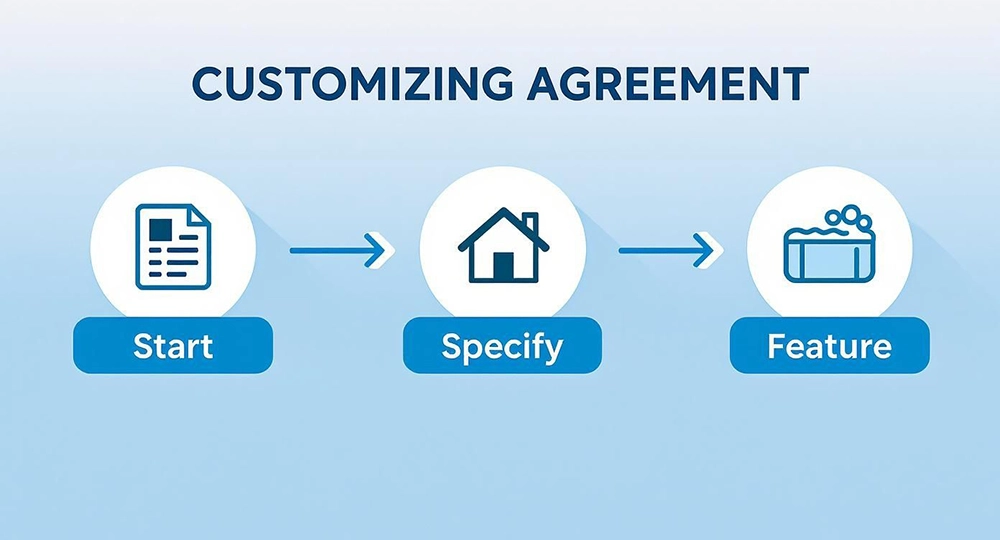
The key takeaway here is that customisation isn’t a quick job. It’s a focused effort to embed the specific details that make your rental what it is.
Tailoring Rules For Shared Spaces And Amenities
If your property comes with shared facilities—like a communal garden, a swimming pool, or even just a shared entrance hall in a block of flats—your agreement must address them head-on. Any ambiguity here can lead to friction, not just with your guests, but with your neighbours too.
You need to be explicit about the rules for these spaces.
- Access Hours: Be specific about when amenities are available. For example, "The communal swimming pool is open for guest use from 9 am to 7 pm daily."
- Conduct and Noise: Outline your expectations, particularly around noise levels in shared hallways or gardens, to keep the peace.
- Accompaniment: State clearly whether guests can bring their own visitors into shared areas. This is crucial for security and maintaining good relationships with other residents.
For properties like a spare room in a shared house, setting boundaries is absolutely vital to respect everyone living there. You might need to specify rules around kitchen use or bathroom schedules. Finding that balance is key, as you’ll see in many listings where clear expectations are paramount for a successful let.
Adding Clauses For Special Features
Does your rental have a hot tub, a log burner, a barbecue, or expensive electronics like a home cinema system? Each of these adds value, but they also introduce risk. Your agreement needs specific clauses to manage these features safely and effectively.
Take a hot tub, for instance. A dedicated clause should cover:
- Safety Rules: No glass in or around the tub, showering before use, and always securing the cover when it's not in use.
- Usage Times: To avoid noise complaints, you might restrict use after a certain hour, like 10 pm.
- Liability: Include a statement that guests use the hot tub at their own risk and are responsible for any damage caused by misuse.
Likewise, a property with a log burner needs clear instructions on safe operation, the correct fuel to use, and how to dispose of ash. Skipping these details is a missed opportunity to prevent damage and ensure your guests are safe.
A guest from a warm climate might have zero experience with a wood-burning stove. Providing clear, written instructions within the agreement isn’t just about protecting your property; it’s a vital part of being a responsible host.
Incorporating Property-Specific Maintenance And Care
Every property has its own operational quirks, and your agreement should reflect them. This is about clarifying your guests' responsibilities for the upkeep of the property during their stay. While you handle the big stuff, guests have a role to play in keeping things in good order.
This section should cover practical, day-to-day items. For example, if you have a sensitive septic tank, you absolutely must include a clause about what can and cannot be flushed. If you provide a barbecue, your agreement should state that guests are expected to clean it after use. A comprehensive rental property maintenance checklist can be a great guide when thinking about what to include.
Consider adding clauses for:
- Waste Disposal: Clear instructions on recycling, bin collection days, and where to leave rubbish when they check out.
- Security: Simple reminders to lock all doors and windows when leaving the property.
- Appliance Use: Any specific instructions for temperamental appliances to prevent misuse or damage.
This level of detail in your short term rental agreement template shows true professionalism. It signals to guests that you've thought of everything, which builds trust and encourages them to treat your property with greater respect. By investing time to customise your agreement thoroughly, you create a robust document that serves as a clear guide for every guest, protecting your investment for years to come.
Staying Complant with UK Rental Regulations
Having a solid short-term rental agreement is one thing, but making sure it actually works within the UK’s maze of legal rules is another challenge entirely. The regulations for short-term lets can feel like a moving target, with rules changing dramatically from one city to the next. Staying on top of compliance isn't just good business practice—it's absolutely essential to protect yourself from eye-watering fines and legal headaches.
The landscape is shifting all the time as local authorities scramble to keep up with a booming market. In August, the number of short-term rental properties across the UK hit 491,582, a 4% jump from the previous year. Hotspots like London and the South West now boast over 85,000 properties each. This explosion in growth is fuelling tighter regulations, making it more critical than ever for hosts to stay in the loop. You can dig into the numbers with these UK short-term rental supply trends from VisitBritain.
To navigate this, you need to be proactive. From nationwide safety standards to incredibly specific local licensing schemes, your compliance checklist is one of the most important tools in your operational kit.
Right to Rent Checks
For most genuine short-term holiday lets, the 'Right to Rent' scheme doesn't apply. This legislation, which makes landlords check the immigration status of their tenants, is really aimed at long-term residential tenancies.
But that distinction is crucial. Your letting agreement must clearly and unambiguously define the stay as a holiday let. If you don't, you risk accidentally creating a tenancy that falls under a completely different set of rules. If a stay drags on beyond a typical holiday or loses its holiday character, you could find yourself on the hook for checks you never thought you had to do.
Your Legal Obligations for Gas and Fire Safety
Safety regulations are completely non-negotiable and apply to every single rental property, short-term lets included. As a host, you have a legal duty of care to ensure your property is safe for every guest who walks through the door.
Here are the key safety certificates you must have sorted:
- Gas Safety Certificate: If your property has any gas appliances (a boiler, hob, or gas fire), you are legally required to have an annual inspection done by a Gas Safe registered engineer. You must also give your guests access to a copy of this certificate.
- Electrical Safety: While a formal Electrical Installation Condition Report (EICR) is a legal must-have for long-term tenancies in England, it's considered best practice for short-term lets right across the UK. At the very least, you should be getting regular PAT (Portable Appliance Testing) done for any electrical items you provide.
- Fire Safety: You have to follow fire safety regulations. This means installing smoke alarms on every floor and fitting carbon monoxide alarms in any room with a solid fuel-burning appliance, like a wood burner or open fire. It’s also just common sense to provide a fire extinguisher and a fire blanket.
Forgetting these certificates isn't just a bit of admin you've missed; it's a serious breach of the law. It could invalidate your insurance and lead to severe penalties, especially if an accident happens on your watch.
Navigating Local Council Licensing Schemes
This is where compliance can get really messy. A lot of local councils, particularly in tourist-heavy areas, have brought in their own licensing schemes to try and manage the impact of short-term rentals. These rules are anything but uniform across the UK.
For instance:
- London: In Greater London, you might need planning permission to let a property on a short-term basis for more than 90 nights in a single calendar year.
- Edinburgh: The entire city has been designated a "Short-Term Let Control Area." This means hosts now need to get planning permission to change a property's use to a short-term let.
- Scotland: A nationwide scheme now requires every single short-term let host to get a licence from their local authority before they can operate.
It's completely down to you to research and follow the rules in your specific local council. Getting this wrong and failing to secure the right licence can lead to "stop" notices and some very hefty fines.
Short-Term Lets and HMO Regulations
If you're renting out multiple rooms in one property, you need to keep an eye on how your operation might cross over into House in Multiple Occupation (HMO) territory. An HMO is generally defined as a property rented out by at least three people who aren't from a single 'household' but share facilities like a kitchen or bathroom.
While most holiday lets won't be classed as an HMO, the lines can get blurry. If you start letting rooms individually for longer "short-term" stays (for example, to a group of contractors for a few months), you could inadvertently create an HMO without realising it. It’s vital to understand the nuances, and you can find more insights on managing different rental types over on our landlord advice blog. If you're in any doubt, always check with your local council.
Handling Deposits, Damages, and Guest Disputes
You’ve got a signed agreement, the guests have had their stay, and everything seems perfect. But the real test often comes after they’ve checked out. This is where you move from setting expectations to enforcing them, especially when it comes to security deposits, damages, and the occasional—but inevitable—guest dispute.
How you handle this process is a defining moment. Get it right, and you protect your property and your reputation as a professional host. Get it wrong, and you could be facing a damaging online review or a drawn-out argument.

It’s crucial to understand that short-term holiday lets operate in a different world to long-term tenancies. The rules that govern a standard Assured Shorthold Tenancy (AST) simply don't apply here. One of the biggest differences? Security deposits.
With an AST, you’re legally bound to protect the tenant’s deposit in a government-backed scheme. For a short-term or holiday let, this rule does not apply.
This gives you a lot more flexibility, but it also puts all the responsibility squarely on your shoulders to manage the deposit fairly and transparently. Your rental agreement is the only rulebook, making it absolutely vital for navigating what comes next.
Before we dive into the process, it's helpful to see just how different the obligations are for short-term versus long-term lets.
Short-Term vs Long-Term Tenancy Obligations (UK)
This table highlights the key legal and financial differences landlords need to know.
| Aspect | Short-Term Let (Holiday Let) | Long-Term Tenancy (AST) |
|---|---|---|
| Deposit Protection | Not required to use a government scheme. Landlord holds the deposit. | Legally mandatory to protect the deposit in a government-approved scheme. |
| Right to Rent Checks | Not required for holiday lets under 3 months. | Legally mandatory to check the immigration status of all adult tenants. |
| Repairs & Maintenance | Landlord responsible for ensuring safety and habitability for the short stay. | Landlord has statutory repair obligations under the Landlord and Tenant Act 1985. |
| Eviction Process | No formal eviction process; guests must leave at the end of the booking. | Requires serving a Section 21 or Section 8 notice and potentially a court order. |
| Council Tax | Landlord pays business rates if the property qualifies, or Council Tax. | Tenant is responsible for paying the Council Tax. |
| Gas & Electrical Safety | Landlord must ensure all appliances are safe. Annual gas safety checks are best practice. | Legally mandatory annual Gas Safety Certificate and 5-yearly EICR (electrical report). |
Understanding these distinctions is fundamental. For holiday lets, your rental agreement isn't just a formality; it's the primary legal document governing the entire stay, especially when it comes to deductions and disputes.
Documenting Property Condition: Your Best Defence
Want to prevent arguments over damages? Take subjectivity out of the equation.
The most powerful tool you have is meticulous documentation of your property's condition before every single guest checks in. A vague claim that "the worktop was scratched" is easy for a guest to dismiss. A time-stamped photo of a pristine worktop taken an hour before they arrived? That’s hard evidence.
Your check-in and check-out process should be a well-oiled machine:
- Build a detailed inventory checklist. List everything, from the sofa and TV down to the coasters and cushions. A simple spreadsheet or a dedicated app works wonders.
- Take photos and videos of everything. Before the guest walks through the door, do a full walkthrough. Get clear shots of every room, paying close attention to expensive items and surfaces prone to damage, like floors, tables, and kitchen worktops.
- Invite guests to do their own inspection. A quick line in your welcome email or house manual encouraging them to report any pre-existing damage they spot on arrival builds huge amounts of trust. It shows you're fair and not looking to catch them out.
When the stay is over, you just repeat the process. Compare the ‘before’ and ‘after’ evidence, and you have an objective, undeniable record. This is the foundation of any claim you might need to make against their security deposit.
How to Assess and Claim for Damages Fairly
If you find damage that goes beyond reasonable wear and tear—a red wine stain on a new rug, a cracked mirror—your agreement gives you the right to make a deduction. But your approach has to be professional and evidence-based.
It’s not enough to just say a cushion was ruined. You need proof of what it costs to put it right.
Keep receipts for any repairs or replacements you have to buy. If you need a specialist cleaner to tackle a stubborn stain, their invoice is your evidence. The goal is to make the property whole again, not to profit.
Key Takeaway: Never pull a number out of thin air. Every single pound you withhold from a deposit must be backed by a specific, documented cost you’ve incurred to return the property to its original condition.
This kind of professionalism is a cornerstone of great hosting and is central to property management best practices.
Communicating Deductions and Resolving Disputes
If you need to make a deduction, clear and calm communication is your best friend. Get in touch with the guest promptly, but take a moment to compose a message that is factual, unemotional, and backed by proof.
Here’s a simple structure that works well:
- Start on a positive note. "Hi [Guest Name], thanks again for staying with us."
- State the issue clearly and factually. "During our inspection after your departure, we found the glass coffee table has a large chip in the corner that wasn't there before your stay."
- Provide your evidence. Attach the ‘before’ and ‘after’ photos. The visual proof is critical.
- Outline the exact cost. "We've sourced a quote to repair the glass, which comes to £85. I've attached a copy of the quote for you to see."
- Explain the deduction. "As per section 7b of the rental agreement, this cost will be deducted from your £250 security deposit. We are processing the return of the remaining £165 to you today."
By calmly pointing to the short term rental agreement template they signed and showing them undeniable proof, you turn a potential shouting match into a simple contractual matter. It’s a professional approach that protects your investment and, just as importantly, your reputation.
Answering Those Common Questions About Your Rental Agreement
Even with the most detailed short-term rental agreement, you can bet guests will have questions. Don't worry, this is completely normal. In fact, think of it as a good thing.
Being ready with clear, confident answers doesn't just make you look professional; it builds trust right from the start. It's your chance to show you've thought everything through and to make sure everyone is on the same page before they even pick up the keys.
Is This Agreement Legally Binding in the UK?
Yes, absolutely. Once you and your guest have both signed it, your short-term rental agreement becomes a legally binding contract. It isn't just a list of polite suggestions—it's an enforceable document that sets out the rules of the stay, payment terms, and what's expected of both parties.
This is exactly why getting it signed is so vital. If you end up in a dispute over damage or unpaid fees, this document is your key piece of evidence. It takes the situation from a messy "he said, she said" argument to a much clearer contractual issue.
Do I Need to Protect the Security Deposit?
This is a really common point of confusion, especially for landlords who also deal with long-term tenancies. The short answer is no. For a genuine short-term or holiday let in the UK, you are not legally required to place the security deposit in a government-backed scheme like the Tenancy Deposit Scheme (TDS).
This is a crucial difference from standard Assured Shorthold Tenancies (ASTs). It offers more flexibility, but it also means the responsibility to handle the deposit fairly rests entirely with you. Your agreement must spell out, in no uncertain terms, the conditions for a full refund and the specific reasons why you might need to make deductions.
What If a Guest Refuses to Sign?
This is one of those moments where you need a firm red line. If a guest won't sign the agreement, you simply cannot let them check in. No exceptions. The whole point of the agreement is to protect you and your guest by setting out clear, agreed-upon terms before their stay begins.
Going ahead without a signature opens you up to massive financial and legal risks. Honestly, a refusal to sign is often a big warning sign that you might be dealing with a difficult guest. It’s far better to lose one booking than to risk the security and safety of your property. For landlords looking to connect with reliable tenants, making sure all the paperwork is right is the first step; you'll find more helpful advice when you register as a landlord on our platform.
Can I Make Guests Leave a Positive Review?
While it’s always great to encourage feedback, you absolutely cannot put a clause in your agreement that forces a guest to leave a positive review. Trying to contractually lock someone into a five-star rating isn't just unethical; it's a direct violation of the terms of service for major booking sites like Airbnb and Vrbo.
A clause like that is completely unenforceable and could seriously backfire, damaging your reputation if a guest feels pressured. Your best strategy? Focus on giving them an incredible experience that makes them want to leave a glowing review. A friendly note in your check-out message asking them to share their thoughts is a much more professional—and effective—way to go about it.
At Rooms For Let, we're dedicated to helping UK landlords and homeowners manage their properties with confidence. Find your next tenant or lodger quickly and easily by advertising your spare room on our platform. Explore Rooms For Let today.