A solid template for rent agreement is your first line of defence. It’s the document that sets clear expectations and legally protects your investment from day one, transforming a simple handshake into a binding contract that defines everything from rent payments to tenant responsibilities.
Getting this right isn't just paperwork; it’s the cornerstone of a successful, dispute-free tenancy.
Why a Generic Template Just Won't Cut It
Staring at a blank document can be intimidating, especially when there are legal and financial risks on the line. It's tempting to just download the first free template you find online, but for UK landlords, homeowners with lodgers, or HMO managers, a one-size-fits-all approach is a recipe for disaster.
Each type of tenancy comes with its own unique legal requirements, and a generic document almost always overlooks the crucial details that matter most.
The private rental sector is bigger than ever. In fact, the number of rental homes in England has shot up by 36%, from 6.3 million in 1990 to 8.6 million in 2023. This boom makes having robust, specific agreements more critical than ever to manage properties effectively. Without a contract tailored to your situation, you’re leaving yourself wide open to financial loss and legal headaches.
The Pitfalls of a Weak Agreement
A poorly constructed agreement leaves you exposed. Vague clauses are a breeding ground for disputes over repairs, deposit deductions, or what needs to happen at the end of a tenancy. Worse still, forgetting to include legally required information can invalidate entire sections of your contract, seriously weakening your position if you ever need to take action.
This guide will take you beyond the generic templates and show you how to build a rent agreement that truly protects you. We'll be focusing on the two main types of agreements you're likely to need:
- Assured Shorthold Tenancy (AST): This is the standard for most private tenancies. It's used when a tenant rents a whole property or a room in a shared house (like an HMO) where the landlord doesn't live.
- Licence to Occupy: This is typically what you'd use for a lodger who lives in the same property as you and shares facilities like the kitchen or bathroom.
This isn't just about using the right terminology. The fundamental difference dictates your rights and responsibilities around deposits, eviction procedures, and even your right to access the property. Getting it wrong can have serious legal consequences.
Understanding these distinctions is essential. It's also helpful to have a grasp of the wider housing rentals industry to ensure your agreement reflects current best practices. We'll give you clear, actionable steps to craft a professional, compliant agreement, making sure you start every new tenancy on solid legal ground.
Choosing the Right Agreement for Your Tenancy
Getting the legal paperwork right from the start is probably the most critical step, and honestly, it’s where a lot of new landlords trip up. If you use the wrong type of agreement, you can completely undermine your rights and land yourself in a world of legal trouble down the line.
The choice boils down to one simple question: do you live in the same property as the person you're renting to?
Your answer to that question determines whether you need a tenancy agreement or a licence. These aren't just different names for the same document; they create fundamentally different legal relationships, each with its own set of rights and responsibilities.
This simple decision tree should clear things up instantly.
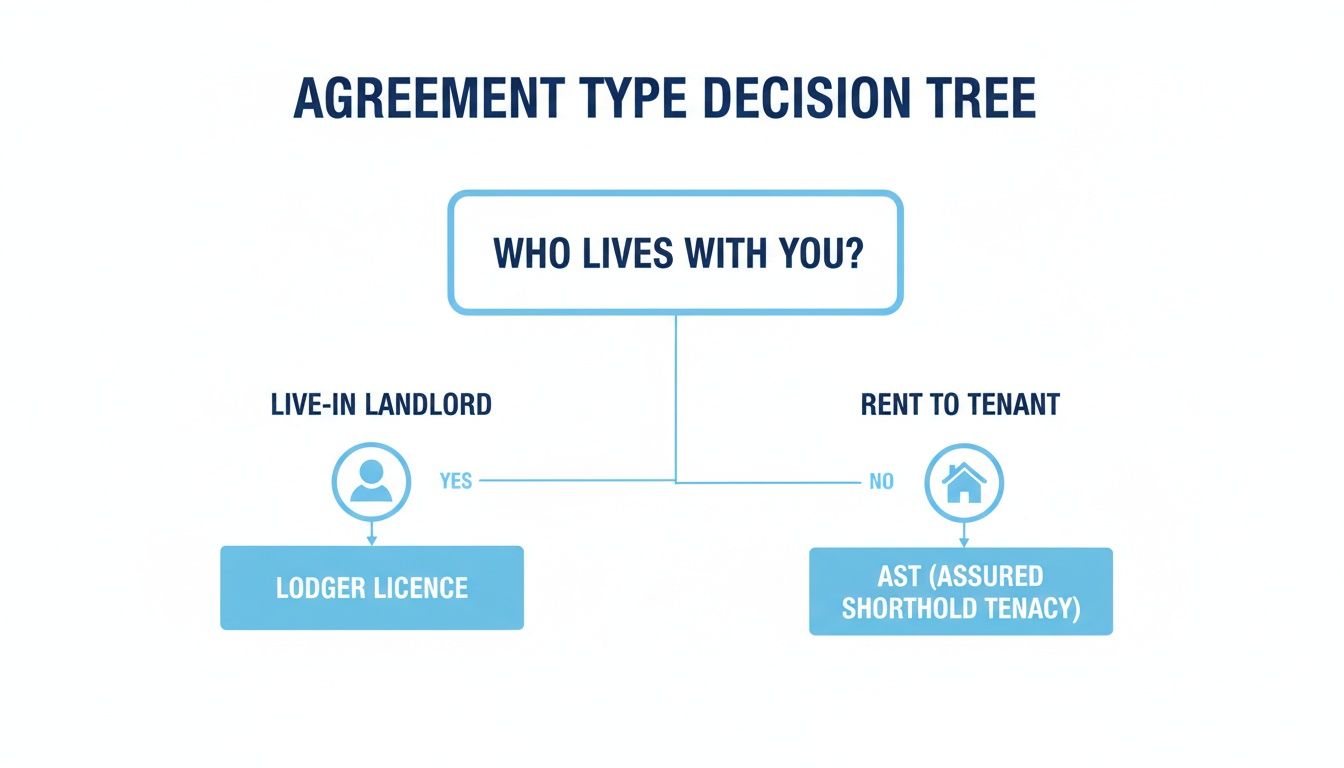
As you can see, if you’re a live-in landlord, you’ll be using a lodger licence. If you're renting out a separate property where you don’t live, it's an Assured Shorthold Tenancy.
When to Use an Assured Shorthold Tenancy (AST)
The Assured Shorthold Tenancy (AST) is the default and most widely used agreement for private rentals in England and Wales. This is the one you need if you're renting out a property that you don't personally live in.
This covers everything from letting a whole house to a family, to renting out individual rooms in a House in Multiple Occupation (HMO). So, if you manage an HMO in Bristol where tenants have their own rooms and share a kitchen, but you live somewhere else, each of those tenants will need their own AST.
An AST gives the tenant exclusive possession of their room or the property. That's a key legal term meaning they have the right to keep everyone, including you, out. Your right to enter is limited, and you typically need to give at least 24 hours’ written notice, unless there's a genuine emergency. This is a crucial bit of law that protects the tenant’s right to privacy.
An AST provides solid legal protection for both the landlord and the tenant, but it does place more legal duties on you as the landlord. Things like deposit protection and the eviction process are much more formal. It's designed for a standard, arm's-length rental relationship.
When a Licence to Occupy is the Right Choice
A Licence to Occupy, which most people just call a lodger agreement, is what you'll use when you rent out a room in your own home and share living spaces like the kitchen or bathroom. The person renting from you is a lodger, not a tenant, and that distinction is vital.
For instance, if you're a homeowner in Leeds with a spare bedroom to let, you’ll be drawing up a lodger agreement. Because you live there, the lodger doesn't have exclusive possession of their room. You have the right to enter the room without giving notice (for cleaning or repairs, for example), although it's always good practice to agree on this sort of thing in advance.
This setup gives you, the landlord, a lot more flexibility. The legal hoops you have to jump through are much less stringent:
- You don’t have a legal duty to protect their deposit in a government-backed scheme (though doing so is still a good idea).
- Ending the arrangement is far simpler. You just need to give 'reasonable notice' to ask them to leave, which is usually the same as the rental period (e.g., one month if they pay monthly).
To make it even clearer, this table breaks down the main differences at a glance.
AST vs Licence to Occupy Key Differences
This quick-reference table compares the core legal differences between an Assured Shorthold Tenancy and a Licence to Occupy.
| Feature | Assured Shorthold Tenancy (AST) | Licence to Occupy (Lodger Agreement) |
|---|---|---|
| Use Case | Renting a separate property/HMO room | Renting a room in your own home |
| Legal Status | Tenant | Lodger (Excluded Occupier) |
| Deposit Protection | Mandatory in a government scheme | Not required by law |
| Right to Enter | Requires 24 hours' notice | No notice period required |
| Eviction Process | Formal (Section 8/21 notices) | Simpler 'reasonable notice' |
Picking the right template for rent agreement from the outset is the key to preventing future disputes and staying on the right side of the law. Mistaking a tenant for a lodger can lead to serious legal problems, including accusations of illegal eviction, so it pays to get this right.
Getting the Core Clauses of Your Agreement Right
Right, you’ve picked the correct type of agreement. Now it’s time to get down to the nuts and bolts—the actual clauses that will form the backbone of your contract. This is where we move from the theoretical to the practical, defining the terms that will govern the entire tenancy or lodging arrangement. A solid template for rent agreement is built on a handful of essential clauses that you simply can’t skip.

Think of this part as your workshop. I'm not just going to list the clauses; I’ll explain why each one matters and give you some real-world wording you can adapt for your own use. Getting these fundamentals spot-on from the beginning is the key to preventing arguments down the line.
Identifying the Parties and the Property
This is ground zero. This clause needs to state, with zero ambiguity, who is involved and exactly what property is being rented.
First up, list the full legal names of everyone involved. That means you (the Landlord) and every adult who will be living there (the Tenant or Tenants). No nicknames or shortened versions here; use the names that are on their passports or driving licences.
Next, you have to be incredibly specific about the property itself. Don't just chuck in the street address and call it a day. Spell out exactly what the tenant is getting access to.
- For a whole property: "The property known as 123 Willow Lane, Manchester, M1 1AB, including the garden, garage, and any fixtures and fittings listed in the inventory."
- For an HMO room: "Room 3 at 45 Oak Street, Birmingham, B2 2CD, together with the right to use the shared facilities, including the kitchen, bathroom, and living room, in common with the other occupants."
- For a lodger: "The furnished bedroom located on the first floor of 789 Birch Avenue, London, SW1A 0AA, with shared use of the kitchen and main bathroom."
This level of detail is your best friend if a dispute ever pops up. If there's a disagreement about using the garden or who can be in the living room, this clause is your definitive answer. A bit of precision here saves a world of headaches later.
Defining the Tenancy Term
This bit is all about how long the agreement is for. For an Assured Shorthold Tenancy (AST), you’ll generally be using one of two types.
A fixed-term tenancy has a clear start and end date, usually for six or twelve months. It offers a nice bit of security for both of you, as neither party can just walk away early without a good reason (like a break clause).
A periodic tenancy is more flexible, running from one rental period to the next—typically month-to-month. It doesn't have a fixed end date and just keeps rolling until either you or the tenant gives the proper notice.
Here’s how that might look in your agreement:
- Fixed-Term Example: "The Tenancy shall be for a fixed term of 12 months, commencing on 1st October 2025 and ending on 30th September 2026."
- Periodic Example: "The Tenancy shall be a monthly periodic tenancy commencing on 1st October 2025."
For lodger agreements, it's far more common to start with a periodic term right away. This gives both the homeowner and the lodger maximum flexibility.
The All-Important Rent Clause
Let’s be honest, this is one of the most important clauses for any landlord. It needs to be crystal clear to avoid any awkward conversations about money. The clause must state three things without fail: the amount, the due date, and how it should be paid.
With rental prices climbing, locking this in is crucial. Average monthly private rents in England recently hit £1,381, which is an 8.3% jump from the previous year. A watertight rent clause makes sure you get the rate you agreed upon for the entire term.
Here's some simple wording you can tweak:
"The Rent is £950.00 per calendar month, payable in advance on the first day of each month. The first payment shall be made on or before the commencement of the Tenancy. All payments are to be made by standing order to the Landlord's nominated bank account."
Always specify "per calendar month" to avoid any mix-ups. And stating the payment method, like a standing order, helps automate things and cuts down the risk of late payments.
Detailing the Security Deposit
If you’re taking a security deposit, you must have a clause that covers the amount and—most importantly—how it will be protected. For any Assured Shorthold Tenancy in England and Wales, you are legally required to protect the deposit in a government-approved tenancy deposit scheme (TDP).
Your agreement has to spell out:
- The exact deposit amount.
- The name of the TDP scheme you’re using.
- The reasons you might make deductions (e.g., unpaid rent, damage that isn't just fair wear and tear, or professional cleaning costs).
- Sample Wording: "The Tenant shall pay a Security Deposit of £1,095.00 prior to the commencement of the Tenancy. The Landlord confirms that the Deposit will be protected with the Deposit Protection Service (DPS) within 30 days of receipt."
This isn’t just a suggestion; it’s the law. Failing to protect a deposit properly can land you with a hefty fine and make it much harder to regain possession of your property if you need to.
Nailing these core clauses gives you a solid foundation for your entire agreement. For a different perspective on structuring these obligations, you might find some detailed insights into Dutch rental contracts interesting. By being precise and thorough now, you create a document that not only protects your investment but also sets the stage for a clear, professional relationship from day one.
Defining Landlord and Tenant Obligations
Once you've got the core clauses sorted, it's time to get into the nitty-gritty: the day-to-day rules of the tenancy. This is where your template for rent agreement really comes to life, setting out clear expectations for both you and your tenant. A good tenancy is built on mutual understanding, and this section creates a fair framework that stops small misunderstandings from turning into big problems.
Getting this part right isn't just about keeping the peace; it's about protecting your investment. Last year, the average rental income for a UK landlord was £19,200, a noticeable jump from previous years. With 58% of landlords increasing rents on new lets, having solid obligation clauses is essential to protect those earnings and keep the tenancy on track. You can dig deeper into these trends in the government's English Private Landlord Survey.

Key Landlord Responsibilities
As the landlord, you have a set of legal duties you simply have to meet. Your agreement should spell these out clearly, not just because it’s the law, but because it shows your tenant you’re a professional.
Here are your main responsibilities:
- Property Repairs: You’re on the hook for keeping the property's structure and exterior in good shape. Think roof, walls, windows, and drains. You also need to make sure the installations for water, gas, electricity, and sanitation are safe and working properly.
- Safety Compliance: You have a legal duty of care. This means organising an annual Gas Safety Check with a Gas Safe registered engineer, checking that the electrical systems are safe, and fitting smoke and carbon monoxide alarms where they’re needed.
- Quiet Enjoyment: This is a tenant’s legal right to live in their home without you constantly bothering them. It means you can't just pop round whenever you feel like it. You must give at least 24 hours' written notice before visiting, unless it's a genuine emergency.
Think of these duties as the foundation of a professional relationship. By laying them out in the agreement, you’re showing your commitment to providing a safe, habitable home, which builds trust right from the start.
Essential Tenant Obligations
Of course, it’s a two-way street. Your tenant also has responsibilities that protect your property and keep things respectful. These clauses define clear boundaries and give you a legal leg to stand on if they don't hold up their end of the bargain.
Being specific here is key. For instance, if you're running an HMO in Liverpool, you'll want clear rules on keeping the shared kitchen clean. If you’re a live-in landlord in London, you might need to set boundaries around using the shared living room or having overnight guests.
Crafting Specific Rules and Regulations
The best agreements don’t just stick to the legal minimums; they include specific house rules tailored to the property. This is your chance to tackle common friction points before they even start.
Consider adding clauses on these topics:
- Property Care: The tenant should keep the property reasonably clean and tidy. Crucially, they must report any repair needs as soon as they spot them. This clause should also make it clear what’s their job (like changing a lightbulb) and what’s yours (fixing the boiler).
- Guests: It's perfectly reasonable to set rules around guests. You could state that overnight guests can stay for no more than three consecutive nights without your permission. This helps stop a guest from becoming an unofficial tenant.
- Smoking Policy: Be explicit. If smoking is banned everywhere on the property—including gardens or balconies—say so. A vague "no smoking" rule is just asking for trouble.
- Alterations: Make it clear that the tenant can’t make any changes—like painting walls or putting up shelves—without getting your permission in writing first. This protects you from having to fix unauthorised and potentially dodgy DIY.
For tenants looking to understand their rights and find a good place, using a platform that connects them with responsible landlords is a smart move. When you know what to expect, finding the right room is so much easier. You can explore your options and register as a tenant on Rooms For Let to connect with landlords who believe in fair and clear agreements.
By carefully defining these obligations for both sides, your rent agreement becomes more than just a contract. It’s a practical handbook for a successful tenancy, fostering respect and giving everyone a clear point of reference.
Getting Your Agreement Signed and Sealed
You’ve put in the hard work – you've chosen the right agreement and fine-tuned every clause to perfection. But even the best template for rent agreement is just a document until it's properly signed and executed. This is the moment it becomes a legally binding contract, turning all that careful preparation into real-world protection.
Getting this final stage right isn't just a box-ticking exercise. It's the critical step that shields you from future legal headaches. It’s tempting to rush this last hurdle, but a few simple checks will ensure your tenancy gets off to the best possible start.
The Final Review and Signing Process
Before anyone picks up a pen, set aside time for a final, thorough review. My advice is to always sit down with your new tenant or lodger and walk through the agreement together, page by page. This isn't the time to renegotiate; it's about making sure everything is crystal clear for both of you.
This is your golden opportunity to answer any last-minute questions and confirm they really understand their responsibilities. A tenant who fully grasps the rules on guests, repairs, and when rent is due from day one is far less likely to cause problems down the road.
When it's time to sign, you have a couple of options:
- Wet Signatures: This is the traditional method. You and your tenant sign two physical copies of the agreement—one for your records, and one for theirs. I always get every page initialled too; it's a great way to confirm they've seen and acknowledged the entire document.
- Digital Signatures: Electronic signatures are perfectly legal for tenancy agreements in the UK, as long as you use a secure, recognised platform. It's fast, efficient, and creates a clear digital paper trail, which can be incredibly useful.
Whichever way you go, make absolutely sure every adult who will be living at the property signs the agreement. This makes them all jointly responsible for sticking to the terms.
Here's a classic landlord mistake: handing over the keys before the agreement is signed and the first month's rent and deposit have cleared. Never do this. The moment a tenant moves in, your leverage to get the paperwork sorted vanishes, leaving you in a very vulnerable position.
Your Essential Pre-Tenancy Checklist
Executing the agreement is vital, but it’s only one piece of the puzzle. UK law requires you to provide your tenant with a number of key documents right at the start of their tenancy. Skipping this can lead to hefty fines and, crucially, might stop you from being able to serve a Section 21 notice if you need to regain possession of your property.
Think of this as your final compliance MOT. Before those keys change hands, you must ensure your tenant has received copies of the following:
- The Signed Tenancy Agreement: A fully signed copy for them to keep.
- The Government's 'How to Rent' Guide: You are legally required to provide the most current version of this booklet at the beginning of any new or renewed tenancy.
- A Valid Gas Safety Certificate: If your property has any gas appliances, this must be provided by a Gas Safe registered engineer, and it needs to be renewed annually.
- An Energy Performance Certificate (EPC): The property must have an EPC rating of 'E' or higher, and the tenant needs a copy.
- Deposit Protection Details: For an AST, you must protect their deposit in a government-approved scheme and give them the official Prescribed Information within 30 days. This tells them exactly where their money is being held.
Following this checklist isn't optional; it's a fundamental part of being a professional, compliant landlord. Once you've got all this sorted, the next logical step is to find your next great tenant. You can start by advertising your room and registering as a landlord on Rooms For Let to connect with thousands of people looking for a new home.
Common Questions About Rent Agreements
Even with the perfect template in hand, you’re bound to have questions. Tenancies are never quite as straightforward as the paperwork suggests, and situations can crop up that aren’t neatly covered in a standard clause. This is where we tackle some of the most common queries we hear from landlords.
Think of this as your practical problem-solving guide. We’ll go beyond the main document to address those real-world "what if" scenarios that can make or break a tenancy.
Can I Write My Own Rent Agreement or Do I Need a Solicitor?
You can absolutely write your own rent agreement. In fact, starting with a high-quality, comprehensive template is an excellent way to get it done. For most standard tenancies, a well-drafted template covers all the necessary legal ground.
That said, the responsibility is on you to make sure the document complies with UK law, like the Landlord and Tenant Act 1985. If you’ve got a non-standard property, unusual terms, or a particularly complex HMO setup, getting a solicitor to review your final draft is a very wise move. It’s an extra layer of protection that brings invaluable peace of mind.
What Happens if a Tenant Breaks a Clause?
When a tenant breaches a term of the agreement, your contract becomes your most powerful tool. The first step is always to communicate clearly and formally in writing. You need to reference the specific clause they’ve broken and state exactly what you require them to do to fix the situation.
The agreement provides the legal foundation for any further action. For serious issues like consistent rent arrears, it’s what allows you to serve a Section 8 notice to seek possession. For other breaches, the steps will vary, but having that well-written contract makes enforcing your rights significantly more straightforward.
How Do I Add a Rent Review Clause?
If you want the ability to increase the rent during a fixed-term tenancy, you must include a rent review clause in the original agreement. You can’t just add one in later.
This clause needs to be specific to avoid any disputes down the line. It should clearly outline when and how the rent will be reviewed.
- When: Give a clear timeframe, like, "on an annual basis on the anniversary of the tenancy start date."
- How: State the method. This could be a fixed percentage (e.g., "by 3% per annum") or linked to an official measure like the Consumer Price Index (CPI).
Without this clause, your only options are to increase the rent by mutual agreement or by serving a formal Section 13 notice once the fixed term has ended and the tenancy becomes periodic. For more practical advice on managing tenancies, you can find more articles on our Rooms For Let blog.
Key Takeaway: An unsigned rental agreement is a huge risk. While a verbal tenancy can technically exist if someone moves in and starts paying rent, proving the agreed-upon terms becomes nearly impossible. This creates massive uncertainty and leaves you exposed. Always, without exception, get the agreement signed by all parties before the tenancy officially begins.
Ready to find your next great tenant? At Rooms For Let, we connect thousands of landlords with reliable tenants across the UK every day. Advertise your spare room for free and start building a successful tenancy on solid foundations. Find out more at https://www.roomsforlet.co.uk.