A solid tenancy agreement isn't just a formality; it's the very bedrock of a successful landlord-tenant relationship. This guide is all about moving beyond risky, generic templates and treating your agreement as a clear roadmap that sets out expectations from day one.
Your Foundation for a Secure Tenancy
Think of a tenancy agreement as the rulebook for your property. Just as you wouldn't start a game without knowing the rules, you shouldn't kick off a tenancy without a clear, written contract in place. It’s there to protect everyone involved, defining rights, responsibilities, and exactly what happens when things don't go to plan.
This piece of paper has never been more critical. The UK’s private rental market is booming, hitting a staggering 8.6 million homes in 2023. At the same time, private rents shot up by 8.7% in the year to May 2024, meaning the financial stakes are higher than ever for both sides. In this climate, where over a third of the population rents, a vague or incorrect agreement isn't just a mistake—it's a massive liability. You can dig into these rental market trends in this Statista report.
Why a Generic Template Just Won’t Cut It
Picking up the wrong document can land you in serious legal trouble. A standard lease might be completely unsuitable for a House in Multiple Occupation (HMO) with its shared facilities, while a lodger agreement operates under entirely different legal principles than a formal tenancy. Your agreement absolutely must reflect your specific situation.
Here’s why you need to get it right:
- Legal Compliance: A tailored agreement ensures your contract is up-to-date with the latest UK housing laws.
- Dispute Prevention: It clearly spells out the rules on rent payments, repairs, and notice periods, heading off the most common conflicts before they even start.
- Clarity and Confidence: It gives both parties a crystal-clear understanding of their obligations, fostering a professional, trusting relationship from the outset.
A well-crafted tenancy agreement is your first line of defence against disputes. It transforms ambiguity into certainty, ensuring everyone understands their role and responsibilities throughout the tenancy.
This guide will walk you through the crucial differences between agreements for standard lets, HMOs, and live-in landlords. For anyone looking to manage their properties effectively, getting the paperwork right is the essential first step. Landlords can get started by creating a professional profile to connect with properly vetted tenants.
Choosing the Right UK Tenancy Agreement
Picking the correct tenancy agreement is like choosing the right tool for a job. You wouldn't use a sledgehammer to hang a picture frame, and you shouldn't use a lodger agreement for a self-contained flat. Using the wrong one will create a mess of legal problems down the line.
Every rental situation in the UK has a specific type of contract designed to protect both landlords and tenants. Getting this right from the very start is crucial for a secure and legally sound tenancy. Let's break down the most common agreements to help you match the right document to your property.
The Industry Standard: Assured Shorthold Tenancy (AST)
Think of the Assured Shorthold Tenancy (AST) as the default setting for most private rentals across England and Wales. If you're letting an entire house or a self-contained flat to a tenant, this is almost certainly the contract you’ll be using.
The AST comes in two main flavours, each offering a different blend of security and flexibility for you and your tenant.
Fixed-Term AST: This works like a fixed-term employment contract. It runs for a specific period, usually six or twelve months, and locks in the rent and key terms. It provides stability for everyone involved, as neither party can end the tenancy early without a specific 'break clause' or mutual agreement.
Periodic AST: This is more like a rolling monthly subscription. It continues month-to-month (or week-to-week, depending on how rent is paid) with no fixed end date. This offers far more flexibility, allowing either party to end the tenancy by giving the correct legal notice.
Crucially, an AST provides tenants with significant legal protections, including the absolute right to have their deposit protected in a government-backed scheme.
The Lodger Agreement: A Guest in Your Home
So, what happens if you're not renting out a separate property, but just a spare room in the home you live in? This is where a Lodger Agreement (also known as a Licence to Occupy) comes into play.
This setup is fundamentally different because you are a 'live-in landlord', sharing common areas like the kitchen or bathroom with your lodger.
A lodger is legally considered a 'licensee' rather than a tenant. This means they have permission to use a room in your home but do not have the exclusive possession rights that come with an AST.
This distinction is massive. Because a lodger is essentially a guest, the legal requirements are much less formal. For example, a landlord can often end the agreement by simply giving 'reasonable notice'—typically 28 days—without needing a court order for eviction. This is a world away from the formal, lengthy process required under an AST.
This decision tree gives you a quick visual guide to figuring out which agreement you need.
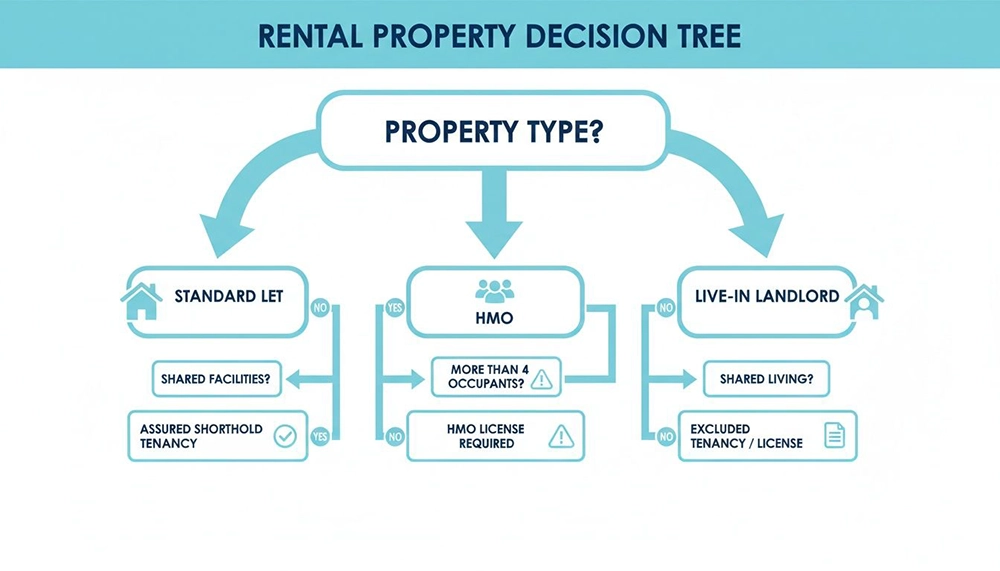
As you can see, the type of property—whether it's a standard let, a shared house, or a room in your own home—is the deciding factor for the legal paperwork you must use.
Which Tenancy Agreement Do You Need?
Still not sure? This table breaks it down into common scenarios to help you find the right fit instantly.
| Scenario | Recommended Agreement | Key Feature | Best For |
|---|---|---|---|
| I'm renting out a whole house or flat. | Assured Shorthold Tenancy (AST) | Provides tenant with exclusive possession and strong legal rights. | Standard single-family or single-household lets. |
| I'm renting a spare room in my own home and sharing facilities. | Lodger Agreement (Licence) | The renter is a 'licensee', not a tenant. Much more flexible for the landlord. | Homeowners with a spare room looking for extra income. |
| I'm renting rooms individually in a shared student house. | AST with HMO-Specific Clauses | A standard AST is used, but with extra clauses for managing shared living. | Properties with 3+ tenants from different households sharing facilities. |
| I want a rolling, flexible contract with no fixed end date. | Periodic AST | Continues month-to-month, can be ended with appropriate notice from either side. | Landlords and tenants who value flexibility over long-term security. |
| I want to guarantee the tenancy for a specific period (e.g., 12 months). | Fixed-Term AST | The contract has a defined start and end date, locking in the terms. | Landlords and tenants seeking stability and predictable income/outgoings. |
Choosing the right document from the start prevents legal headaches and sets clear expectations for everyone.
Specific Clauses for a House in Multiple Occupation (HMO)
A House in Multiple Occupation (HMO) is a property rented out by at least three people who aren't from one 'household' (like a family) but share facilities like the bathroom and kitchen. The classic example is a student house share.
While the contract used is often an AST, it needs extra, specific clauses to properly manage the shared living environment. These additions are vital for preventing the common friction points that pop up in shared houses.
They often cover things like:
- Shared Responsibilities: Rules for cleaning rotas in communal areas and how shared bills are managed.
- Tenant Conduct: Clauses covering noise levels, overnight visitors, and respectful use of shared spaces.
- Waste Disposal: Clear instructions for bin rotas and recycling to keep the council happy.
- Room-Only Tenancies: In some HMOs, tenants have an agreement for their specific room plus the use of common parts, rather than a joint tenancy for the whole property.
These extra terms beef up a standard AST, making it fit for the unique challenges of running an HMO and helping ensure a smoother experience for everyone living under one roof. By picking the right tenancy agreement sample and tailoring it correctly, you establish clear expectations and legal protection from day one.
Downloadable Tenancy Agreement Samples
Knowing the theory is one thing, but having the right tools in your hands is what gives you the confidence to get things done properly. This section is all about those practical tools: a collection of downloadable tenancy agreement samples built for the most common rental situations you'll come across in the UK.
Don't think of these as rigid, final documents. Instead, see them as expert-built foundations, ready for you to adapt to your specific property and situation. Each template is more than just a file; it's a guided tour through the legal jargon. We've added annotations throughout, explaining key clauses in plain English so you don't just use a template—you actually understand it.

Fixed-Term Assured Shorthold Tenancy (AST) Sample
This is the bread and butter of UK lettings. It’s the agreement you’ll use for renting out an entire property for a set period, usually six or twelve months. It gives both you and the tenant peace of mind by locking in the rent and terms for the agreed duration. This is your go-to for standard family homes, flats, or apartments.
- Ideal for: Landlords who want a stable, predictable income and tenants who need the security of a guaranteed home for a specific time.
- Key Annotated Clauses: Keep an eye out for our notes on the break clause (which explains how to end the tenancy early) and the deposit protection section—a critical legal requirement you can't afford to get wrong.
- Download Link: Download our Annotated Fixed-Term AST Template here (Note: Link is for demonstration).
Remember, a Fixed-Term AST legally binds both parties for the entire term. Ending it early is only possible if both sides agree or a specific break clause is activated correctly.
Periodic Assured Shorthold Tenancy (AST) Sample
When flexibility is the name of the game, a Periodic AST is the perfect choice. This agreement runs on a rolling basis, typically month-to-month, with no fixed end date. It creates a much more adaptable arrangement, which is perfect when long-term plans are up in the air for either the landlord or the tenant.
- Ideal for: Landlords who might need their property back with shorter notice, or tenants who need a flexible living situation without a long-term commitment.
- Key Annotated Clauses: Pay close attention to the notice period clause. Our annotations clarify the legal minimums for both landlords (using a Section 21 notice) and tenants to end the agreement lawfully.
- Download Link: Download our Annotated Periodic AST Template here (Note: Link is for demonstration).
Lodger Agreement (Licence to Occupy) Sample
Renting out a spare room in the home you live in is a totally different legal kettle of fish from a standard tenancy. This is where a Lodger Agreement comes in. It sets up a 'licence to occupy' rather than a tenancy, which legally makes the person a guest in your home and gives you, the resident landlord, much more flexibility.
- Ideal for: Homeowners living in the property who want to rent out a spare room and share common areas like the kitchen or bathroom.
- Key Annotated Clauses: The notes here highlight the clauses on shared areas and the notice to quit. Notice periods for lodgers are often much shorter and, crucially, you don't need a court order for eviction, a massive distinction from an AST.
- Download Link: Download our Annotated Lodger Agreement Template here (Note: Link is for demonstration).
House in Multiple Occupation (HMO) Clause Addendum
Running a House in Multiple Occupation (HMO) brings extra responsibilities, and a standard AST just won't cut it on its own. While you'll still use a fixed-term or periodic AST as the foundation, you need to add specific clauses to manage the unique challenges of shared living. This addendum gives you those essential extra terms.
This isn't a standalone agreement. Think of it as a set of pre-written clauses that you simply insert into your main AST. This keeps your core agreement solid while addressing the specific dynamics of an HMO.
Our HMO addendum includes ready-to-use and annotated clauses covering:
- Cleaning Rotas: Setting out clear responsibilities for keeping communal areas tidy.
- Guest Policies: Laying down clear rules on overnight visitors to keep things peaceful.
- Noise and Conduct: Defining what's acceptable to make sure everyone can enjoy their home.
- Shared Bill Management: A simple framework for how utilities and other shared costs will be split.
- Download Link: Download our Annotated HMO Clause Addendum here (Note: Link is for demonstration).
By starting with these expertly crafted and clearly explained tenancy agreement samples, you can build a solid legal foundation for any rental, protecting both your investment and your relationship with your tenants from day one.
How to Finalise and Sign Your Agreement
You’ve found the right template, filled in the blanks, and are almost ready to go. This final step—turning that template into a legally binding contract—is the most important part of the whole process. Getting the details right now is your best defence against headaches and disputes down the line.
This checklist will walk you through finalising and signing your agreement, making sure everything is clear, correct, and watertight for everyone involved.

Think of it like building flat-pack furniture. You’ve got all the pieces (the clauses) and the instructions (our annotations). Now, you just need to put it together carefully. Rush this stage, and you’ll end up with a wobbly, unstable tenancy that’s bound to cause problems.
The Pre-Signing Checklist
Before a single signature hits the page, a thorough review is non-negotiable. Both the landlord and every single tenant need to read every word. This isn’t just a box-ticking exercise; it’s the last chance to clear up any confusion before it becomes a real issue.
Here’s exactly what you need to check and complete:
- Fill in All Party Details: Get the full legal names of the landlord(s) and all tenants who will be living there. Double-check the property address is perfect, right down to the postcode.
- Define the Financials: Write down the exact rent amount, the day it’s due each month (e.g., the 1st of the month), and how it should be paid. You also need to state the security deposit amount and name the specific government-approved scheme where it will be protected.
- Confirm Tenancy Dates: Pin down the precise start date and, for fixed-term contracts, the exact end date. Any fuzziness here is a recipe for arguments about notice periods later on.
A tenancy agreement is only as strong as its weakest clause. Taking the time to ensure every detail is accurate and mutually understood is the best way to prevent future conflict and protect everyone’s interests.
Customising Your Agreement
Most good templates will have space for you to add your own clauses. This is your opportunity to tailor the contract to your specific property and situation.
A few common additions include:
- Pet Clauses: If you're allowing pets, be specific. Name the type and number of pets and clarify the tenant's responsibility for any damage.
- Smoking Policies: Be crystal clear about whether smoking is allowed anywhere on the property, and that includes balconies or gardens.
- Gardening Responsibilities: If there’s a garden, who’s mowing the lawn or pulling the weeds? Spell it out so there’s no confusion.
Once you’ve added your clauses, it’s a brilliant idea to attach a full inventory report. This document should be packed with dated photos and detailed descriptions of the property's condition before the tenants move in. Get both sides to sign it. It's the single best tool for avoiding deposit disputes when the tenancy ends.
If you need a bit of personalised advice on tailoring your agreement, you can always get in touch with our team for guidance.
Executing the Agreement
With everyone happy with the document, it's time to make it official. These days, you’ve got two main options for signing, and both are perfectly legal when done right.
Physical Signatures
This is the old-school way. Everyone meets up to sign two identical copies of the agreement—one for the landlord, one for the tenants. It’s good practice for each person to initial every single page and then put their full signature on the last page. You can have a neutral third party witness the signatures if you want extra peace of mind, though it’s not always a legal must-have for an AST.
Digital Signatures
This method is becoming incredibly popular because it’s so quick and convenient. Digital signatures are a secure and efficient way to lock in a tenancy. Once you've chosen your agreement, the next step is often to understand how to electronically sign a PDF document properly. Using a trusted e-signature service ensures the document can’t be tampered with and creates a clear audit trail showing who signed and when. Simple. Everyone gets a final, executed copy emailed to them instantly, creating a secure record for all.
Dodging the Common Legal Pitfalls in Your Agreement
Your tenancy agreement is your single most important legal safeguard. Thinking of it as just another piece of paperwork is a classic mistake, and one that can easily lead to costly disputes, painful legal penalties, and a soured relationship with your tenant. Knowing the most common legal traps is your best line of defence.
Many landlords, especially new ones, get tripped up by the strict rules around tenancy deposits. This isn't just an admin task you can get to later; it's a critical legal duty with a tight deadline.
You have exactly 30 days from the moment you receive the deposit to protect it in a government-approved scheme. Get this wrong, and you could be hauled into court and ordered to pay your tenant up to three times the deposit amount as compensation. On top of that, an unprotected deposit can completely block you from using a Section 21 notice to get your property back.
The Danger of Unfair Terms
It's tempting to add clauses to your agreement to cover every imaginable situation, but you can't just make up any rule you like. The Consumer Rights Act 2015 is there specifically to protect tenants from 'unfair terms' in a contract.
So, what makes a term unfair? Generally, it's anything that creates a major imbalance in rights and responsibilities, stacking the deck unfairly against the tenant.
Here are a few classic examples of terms that would likely be thrown out:
- A clause letting you enter the property whenever you want, without any notice.
- A term that makes the tenant responsible for all repairs, no matter what caused the damage.
- A clause that lets you unilaterally change the rules of the agreement after it’s been signed.
An unenforceable clause doesn't just get ignored; it can seriously damage the credibility of your entire agreement. Always make sure your terms are fair, crystal clear, and fully compliant with UK law.
The Non-Negotiable Compliance Steps You Can't Afford to Skip
Beyond the agreement itself, there are several procedural hoops every landlord in England must jump through. Miss any of these, and you could find your contract is invalid or your legal options are severely limited down the line.
The private rental sector in England is huge, now accounting for 8.6 million homes, and with median rents on new tenancies jumping by 11%, getting the compliance right has never been more vital. This is why having strong tenancy agreement samples is so important for staying on the right side of UK housing law. Even for homeowners with a lodger, where licence agreements fell to 10% of new social housing lettings in 2024/25, using the correct documentation remains essential. You can dig into more of these social housing statistics on the official government website.
Before your tenant even moves in, you are legally required to give them a specific set of documents:
- The 'How to Rent' Guide: You must provide the very latest version of this government checklist right at the start of the tenancy.
- Gas Safety Certificate: A copy of the current certificate from a Gas Safe registered engineer is a must.
- Energy Performance Certificate (EPC): This certificate details the property’s energy efficiency rating.
Just like failing to protect a deposit, not serving these documents correctly can invalidate a Section 21 notice. These aren't just helpful suggestions; they are fundamental legal duties. By getting ahead of these common pitfalls, you protect your investment, build a foundation of trust with your tenant, and make sure your rental operates on solid, lawful ground from day one.
Understanding Your Rights and Responsibilities
A tenancy agreement isn’t just a pile of paperwork; it’s the rulebook for the professional relationship between a landlord and a tenant. When you think about it, most arguments don't start over huge issues. They bubble up from simple misunderstandings about who's meant to do what.
Getting these duties clear from day one is the secret to a smooth, respectful tenancy. This contract turns mutual expectations into legally binding terms, stopping small problems from spiralling into major headaches.
Key Landlord Responsibilities
As a landlord, your main job is to provide a safe and liveable home. This isn't just a friendly suggestion—it’s a set of concrete legal duties that protect your tenants and, ultimately, your own investment.
Your core obligations boil down to this:
- Provide a Safe Property: This means getting the property properly checked. You'll need a valid Gas Safety Certificate and an Electrical Installation Condition Report (EICR) to prove it's safe.
- Protect the Deposit: Once you receive the tenant's deposit, the clock starts ticking. You have 30 days to protect it in a government-approved scheme and give the tenant all the official paperwork.
- Respect Tenant Privacy: The property is your tenant's home, and they have a right to 'quiet enjoyment'. You must give at least 24 hours' written notice before visiting, unless there's a genuine emergency.
Think of your duties as the foundation of a house. If that foundation is shaky—say, you forget a safety check or mishandle the deposit—the whole tenancy becomes unstable, leaving you wide open to serious legal trouble.
Core Tenant Obligations
It’s a two-way street. Tenants also have a clear set of responsibilities, mostly centred around looking after the property and paying their way. These duties ensure your investment is respected and kept in good shape.
A tenant's main responsibilities are:
- Pay the Rent on Time: This is the most basic part of the deal. The agreement will lock in the amount and the day it’s due.
- Look After the Property: Tenants need to keep the place reasonably clean and tidy. This is often called acting in a 'tenant-like manner'—essentially, using the home and its fittings properly and not causing damage.
- Report Repairs Quickly: If a pipe starts leaking or the boiler gives up, the tenant needs to let you or your agent know straight away. A quick report can stop a small drip from becoming a massive disaster.
The UK's private rental sector is buzzing. The number of rental homes in England shot up by 36% to reach 8.6 million by 2023. With median rents for new tenancies jumping by 11%, having a crystal-clear understanding of these responsibilities is more vital than ever to keep things fair and dispute-free. You can read more about these fascinating UK rental market statistics from Alan Boswell.
Ultimately, a solid agreement built from reliable tenancy agreement samples makes sure everyone knows exactly where they stand. For more hands-on advice on making your rental a success, why not explore other topics on our blog?
A Few Common Questions
Even with the most carefully drafted agreement, it's natural for questions to pop up once everyone's settled in. Here, we tackle some of the most common queries that land in our inbox from both landlords and tenants, giving you quick, practical answers to keep things running smoothly.
Can a Tenancy Agreement Be Changed After Signing?
Once the ink is dry, a tenancy agreement becomes a legally binding contract, meaning one person can't just decide to change the rules. Any tweaks or amendments need a thumbs-up from everyone involved—that means the landlord and all the tenants on the agreement.
If you all agree on a change, it's vital to get it down in writing. The proper way to do this is with a document called an addendum. This paper should clearly outline the new clause or the change to an existing one. To make it official and legally binding, everyone needs to sign and date it.
What Happens If There Is No Written Tenancy Agreement?
Believe it or not, a tenancy can legally exist without a single piece of paper. The moment someone starts paying rent for a place to live, a verbal tenancy agreement is automatically created. But honestly, this is a recipe for disaster and creates huge uncertainty for both sides.
Without a written contract, trying to prove the original terms—like the exact rent, the notice period, or whether pets were allowed—becomes a messy game of "he said, she said." The law will generally assume it's a periodic Assured Shorthold Tenancy (AST), but relying on that leaves everyone exposed to potential disputes. A proper written agreement is always the professional and safer route.
A verbal agreement isn't worth the paper it's not written on. It leaves both landlords and tenants exposed, turning simple disagreements into complicated legal battles that could have been easily avoided.
How Much Notice Is Required to End a Tenancy?
There’s no single answer to this one; the notice period depends entirely on the type of agreement you have and who's looking to end it.
Here’s a quick rundown of the usual scenarios:
- Fixed-Term AST: A tenant can't typically leave early unless there's a specific break clause in the contract that they can activate correctly. Landlords are also locked in for the term unless there are serious legal grounds for eviction.
- Periodic AST: When the fixed term is over and the tenancy rolls on, tenants usually need to give at least one month's notice. Landlords, on the other hand, must provide at least two months' notice, typically via a formal Section 21 notice.
- Lodger Agreement: If you're a live-in landlord, the agreement usually calls for 'reasonable notice'. This is often tied to the rental period, so it's commonly 28 days.
Ready to find the perfect tenant or your ideal room? At Rooms For Let, we've been connecting landlords and tenants across the UK since 2000. Advertise your spare room or browse thousands of listings today at https://www.roomsforlet.co.uk.