You’re probably in one of two moods right now. Either you’ve got twenty tabs open trying to find a spare room for rent london that doesn’t swallow your pay packet, or you’ve got a decent room sitting empty and you want the right person in it without months of hassle.
Both situations can feel messier than they should. London has never been simple, and room hunting in particular comes with its own language, its own unwritten rules, and its own hidden costs. The headline rent only tells part of the story. A “cheap” room can become expensive once you add travel, bills, or a house that’s badly run. A “premium” room can turn out to be fair value if it saves you time, stress, and constant move-outs.
I’ve seen people overpay because they chased the wrong postcode. I’ve seen landlords leave rooms empty because they priced them for the market that existed a year earlier, not the one in front of them now. The good news is that London still offers good room deals if you know where to look and what to compare.
Your Complete Guide to Renting a Room in London
A room move in London usually starts with a deadline. The tenancy is ending. A new job starts in two weeks. A relationship changes. A live-in landlord decides to let out the spare bedroom. Nobody begins this process because they fancy reading housing jargon over breakfast.
That’s why it helps to treat the search like a practical problem, not a mystery. If you’re a tenant, your job is to work out three things early: what you can comfortably afford each month, how far you’re willing to travel, and what kind of household you’ll enjoy living in. If you’re a landlord or homeowner, your version is similar. You need to know what sort of occupier suits the home, what your legal setup is, and how to present the room accurately enough to attract the right match.
A lot of people get stuck because they focus only on the room itself. In London, the bigger picture matters just as much. The local high street matters. The bus link matters. The house culture matters. So do bills, deposit terms, and whether the person advertising the room is organised or chaotic.
If you want extra reading after this, the room rental advice and flatsharing resources library is useful for checking practical points as you go.
Good room decisions in London rarely come from rushing. They come from comparing the full monthly living picture, then choosing the home that still looks sensible on a tired Tuesday night.
Understanding the London Rental Market in 2026
You find a room in Zone 2 for a price that looks manageable. Then the maths changes. The bills are extra, the Tube fare is steeper than you expected, and the nearest affordable supermarket is two bus rides away. A week later, a slightly pricier room in a different borough starts to look cheaper in real life.
That is the key to London in 2026. The room market is softer than it was at its most frantic, but cheap has not returned. Good value still comes from reading the full monthly picture, not just the headline rent.

One clear signal came in early 2025. In Q1 2025, the average monthly room rent in London fell by 1% year on year to £982, making London the only UK region to record a decline, while the national average outside London rose to £662. The same report noted that the number of London postcodes with average room rents under £800 dropped from 81 in 2020 to just five by 2025. You can see the figures in the Q1 2025 SpareRoom rental index coverage.
A small drop matters, but context matters more. If a coat in a shop falls from £100 to £99, it is still a £99 coat. London rents work the same way. After years of strong growth, a slight cooling gives people a bit more choice, yet it does not suddenly make the city affordable.
That catches people out.
Tenants hear that rents have eased and expect a calmer search. Landlords hear the same thing and assume demand has vanished. Neither view is quite right. Well-priced rooms in tidy homes near useful stations still move quickly. Overpriced rooms, badly presented adverts, and awkward house shares now sit around longer than they did during the post-pandemic scramble.
The useful shift is not “London is cheap now.” It is “London is more uneven now.”
Some boroughs and postcode clusters still behave like a seller’s market, especially where a room combines fast transport, pleasant streets, and decent house quality. Other areas have become more negotiable, especially where the asking rent ignores hidden costs such as high travel spend, expensive parking permits, limited late-night transport, or bills listed separately.
Why affordability now depends on borough details
A lot of renters still search by zone first. That is understandable, but zone maps can hide the actual value. Two rooms with the same rent can produce very different monthly totals depending on the borough and the way you live.
Here is the practical version I give friends:
| Headline question | What to check underneath |
|---|---|
| Is the rent low? | Are bills included, and are they capped or estimated? |
| Is the area cheaper? | Will you spend the saving on trains, buses, or Ubers home? |
| Is the room near a station? | Is it one reliable line, or a fiddly chain of bus plus Tube plus walk? |
| Is the borough good value? | Are groceries, gyms, and basic errands affordable nearby? |
This is why hyper-local comparison matters. One part of a borough can feel like a bargain and another can drain your budget. In London, value often sits one or two stops away from the obvious hotspot, or on the less fashionable side of a borough boundary where the commute is still straightforward.
What the softer market changes for tenants and landlords
For tenants, the main advantage is breathing room. You can compare more carefully, ask whether council tax is included, check if the heating works properly, and question a rent that feels out of line with nearby listings. A few years ago, many people skipped those checks because they feared losing the room in an hour.
For landlords, the lesson is simple. Memory is not a pricing strategy. If a room was snapped up at a premium in 2023 or 2024, that does not mean the same advert will work now. Clear photos, honest descriptions, a sensible bill setup, and an asking price tied to local competition matter more in a market with more comparison shopping.
Practical rule: judge a room the way you judge a weekly shop. The shelf price matters, but the total at the till is what counts.
What to watch in 2026
The biggest mistake is reading “average London rent” as if the whole city moves together. It does not. London behaves more like a patchwork of mini-markets than one single room market. A household in Walthamstow, a spare room in Bromley, and a flatshare near Clapham Junction may all attract different kinds of tenant, different budgets, and different negotiation room even within the same month.
So if you are trying to understand the market in 2026, focus on three things:
- How flexible the asking price seems in that exact area
- What hidden monthly costs sit outside the rent
- Whether the borough offers everyday value, not just a lower sticker price
That approach gives you a truer picture of affordability than any London-wide average on its own.
How to Choose Your London Neighbourhood for Value
A common starting point is zones. That’s understandable, but it’s not enough. Value in London doesn’t come from picking the farthest place you can tolerate. It comes from finding the area where your total life works. Rent is part of that. So are transport links, food shops, house quality, and whether you’ll resent the commute after three weeks.
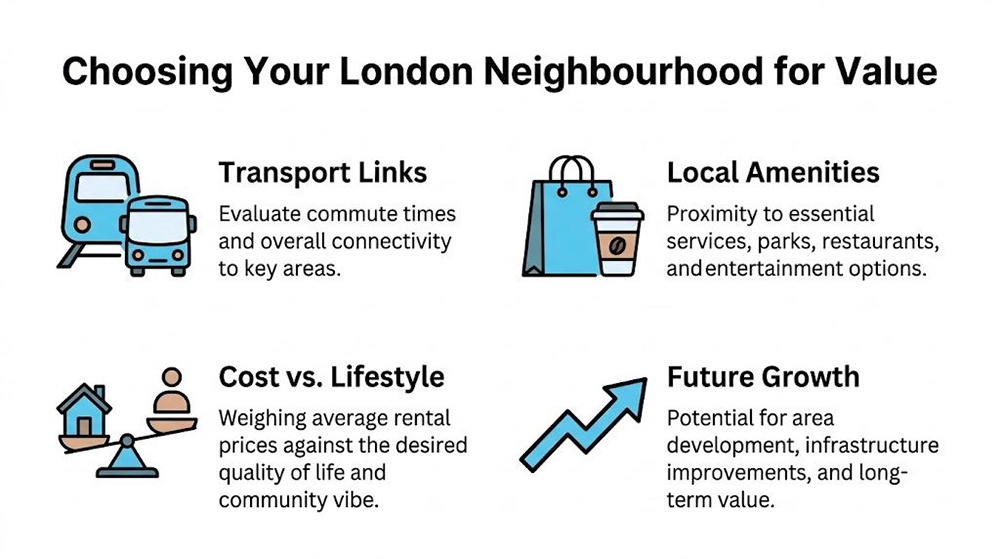
One useful anchor point is this. From Q3 2020 to Q3 2025, average London room rents rose 37%, from £728 to £995. Within that picture, south east London averaged £951 in Q3 2025, making it the most budget-friendly area in that source, while commuter hotspots such as St Albans recorded a 10% year-on-year increase. Those figures are from the London rents Q3 2025 statistics page.
What “good value” really means
A room is good value when the full arrangement makes sense for your life. A cheaper room can be poor value if:
- Travel eats the saving: A long or awkward commute can drain both money and energy.
- The house is badly run: Frequent flatmate turnover, weak cleaning standards, or poor maintenance create hidden costs.
- Local basics are thin on the ground: If every supermarket trip is inconvenient, daily life becomes harder than the headline rent suggests.
A more expensive room can still be decent value if it gives you an easier routine, stable housemates, and a simpler monthly budget.
A borough mindset beats a zone mindset
London renters often make better choices when they think in clusters rather than broad labels. “South east London” is useful as a guide, but your real experience comes down to the immediate patch around the property. Two streets can feel very different.
That said, some patterns hold up in practice:
- South east pockets often appeal to renters who want a lower entry point without abandoning London life.
- North London pockets can work well for renters who prioritise transport and established neighbourhood amenities.
- Outer suburban areas suit people willing to trade nightlife-on-the-doorstep for more space and a calmer home setup.
- Commuter towns can make sense for hybrid workers, but they need proper cost checking. A lower room rent can be offset by regular travel.
London Neighbourhood Value Snapshot 2026 Estimates
The table below uses only verified rent figures where they exist. Commute and “best for” notes are qualitative so you can compare the shape of each option without pretending every neighbourhood behaves the same way.
| Neighbourhood | Average Monthly Rent (pcm) | Avg. Commute to Zone 1 | Best For |
|---|---|---|---|
| South east London | £951 | Moderate, depending on station and line | Budget-conscious renters who still want London amenities |
| North London | £961 | Often straightforward on established routes | Professionals who want strong transport and busy local centres |
| Kingston upon Thames | £926 | Longer than inner London, but workable for many commuters | Renters wanting suburban feel with London access |
| St Albans | Qualitatively higher pressure due to rising demand | Commuter rail dependent | Hybrid workers and those prioritising town-centre living outside London |
| Central WC postcodes | £1,339 | Short | People paying for centrality above all else |
Hidden costs that change the maths
The process often leads many room hunters to either save a lot of money or accidentally commit to the wrong place.
Bills and what “included” actually buys you
An all-bills-included room can look pricier at first glance and still work out better. It gives you budgeting certainty. It also reduces arguments in mixed households where one person works from home, another blasts heating, and nobody can agree who owes what.
If bills aren’t included, ask exactly how the split works. Don’t settle for “we usually work it out somehow.” That sentence has launched a thousand house-share disputes.
Commute shape matters more than commute length
A direct train and a single bus can cost you the same amount of time on paper, but the lived experience is different. Frequent changes, long walks to stations, and patchy late-night routes make a cheap room feel less cheap.
A London room isn’t only where you sleep. It’s the route home in the rain, the shop you use when you’re shattered, and the kitchen you walk into after work.
Local spending patterns
Area value isn’t only about rent. It’s also about whether your nearby routine is affordable. If the only options around you are expensive cafés, convenience stores, and takeaway-heavy high streets, your weekly spend climbs gradually.
Matching areas to renter type
Different renters often need different versions of value.
Students usually need a clear budget, decent transport, and a household rhythm that won’t make revision miserable. Areas with practical shopping, libraries, and straightforward routes can beat trendier postcodes every time.
Young professionals often do best in places that balance social life with weekday practicality. A lively high street is great. A lively high street directly under your bedroom window is not always great.
Contractors and short-term renters often care more about flexibility and journey reliability than neighbourhood prestige. If the room is clean, well-managed, and easy to reach from the job site, that’s usually the winning formula.
A simple value test before you say yes
When comparing two rooms, ask yourself:
- Which one gives me the calmer weekday?
- Which one keeps my monthly spending more predictable?
- Which area still works for me when I’m tired, busy, or coming home late?
- Would I still choose this if the photos were less flattering?
If one room wins most of those answers, it’s usually the better deal, even if it isn’t the cheapest on the page.
The Landlords Playbook Advertising Your Spare Room
It is 8:30 pm, you have finally uploaded your room advert, and by breakfast there are still no serious messages. That usually is not bad luck. It is usually one of three things. The price is out of line with the street, the listing leaves too many gaps, or the advert promises one kind of home while the room clearly belongs to another.
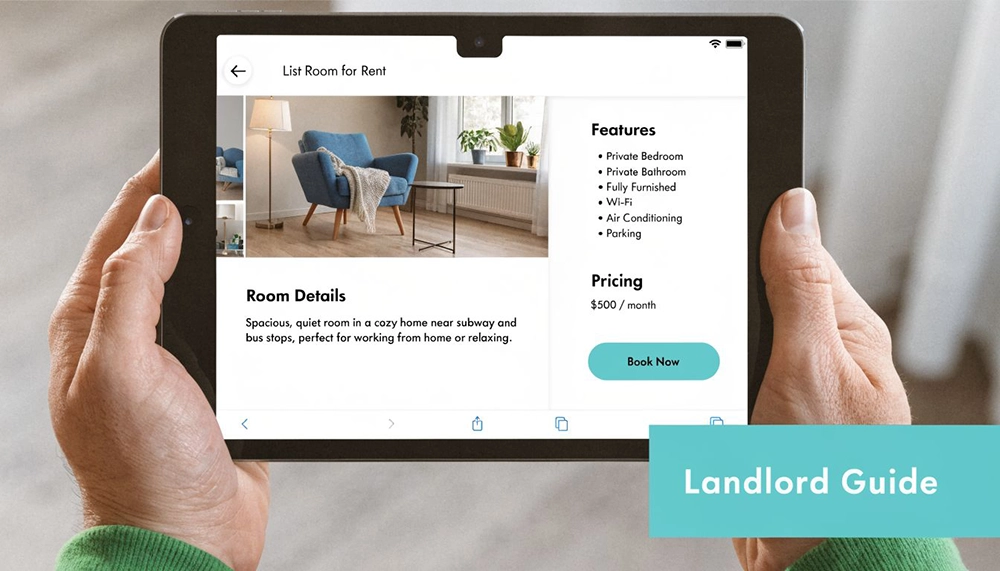
London landlords often make the same mistake tenants make. They compare only by postcode headline and ignore the details that shape value. A spare room in a cheaper-looking borough can still be poor value if the occupier faces high bus costs, limited late-night transport, or overpriced corner shops. A room in a less fashionable pocket of a pricier borough can let quickly if the walk to the station is simple, bills are included, and the household runs calmly. Good adverts make that value visible.
Start with the legal setup
Work out what you are offering before you write a single line.
If you live in the property and rent out a room in your own home, the occupier may be a lodger. If you rent out a room in a property where you do not live, the occupier may be a tenant under a different arrangement. If several unrelated people share the property, HMO rules may apply, depending on the property and the council.
These are not fussy labels. They shape notice periods, access, paperwork, safety duties, and how house rules should be handled. If you want a broader primer before listing, this complete guide on how to rent rooms in your house covers the practical checks landlords and homeowners should make.
Price the actual room, not the version in your head
It is at this point that many adverts go stale.
A landlord sees a large double room and remembers what a friend got in Clapham six months ago. A tenant sees a fourth-floor walk-up, one small freezer drawer, a long bus link to the station, and a bathroom shared with three strangers. Both are looking at the same room, but only one is pricing the actual experience.
Start with nearby room listings, then adjust for the details people feel every day:
- Bills included or separate. A slightly higher rent with council tax, broadband, and energy wrapped in can feel safer than a lower rent with shifting extras.
- Transport rhythm. A 12-minute walk to an Overground stop is different from a 12-minute walk plus a bus that turns unreliable at night.
- Household pressure points. One bathroom for two people is different from one bathroom for five.
- Storage and workability. A room that fits a desk properly will usually attract better enquiries than one that only photographs well.
- Local spend. If the nearest affordable supermarket is two bus rides away, your room is less attractive than the rent alone suggests.
That last point matters more than many landlords realise. Tenants do not rent only the four walls. They rent the weekly routine attached to them.
Write like a person who actually lives there
The best room adverts answer the questions people are too polite to ask in the first message.
Say who lives there. Say whether the house is quiet on weeknights. Say whether everyone cooks at different times or the kitchen gets crowded at 7 pm. Say whether the road is lively, whether the windows are good, whether the wifi holds up on work calls, and whether the cleaner comes or the house handles cleaning itself.
Plain English works better than sales language. “Warm room, good light in the morning, shared bathroom with one other person, 8 minutes to Brockley station, big Tesco on the walk home” does more work than “stunning double room in sought-after area.”
A strong advert usually includes four things:
Room details that answer practical questions
State the bed size, storage, furnishing, desk space, and whether the room suits home working. “Compact double with under-bed storage” is clearer than “spacious.” If there is a sloped ceiling, mention it. If the room gets road noise on Friday nights, mention that too.
House details that set expectations early
Explain how many people live there, what their rough routines are, and what kind of household works best. Social homes and quiet homes both let well. Confusing the two creates wasted viewings.
Cost details that stop time-wasting
List the monthly rent, what is included, deposit terms, move-in date, and any upfront costs. If bills are capped, say so. If the cleaner is included, say how often. If parking costs extra through a local permit, say that as well.
Area details that show value properly
Do not just name the nearest station. Add what daily life is like. Mention the useful bus route, the affordable supermarket, the gym people use, or the market that keeps food costs down. In London, borough-level value often hides at micro level. One side of a high street can feel much cheaper to live on than the other.
Photos should reduce doubt
Tenants are scanning for signs of care.
Use daylight. Open the curtains. Put away drying racks, half-empty shampoo bottles, and the mystery charger nest by the bed. Photograph the bedroom, kitchen, bathroom, storage, and the route into the room if access is awkward.
Keep the camera honest. Wide-angle shots that make a box room look like a dance studio only create distrust at viewing stage. A clear photo of the wardrobe, desk, and window tells a tenant far more than a dramatic corner shot.
A sample advert you can adapt
Bright furnished double room in calm shared home near Brockley station
Double room available in a tidy professional house share. The room has a double bed, wardrobe, chest of drawers, and a proper desk for home working. It suits someone who wants a quiet weekday base rather than a party house.
The bathroom is shared with one other person. Rent is £[insert amount] per month and includes [state bills clearly]. Brockley station is an easy walk away, and there is a large supermarket and several lower-cost food shops nearby, which helps keep weekly spending predictable. Please state your move-in date, whether you work from home, and whether you are looking for a lodger or tenancy arrangement.
Prepare for viewings like a careful host
A viewing is a trust test. People are asking themselves, “If this person handles the advert like this, how will they handle repairs, privacy, and deposits?”
Use a simple checklist:
- Fix obvious snags first. Loose handles, dead bulbs, peeling sealant, and stiff locks make viewers assume bigger problems are being ignored.
- Air the room properly. Smells travel faster than good intentions.
- Have the facts ready. Rent, deposit, agreement type, bills, council tax position, move-in date, and household routine should be easy to explain.
- Answer awkward questions directly. Noise, guests, heating, internet reliability, and bathroom sharing are normal questions.
- Know why your room is good value locally. If the room is not the cheapest in the area, explain the difference clearly. Included bills, a shorter walk, fewer sharers, or better local shopping can justify the price.
If you are deciding where to place the listing, the Rooms For Let advert pricing page is a useful place to compare advert options and visibility.
The Tenants Toolkit Finding and Securing a Room
Most room searches go wrong in one of two ways. People either drift through listings without a plan, or they panic-apply to everything and end up in the wrong house. The trick is to move quickly without becoming careless.
The room-share crowd is broader than many people expect. Renters over 45 have doubled as a share of the market since 2014 and now make up over 20% of roommates, reflecting stronger demand from mature professionals and contractors for flexible room lets, according to the SpareRoom statistics page. That matters because it reminds you not to assume every house share is the same. Some homes are social. Some are quiet. Some run more like professional lodging than student digs.
Build a search that saves you time
The best searches are filtered hard from the start. Decide your absolute requirements before you open listings. If you don’t, every room starts looking possible at midnight.
Use a shortlist like this:
- Budget reality: What can you pay comfortably every month once travel and daily life are included?
- Agreement type: Do you need flexibility, or do you want more stability?
- Household style: Social house, calm professional house, mixed ages, live-in landlord, or larger HMO.
- Travel pattern: Daily commute, hybrid work, shift work, or site-based contract.
For active searches, set up alerts and keep your criteria tight on the room search page for available listings.
What to say in the first message
Landlords and existing flatmates can tell immediately whether someone has read the advert. A good opening message is short, specific, and easy to trust.
Include who you are, what you do, when you need to move, and why the room suits you. If you work from home often, say so. If you need short-term flexibility, say so. If you prefer a quiet house, say so. You’re not trying to sound impressive. You’re trying to sound compatible.
Be honest early. The wrong house share is expensive even when the rent looks fine.
What to check at a viewing
A room viewing is not just for admiring the bedroom. You are inspecting the household.
Ask the questions people forget
- How are bills handled? Shared equally, included, or settled informally?
- Who cleans what? If nobody knows, that usually means future friction.
- How long do people typically stay? Regular turnover changes the feel of a house.
- What’s the noise level like on weekdays and weekends?
- How are repairs handled? Fast answers matter.
Look beyond the room itself. Check kitchen storage. Check bathroom condition. Check whether people seem relaxed around each other or politely trapped.
A quick visual guide can help if you’re new to the process:
Spotting red flags without overthinking
You don’t need to become paranoid, but you do need standards.
Walk away if:
- You’re pushed for money before a proper viewing or clear paperwork
- Basic questions are answered vaguely
- The advert and the actual property don’t match
- The household dynamic feels tense or chaotic
- Nobody can explain the agreement, deposit, or notice terms
If you can’t view in person, try to arrange a live video call and ask to see the entrance, kitchen, bathroom, and bedroom in one continuous walk-through. Edited clips prove very little.
How to make yourself the easy yes
Good applicants are organised. They turn up on time. They reply promptly. They know their move date. They can explain their work or study situation clearly. They don’t invent a personality just to secure the room.
If you want the room, say so directly after the viewing. Then send whatever documents the landlord reasonably asks for without disappearing for two days. In room letting, reliability often beats flashiness.
Finalising the Deal Contracts Deposits and Safety
This is the point where excitement makes people sloppy. Don’t let it. A good room arrangement becomes much better when both sides slow down and write things down properly.
The main confusion is usually the agreement type. A lodger agreement often applies when the landlord lives in the property. A tenancy agreement is commonly used in other setups. The name matters less than the content. Read the clauses on rent, notice, deposit, house rules, guests, and what happens if either side wants to end the arrangement.
What to check before money changes hands
Ask for the agreement before move-in day, not while you’re standing in the hallway with bags. Both parties need time to read it calmly.
Focus on these points:
- Rent and due date: Make sure the payment day and method are clear.
- Deposit terms: Confirm the amount, the conditions for deductions, and when it should be returned at the end.
- Bills: Included, excluded, or partly shared. This should be written, not guessed.
- Notice period: Both sides need to know the exit process.
If anything sounds hand-wavy, fix it before you move in.
Long-term affordability is more than postcode choice
One of the biggest gaps in rental advice is sustained affordability. Location matters, but it isn’t the whole answer. The wider guidance gap highlighted on HousingAnywhere’s London room listings page is the lack of practical help on things like flexible lease terms and all-inclusive utilities.
That’s worth taking seriously. For many students and young professionals, the better deal isn’t always the cheaper room. It’s the room with fewer surprise costs.
Consider discussing:
- All-inclusive bills if you need budget certainty.
- Flexible lease terms if your work or study schedule may change.
- Clear utility arrangements if bills are separate.
- Reasonable guest rules so everyday life doesn’t become awkward.
Safety for both sides
Tenants should make sure the property feels legitimate, the person letting it has the right to do so, and the home appears safe and lived in. Landlords should check references where appropriate, confirm identity, and make sure smoke alarms, locks, and basic safety measures are in place.
If either side feels rushed, confused, or pressured at the contract stage, pause. Sensible room deals survive a day’s delay.
A final inventory helps more than people think. Even for a single room, note what furniture is included and what condition it’s in. It prevents the end of the arrangement turning into an argument about a desk chair nobody remembers properly.
Your London Room Rental Questions Answered
Who usually pays council tax in a flatshare
It depends on the setup. In many shared houses, the legal responsibility sits with the landlord, but the cost may be built into the rent or recovered through the household arrangement. Ask directly and get the answer in writing.
Is a short-term room let normal in London
Yes, especially for contractors, interns, and people between longer moves. The key is clarity. Everyone should know the move-in date, expected stay, notice arrangement, and whether the room is available for that term.
Can I negotiate the rent on a room
Sometimes, yes. You’re more likely to get movement if you’re polite, prepared, and pointing to practical issues such as move-in timing, room condition, or bill setup rather than asking for a discount because you’d like one.
Are guests usually allowed in a house share
Usually, but the rules vary wildly. Some houses are relaxed. Others are strict because of space, past problems, or a live-in landlord setup. Ask before you agree, not after someone turns up with an overnight bag.
What if the room looks good but the housemates don’t feel right
Trust that feeling. You can like the room and still say no. In a house share, the people are part of the property.
What should a landlord do about minor repairs
Deal with them quickly and communicate clearly. Small issues become trust issues when they’re ignored.
What should a tenant do if something breaks
Report it promptly, explain the problem clearly, and keep the message polite and factual. Don’t wait until the issue gets worse.
How do I know if a listing is a scam
Be cautious if you’re asked for money before a proper viewing or before basic checks make sense. Be equally cautious if the story around the property keeps changing, the advertiser avoids straightforward questions, or the deal feels oddly rushed.
If you're ready to advertise a room or start searching for one, Rooms For Let gives UK landlords, homeowners, and tenants a straightforward way to connect over spare rooms and shared accommodation. It’s a practical place to list, compare options, and move from browsing to a real match without overcomplicating the process.