Direct property lettings simply means you’re cutting out the traditional letting agent and managing the whole rental process yourself. It’s a hands-on approach that gives you, the landlord, complete control over who you choose, how you market your property, and how it's managed day-to-day.
This approach often leads to significant cost savings and, just as importantly, a much better connection with the people living in your property.
Why Modern Landlords Are Choosing Direct Lettings
The days when high-street letting agents were the only game in town are long gone. A growing number of UK landlords, from first-timers with a single room to seasoned HMO managers, are now choosing to go it alone and let their properties directly.
This shift isn't just about dodging agent fees, which can eat up as much as 15% of your monthly rental income. It's about taking back control and building a more efficient, profitable portfolio on your own terms.
When you take the reins, you're in the driver's seat for every critical decision. You get to personally screen applicants, conduct the viewings, and ultimately choose the person who you feel is the best fit. This direct interaction helps build a solid landlord-tenant relationship right from the start.
The Core Benefits of Going Direct
The advantages go way beyond just the financial perks. Managing the process yourself puts you in a position of power, allowing for quicker decisions and much more agile management of your property.
Here’s what you stand to gain:
- Total Control Over Tenant Selection: You meet and vet every single candidate. This is crucial for making sure they're the right fit for your property, especially if you have existing housemates to consider.
- Significant Financial Savings: By cutting out agency commissions for finding tenants, monthly management, and those sneaky renewal fees, you keep more of the rental income in your pocket.
- Reduced Void Periods: You can jump on enquiries the moment they come in and schedule viewings right away. This speed means you get your rooms filled much faster.
This simple flowchart shows how taking control naturally leads to a faster, more connected letting process.
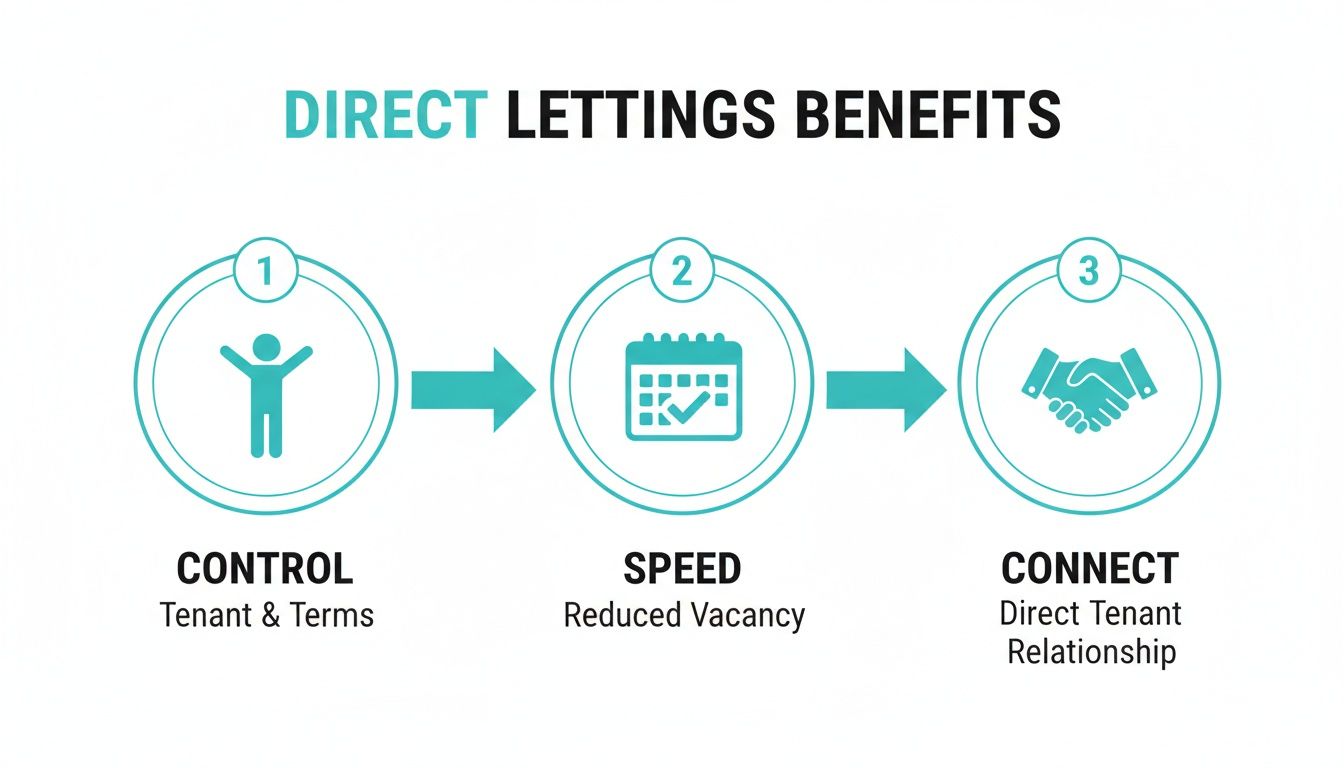
As the graphic shows, taking charge leads to faster lets and better tenant relationships, creating a positive cycle. This speed is vital in today's market. Recent data shows properties are being let in an average of just 17 days, even with a 15% rise in rental supply, which really highlights how effective direct advertising can be.
By managing the process yourself, you gain an invaluable insight into the rental market and what makes your property specifically appealing. This is the kind of ground-level knowledge that a letting agent, dealing with dozens of properties, simply can't replicate.
This guide is designed to be your roadmap, helping you master each step of the journey. For more practical landlord tips and advice, feel free to explore other articles on our blog.
Getting Your Property Ready for The Perfect Tenant
A successful let starts long before you even think about posting an advert. This prep phase is where you lay the groundwork, creating a space that not only looks brilliant in photos but feels safe, welcoming, and legally sound to anyone who walks through the door.
Getting this right from the very beginning dramatically boosts your chances of attracting top-tier applicants and securing a swift, hassle-free tenancy.
Think of your property as a product on a very crowded shelf. To stand out, its presentation has to be spot on. We're talking about more than just a quick hoover and a spray of air freshener; it's about nailing the small details that, together, make a massive impression.
First Impressions Count The Most
Potential tenants often make a snap judgment within seconds of seeing your listing or stepping over the threshold. Your mission is to make that first impression an overwhelmingly positive one.
Start with a proper deep clean, tackling everything from skirting boards and window frames to light fittings. A genuinely clean property instantly signals that you're a diligent and caring landlord.
Next up, focus on the niggly little repairs. That dripping tap, the squeaky door, or scuffed paintwork might seem minor to you, but to a viewer, they can suggest neglect. Fixing these small issues is a low-cost, high-impact way to show your property is well looked after.
A fresh coat of neutral paint is one of the best investments you can possibly make. Colours like light grey, off-white, or a soft beige create a bright, spacious feel and give potential tenants a blank canvas to imagine their own life in.
Staging for Success
Once the basics are sorted, it’s time to think about presentation. Whether your property is furnished or unfurnished, a little bit of staging goes a very long way. The goal is to create a space that feels aspirational yet neutral.
- Declutter Everything: Get rid of personal items, excess furniture, and anything that makes a room feel cramped or small. Less is always more.
- Define Each Space: Even in an empty property, simple touches can help. A small table and chairs can suggest a dining area, while a well-placed rug can anchor a living space.
- Maximise Light: Open all blinds and curtains. Clean the windows until they sparkle. If you’ve got a room that’s naturally a bit dark, adding a floor lamp to brighten it up for viewings and photos works wonders.
If you're letting a furnished property, make sure the furniture is clean, modern, and in good nick. Targeting young professionals? A dedicated desk or workspace is a huge selling point right now. For a family home, showing how that second bedroom can work as a child's room or a home office can really help people see the potential.
Meeting Your Legal and Safety Obligations
Beyond the aesthetics, making sure your property is safe and legally compliant is completely non-negotiable. Getting this wrong not only puts your tenants at risk but exposes you to hefty fines and serious legal action. This is a critical step in any direct property lettings journey.
Your essential safety checklist absolutely must include:
- Gas Safety Certificate (CP12): This is an annual inspection by a Gas Safe registered engineer and it's a legal requirement for any property with gas appliances. You must provide a copy of this certificate to your tenants before they move in.
- Electrical Installation Condition Report (EICR): This report confirms that all the electrical systems in your property are safe. An EICR has to be carried out by a qualified electrician at least every five years.
- Smoke and Carbon Monoxide Alarms: You are legally required to have at least one smoke alarm on every storey of your property. A carbon monoxide alarm is also mandatory in any room with a solid fuel-burning appliance, like a wood-burning stove or an open fire.
It's crucial to test all alarms on the day the tenancy starts, ideally with the tenant present. Documenting this simple check can save you a world of trouble later on. By presenting a property that is clean, well-maintained, and fully compliant, you aren’t just attracting tenants—you’re attracting the right tenants.
How to Create Ads That Attract Quality Applicants
Your property is ready, and all the legal boxes are ticked. Now for the exciting part: getting the attention of your ideal tenant. Crafting a compelling rental ad is less about listing features and more about selling a lifestyle. Get this right, and your advert will work tirelessly for you, filtering out unsuitable applicants and attracting the high-calibre people you actually want to hear from.
In a crowded market, a lazy, generic description just won’t do the trick. You need to paint a vivid picture that lets potential tenants see themselves living happily in your space. This is a core skill in the world of direct property lettings.

A well-staged and beautifully photographed room, like the one above, should be the centrepiece of your entire advert. Bright, clean, and inviting images are what stop people from scrolling and convince them to read on.
Writing a Description That Sells
The best rental ads focus on benefits, not just features. Think about it: a feature is what the property has (like "double glazing"), but a benefit is what the tenant gets ("a peaceful home with lower energy bills"). See the difference?
Start with a powerful headline that instantly summarises the best selling point. Ditch "Room for rent in Clapham" and try something like, "Spacious Double Room with Garden View, 5 Mins from Clapham North Station."
Then, structure your description like you’re telling a story:
- The Room & Property: Go into the specifics, but use appealing language. A "small kitchen" can become a "well-organised kitchen, perfect for cooking for one or two."
- The Lifestyle: This is where you really sell it. Mention the brilliant coffee shop on the corner, the nearby park that’s perfect for a weekend run, or the easy commute into the city. Sell the experience of living there.
- The Housemates (if you have them): A quick, friendly description helps people figure out if they’ll fit in. Something like, "a friendly household of young professionals" is perfect.
- The Practicalities: Be upfront. Clearly state the rent, deposit, council tax band, and exactly which bills are included. Transparency builds trust from the very first interaction.
Mastering Your Property Photography
Forget expensive cameras; your smartphone is more than capable of taking fantastic property photos. The real secret is in the prep work and a few simple techniques. Good photos will dramatically increase the number of enquiries you receive.
Always shoot in natural daylight and flick on all the lights to make the space feel as bright and airy as possible. To make rooms look bigger, stand in a corner and take your shot from about chest height for a natural perspective. And it goes without saying: tidy up and get rid of any clutter before you even think about snapping photos. For a deeper dive, it's worth understanding the latest strategies on how to market rental properties to make sure you're filling vacancies fast.
Pro Tip: Don't forget the small details that give a place character. A close-up of a modern bathroom tap, a period fireplace, or a sunny window seat can be far more compelling than another wide shot of an empty room.
Using Online Platforms Effectively
Listing on a dedicated platform like Rooms For Let puts your advert right in front of thousands of people who are actively looking for a room. Your job is to make that listing pop. Fill out every single section of the profile—the more detail you provide, the more interest you're likely to get.
The UK rental market is unbelievably active right now. Since the pandemic, rental demand has shot up by 60%, while the supply of available properties is still lagging 20% below pre-2020 levels. With 67% of agents reporting rising tenant demand, a fantastic direct advert is your best weapon for navigating this competitive landscape.
But don’t just sit back and wait for the perfect tenant to find you. A proactive approach is often the fastest way to get a great result.
- Be Proactive: Most platforms have a 'Rooms Wanted' section. Spend a bit of time browsing these ads—your ideal tenant might already be out there, describing a place just like yours.
- Respond Quickly: Good tenants are snapped up in a flash. Try to reply to all enquiries within a few hours. It shows you’re an organised and on-the-ball landlord.
- Offer Flexible Viewings: Make it easy for people to see the property. Offering viewings in the evenings or on weekends will open you up to a much wider pool of potential tenants.
By combining a benefit-led description, top-notch photos, and a smart online strategy, you'll find the right person for your property in no time. You can learn more about how to create your advert on Rooms For Let.
Finding Your Ideal Tenant & Staying on the Right Side of the Law
Once your fantastic advert starts pulling in enquiries, you move into what is probably the most critical part of the whole process. This is where you protect your investment, picking the right person for your property while ticking every single legal box.
Don't think of thorough screening as being intrusive or awkward. It’s simply a sensible business decision. You’re gathering the facts to make sure a potential tenant is reliable, responsible, and can comfortably afford the rent. Cutting corners here is a classic mistake that can cause major headaches down the road.
The Nuts and Bolts of Tenant Screening
It's vital to have a fair and consistent screening process for every single applicant. I always start with a quick pre-screening chat on the phone. It helps you get a feel for their situation and ask a few basic questions before committing to a viewing.
When you find a promising applicant after a viewing, it's time to do your homework. Your checks should always cover these key areas:
- Credit Checks: This gives you a clear snapshot of their financial past, flagging up any County Court Judgements (CCJs) or bankruptcies. A shaky credit history is often a red flag for future rent payment problems.
- Employment and Affordability Checks: Always get in touch with their employer. You need to confirm their job title, contract type (permanent or temporary), and salary. A good rule of thumb is that a tenant's gross monthly income should be at least 2.5 to 3 times the rent.
- Previous Landlord References: This is where you get the real story. A quick chat with a previous landlord can tell you so much. Ask specific questions: Did they pay on time? How did they leave the property? Were there any issues with neighbours?
A quick tip from experience: be a little cautious with references from a current landlord. Sometimes, they might give a glowing review just to help move on a tenant they've had problems with. If you can, getting a reference from the landlord before their current one is often more telling.
Getting to Grips with Your Legal Duties
Being a landlord in the UK means taking on a fair few legal responsibilities. These rules aren't just suggestions; they're there to protect both you and your tenant, making sure everything is above board from day one. Get this wrong, and you could face some hefty fines or even find it impossible to regain possession of your property later on.
One of the first legal steps is the Right to Rent check. Before anyone signs a tenancy agreement, you are legally required to check that all occupants aged 18 and over have the legal right to rent in the UK. This means you need to see and take copies of their original identity documents, like a passport or biometric residence permit.
You must check the original documents with the applicant physically present, or via a live video call. Don't just accept scans over email. The penalties for getting this wrong can include unlimited fines or even prison time, so it's one to take very seriously.
Next up is handling the tenancy deposit correctly. As soon as you take a deposit from your tenant, the clock starts ticking. You have just 30 days to protect it in one of the government-approved tenancy deposit schemes (TDP).
You also have to give the tenant the official 'prescribed information', which tells them exactly where their money is being held. Failing to do this can lead to a penalty of up to three times the deposit amount being awarded to the tenant.
The Landlord's Legal Compliance Checklist
To keep everything straight, especially during the busy move-in period, a simple checklist is your best friend. It’s a systematic way to make sure no crucial steps are missed.
Here’s a quick summary of the essential certificates, documents, and actions you need to have in place for every new tenancy.
| Compliance Item | Description and Purpose | When It Is Required |
|---|---|---|
| Right to Rent Check | Verifying a tenant's legal immigration status to rent in the UK. | Before the tenancy agreement is signed. |
| Deposit Protection | Securing the tenant's deposit in a government-backed scheme. | Within 30 days of receiving the deposit. |
| 'How to Rent' Guide | Providing the latest version of the government's official guide. | At the beginning of a new tenancy. |
| Gas Safety Certificate | A valid CP12 certificate from a Gas Safe registered engineer. | Before the tenant moves in. |
| EICR Certificate | An Electrical Installation Condition Report valid for five years. | Before the tenancy starts. |
| EPC Certificate | An Energy Performance Certificate with a minimum 'E' rating. | When marketing and before the tenancy starts. |
| HMO Licensing | Securing a licence from the local council if your property qualifies as an HMO. | Before the property is occupied as an HMO. |
Following this checklist for every tenancy gives you peace of mind. You'll know you're operating completely within the law, which not only protects your investment but also lays the foundation for a professional and positive relationship with your new tenant from the get-go.
Getting the Paperwork Sorted and Nailing the Move-In
You’ve found a great tenant and done all the checks. Now, all that’s left are the final legal and practical bits to get them moved in. Don’t rush this part. Getting the paperwork and the move-in day right sets the tone for the entire tenancy and shows you’re a professional, organised landlord.
This is where you make everything official. It’s your chance to turn a promising applicant into a happy, settled tenant and protect both of you from any future mix-ups.
Choosing the Right Agreement
First things first, you need the correct legal agreement. This isn't a one-size-fits-all job, and grabbing the wrong template from the internet can cause massive headaches later, especially if you ever need to regain possession of the property.
For most landlords letting a whole property or a room in a shared house where they don’t live, the go-to contract is an Assured Shorthold Tenancy (AST). It's the standard for the UK's private rented sector.
However, the situation is completely different if you're a homeowner renting out a spare room and sharing living spaces like the kitchen or bathroom. In this scenario, your renter is legally a lodger, not a tenant. You'll need a Lodger Agreement, which is a much simpler document and gives the occupant fewer rights, making it far easier to end the arrangement if things don’t pan out.
Getting this distinction right is absolutely fundamental. An AST gives tenants significant legal protections and involves a formal eviction process. A Lodger Agreement reflects the less formal nature of sharing your own home and gives you much more flexibility.
Whichever agreement you use, it must nail down the basics. Make sure it clearly states:
- The full names of you (the landlord) and the tenant(s).
- The property address and which room is being let, if applicable.
- The tenancy start date and how long it's for (e.g., a 12-month fixed term).
- The exact rent amount, the date it's due, and your bank details for payment.
- The deposit amount and details of the government-approved scheme you've used.
- Key tenant responsibilities, like keeping the place clean and reporting repairs promptly.
The Power of a Detailed Inventory Report
An inventory is one of your most important tools for avoiding arguments over the deposit when your tenant moves out. This isn’t just a quick list scribbled on a notepad; it’s a detailed, photographic record of the property’s exact condition on move-in day.
Walk through every room and document everything – the state of the walls, floors, furniture, and fittings. Note down every scuff, stain, or chip. Honestly, the more detail, the better.
And crucially, back it all up with photo and video evidence. A clear, time-stamped video walkthrough on your phone is hard to argue with. On move-in day, go through the inventory with your new tenant, have them check it, and then get them to sign it to confirm they agree. This simple step can save you from a world of "he said, she said" headaches down the line.
How to Create a Flawless Move-In Day
A smooth move-in day gets the tenancy off to a brilliant start. It shows you’re on the ball, and that encourages your tenants to be responsible in return. A simple checklist will make sure you don't forget anything important.
Your move-in checklist should cover:
- Meter Readings: Take photos of the gas, electricity, and water meters together with the tenant. A quick snap on your phone is a perfect time-stamped record.
- Key Handover: Give them a full set of keys for everything – front door, windows, any communal areas. Get a signature on a simple receipt confirming how many keys you’ve handed over.
- Appliance Instructions: Leave a folder with all the manuals for the boiler, oven, washing machine, etc. It’s also a good idea to quickly show them how the heating works.
- Practical Info: Show them where the stopcock, fuse box, and bins are. It’s a small thing, but it can be a lifesaver in an emergency.
By getting these details right, you create a clear, professional foundation for the tenancy. If you're looking for more ways to make the process easier, you might find it helpful to register as a landlord on Rooms For Let to access more resources and connect with a wider pool of potential tenants.
Managing Rent Collection and Tenant Relationships

So, you’ve found a great tenant and they’re all moved in. Now your role shifts from finding a renter to managing the tenancy itself. This is the long game of direct property lettings, where consistency and clear communication are everything.
Think of it like this: efficient rent collection and a positive landlord-tenant relationship are the two engines that keep your rental running smoothly and stress-free.
The best way to kick things off is with a solid system for collecting rent. While some still use cash or bank transfers, setting up a standing order is hands-down the most reliable method. It’s automated for both of you, which massively cuts down the risk of missed or late payments.
This kind of proactive management is more crucial than ever. The total UK property rental income for unincorporated landlords hit a massive £55.53 billion in 2023-2024. That’s a 17% jump from just a few years ago, showing just how profitable direct lettings can be when you get the basics right.
Cultivating a Positive Landlord-Tenant Dynamic
A good relationship isn’t about being best friends; it’s about mutual respect. When tenants feel respected, they’re more likely to look after your property and tell you about small issues before they become big, expensive problems. A happy tenant is also more likely to renew their tenancy, saving you the hassle and cost of finding someone new.
Here are a few simple ways to build that positive connection:
- Respond Quickly: Try to acknowledge any maintenance requests within 24 hours. Even a quick message saying, "Got it, I'm looking into it," makes a world of difference.
- Be Proactive: Don't wait for the boiler to break in the middle of winter. Arranging regular checks for things like gutters or servicing appliances shows you care about their comfort and the property's upkeep.
- Inspect Respectfully: You have every right to inspect your property, but always give at least 24 hours' written notice. Work with your tenant to find a time that suits you both.
Building a good rapport simply means being a professional, fair, and responsive landlord. Honestly, this approach is the single most effective way to protect your investment and ensure a smooth tenancy from start to finish.
Addressing Late Payments and Financial Admin
Even with the best tenants, hiccups can happen. If a rent payment is late, address it straight away, but keep it polite. Often, a simple text or email is all that’s needed to sort out a genuine oversight. If it becomes a pattern, however, you’ll need to have a more formal, documented chat.
Keeping your own financial records organised is just as important. A key part of managing your money effectively is understanding your obligations, and a good Landlord's Guide to Buy To Let Tax is invaluable for making sure you're compliant and maximising your returns.
By combining efficient systems with good, human communication, you can manage your tenancy like a seasoned pro.
Got Questions About Letting Directly?
Stepping into the world of direct lettings is incredibly rewarding, but it’s completely normal to have a few questions buzzing around. Getting your head around the common queries is the best way to build your confidence and make sure you’re managing your property like a pro.
Let’s tackle some of the most frequent ones I hear from landlords.
How Much Deposit Can I Legally Take in The UK?
This is a big one, and thankfully, the rules in England are crystal clear. The Tenant Fees Act 2019 put a firm cap on how much you can ask for.
If the total annual rent for your property is under £50,000, the maximum security deposit you can take is five weeks' rent. Simple as that. For properties where the annual rent is £50,000 or more, you can ask for up to six weeks' rent.
Don't forget, it’s not just about the amount. You have a legal duty to protect that deposit in a government-backed scheme within 30 days of the tenant paying you.
What Is The Difference Between a Lodger and a Tenant?
Getting this wrong can cause major headaches down the line, so it’s crucial to understand the distinction. It all boils down to whether you, the landlord, live in the property as your main home.
- A tenant rents a property that you don't live in. They have significant legal protections, usually under an Assured Shorthold Tenancy (AST).
- A lodger is someone who rents a room in the home you live in and shares common spaces like the kitchen or living room with you. They have far fewer rights, which makes ending the arrangement much more straightforward if things don’t work out.
Honestly, this is one of the most important things to get right from the start. Using a tenancy agreement for a lodger (or vice versa) can create a legal mess, especially if you ever need to get your room or property back.
Do I Need Special Landlord Insurance?
While it might not be a legal requirement written in statute, my answer is always an emphatic yes. Your standard home insurance policy is almost certainly not fit for purpose and won't cover you for rental activities.
Landlord insurance is specifically built to protect your investment from the unique risks that come with letting property. We're talking about things like major building damage, loss of rent if the property becomes uninhabitable, or liability if a tenant has an accident.
Think of it as an essential financial safety net. Skipping it is a false economy that could cost you thousands.
Ready to take control and find your next tenant directly? With Rooms For Let, you can advertise your spare room or property for free and connect with thousands of potential tenants across the UK. Start your journey to faster, more profitable lettings today at https://www.roomsforlet.co.uk.