Renting out a room in your house isn't just about finding a lodger; it’s about making sure your property is legally and safely ready to welcome them. This process kicks off with getting the green light from your mortgage lender and insurer, and then moves on to the really crucial stuff: meeting UK safety standards for things like gas and electricity.
Your Pre-Letting Legal and Safety Checklist
Before you even think about writing that "room for let" advert, a bit of essential groundwork is needed. It’s tempting to skip these bits and get straight to finding someone, but ignoring these first steps can lead to some serious legal and financial headaches later on. Think of it as laying a solid foundation—it ensures you’re not only compliant with UK law but also creating a secure home for both you and your new lodger.
Taking on a lodger makes you a 'resident landlord', and with that title come specific responsibilities. The rules are often less strict than for landlords letting out a whole property, but they're every bit as important. Getting it right from day one protects your property, your investment, and gives you invaluable peace of mind.
First Things First: Secure Permissions
Before anything else, you’ve got to clear two major administrative hurdles: your mortgage and your home insurance. It's an easy thing to overlook. Many homeowners assume they can do whatever they want with their own property, but that assumption can turn into a very costly mistake.
Check Your Mortgage Agreement: Dig out your mortgage terms and conditions and look for the clause about letting. Some lenders flat-out prohibit it, while others might ask you to switch to a buy-to-let mortgage, which often comes with different interest rates. The best-case scenario? Your lender simply requires you to notify them. A quick phone call will give you the answer.
Notify Your Home Insurance Provider: A standard home insurance policy almost certainly won't cover paying guests. You absolutely must inform your insurer that you plan to take on a lodger. If you don't, you could invalidate your entire policy, meaning no cover in the event of a fire, flood, or theft. They might adjust your premium slightly, but it’s a small price to pay for being properly insured.
Key Takeaway: Always get permission in writing from both your mortgage lender and insurer. A verbal "yes" on the phone isn't enough; you need a paper trail to prove you've done everything by the book if any issues pop up later.
Essential Safety Compliance for UK Landlords
Once your permissions are all sorted, your focus shifts to safety. As a landlord, you have a duty of care. These aren't just suggestions; they are legal requirements designed to keep people safe.
Gas Safety: A Legal Mandate
If your home has any gas appliances—a boiler, a cooker, or a gas fire—you are legally required to have them checked every year by a Gas Safe registered engineer.
Once the check is done, you'll get a Gas Safety Certificate (often called a CP12). This document is your proof that all appliances are working correctly and are safe. You must give your lodger a copy of this certificate before they move in. The fines for not doing this are severe, so make it a top priority.
Electrical Safety Standards
While the rules for lodgers are a little different from those for tenants in a separate property, making sure the electrics are safe is still paramount. An Electrical Installation Condition Report (EICR) is something we highly recommend. A qualified electrician carries out this check, assessing the safety of all the fixed wiring in your home, from sockets to light fittings.
On top of that, any electrical appliances you provide in the lodger's room, like a kettle or a lamp, should be PAT (Portable Appliance Testing) checked to confirm they’re safe to use.
Fire Safety Measures
Fire safety is another area where you simply cannot afford to cut corners. As a minimum, UK law requires you to have:
- Smoke Alarms: You must have at least one working smoke alarm on every storey of your property that's used as living accommodation. Get into the habit of testing them monthly.
- Carbon Monoxide Alarms: A carbon monoxide alarm is a legal must-have in any room with a solid fuel-burning appliance, like a wood-burning stove or a coal fire. It’s also considered best practice to have one near your gas boiler.
Completing these checks gives you the confidence to start looking for the right person. When you're ready to list your space, you'll know you've created a home that is both safe and compliant. To get your advert in front of thousands of potential lodgers, you can register your room for let on Rooms For Let and start connecting with suitable applicants today.
Pricing Your Room and Crafting a Standout Advert
Once your home is legally ship-shape and ready to go, the next big hurdle is figuring out what to charge and how to catch the eye of the right person. Nailing the price is a real balancing act. Go too high, and you're left with an empty room gathering dust. Too low, and you're simply leaving money on the table each month.
And your advert? That's your first impression. Making it clear, compelling, and honest from the get-go is absolutely essential.
Nailing the Right Rental Price
First things first: do your homework. Don't just pluck a number out of thin air. Spend a bit of time browsing sites like Rooms For Let, Rightmove, and SpareRoom to see what similar rooms in your postcode are actually renting for. You're looking for properties that are a close match to yours in size, condition, and whether bills are included. This gives you a solid, realistic baseline.
Once you have a ballpark figure, think about what makes your room stand out. Several factors can justify tweaking the price up or down.
- En-suite Bathroom: This is the big one. A private bathroom is a massive draw and can significantly bump up your room's value.
- Included Bills: Life is complicated enough. Most lodgers will jump at the chance for an all-inclusive rent that covers council tax, gas, electricity, water, and Wi-Fi. It’s a huge selling point.
- Location Perks: Is your place a stone's throw from a train station, a key bus route, or a major hospital? Proximity to transport and employment hubs makes a room far more desirable.
- Furnishings: A well-furnished room with a decent bed, proper storage, and a desk is much more appealing than an empty box.
The UK room rental market has been booming, which is great news for homeowners. To give you an idea, the average monthly room rent hit £753 in Q3, which is a massive 28.3% jump over five years. Unsurprisingly, rents in Inner London soared even higher, averaging £995—that's up 36.7% in the same period.
Before you get too excited about the numbers, it's worth taking a moment to review your landlord duties. This handy flowchart is a good reminder of the key safety and legal checks you need to have ticked off.
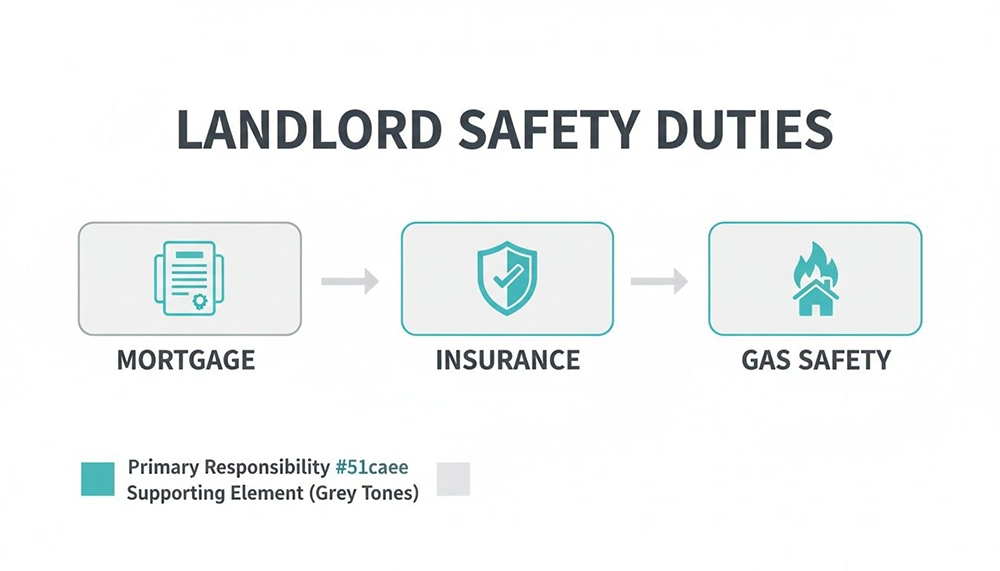
As the chart shows, getting your finances in order—like checking your mortgage and insurance policies—goes hand-in-hand with physical safety checks.
To help you position your room in the current market, here’s a quick snapshot of what people are paying across the UK right now.
UK Average Monthly Room Rent by Region (Q1 Data)
This table gives you a snapshot of average room rents across different UK regions to help you benchmark your pricing.
| Region | Average Monthly Rent | Year-on-Year Change |
|---|---|---|
| London | £998 | +4.5% |
| South East | £725 | +6.1% |
| South West | £680 | +5.8% |
| East of England | £695 | +5.3% |
| West Midlands | £610 | +7.2% |
| East Midlands | £590 | +6.8% |
| North West | £620 | +8.1% |
| Yorkshire & Humber | £585 | +7.5% |
| North East | £550 | +9.3% |
| Scotland | £650 | +6.5% |
| Wales | £575 | +6.0% |
| Northern Ireland | £540 | +8.0% |
As you can see, rental demand remains strong pretty much everywhere, but regional variations are significant. Use this as a guide, but always prioritise your local market research for the most accurate pricing.
Creating an Advert That Gets Noticed
With your price decided, it’s time to build an advert that really sells your space. The name of the game is to be both appealing and completely transparent.
Write a Description That Tells a Story
Start with a punchy headline that flags up the best bits, like "Spacious double room with en-suite, 5 mins from station."
In the main description, paint a picture of what life is like in your home. Talk about the shared spaces, the general atmosphere (is it a quiet house for professionals, or more relaxed and social?), and add a friendly line or two about yourself. Crucially, be upfront about the important house rules—things like your policy on smoking, pets, or overnight guests. This kind of honesty saves everyone time by weeding out unsuitable applicants from the start.
Insider Tip: Don’t just post your advert and wait. Be proactive! Many rental sites have a 'Rooms Wanted' section. Have a browse and see if anyone is looking for a room just like yours. Reaching out to them directly can massively speed up your search.
Take Photos That Do the Talking
Let's be blunt: photos are the most important part of your advert. A listing with dark, blurry, or messy pictures will be scrolled past in a heartbeat.
- Declutter and Clean: This is non-negotiable. Tidy the room completely, make the bed with fresh linen, clear all surfaces, and hide any personal clutter.
- Let There Be Light: Open the curtains and take your photos during the day. Bright, natural light makes any space look bigger, cleaner, and more inviting.
- Find the Best Angles: Stand in the corners of the room to shoot. This classic trick makes the space look as large as possible. Make sure you capture every key feature, including storage.
- Show the Whole Picture: Don't forget to add great photos of the kitchen, living room, bathroom, and even the garden if you have one. Potential lodgers want to see the entire property they’ll be sharing.
Finally, when you're putting your advert together, remember it needs to be fair and accurate. Make sure you're up to speed with advertising rules, including those around ASA compliance. And if you need a hand figuring out the best way to structure your advert for maximum impact, have a look at the different advert prices and options we offer here at Rooms For Let.
Vetting Applicants and Mastering the Viewing Process
Your advert is live and the enquiries are starting to pop into your inbox. Now comes the most important part of the entire process: choosing the right person to share your home with. This isn't just about filling a room; it’s about finding someone you can happily live with. A careful, well-thought-out approach to vetting applicants and handling viewings is your best defence against any future headaches.

That first message or phone call is your first filter. Before you even think about arranging a viewing, this is your chance to get a feel for the person and gather some key information. It’s a good idea to have a few simple questions ready to ask every applicant so you can compare them fairly.
The Initial Screening Conversation
Think of this as a quick, informal chat, not a formal interview. You’re simply trying to see if they’re a good potential fit for your home and lifestyle. It’s about saving everyone time and making sure you’re both on the same page.
Here are a few essential questions to weave into the conversation:
- Current Situation: Ask them what they do for a living and what their typical working hours are. This is a big one if you work from home, as you’ll want to know if your routines are going to clash.
- Lifestyle Habits: Gently ask about their lifestyle. Are they someone who loves a quiet night in with a book, or are they out socialising most of the week? There’s no right or wrong answer, but their habits need to gel with the atmosphere of your home.
- Reason for Moving: Understanding why they’re on the move can be very telling. Are they relocating for a new job, moving out of an old house share, or just looking for a change of scene?
- Expectations: A great question to ask is, "What are you looking for in a house share?" This gives them a chance to tell you what's important to them and can quickly highlight any potential deal-breakers.
Remember, this is a two-way street. They'll have questions for you, too. Be honest and clear – it’s the best way to start any potential house share.
Conducting a Successful Viewing
When an applicant sounds promising, it’s time to invite them over. The viewing is more than just a quick tour; it’s your chance to see how you get on and to talk about the practicalities of living together. Make sure the room and any shared spaces are looking their best. First impressions count.
Walk them through the property and be ready to answer their questions openly. This is the perfect time to chat about house rules on things like cleaning, having guests over, and using shared spaces like the living room and kitchen.
A Note on Red Flags: Trust your gut instinct. If someone seems evasive, is constantly complaining about previous landlords, or puts pressure on you for an immediate decision, these can be warning signs. A great lodger will be respectful and understand you need to make a considered choice.
Pay attention to what they ask you. The questions they ask reveal their priorities. Someone asking about the Wi-Fi speed and local takeaways has a different focus from someone asking about the cleaning rota and council tax bands.
Your Legal Duty: The Right to Rent Check
If you're in England, there's one final, non-negotiable step before you can offer the room to someone: the Right to Rent check. The government legally requires all landlords to check that a prospective lodger has the right to rent property in the UK. Get this wrong, and you could face a hefty fine.
You must check the original documents of every adult who will be living in your property. The process is straightforward:
- Check which adults will live there: This applies to absolutely everyone aged 18 and over.
- Ask for original documents: You need to physically see documents that prove their right to rent in the UK, like a UK passport or a valid visa.
- Check the documents with the applicant present: Make sure the documents are genuine and that the person in front of you is the person on the documents.
- Make copies: You must keep copies of the documents and record the date you performed the check.
This is a mandatory step, so make sure you’re familiar with the official government guidance to stay compliant. For more practical advice on managing your house share once your lodger is in, our blog is full of useful tips. Learn more about landlord best practices on the Rooms For Let blog.
Formalizing the Let with the Right Agreement
Once you’ve found the perfect person, it’s time to move past handshakes and get everything down in writing. A formal contract is the single most important document you'll create. It protects both you and your lodger by setting crystal-clear expectations right from the start. This isn’t about being overly formal—it’s about being smart and heading off misunderstandings before they can begin.
Think of it as the rulebook for your house share. It lays out everyone’s rights and responsibilities, building a foundation of respect that makes for a much smoother living arrangement. Without it, you’re just relying on memory and goodwill, which can easily lead to arguments over things like notice periods or who's on the hook for minor repairs.
Lodger Agreement vs Tenancy Agreement
First things first, you need to know which type of agreement you actually need. In the UK, if you’re a resident landlord (meaning you live in the same property as the person renting the room), you will almost always use a Lodger Agreement. It's a much simpler, more flexible contract than a full-blown tenancy agreement.
A Lodger Agreement establishes that the person is an 'excluded occupier'. This legal status gives them fewer rights than a tenant and, crucially, means you can give them 'reasonable notice' to leave without needing to go through the courts. This is a key distinction designed specifically for homeowners sharing their primary residence.
On the other hand, an Assured Shorthold Tenancy (AST) is what you’d use when renting out a separate property that you don't live in. The legal protections and obligations for both landlord and tenant are far more extensive under an AST. Getting this wrong can lead to serious legal headaches, so it's vital to use the correct document.
What to Include in Your Lodger Agreement
Your agreement doesn't need to be crammed with complicated legal jargon, but it absolutely must cover the essentials to be effective. A well-written contract is your first line of defence if any disagreements pop up.
Here are the non-negotiable clauses every Lodger Agreement should contain:
- Names: Full names of both you (the landlord) and your lodger.
- Property Address: The full address of the property being shared.
- Room Details: Be specific about which room is being let and which areas are shared (e.g., kitchen, bathroom, living room).
- Rent Amount & Due Date: Clearly state the exact rent, when it’s due each month (e.g., the 1st), and how it should be paid (e.g., standing order).
- Deposit Amount: The total amount of the security deposit taken.
- Start and End Dates: The date the agreement begins and any fixed term, if there is one.
- Notice Period: How much notice either of you needs to give to end the agreement. For lodgers, this is typically one rental period (e.g., one month).
- Obligations: A clear list of responsibilities, like who handles cleaning shared areas or the rules on overnight guests.
When you're ready to make it official, you can find helpful resources like a free rental agreement template online to use as a solid starting point.
Crucial Tip: Both you and your lodger must sign and date two copies of the agreement—one for each of you to keep. This signed document is your proof of the terms you've both agreed to.
Handling the Security Deposit Correctly
Taking a security deposit is just common sense. It protects you against potential damages or unpaid rent. For a room let, this is usually equivalent to four or five weeks' rent.
Now, it’s important to know that as a resident landlord with a lodger, you are not legally required to protect their deposit in a government-approved scheme like the Tenancy Deposit Scheme (TDS). That requirement only applies to Assured Shorthold Tenancies.
However, just because it isn't mandatory doesn't mean you shouldn't handle it professionally. It's all about building trust. Voluntarily using a scheme or, at the very least, keeping the deposit in a completely separate bank account shows your lodger you're fair and responsible.
Always provide a written receipt for the deposit. And be completely upfront about the conditions under which you might make deductions when they move out. This kind of transparency prevents disputes down the line and helps end the arrangement on a positive note.
Managing Your Tax and Ongoing Landlord Duties
The moving boxes are gone, the first month's rent has landed in your account, and your new lodger is settling in. While the initial legwork might be done, your role as a landlord is really just getting started. This is where the day-to-day management and financial responsibilities kick in, and getting them right is the key to a smooth, profitable arrangement.

Honestly, this ongoing phase is all about good habits and clear communication. From making sure rent is paid on time to sorting out maintenance and, of course, dealing with the taxman, staying organised now will save you from major headaches down the line.
Understanding Your Tax Obligations
Let’s tackle the big one first: tax. The fantastic news is that the UK government offers a brilliant tax break just for resident landlords called the Rent a Room Scheme. If you’re learning how to rent out a room, this scheme is a genuine game-changer because it simplifies your tax affairs massively.
Under this scheme, you can earn up to £7,500 per tax year from your lodger completely tax-free. And that’s your gross income, not just the profit. If you're letting the room jointly with a partner, this threshold is simply split between you at £3,750 each.
The best part? For most people, the scheme is automatic. If your total rental income is below this amount, you don't even need to tell HMRC about it. It’s a huge perk of being a live-in landlord.
Key Insight: You can choose to opt out of the Rent a Room Scheme if your expenses are particularly high. If you think your actual costs (wear and tear, bills, repairs) will exceed £7,500, it might be more beneficial to claim these expenses instead. For most people renting a single room, though, the tax-free allowance is the far simpler and more profitable option.
When Your Rental Income Exceeds the Threshold
If you're lucky enough to earn more than £7,500 from your lodger, you’ll need to declare it. You've got two ways to handle the tax:
- Pay Tax on the Balance: You can stick with the scheme, take your £7,500 tax-free allowance, and just pay income tax on the amount that's left over. For instance, if you earn £9,000 for the year, you'd only pay tax on £1,500 (£9,000 - £7,500).
- Claim Expenses: The other option is to opt out of the scheme entirely. Here, you'd calculate your profit the traditional way: take your total rental income and subtract all your allowable expenses (a portion of utility bills, council tax, insurance, and repair costs). You then pay tax on the final profit figure.
Either way, you will need to complete a Self Assessment tax return each year. This makes keeping meticulous records of every penny in and out absolutely essential.
Day-to-Day Management of the Let
Financials aside, the day-to-day running of the houseshare is where a positive relationship with your lodger is truly built. It all comes down to having clear processes and being a respectful communicator.
Collecting Rent and Handling Maintenance
Set up a professional process for rent collection from day one. A monthly standing order is the gold standard – it's automated, easy for both of you, and creates a clear payment history. Nobody enjoys chasing for rent, so make it as simple and painless as possible.
When it comes to maintenance, be proactive. If your lodger reports a dripping tap or a faulty appliance, get on it quickly. A prompt response shows respect and proves you're a responsible landlord. Small, ignored issues have a nasty habit of building resentment over time.
Respectful Room Inspections
Even though you live in the property, your lodger's room is their private space. It’s perfectly reasonable to conduct occasional inspections to check for maintenance issues, but you must do so with respect for their privacy.
- Always give notice: A quick text or email giving at least 24 hours' written notice is a must before you enter their room.
- Agree on a time: Try to be flexible and find a time that works for you both.
- Be clear about why: Just explain you're doing a quick check for things like damp, leaks, or any needed repairs.
This approach maintains boundaries and trust, allowing you to fulfil your duties without making your lodger feel uncomfortable.
Managing the End of the Agreement
All good things come to an end, and when it’s time for your lodger to move on, handling it professionally ensures everything finishes on a positive note. The notice period should already be clearly laid out in your Lodger Agreement, so there are no surprises.
The final step is dealing with the deposit. Arrange a move-out inspection, ideally with the lodger present, and go through the inventory you both signed at the start. If there are no damages beyond normal wear and tear and the rent is all paid up, you must return the deposit in full and promptly. Being fair and transparent about any deductions is the best way to avoid disputes and part on good terms.
Got Questions? We’ve Got Answers
Deciding to rent out a room brings up plenty of practical questions. Even after you’ve sorted the big things like contracts and safety checks, smaller queries always seem to pop up. Here are some straightforward answers to the questions we hear most often from first-time landlords.
What Insurance Do I Actually Need?
Your standard home insurance just won’t cut it once you have a lodger. It’s absolutely vital to inform your provider that you're taking someone in, as this changes the risk profile of your policy. If you don't, you could invalidate your entire policy, leaving you completely exposed if there's a fire, theft, or flood.
Your insurer will likely suggest adding a clause to your existing policy or recommend a specific 'landlord insurance' product designed for people in your situation. This usually covers you for:
- Public Liability: This is crucial. It protects you if your lodger injures themselves in your home because of a fault with the property.
- Loss of Rent: A lifesaver if the room becomes uninhabitable after something like a fire or major leak, covering your lost income.
- Accidental Damage: This can cover damage your lodger causes to your property and its contents.
It’s a small extra cost for some serious peace of mind. Always, always get confirmation of your new cover in writing.
Lodger vs Tenant: What’s the Real Difference?
This is a crucial distinction under UK property law, and one you need to get right. If you live in the property yourself and share common areas like the kitchen or bathroom with the person renting a room, they are a lodger, not a tenant.
Legally, a lodger is classed as an 'excluded occupier', which means they have fewer rights than a tenant on a standard Assured Shorthold Tenancy (AST).
The Key Practical Difference: The biggest advantage of having a lodger is how you can end the arrangement. You only need to provide 'reasonable notice'—which is usually one rental period, like one month. Crucially, you don’t need a court order to ask them to leave. This makes managing the situation far more straightforward for you as the homeowner.
How Do I Handle Difficult Conversations?
Sharing your home means you’ll probably have to navigate the odd awkward moment, from chasing up late rent to mentioning that the bathroom could do with a clean. The trick is to stay calm, be direct, and always refer back to your Lodger Agreement.
For instance, if rent is a day late, don't let it slide and become a bigger issue. A simple, non-confrontational message is best: "Hi [Lodger's Name], just a friendly reminder that the rent was due yesterday. Could you let me know when I can expect it? Thanks." This keeps it professional and takes the emotion out of it.
If the issue is more about house rules, like cleaning, lean on the agreement you both signed. You could try, "I just wanted to have a quick chat about the cleaning rota we agreed on. It looks like the kitchen was missed this week. Can we make sure we stick to the schedule?" By framing it around your mutual agreement, it feels less like a personal criticism and more about simply honouring your contract.
Finding the right person to share your home with is the most important step. Rooms For Let connects you with thousands of potential lodgers across the UK, making it easier to find a great match for your spare room. Advertise your room today and start your search.