You’ve probably heard the term ‘electrical safety certificate’ floating around, especially if you’re a landlord with rooms to rent. So, what is it? Put simply, it’s the everyday name for a much more official-sounding document: the Electrical Installation Condition Report, or EICR for short.
Think of it as a comprehensive MOT for your property's entire electrical system. It's not just a piece of paper; it’s proof that the fixed wiring, sockets, and consumer unit are safe and meet UK standards.
What Exactly Is an Electrical Safety Certificate?
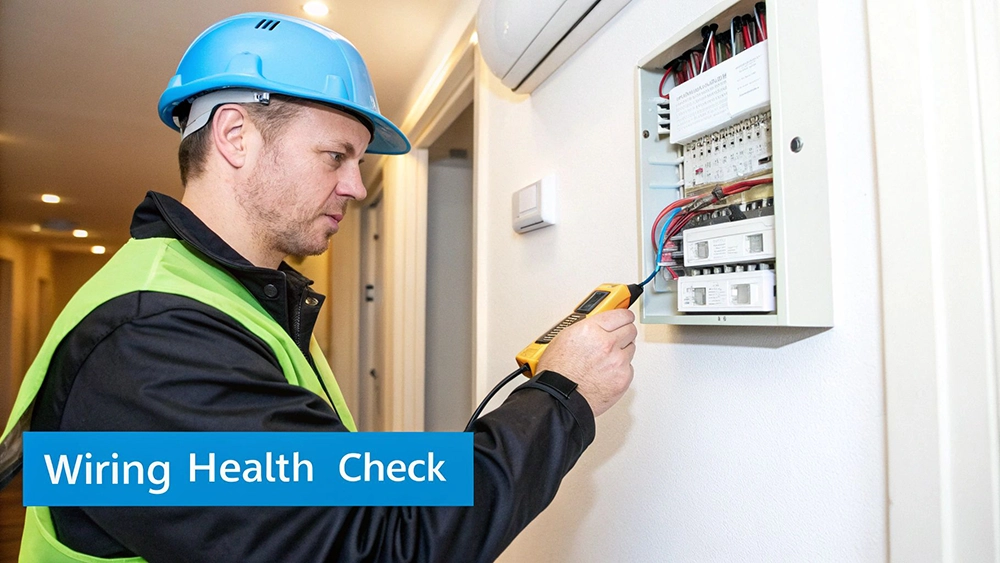
An EICR is far more than a simple tick-box exercise. It’s the formal report you get after a qualified and competent electrician has performed a deep-dive inspection of your property's electrical installations. The goal is to hunt down any potential dangers and make sure everything is in safe working order.
This inspection doesn’t cover your portable appliances like the kettle or toaster. Instead, the focus is squarely on the building's fixed electrical backbone. The electrician will methodically check everything that’s permanently connected, including:
- The consumer unit (often called the fuse box)
- All the wiring hidden away in walls and ceilings
- Light fittings, switches, and plug sockets
- The property’s earthing and bonding arrangements, which are crucial for preventing electric shocks
The process involves a series of visual checks and live electrical tests designed to spot wear and tear, hidden damage, or any part of the system that falls short of current safety regulations, like the BS 7671 Wiring Regulations.
And these checks are critically important. In UK homes alone, faulty electrical installations are responsible for around 70 deaths and a staggering 350,000 injuries each year. You can find more detail on these stark electrical safety statistics on Meteor Electrical's website.
Decoding the Report Findings
Once the electrician has finished their assessment, they'll issue the EICR. This report won’t just give you a "satisfactory" or "unsatisfactory" result. It provides detailed observations using a simple coding system, which helps you understand how urgent any discovered issues are.
An EICR provides a crucial snapshot of your electrical system's condition. Any code other than FI (Further Investigation) or C3 requires attention, with C1 and C2 findings legally mandating remedial action for landlords to achieve a 'Satisfactory' status.
Getting your head around these codes is the key to keeping tenants safe and meeting your legal obligations as a landlord. They effectively turn a technical inspection into a clear, actionable to-do list for any necessary repairs.
A Quick Guide to EICR Observation Codes
The codes on your report might look a bit technical at first, but they’re actually quite straightforward. Here’s a simple breakdown of what each one means and what you need to do about it.
| Code | Meaning | What You Must Do |
|---|---|---|
| C1 | 'Danger present. Risk of injury.' | This is the most serious. Immediate remedial action is required. The electrician will need to fix this on the spot. |
| C2 | 'Potentially dangerous.' | This is still very serious. Urgent remedial action is required to make the installation safe. |
| C3 | 'Improvement recommended.' | This is an advisory. While not dangerous, it’s a recommendation to upgrade your system to current standards. |
| FI | 'Further investigation required.' | This means the electrician couldn't reach a conclusion and needs to investigate a specific part of the system more. |
Essentially, if your report comes back with any C1 or C2 codes, your electrical system is deemed 'Unsatisfactory'. As a landlord, you are legally required to get these issues fixed to receive a 'Satisfactory' certificate.
It’s The Law: What UK Landlords Must Do
For landlords across the UK, getting an electrical safety certificate isn't just a box-ticking exercise or a nice-to-have. It’s a legal must-do. This is all thanks to a key piece of legislation: The Electrical Safety Standards in the Private Rented Sector (England) Regulations 2020. These rules came in to make safety checks a formal, non-negotiable part of letting a property, protecting tenants from dangerous electrical faults.
Your main job under these regulations is straightforward. You must get the electrical system in your rental property inspected and tested by a qualified and competent person. This isn't a one-off task; it has to be done at least every five years. Think of it as an MOT for your property's wiring – a regular check-up to catch any wear and tear before it turns into a serious hazard.
Once the Inspection is Done, Your Job Isn't Over
Getting the report, officially known as an Electrical Installation Condition Report (EICR), is only the beginning. The law is very specific about what you need to do next, and the clock starts ticking as soon as you have it.
You’re legally required to share a copy of this report with your tenants. Here are the deadlines you can’t miss:
- New Tenants: They must be given a copy of the current EICR before they even move in.
- Existing Tenants: You have 28 days from the date of the inspection to provide them with the new report.
- The Local Authority: If the council asks to see the report, you need to send it to them within 7 days.
On top of that, if a potential tenant puts in a written request to see the certificate, you've got 28 days to provide them with a copy.
The Heavy Cost of Cutting Corners
Ignoring these electrical safety standards can land you in serious trouble. Local authorities have the teeth to enforce these rules, and they don't hesitate to hand out hefty fines to landlords who aren't playing by the book.
A single breach of the regulations can lead to a financial penalty of up to £30,000. That number alone shows just how critical electrical safety is and why staying compliant is essential for protecting your tenants and your investment.
The financial pain doesn't stop with fines. Failing to comply could also completely invalidate your landlord insurance. Imagine an electrical fire breaks out, and you can't show a valid safety certificate. Your insurer would likely refuse to pay out, leaving you personally liable for potentially astronomical costs. To get a handle on all your responsibilities, digging into a good landlord compliance guide is a smart move.
At the end of the day, these rules are in place to save lives. Keeping up with your EICR schedule is a cornerstone of being a responsible, professional landlord. For landlords looking for tools and resources to manage their properties effectively, you can register as a landlord on Rooms for Let to connect with tenants and stay organised.
How to Get Your Property Certified
Getting an electrical safety certificate might sound a bit daunting, but it really boils down to a few straightforward steps. The whole process is about having a qualified professional give your property's wiring a thorough health check and then acting on their findings. Simple as that.
First things first, you need to find a 'qualified and competent' electrician. This isn't just good advice; it's a legal must. Your best bet is to look for an electrician registered with a government-approved scheme. This is your guarantee that they’re properly insured, regularly assessed, and working to the very latest safety standards.
The main schemes to look out for in the UK are:
- NICEIC (National Inspection Council for Electrical Installation Contracting)
- NAPIT (National Association of Professional Inspectors and Testers)
Picking an electrician from one of these bodies gives you peace of mind that the job will be done properly from the get-go.
What Happens During the Inspection
When the electrician arrives, they'll need access to every part of your property that has electrical installations – so, pretty much everywhere. They will have to shut off the power for a short time to carry out certain tests safely, so it’s a good idea to give your tenants a heads-up in advance.
The inspection itself comes in two parts. It starts with a visual check, where the electrician scans for any obvious problems. They’re looking for things like cracked sockets, scorch marks around fittings, frayed wiring, or an outdated consumer unit (fuse box).
Next comes the deep dive: a series of live electrical tests. This is where they use specialist equipment to measure the performance and safety of your circuits. They’ll check things like insulation resistance and polarity to make sure everything is wired correctly and protected against dangerous faults.
This infographic breaks down the simple three-step duty that every landlord needs to follow.
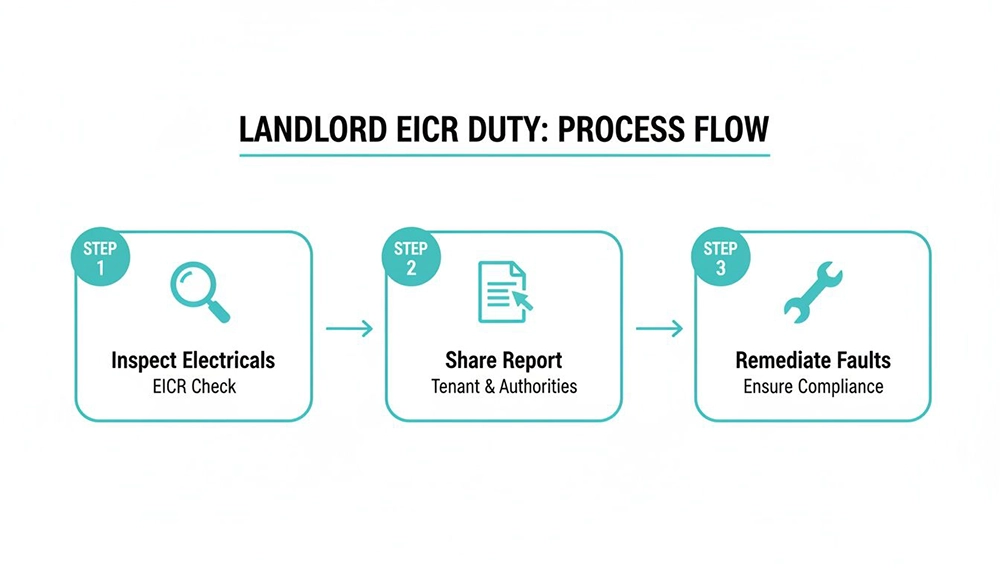
Following this process ensures that from the initial check to any necessary fixes, you're covering all the bases for tenant safety and staying on the right side of the law.
After the Report Is Issued
Once the inspection is done and dusted, you'll receive the EICR. If the report comes back as 'Satisfactory', brilliant! Your job is done for the next five years, other than making sure your tenants get a copy of the report.
If the report is marked 'Unsatisfactory' because of a C1 or C2 fault, the law is very clear: you must get the recommended remedial work done within 28 days, or even sooner if the report specifies an urgent timeline.
After the repairs have been completed, you must get written confirmation from a qualified electrician stating that the work is done and the electrics are now up to standard. This confirmation, along with the original EICR, needs to be given to your tenants and also to the local authority if they ask for it.
If you ever need a hand finding reliable contractors or need general advice on managing your rental properties, feel free to get in touch with our team. We're always here to help.
Making Sense of Your EICR Report
Getting your Electrical Installation Condition Report (EICR) can feel a bit like being handed a doctor's diagnosis in a foreign language. It’s dense, packed with circuit charts, technical readings, and coded observations that don't mean much at first glance.
But learning to read this report is the single most important step in making sure your property is genuinely safe. Think of it as a detailed health check for your property's entire electrical system.
The first few pages cover the basics—the property address, the date of the inspection, and the electrician's details. After that, you'll find the circuit-by-circuit breakdown, which leads to the real heart of the document: the observations and recommendations. This is where the electrician flags any issues they’ve found, using specific codes to rank how serious they are.
For landlords, these codes are everything. They’re not just suggestions; they are the deciding factor between a ‘Satisfactory’ or ‘Unsatisfactory’ electrical safety certificate.
Translating the Observation Codes
The whole report really boils down to three simple codes: C1, C2, and C3. They’re designed to turn a complex electrical assessment into a straightforward, prioritised action plan.
If your EICR has any C1 or C2 codes, it automatically gets an 'Unsatisfactory' rating. This isn't just a mark on a piece of paper—it legally obligates you to get the faults fixed.
Here's what they actually mean in the real world:
- C1 'Danger present': This is the top-level alert. It means there's an immediate risk of injury and something needs to be done about it right now. A classic example is exposed live wiring where someone could easily touch it, or a consumer unit with live parts accessible.
- C2 'Potentially dangerous': This code flags a serious defect that could become a real danger down the line. A very common C2 is finding an old fuse box that doesn't have modern RCD protection, which is absolutely essential for preventing nasty electric shocks.
- C3 'Improvement recommended': Think of this as a helpful advisory. It points out something that doesn't meet the very latest standards but isn't actually dangerous. For example, the labelling on your consumer unit might not be up to modern specifications—it’s good practice to update it, but it’s not an immediate hazard.
A report marked 'Unsatisfactory' isn't a failure. It’s a clear instruction manual telling you exactly what needs to be done to make your property safe. For landlords, fixing C1 and C2 faults isn't optional—it's a non-negotiable legal duty to protect your tenants.
In short, a C1 is a ticking time bomb that needs defusing immediately. A C2 is a serious safety flaw that must be fixed urgently to make the installation safe.
Real-World Examples of EICR Fault Codes
To give you a better picture of what your electrician is looking for, here are some practical examples of faults that correspond to each code. Seeing them laid out like this helps clarify why certain issues need immediate attention before a satisfactory electrical safety certificate can be issued.
| Code | Severity | Common Example |
|---|---|---|
| C1 | Danger Present | Exposed live conductors at a broken light switch, meaning someone could easily suffer a severe shock. |
| C2 | Potentially Dangerous | No protective earthing conductor to a metal light fitting, which could become live if a fault occurs. |
| C3 | Improvement Recommended | Sockets installed in a location that doesn't meet the latest height regulations for accessibility. |
Understanding these distinctions is key. While it's always good practice to address a C3 recommendation when you can, the law is crystal clear: all C1 and C2 issues must be resolved within 28 days to bring the property up to a safe and compliant standard.
What Does an Electrical Safety Certificate Cost and How Long Is It Valid For?
Let's get straight to the two questions every property owner asks: how much is this going to cost, and how long does it last? Knowing the answers helps you budget properly and stay compliant without any last-minute panic.
The price of an Electrical Installation Condition Report (EICR) isn’t a one-size-fits-all figure. A few key things will influence the final quote you get from a qualified electrician, making every property’s assessment slightly different.
The biggest factor, unsurprisingly, is the size of your property. A larger home with more rooms means more circuits and outlets to inspect and test, which simply takes more time. To give you a rough idea, a one-bedroom flat might cost somewhere between £100 and £230, whereas a four-bedroom house could be anywhere from £150 to over £300.
Key Factors That Influence the Price
Beyond just the bedroom count, a few other things can nudge the price up or down. It’s worth knowing what they are before you book an inspection.
- Age of the Installation: Older wiring and fuse boxes can be more complex to test and often need a more detailed investigation, which can add to the electrician's time.
- Number of Circuits: The more circuits you have running from your consumer unit (or fuse box), the longer the inspection will take. It's a simple matter of having more to check.
- Accessibility: If the electrician has to move furniture to get to sockets or can't easily access the consumer unit, it can add to the time and, therefore, the cost.
It helps to think of an EICR not as a simple cost, but as a crucial investment in safety. These regular checks are designed to catch small issues before they snowball into dangerous, expensive emergencies.
It’s all part of the wider benefits of a preventive maintenance approach, saving you a lot of money and stress in the long run.
For landlords in the UK, a satisfactory electrical safety certificate is valid for five years. This five-year rule is a legal must-have for all private tenancies, ensuring properties are regularly checked to keep tenants safe.
That said, it's always wise to consider more frequent checks if you have an older property or if you’ve had significant renovation work done that might have affected the electrical system.
The Story Behind Modern Electrical Safety
The rigorous checks we see on today's electrical safety certificates didn't just appear out of nowhere. They’ve been built on over a century of learning – often from tragic accidents – that slowly and painstakingly shaped the robust standards we now rely on. This journey from basic, often haphazard precautions to comprehensive regulation is why an EICR is so much more than just a piece of paper.
In the early days, electrical systems were a bit like the wild west, with hugely inconsistent practices and very little in the way of rules. To bring some order and safety to the chaos, pioneering organisations began to take shape. The UK's path towards standardised inspections really began with the National Register of Electrical Contractors back in 1923, which eventually evolved into the NICEIC in 1956. You can dive deeper into this fascinating history of electrical safety on Electrical Safety First's website.
From Simple Rules to Comprehensive Standards
These early bodies were absolutely instrumental in developing the first wiring rules, which grew more and more detailed over time. This evolution eventually led to the comprehensive regulations we know today as BS 7671, often just called the 'Wiring Regs'.
Think of it this way: each update to these standards represents a lesson learned, often the hard way. Every new rule is designed to prevent a specific type of accident from ever happening again. An EICR is the modern tool we use to make sure all homes, especially older ones with outdated wiring, meet these life-saving benchmarks.
This history really drives home why even the smallest details on an electrical safety certificate matter so much. They draw a direct line back to past dangers, reinforcing the critical role that a professional, modern inspection plays in preventing fires and, ultimately, protecting lives.
Common Questions About Electrical Certificates
Even with a good grasp of the process, a few specific questions tend to pop up for landlords and homeowners. Getting straight answers can clear up any lingering confusion about your electrical safety certificate and what it really means for your property. We've pulled together some of the most common queries to give you that clarity.
One of the biggest worries is, understandably, what happens if things don't go to plan during the inspection.
What Happens If My Property Fails the EICR?
If your report comes back marked as ‘Unsatisfactory’ because of a C1 or C2 fault, the law is crystal clear. You are legally required to get all the necessary repairs sorted within 28 days. In some cases, if the electrician flags something as particularly dangerous, they might specify an even shorter timeframe.
Once the work is done and dusted, you’ll need written confirmation from a qualified person stating that the fixes are complete and the property's electrics are now safe. This confirmation, along with your original EICR, is your proof of compliance for both your tenants and the local authority.
Another point that often trips people up is the difference between checking the wiring in the walls and checking the kettle on the counter.
Is an EICR the Same as a PAT Test?
No, they cover completely different things. Think of it this way: an electrical safety certificate (EICR) is like a full health check for the building's nervous system—the fixed wiring, sockets, and consumer unit that are permanently part of its structure.
A Portable Appliance Test (PAT), on the other hand, is a check-up for the movable electrical items you might provide, like microwaves, lamps, or TVs. While both are essential for keeping tenants safe, they are two separate jobs.
Finally, homeowners often ask if they need an EICR when it's time to sell up.
While it isn't a legal must-have for selling a home in the UK, having a current 'Satisfactory' EICR is quickly becoming the expected standard. Providing one upfront gives buyers a huge confidence boost and can head off any last-minute haggling or delays over the state of the electrics.
A valid certificate is a clear signal that the home has been looked after properly, which always helps to smooth out the conveyancing process. For more practical advice on letting properties and staying on top of your obligations, you'll find some great resources over on the Rooms for Let blog.
Finding the right tenants starts with showing them you're a responsible landlord. At Rooms For Let, we make it easy to advertise your safe, compliant rooms to thousands of prospective tenants across the UK. List your spare room with us today and connect with your next ideal tenant.