Think of an Energy Performance Certificate (EPC) as your property’s energy report card. It gives you a clear, at-a-glance idea of how much the bills might be, grading the building from A (the best) down to G (the worst). It’s just like the multi-coloured stickers you see on a new fridge or washing machine. Of course, if you are in a shared house or HMO, your monthly room rental will likely include bills so this information is more relevant to the Landlord. However, it is still important to be aware of energy efficiency, if only from a climate perspective.
An ‘A’ rating means super-efficient and cheap to run, while a ‘G’ suggests you’ll be paying a lot more to keep the place warm.
What is a Property Energy Report Card?
For any landlord, that EPC certificate is far more than just a piece of paper you’re legally required to have. It's a genuinely useful tool that helps you understand your property's energy performance and, just as importantly, market it effectively.
The certificate translates complex bits of information—like how good the insulation is or what kind of heating system is installed—into one simple rating. This gives potential tenants a clear idea of what they can expect to spend on their energy bills, and a higher rating can be a real selling point in a crowded market.
In the UK, you legally need a valid EPC whenever a property is built, sold, or rented out. Getting to grips with what it all means is the first step towards not just staying compliant, but actually boosting your property's value and making it more attractive to renters.
Key Things to Know About an EPC
Every landlord needs to be clued up on the basic rules for EPCs. They aren’t just a one-off tick-box exercise; they have a lifespan and come with real legal weight.
- Who needs one? Simple. If you're a landlord planning to let or sell a property, you must have one. This applies just as much to an individual room in an HMO as it does to an entire house.
- When is it required? You must show the EPC to any prospective tenants at the earliest opportunity—definitely before they sign on the dotted line. It also has to be visible in any advertising for the property.
- How long is it valid for? An EPC is valid for 10 years from the date it was issued. You don’t need a fresh one for every new tenancy within that decade, but you might want to get an updated one if you’ve made major energy-saving improvements.
An important thing to remember is that the EPC gives an 'asset rating.' This means it judges the building's physical features—like its walls, windows, and boiler—not the energy habits of the people who used to live there. This ensures a fair, like-for-like comparison between properties.
The certificate itself is put together by an accredited domestic energy assessor who pops round to the property to gather all the necessary data. They’ll look at things like loft insulation, wall construction, the type of windows, and the heating system. All this information is then crunched to calculate the final rating.
Demand for these assessments is always high. In the 12 months leading up to March 2025, a massive 1,589,000 domestic EPCs were lodged in England and Wales alone—a 2% jump from the year before. You can dive deeper into these figures in the latest government statistical release.
Understanding these fundamentals helps you see your property through an energy efficiency lens, paving the way for better ratings and happier tenants. For more insights on running your rental property, check out our comprehensive landlord blog.
Decoding the EPC Rating Bands From A to G
Think of an Energy Performance Certificate (EPC) rating as the story of your property's energy health. Each letter, from A right down to G, gives you the inside scoop on how efficient a building is, what it might cost to run, and the kind of comfort a tenant can expect. It’s a standardised system that lets everyone compare properties on a level playing field.
It’s a bit like the fuel efficiency sticker on a new car. A property with an ‘A’ rating is the top-of-the-range electric model—super cheap to run and incredibly efficient. At the other end, a ‘G’ rated home is more like a classic gas-guzzler. It might have character, but it's going to cost a fair bit to keep warm and running.
This simple diagram shows how an accredited assessor gets from a property inspection to the final certificate.
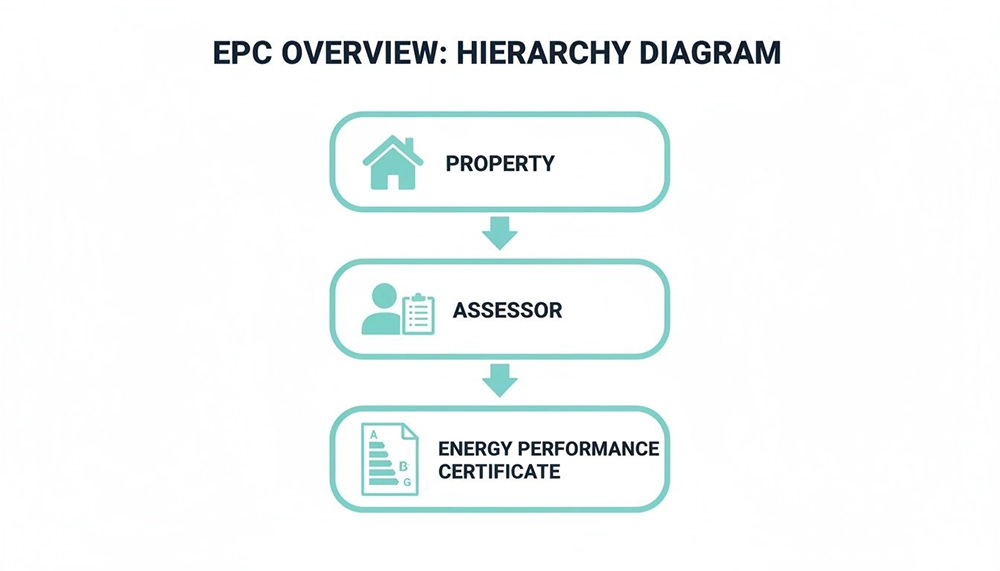
This process is all about an independent expert evaluating the physical facts of your property to produce that final, all-important grade. So, let's break down what each of those grades really means.
EPC Rating Bands at a Glance
To give you a clearer picture, this table summarises what each EPC band represents, from the best to the worst. It’s a quick reference guide to understand a property's performance at a glance.
| EPC Band | SAP Points | Efficiency Level | Typical Property Features |
|---|---|---|---|
| A | 92–100 | Very High | Solar panels, top-tier insulation, heat recovery systems. |
| B | 81–91 | High | New-build standard, excellent insulation, modern boiler. |
| C | 69–80 | Good | A common target. Good loft/cavity wall insulation. |
| D | 55–68 | Average | The UK median. Some upgrades, but room for improvement. |
| E | 39–54 | Poor | The legal minimum for rentals. Basic insulation, older boiler. |
| F | 21–38 | Very Poor | Significant heat loss, outdated heating system. |
| G | 1–20 | Extremely Poor | Severe efficiency issues, very high running costs. |
As you can see, the difference between an A and a G is huge, affecting everything from tenant bills to a landlord's legal obligations.
The Top Tier: Ratings A and B
Properties hitting an A or B rating are the absolute gold standard of energy efficiency. Frankly, they're as rare as hen's teeth in the UK's rental market, especially in anything but the newest housing stock. These are homes built from the ground up to consume minimal energy.
- Band A (92–100 SAP points): This is the pinnacle. A Band A home is often packed with tech like solar panels, advanced heat recovery systems, and the thickest insulation money can buy. Running costs are virtually negligible, making them a dream for tenants.
- Band B (81–91 SAP points): Still exceptional, a Band B property is very well-insulated, will almost certainly have a modern, efficient boiler, and high-performance double or even triple glazing. It’s what you’d expect from a quality new-build—a warm, comfortable home where energy isn't wasted.
For landlords, getting a property into these bands turns it into a premium asset. You can market it as a home with rock-bottom bills, which is a massive draw for savvy tenants willing to pay for that quality and comfort.
The Average Performers: Ratings C and D
This is where you’ll find the vast majority of UK properties. Homes in these bands are reasonably efficient, but they nearly always have obvious, straightforward routes to improvement.
According to the Office for National Statistics, the median energy efficiency score for properties in England is 67, which falls squarely into Band D. This really highlights the opportunity for landlords to get a competitive edge by pushing their properties into the more desirable Band C.
A C-rated (69–80 SAP points) property is now the target for many government initiatives and is considered a good standard. It will typically have decent loft and cavity wall insulation and a relatively modern boiler. A D-rated (55–68 SAP points) home is average, often found in properties that have seen some upgrades but still have weak spots, like older windows or patchy insulation.
The Legally Critical Zone: Ratings E, F, and G
These lower bands are where landlords really need to pay attention, as legal requirements kick in. They signal poor energy efficiency, which means high bills and potentially cold, uncomfortable homes for tenants.
- Band E (39–54 SAP points): This is the current legal minimum for most private rental properties in England and Wales under the MEES regulations. A property at this level probably has some basic insulation but might be held back by an old boiler or single-glazed windows.
- Bands F (21–38) and G (1–20): These ratings are a major red flag. A home in these bands is haemorrhaging heat due to terrible insulation, an ancient heating system, and draughty windows and doors. It's now unlawful to rent out a property in these bands without a valid exemption.
If your property is rated F or G, it’s a sign that you need to take action—not just to avoid fines, but to make the home liveable and affordable for tenants. Getting to grips with this A-G scale is the first, most crucial step in managing your property effectively.
How EPC Ratings Are Actually Calculated
An Energy Performance Certificate rating isn't just a letter plucked out of thin air. It’s the result of a detailed, methodical inspection by an accredited domestic energy assessor who acts a bit like a detective, piecing together clues about your property's energy DNA. They use a standardised methodology, ensuring every property is judged on a level playing field.
The process involves a thorough survey where the assessor records specific physical features of the building. Think of it less as a critique of your interior design and more as a forensic analysis of the building's structure and systems. This ensures the final rating is consistent and comparable nationwide.
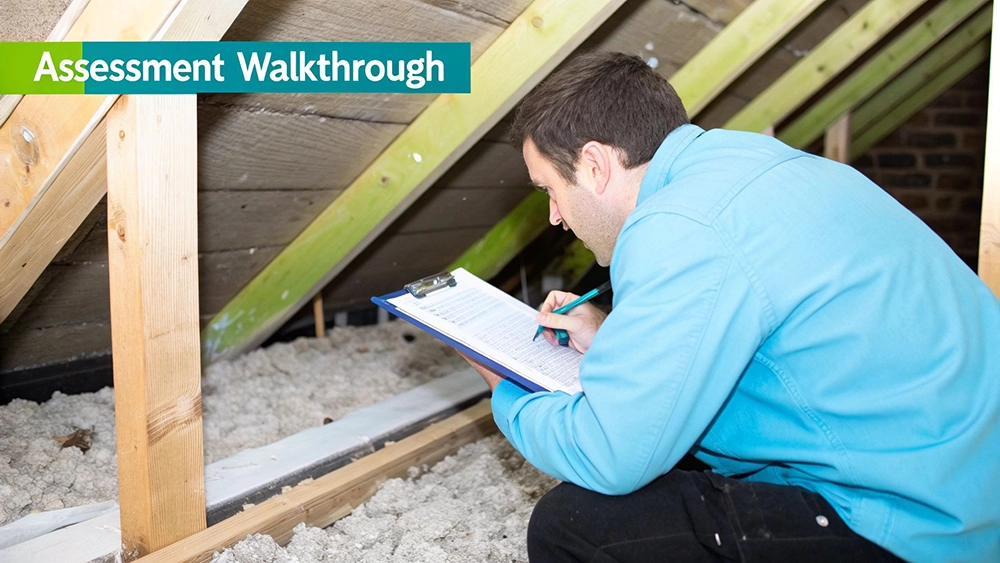
This distinction is crucial. The EPC is what's known as an ‘asset rating’. It reflects the inherent energy efficiency of the building itself—the bricks, mortar, windows, and boiler—not the habits of the people living inside. Two identical houses could have wildly different energy bills based on who lives there, but they would still share the exact same EPC rating.
The Assessor's Walkthrough: What They Actually Check
Imagine an assessor arriving at a typical terraced house. Their job is to gather data on several key areas, with each one contributing points towards that final score. Here’s a rundown of what they're looking for:
- Loft Insulation: The loft is often the first stop. The assessor will measure the depth of the insulation. Anything less than 100mm is considered poor, while 270mm or more is the modern standard that scores well.
- Wall Construction: They’ll identify the type of walls—are they solid brick, stone, or cavity? An uninsulated cavity wall loses far more heat than a properly filled one, which heavily impacts the rating.
- Windows: The glazing is examined. Are they single-glazed panes, standard double-glazing, or high-performance modern units? The difference in heat loss is huge.
- Heating System: The boiler is a major player. The assessor identifies its exact make and model to find its official efficiency rating. An old, G-rated boiler will bleed points compared to a modern A-rated condensing model.
- Heating Controls: They'll look for things like a room thermostat and thermostatic radiator valves (TRVs). The presence of these sophisticated controls shows an ability to manage energy use effectively.
- Hot Water Cylinder: If there’s a hot water tank, they check its insulation. An uninsulated tank is like a leaky bucket for heat, constantly wasting energy just to keep water warm.
- Lighting: Finally, they do a quick count of the fixed light fittings to work out the percentage that are low-energy bulbs, like LEDs.
How Points Are Gained and Lost
As the assessor moves through the property, they feed all this data into government-approved software called RdSAP (Reduced Data Standard Assessment Procedure). This clever bit of kit is what crunches the numbers and calculates the final score.
For example, finding thick loft insulation adds a healthy number of points. On the flip side, discovering an ancient, inefficient boiler paired with single-glazed windows will cause a significant drop in the score.
The final score isn’t a mystery; it’s a direct calculation based on these physical elements. Every feature, from the wall type to the light bulbs, has a specific value within the RdSAP software. This systematic approach is why the assessor needs to see evidence—if they can't get into the loft, they may have to assume there's no insulation, potentially dragging your score down.
Understanding this process helps you see your property through an assessor's eyes. It shines a light on the exact 'weak links' that are hurting your rating, giving you a clear roadmap for targeted improvements.
Navigating MEES and Your Legal Duties as a Landlord
For landlords in the UK, your Energy Performance Certificate (EPC) isn't just a colourful chart showing how efficient your property is. It’s a critical legal document. The legislation you absolutely need to know is the Minimum Energy Efficiency Standards, or MEES for short, which sets a hard legal baseline for every rental property.
At its core, MEES makes it illegal to grant a new tenancy—or even continue an existing one—for a property with an EPC rating below ‘E’. This rule applies to most domestic private rented properties across England and Wales, effectively kicking F and G-rated homes out of the rental market unless they have a valid, registered exemption.
Don't mistake this for a gentle suggestion; the penalties are serious. Local authorities have the power to issue fines of up to £5,000 for each breach. So, thinking of your EPC as just another piece of paperwork is a costly mistake. It's a vital part of operating your rental business legally and responsibly.
The Cost Cap and Required Improvements
Now, the government knows that bringing an older property up to scratch can cost a pretty penny. To strike a balance between necessary upgrades and financial reality, MEES includes a ‘cost cap’. This means you are only required to spend up to £3,500 (including VAT) on energy efficiency improvements to lift a sub-standard property to that all-important E rating.
If you spend that amount on relevant upgrades and the property still doesn’t hit an 'E', you can register an 'all relevant improvements made' exemption. This is a crucial safety net that stops landlords from facing an endless bill.
The key thing to remember is that any work you do must be recommended in your property's EPC report or a separate report from a qualified surveyor. Only then will it count towards that £3,500 cap. This makes sure the money goes towards measures that genuinely boost the property’s energy performance.
A Practical Path for F and G Rated Properties
If your property is currently languishing with an F or G rating, there's no need to panic. The path to compliance is clear and structured, designed to get you back on track and secure your rental income.
- Review Your EPC Recommendations: Your first step is to dig out your current certificate and carefully read the list of recommended improvements. Think of this as your official roadmap to a better rating.
- Obtain Quotes: Next, get at least three quotes from qualified installers for the suggested measures. This could be anything from loft insulation and cavity wall insulation to upgrading your heating controls.
- Install the Improvements: Once you've chosen your installer, get the work done. Make sure you keep a close eye on the spending to stay within the £3,500 cost cap and, most importantly, keep every single invoice and receipt as proof.
- Commission a New EPC: After the improvements are finished, it's time to get a new EPC. With any luck, the work will have been enough to push your rating up to an 'E' or higher.
- Register an Exemption (If Needed): If you've hit the spending cap but the rating is still below 'E', you're not done yet. You must formally register a valid exemption on the PRS Exemptions Register. This isn't an automatic process and you'll need to submit your evidence to get it approved.
Your Duty to Advertise with an EPC
Beyond the MEES regulations, there's another legal responsibility you can't afford to overlook. You are legally required to display the EPC rating in all property advertisements. That means online portals, newspaper ads, and any other marketing you do. The colourful A-G graph itself needs to be clearly visible.
This rule empowers potential tenants, allowing them to compare the likely running costs of different properties right from the start. And they are paying attention. Government data from April to June 2025 showed a sharp 20% surge in lodged EPCs across England and Wales compared to the previous year. With the average home sitting at a 'D' rating, getting your property into the higher bands gives you a real competitive edge.
Failing to show the rating can result in fines from Trading Standards. It’s a simple thing to get right, and it helps build trust with good tenants. To make your property stand out from the crowd, register as a landlord on Rooms For Let and show off your excellent energy rating.
Proven Strategies to Improve Your EPC Rating
Improving your property's Energy Performance Certificate (EPC) rating is one of the smartest investments you can make as a landlord. It’s not just about ticking a legal box; it's about making your property genuinely more attractive to tenants who are all too aware of rising energy bills. A good EPC rating shouts from the rooftops that your property is a comfortable, well-kept, and affordable place to live.
Getting to a better rating doesn't have to mean breaking the bank. By mixing some high-impact, low-cost fixes with more significant upgrades, you can strategically lift your property’s performance. Let's walk through a practical roadmap, starting with the easy wins and moving up to the bigger projects.
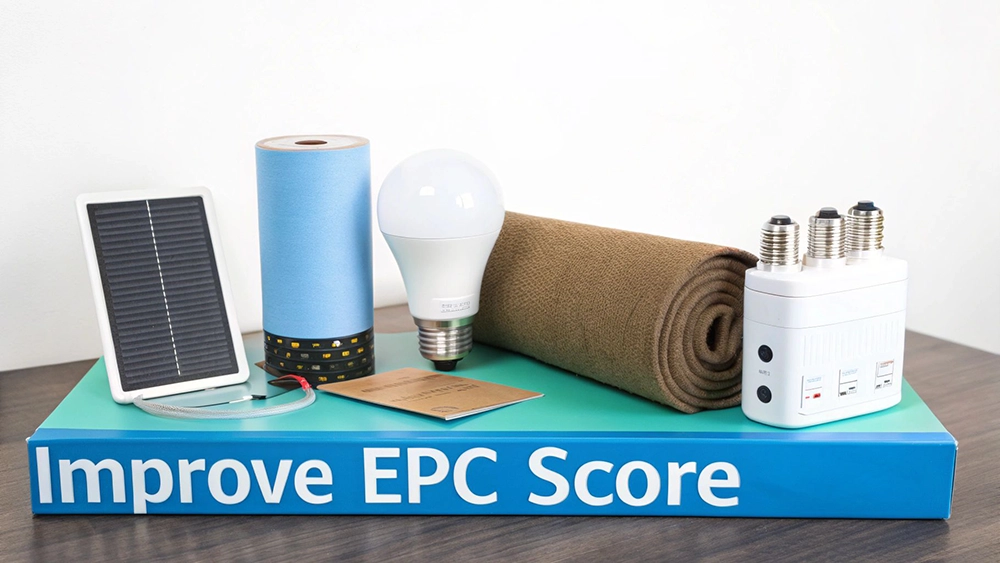
High Impact Low Cost Quick Wins
Before you start thinking about major works, it's worth tackling the simple fixes that deliver the best bang for your buck. These small changes can add up to a surprising number of points on your EPC score and are often easy jobs to get done between tenancies.
Switch to LED Lighting: This is probably the easiest win on the list. Swap out any remaining old-school halogen or incandescent bulbs for modern LEDs. The EPC assessor will check the percentage of low-energy light fittings, and hitting 100% can nudge your score up by a point or two for a minimal cost.
Insulate Your Hot Water Cylinder: If the property has a hot water tank, a simple insulating jacket is non-negotiable. A decent one costs about £20 but saves tenants money and can add a few vital points. The assessor will be looking for it, so make sure it’s fitted properly.
Eliminate Draughts: Draught-proofing is a brilliantly cost-effective way to stop precious heat from vanishing. Focus on sealing up gaps around windows, doors, skirting boards, and especially the loft hatch. It's a small detail, but it all contributes to the property's overall thermal efficiency.
Mid Tier Upgrades for Bigger Gains
Once you've ticked off the quick wins, it's time to look at more significant—but highly effective—upgrades. These measures get to the heart of where most homes lose heat, offering a substantial boost to your EPC rating.
Topping up the loft insulation is often the single most cost-effective major improvement you can make. The current recommendation is a depth of 270mm. If your property has less than 100mm, bringing it up to standard can improve your score by a huge margin, often by as much as 10-15 points.
Another key upgrade is installing modern heating controls. A full set, including a room thermostat and thermostatic radiator valves (TRVs) on every radiator, gives tenants precise control over their heating. This is something the EPC calculation rewards heavily because it shows the system can be run efficiently.
Major Investments for Maximum Impact
For properties that need a serious jump to get over the MEES line, or for landlords aiming for a top-tier C or B rating, larger investments are usually required. These focus on the fundamental fabric and systems of the building. For a deep dive into what’s possible, it’s worth exploring the full range of energy efficient home upgrades.
Replacing an ancient, inefficient boiler with a modern A-rated condensing model is a true game-changer. It’s a significant outlay, no doubt, but it can improve an EPC score by up to 20 points, making a property far more efficient and desirable in one fell swoop.
In the same vein, upgrading from single-glazed windows to modern double-glazing drastically cuts down on heat loss. While it's one of the more expensive jobs, this improvement adds points, reduces noise, and seriously boosts tenant comfort, justifying the investment over the long term.
Recent ONS analysis shows the median EPC score in England is 69 (Band C), with flats often performing best due to their smaller size. For landlords on platforms like Rooms For Let, showcasing a C rating or higher can slash void periods, as energy-conscious tenants actively seek out homes with lower running costs. You can learn more about these national trends from the ONS energy efficiency report.
To help you decide where to focus your budget, the table below breaks down the typical costs and potential impact of these common improvements.
Cost vs Impact of Common EPC Improvements
| Improvement Measure | Estimated Cost | Potential EPC Point Increase | Best For |
|---|---|---|---|
| LED Lighting | £50 – £200 | 1–2 | Quick, cheap points for any property. |
| Hot Water Cylinder Jacket | £20 – £30 | 2–5 | Properties with an older hot water tank. |
| Draught-Proofing | £100 – £300 | 1–5 | Older, draughty properties with single glazing. |
| Loft Insulation (Top-Up) | £500 – £900 | 10–15 | Homes with less than 100mm of existing insulation. |
| Heating Controls | £400 – £700 | 8–12 | Properties lacking a room thermostat or TRVs. |
| New A-Rated Boiler | £2,500 – £5,000 | 10–20 | Replacing a G-rated boiler over 15 years old. |
| Double Glazing | £5,000 – £15,000+ | 5–10 | Upgrading from old single-glazed windows. |
| Solar Panels (PV) | £6,000 – £12,000 | 5–15 | Landlords aiming for top B or A ratings. |
By focusing on the upgrades that offer the highest point increase for your budget, you can efficiently improve your rating and make your property stand out. You can also see how a high EPC rating benefits a property listing by looking at examples like this well-rated HMO room for let.
Frequently Asked Questions About EPC Ratings
Even when you've got a good handle on Energy Performance Certificates, some very specific, real-world questions always pop up. For landlords, getting clear answers is essential for staying on the right side of the law and making smart investments in your properties. This section tackles the most common queries head-on.
We’ve pulled these questions from the things UK landlords are searching for and the challenges they're facing on the ground, so you know the information is relevant, practical, and ready to use.
How Long Is an EPC Valid For and Do I Need a New One for Each Tenancy?
An Energy Performance Certificate is valid for a full 10 years from the date it’s issued. You’re not legally required to get a new one every time a new tenancy starts within that decade; the same certificate covers multiple tenancies.
However, there’s a very good reason you might want to get a new one sooner. If you’ve made significant energy-saving improvements—like installing a new boiler or upgrading the insulation—commissioning a new EPC is a smart move.
A fresh certificate will reflect those upgrades, almost certainly giving you a better rating. This improved score then becomes a powerful marketing tool, making your property far more attractive to tenants keeping an eye on their energy bills.
Are There Any Exemptions to the Minimum Energy Efficiency Standards?
Yes, in certain situations, a property can be exempt from meeting the Minimum Energy Efficiency Standards (MEES) E rating. But—and this is crucial—these exemptions aren't automatic. You have to apply for them and get them officially logged on the national PRS Exemptions Register.
Common exemptions include:
- 'All Relevant Improvements Made' Exemption: This applies if you've spent up to the cost cap of £3,500 on recommended upgrades, but the property still doesn't hit an E rating. You'll need to show proof of the work and the costs.
- 'Devaluation' Exemption: You can apply for this if you have a report from a qualified RICS surveyor confirming that a specific recommended measure would actually reduce your property’s market value by more than 5%.
- 'Third-Party Consent' Exemption: If you can't get the necessary permission for an improvement from someone else—like planning permission from the council or consent from a freeholder—you may be exempt.
It's vital to remember that exemptions are temporary, usually lasting for five years. Once that period is up, you have to try again to improve the property's EPC rating to meet the legal standard. Simply ignoring a poor rating isn't an option and can lead to hefty fines.
Does an HMO or a Single Room Let Require an EPC?
Absolutely. An EPC is required for a House in Multiple Occupation (HMO). If you're letting individual rooms on separate tenancy agreements, you need a valid EPC for the entire building. The certificate has to be made available to any potential tenant looking at any room within that HMO.
What's more, you must display the EPC's energy efficiency graph in any advertisement for a room in the property. This ensures potential tenants can get a feel for the building's overall running costs before they even book a viewing.
The main exception here is for resident landlords letting a room to a lodger under a licence agreement, as this isn't classed as a formal tenancy. Even so, providing an EPC is a great sign of a well-maintained and transparently managed home.
Where Can I Find the EPC for My Property?
Finding the EPC for any property in England, Wales, and Northern Ireland is simple. The government keeps an official online database where every domestic EPC is registered.
You can get to the register by visiting the official government website and just typing in the property's postcode. If there’s a valid certificate on file, you can view it and download it for free.
As a landlord, your accredited assessor will have uploaded the certificate to this register for you after their inspection. For tenants, this public database is a brilliant tool for checking a property's potential energy costs before signing on the dotted line, making it a key part of their decision-making.
Finding the right tenants starts with great advertising on a trusted platform. Rooms For Let gives you the tools to highlight your property's best features, including its excellent energy rating, to thousands of active room-seekers every day. Advertise your spare room or HMO property quickly, easily, and effectively. Find your next tenant at https://www.roomsforlet.co.uk.