A tenancy notice period is simply the formal heads-up required before a rental agreement can legally come to an end. It's the minimum amount of time, either set down in law or in your contract, that a landlord or tenant has to give before the tenancy officially finishes. Getting your head around this is the first step to making sure the end of a tenancy is smooth and lawful.
Decoding the Tenancy Notice Period

Think of it like the notice period you give when you leave a job. It’s a professional courtesy, but one that’s backed by legal rules, designed to give both sides enough time to prepare for the change ahead.
For a tenant, this window of time is crucial for finding a new place to live. For a landlord, it’s vital for finding a new tenant and minimising those empty periods that lead to lost rental income.
It's also really important to understand the difference between a tenant choosing to end the agreement and a landlord needing to regain possession of the property. The rules and notice periods can be very different. A tenant giving notice is a normal part of the rental cycle, whereas a landlord serving something like a Section 21 notice is a more formal, legal process to end the tenancy from their side.
Why This Period Matters for Landlords
For anyone letting property, whether it's a room in a House in Multiple Occupation (HMO) or a whole portfolio, a solid grasp of notice periods is just fundamental business sense. It’s not just about ticking a legal box; it’s about keeping your finances stable.
Knowing the correct timelines allows you to:
- Plan Ahead: You can start advertising your room or property the moment notice is served, lining up viewings and getting a new tenant ready to move in.
- Minimise Void Periods: A slick, well-managed transition means the property is empty for the shortest possible time, protecting your income stream.
- Maintain Professionalism: Following the correct legal procedures builds your reputation as a fair and reliable landlord, which is a massive plus for attracting good tenants in the future.
In the fast-paced rental markets we see across the UK, even a couple of weeks of vacancy can mean a significant financial hit. This is what makes understanding and correctly handling notice periods a core skill for any landlord.
A common point of confusion is the difference between the notice a tenant gives versus what a landlord has to give. While a tenant on a monthly rolling contract typically only has to give one month's notice, a landlord often must provide a minimum of two months' notice for a 'no-fault' eviction. This difference is there to protect tenants from being suddenly displaced.
The Foundation of a Smooth Transition
Ultimately, the tenancy notice period is the official starting pistol for ending a rental agreement. It makes the whole process orderly, predictable, and fair for everyone involved.
Whether you're letting a single room to a lodger or managing multiple properties, getting this first step right is the key to preventing legal dramas and financial headaches down the line. It turns what could be a stressful event into a manageable business process, ensuring a smooth handover from one tenant to the next.
Statutory vs. Contractual Notice Periods: The Rules of the Road
When it’s time to end a tenancy, it’s crucial to know which rulebook to follow. There isn't just one. The correct tenancy notice period is dictated by two different sets of rules: statutory rules and contractual rules. Getting your head around the difference is the first step to ending any tenancy legally and without a headache.
Think of it like driving a car. Statutory periods are the national speed limit—the absolute legal minimums set by UK law. They act as a safety net, making sure every tenant has a baseline of protection, no matter what’s written in their tenancy agreement.
On the other hand, contractual periods are like the specific speed limit sign on a particular street. These are the terms you and your tenant agreed on when you both signed the tenancy agreement. These periods can be longer than the legal minimum, but they can never, ever be shorter.
Which Rule Wins Out?
So, what happens if your tenancy agreement says one thing, but the law says another? It’s actually quite simple: whichever period is more generous to the tenant is the one that applies. The law is specifically designed to stop landlords from writing contracts that strip away a tenant's fundamental rights.
For example, let’s say the law requires you, the landlord, to give two months' notice, but your agreement only says one month. In that case, the law overrides your contract. The one-month clause would be unenforceable because it falls short of the statutory minimum.
But what if it's the other way around? If your agreement states a tenant must give two months' notice to leave, but the statutory minimum is only one month, the two-month period in your contract will almost certainly stand. Why? Because the tenant actively agreed to that longer period when they signed on the dotted line.
The Golden Rule: A tenancy agreement can give a tenant more rights than the law demands, but it can never take their minimum statutory rights away. This is the cornerstone of fair and legal letting in the UK.
The Power of a Written Agreement
This is exactly why having a clear, well-written tenancy agreement is so vital. If you don't have one, you automatically fall back on the standard statutory notice periods, which might not be ideal for your situation. A proper contract provides clarity for both sides right from the start.
This holds true even for more casual setups, like taking in a lodger. While lodgers have fewer rights than tenants, a simple written lodger agreement that spells out the notice period can prevent a world of confusion and arguments down the line.
- For Landlords: A contract lets you set clear expectations. You can potentially ask for a longer notice period from a tenant (within reason), giving you more breathing room to find someone new.
- For Tenants: The agreement is their reference point. It clearly outlines their rights and responsibilities, so they know exactly where they stand.
Ultimately, statutory rules are the bedrock of tenancy law—the non-negotiable floor of rights. Your tenancy agreement is what you build on top of that foundation, allowing you to tailor the arrangement to your property while always respecting those legal minimums.
Notice Periods for Different Tenancy Types
Not all tenancy agreements are cut from the same cloth, and that’s a critical detail when it comes to the correct tenancy notice period. The kind of deal you have in place—whether it’s a fixed-term contract or a rolling monthly setup—spells out the specific rules you and your tenant have to play by. Getting your head around these differences is the first step to managing your property properly and staying on the right side of the law.
By far the most common setup in the UK's private rental world is the Assured Shorthold Tenancy (AST). The rules for an AST actually change depending on where it is in its lifecycle. Is it still in its initial fixed term, or has it switched over to a periodic tenancy? That single detail is probably the most important factor in figuring out notice periods.
This decision tree helps visualise that first crucial question. It all starts with whether you have a written agreement, which determines if you’re following the rules you both agreed on (contractual) or the default legal minimums (statutory).
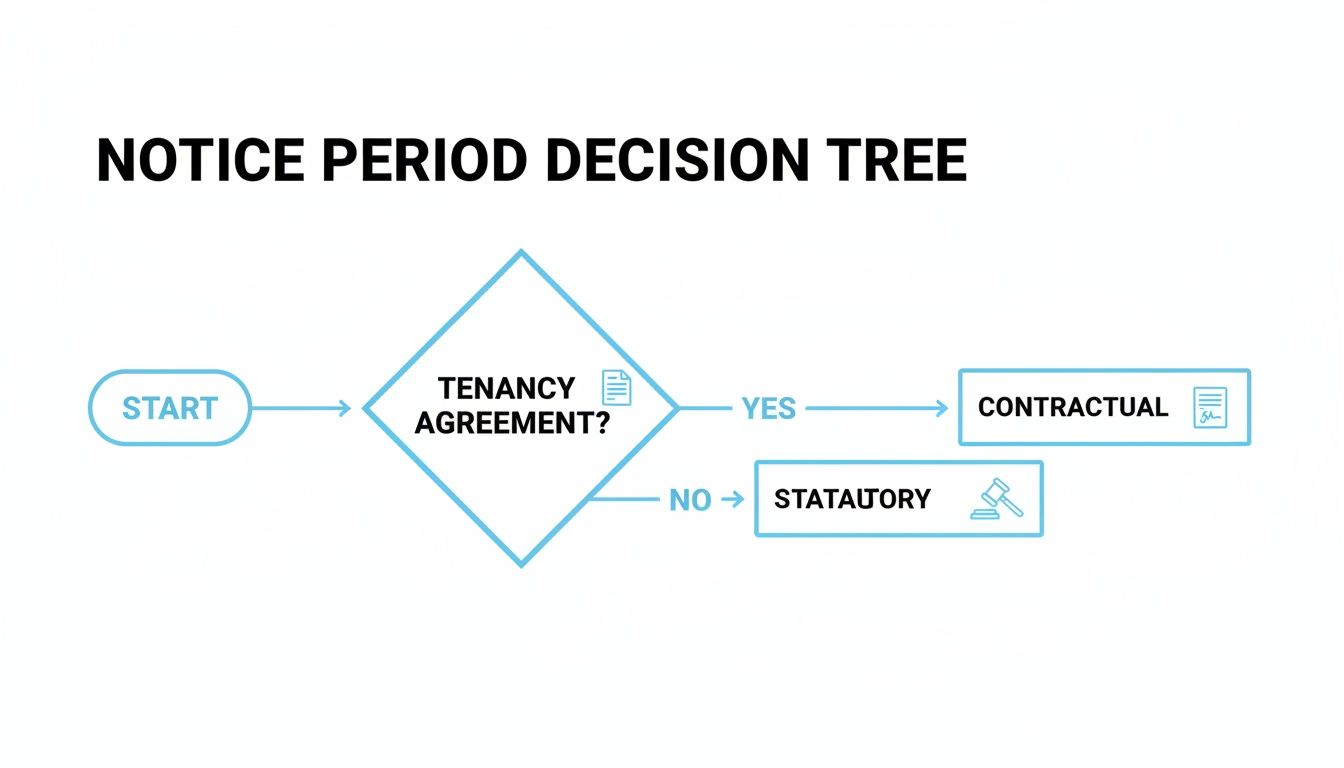
As you can see, the tenancy agreement itself is your go-to document. It's only when there's nothing in writing that the law’s default settings—the statutory rules—kick in.
Assured Shorthold Tenancies (ASTs)
ASTs are the bread and butter of the rental sector. They tend to operate in two distinct phases, and each one has its own set of rules for giving notice.
1. Fixed-Term Tenancies
Think of this as the initial commitment, like the first 6 or 12 months. During this period, the agreement is locked in, and neither the landlord nor the tenant can just walk away without a very good reason.
- Tenant's Notice: A tenant is on the hook for rent for the entire term. If they want out early, they’ll need the landlord to agree to a "surrender" of the tenancy, or they'll need a break clause in the contract that allows for an early exit. If a break clause is there, the tenant has to give whatever amount of notice is stated in that clause. Simple as that.
- Landlord's Notice: For landlords, the rules are just as strict. You generally can't ask a tenant to leave during a fixed term. The only exceptions are for serious issues, like major rent arrears, which would mean using a Section 8 notice. The standard 'no-fault' Section 21 notice just won't work before the fixed term is up, unless a break clause specifically gives you that option.
2. Periodic Tenancies (Rolling Contracts)
This is what happens when the fixed term ends and nobody signs a new contract. The tenancy doesn't just stop; it automatically rolls over into a periodic, or 'rolling', tenancy. This is where things get a bit more flexible.
- Tenant's Notice: If the rent is paid monthly, the tenant typically has to give at least one month's notice. Critically, this notice usually has to line up with the rental period, ending on the first or last day, unless the agreement specifies something different.
- Landlord's Notice: If a landlord needs the property back and wants to use a 'no-fault' Section 21 notice, they must give the tenant at least two months' written notice.
Houses in Multiple Occupation (HMOs)
If you're running an HMO, things aren't as different as you might think. Your tenants will almost certainly be on ASTs, so all the same rules for fixed-term and periodic tenancies we just covered will apply. You’re just juggling more than one of them.
The key thing for HMO landlords is to remember that each tenant's agreement is a separate contract. Serving notice on one person has absolutely no impact on the others. This means you need to be seriously organised, keeping track of different notice periods and end dates for everyone under your roof.
Agreements with Lodgers
Now, if you're a homeowner with a lodger, the rulebook is completely different. A lodger is what’s known as an 'excluded occupier', which basically means they have far fewer legal rights than a tenant on an AST.
The crucial difference here is that a resident landlord only needs to provide 'reasonable notice' to end the arrangement. The law doesn't give a hard-and-fast definition, but it's widely accepted to mean the same as the rental payment period. So, if your lodger pays rent weekly, you give one week's notice. If they pay monthly, it's one month's notice.
Because it’s a bit of a grey area, it is always a good idea to have a clear, written lodger agreement that nails down the exact tenancy notice period. A simple one-page document can prevent a world of confusion and potential arguments down the line.
UK Tenancy Notice Period Quick Reference Guide
To make all this a bit easier to digest, here's a quick-glance table summarising the minimum notice periods for the most common rental situations in the UK.
| Tenancy or Licence Type | Minimum Notice from Tenant | Minimum Notice from Landlord (No Fault) |
|---|---|---|
| AST (Fixed-Term) | Must honour the full term unless a break clause exists. | Cannot end tenancy before term expires. |
| AST (Monthly Periodic) | One rental period (usually one month). | Two months (using a Section 21 notice). |
| Lodger Agreement | 'Reasonable notice' (typically one rental period). | 'Reasonable notice' (typically one rental period). |
This table should serve as a handy starting point, but always remember to check your specific tenancy agreement first, as that's the document that holds the final say.
How to Serve and Receive Notice Correctly

Knowing the right notice period is half the battle. The other half? Making sure the notice is actually served correctly. It’s a detail that’s easy to overlook, but getting it wrong can make the whole notice invalid, sending you right back to square one.
Getting the process right is just as crucial as getting the timing right. A properly served notice isn't just a piece of paper; it's your legal proof that you’ve done everything by the book. Think of it as the official starting pistol that gets the legal clock ticking on the end of a tenancy, protecting you from disputes and costly delays down the line.
Essential Information to Include in a Notice
For a notice to hold up legally, it needs to be completely unambiguous. Vague details are a recipe for confusion and legal challenges, so whether you're a landlord or a tenant, the notice you write needs to be crystal clear.
Your notice has to contain these core elements:
- Full Names: The names of the landlord and every tenant, exactly as they appear on the tenancy agreement.
- Property Address: The full, correct address of the rental property.
- Notice Date: The date you are writing and issuing the notice.
- End Date: The specific date the tenancy will officially end. This one is critical and must line up with the tenancy period.
- Signatures: It must be signed and dated by the person giving notice.
Miss any of these, and you've created a weak link. A tenant could easily argue the notice is invalid, forcing you to start the entire process all over again.
A notice isn’t a casual text message; it's a formal legal document. The single most common mistake that invalidates a notice is getting the end date wrong. For a monthly periodic tenancy, for example, the notice usually has to end on the very last day of a rental period.
Valid Methods for Delivering a Notice
What the notice says is important, but how you deliver it is just as critical. You absolutely need to be able to prove the other person received it. Just sticking it in the post and hoping for the best is a risky move—if they claim it never arrived, you're in a tough spot.
To make sure your notice is legally ‘served’, you need a method that leaves a paper trail.
Here are the most reliable options:
- Hand Delivery with a Witness: Delivering the notice in person is direct and effective. To make it legally solid, bring along an independent witness who can sign a short statement confirming they saw you hand over the document.
- Recorded Delivery: Using Royal Mail's Recorded Delivery service gives you a signature upon receipt. Make sure you keep the tracking receipt somewhere safe – that's your proof.
- Process Server: If you're expecting any difficulties, hiring a professional process server is the gold standard. They serve legal documents for a living and will provide you with a sworn statement of service, which is hard to argue with.
A Landlord's Checklist for Serving Notice
To sidestep the common pitfalls, it’s worth running through a quick checklist every time you need to end a tenancy. A smooth, professional process gets your property back on the market that much faster. It's why many landlords use a dedicated service to advertise their rooms for let – it really speeds up finding that next great tenant.
- Step 1 Review the Agreement: First things first, pull out the tenancy agreement and check for any specific clauses about how notice must be served.
- Step 2 Verify the Dates: Carefully calculate the tenancy end date. Make sure it follows the rules for the tenancy type and lines up with the rental period.
- Step 3 Draft the Notice: Write a clear, formal notice that includes all the essential information we covered above. No shortcuts!
- Step 4 Choose a Delivery Method: Pick a delivery option that gives you solid proof of service, like recorded delivery or handing it over with a witness present.
- Step 5 Keep Copies: Always, always make copies of everything: the signed notice, the proof of postage or delivery, and any witness statements. Keep them for your records.
Following these steps creates an undeniable record that you’ve acted fairly and within the law, protecting your investment and setting you up for a hassle-free transition.
Why Do Tenancies Really End? Getting Ahead of the Game
Thinking about the end of a tenancy isn't just about dealing with an empty property down the line; it’s about understanding the natural ebb and flow of the rental market. While landlords do occasionally need to serve notice, the simple truth is that most tenancies wrap up because the tenant decides it's their time to move on.
Tenants hand in their notice for all sorts of reasons, and most of them are just a normal part of life. A new job in a different city, a growing family needing more space, or simply wanting a change of scenery are all everyday triggers. Often, it's just that their initial fixed-term has run its course, giving them a natural break to think about what comes next.
Once you get your head around these common patterns, you can stop reacting to notices and start planning for them. Instead of being surprised by a tenant's departure, you can see it coming and get a head start on finding your next great tenant.
It’s Usually the Tenant Who Calls Time
There's a common myth that landlords are the ones ending most tenancies. But if you look at the UK's private rental market, the facts paint a very different picture. More often than not, it's the tenant who gets the ball rolling, especially once they're on a flexible rolling contract.
This is a really important insight for any landlord. The latest government data shows that for 44% of landlords, their last tenancy ended simply because the tenant gave notice while on a periodic (rolling) tenancy. That one statistic alone shows you just how much of the rental cycle is driven by tenants' own decisions. You can dig into this and other findings in the English Private Landlord Survey 2024.
Knowing this helps you prepare. As a fixed term nears its end, it's the perfect time to open up a friendly line of communication. A quick, informal chat can tell you everything you need to know about their plans, giving you a priceless heads-up if they're thinking of moving.
Turning a tenancy changeover from a headache into a smooth, efficient process is all about good preparation. An empty room is lost income, so the goal is always to minimise that void period between tenants.
Preparing for a Smooth Handover
The moment you receive that notice, the clock officially starts ticking. A bit of organisation at this stage can make the entire transition feel seamless, ensuring your property is ready for viewings and a new occupant almost immediately. This is where a good plan makes all the difference.
Your handover checklist should look something like this:
- Acknowledge the Notice: Always reply in writing to confirm you've received their notice. This simple step locks in the end date and avoids any confusion later on.
- Schedule Inspections: Arrange a pre-checkout inspection a week or so before they leave. It’s a great way to spot any little issues that can be sorted out before the final inventory check.
- Start Marketing Right Away: Don't wait for the keys to be handed back. Get your property advertised straight away to start lining up potential new tenants. If you need a hand, check out our guide on how to advertise your rooms effectively: https://www.roomsforlet.co.uk/advert-prices/.
- Coordinate the Checkout: Finalise the details for their last day, including the key handover and taking final meter readings.
Making the move as easy as possible for your departing tenant is a smart move, too. Pointing them towards a helpful guide on what to do when moving house can foster a lot of goodwill. A smooth exit for them usually means a smoother handover for you, setting the stage perfectly for your next tenancy.
Common Notice Period Mistakes to Avoid

Navigating the rules of a tenancy notice period can feel like walking a tightrope. One tiny misstep is all it takes to invalidate the whole thing, leading to frustrating delays, lost rent, and sometimes, a whole lot of legal hassle.
Both landlords and tenants can fall into a few common traps. The good news? They’re easily sidestepped once you know what to look for.
These aren’t obscure legal loopholes; they're everyday errors that happen all the time. From a simple date miscalculation to relying on a quick chat instead of proper paperwork, these slip-ups can turn a straightforward tenancy ending into a drawn-out headache. Getting to grips with these pitfalls is your best bet for a smooth, professional, and legally sound transition.
The Invalid End Date Error
One of the most frequent mistakes is simply getting the tenancy end date wrong. It’s not enough to give the right amount of notice; the date the tenancy officially ends has to line up perfectly with the rental period. This catches so many people out.
For a monthly periodic tenancy, for instance, the notice has to end on the last day of a rental period. Getting this date wrong by even a single day can make your notice completely invalid, meaning you have to start the entire process all over again.
- Example Scenario: A landlord gives two months' notice on the 15th of June. The monthly tenancy runs from the 1st to the end of each month. They incorrectly set the end date as the 15th of August. This notice is invalid because it must end on the last day of the rental period, which would be the 31st of August.
Relying on Informal Agreements
In an age of instant messaging, it’s so tempting to handle things casually. But when it comes to ending a tenancy, a text message or a verbal agreement just won’t cut it in the eyes of the law.
A formal notice needs to be a clear, written document. Relying on an informal chat or an email that’s missing key legal details creates a messy, ambiguous situation and leaves you with zero proof if a dispute pops up later.
The Landlord Who Relied on a Text Message: A landlord has a friendly chat with their tenant, who agrees over text to move out in a month. When moving day arrives, the tenant hasn't left. Because the landlord never served a formal written notice, they have no legal leg to stand on and must start the two-month notice process from scratch, losing valuable time and rent.
Forgetting Essential Paperwork
For landlords in England serving a Section 21 notice, the notice form itself is only one piece of the puzzle. For the notice to be valid, the law requires that tenants were given a specific set of documents right at the start of their tenancy.
Forgetting to provide these is a showstopper—it can instantly invalidate your notice. The required documents typically include:
- A valid Gas Safety Certificate.
- An Energy Performance Certificate (EPC).
- The government's 'How to Rent' guide.
The laws around tenancies in the UK are all about balancing the rights of tenants and landlords, and the modern rules demand that you follow the procedure to the letter. Making sure your paperwork is in order from day one isn't just good practice; it's a legal must-have if you want to regain possession of your property smoothly.
For more practical advice and tips for landlords, check out our regularly updated blog.
Frequently Asked Questions
Got a handle on the basics? Good. But let's be honest, it's the specific, tricky situations around a tenancy notice period that often cause the most headaches. Here are some straight answers to the questions we see pop up time and time again.
Can a Tenant Leave a Fixed-Term Tenancy Early?
Think of a fixed-term contract like a promise for a set period, usually six or twelve months. During that time, the tenant is on the hook for the rent for the entire term.
There are only really two ways out of this commitment:
- The tenancy agreement has a 'break clause'. This is a specific term written into the contract that spells out exactly when and how the tenant can give notice to leave early.
- You, the landlord, agree to a 'surrender' of the tenancy. This is simply a mutual agreement to end the contract ahead of schedule.
If neither of these applies, the tenant is legally liable for the rent for the whole fixed term, even if they've already packed their bags and moved out.
How Does Notice Work for a Rolling Tenancy?
When a fixed term ends and nobody signs a new contract, the tenancy automatically 'rolls over' into what's known as a periodic tenancy. It just keeps going, usually on a month-to-month basis.
For a tenant on a monthly rolling tenancy, they must give at least one full rental period's notice. The key here is that the notice has to line up with their rent payment dates. For landlords wanting to regain possession using a no-fault Section 21 notice, the law is stricter: you must give at least two months' written notice.
What Happens If a Notice Is Served Incorrectly?
This is a classic mistake, and the consequences are significant. An incorrectly served notice is legally worthless—it simply doesn't count.
For a landlord, it means any court application for a possession order will be thrown out, forcing you to start the whole process from scratch. That can lead to serious delays and lost rent. For a tenant, it means their attempt to end the tenancy is invalid, and they're still legally obliged to pay rent.
An invalid notice isn’t just a small administrative slip-up; it resets the entire timeline. A simple error, like getting the end date wrong by a single day, could mean a landlord has to wait an extra two months before they can legally get their property back.
Do I Have to Give Notice to a Lodger?
Yes, but the process is far more straightforward than with a tenant. A lodger is typically an 'excluded occupier', meaning they don't have the same level of legal protection as someone with an Assured Shorthold Tenancy.
You only need to give them 'reasonable' notice. While the law doesn't give a concrete definition of 'reasonable', it's widely accepted to mean the same length as their rental payment period.
- Weekly Rent: One week's notice is almost always seen as reasonable.
- Monthly Rent: One month's notice is the standard.
That said, the absolute best practice is to have a simple, written lodger agreement that clearly states the required tenancy notice period. This small bit of paperwork provides total clarity for both of you and helps sidestep any arguments when it's time for them to move on.
Finding the right tenant or lodger is the key to making it all work. Rooms For Let makes it easy to advertise your spare room to thousands of potential renters across the UK, helping you minimise void periods and find a great match quickly. Find your next tenant today at https://www.roomsforlet.co.uk.