When it comes to renting out a property, one of the most common questions we hear from landlords is about the cost of an electrical safety certificate. The straightforward answer is that you should budget somewhere between £150 and £250 for a typical UK rental property.
This report, officially known as an Electrical Installation Condition Report (EICR), isn't just a piece of paper. It's a crucial legal requirement that protects your tenants, your property, and you.
Breaking Down EICR Costs for UK Landlords

Think of an EICR as an MOT for your property’s entire electrical system. It's a thorough health check where a qualified electrician inspects all the fixed installations—everything from the wiring behind the walls and the plug sockets to the light fittings and the consumer unit (or 'fuse box').
This isn't just a 'nice to have'; it’s a legal must. Under the Electrical Safety Standards in the Private Rented Sector (England) Regulations 2020, every landlord is required to have a valid EICR in place. Failing to comply can have serious consequences, with local councils having the power to issue fines of up to £30,000.
For landlords using platforms like Rooms For Let, we see the average cost for a standard 2-3 bedroom house sitting at around £200. For a more detailed breakdown of how these costs are calculated, the team at Checkatrade.com offer a great guide.
An EICR is more than a certificate; it's documented proof of your commitment to tenant safety and legal compliance. Budgeting for it is a non-negotiable aspect of responsible property management.
Average EICR Cost By Property Size
The final price tag for your electrical safety certificate will nearly always come down to the size and complexity of your rental property. It makes sense when you think about it: a larger home with more rooms and more circuits will simply take an electrician longer to inspect than a compact studio flat.
To give you a clearer idea and help you budget, here’s a quick overview of what you can expect to pay based on your property type.
Estimated EICR Cost By Property Type
| Property Type | Average Cost Range (UK-wide) | Estimated Cost (London) |
|---|---|---|
| Studio / 1-Bed Flat | £125 – £180 | £150 – £220 |
| 2-Bed House / Flat | £150 – £225 | £180 – £275 |
| 3-Bed House | £180 – £250 | £220 – £300 |
| 4-Bed House | £200 – £300 | £250 – £350+ |
| 5+ Bed House / HMO | £250 – £400+ | £300 – £500+ |
Just remember, these are estimates. Prices in London and the South East are often higher, which reflects the increased operational costs for electricians working in those areas.
Understanding Your Legal Duties As A Landlord
Being a landlord is about more than just collecting rent; it's about providing a safe home. A huge part of that responsibility rests on electrical safety, and that’s where understanding your legal duties becomes absolutely essential.
The key piece of legislation to get your head around is the Electrical Safety Standards in the Private Rented Sector (England) Regulations 2020. This isn't just bureaucratic red tape—it's the framework that ensures your tenants are protected from electrical hazards.
Think of an EICR as your property's electrical MOT. It’s a mandatory, legally required check-up that has to be done by a qualified professional. The regulations lay out a clear set of duties you must follow to the letter.
Your Core Responsibilities Outlined
The law is actually pretty straightforward. Your main obligation is to make sure the electrical systems in your rental properties are safe when a tenancy begins and remain safe for its entire duration.
This boils down to three core actions:
- Get a Valid Report: You must have the property's electrical installations inspected and tested by a qualified person at least every five years.
- Share the Report: You are legally required to give a copy of this report to your current tenants within 28 days of the inspection. For any new tenants, you must provide it before they even move in.
- Be Ready for Requests: If the local authority asks for a copy of the EICR, you must supply it to them within seven days.
These rules were a significant change. Before 2020, regular electrical checks were just a recommendation. The new regulations, driven by the Housing and Planning Act 2016, made them compulsory and created a proper system for keeping records and informing tenants.
And the statistics show exactly why this was needed. An eye-opening 25% of UK rental properties revealed electrical faults during their first mandatory EICRs, often hitting landlords with unexpected remedial costs. You can find more details on these findings over at MyJobQuote.co.uk.
Failing to comply isn't just a minor slip-up; it's a serious breach of your legal duty of care. The fallout can be far more damaging than a simple fine, hitting your finances, your insurance, and your reputation as a landlord.
The Real Consequences Of Non-Compliance
While the headline figure for non-compliance is a fine of up to £30,000, the real risks go much deeper. Failing to have a valid EICR can actually invalidate your landlord insurance policy.
Just imagine that for a moment. If an electrical fault causes a fire or, even worse, injures a tenant, you could be left personally liable for all the damages, repair bills, and legal fees.
This isn't just a financial gamble; it undermines your credibility as a landlord. Staying compliant is about much more than avoiding fines—it's about protecting your investment and, most importantly, the people living in your property. Our platform helps you keep on top of these crucial compliance deadlines. Find out more by registering as a Rooms For Let landlord.
What Factors Influence Your EICR Quote
Ever wondered why one landlord pays £150 for an EICR, while another gets a quote for over £300 on a property that seems pretty similar? It's a common question, and the answer is that the final cost isn't just a simple flat fee. It’s a calculation based on several key variables that determine how complex, and therefore how time-consuming, the job will be.
Getting your head around these factors is key to budgeting properly. It helps you understand exactly what you're paying for and lets you have a much more informed chat with any electrician you're thinking of hiring. Think of it like getting a quote to decorate a room—the price naturally changes depending on its size, the condition of the walls, and how much detail is involved.
Property Size and Circuit Count
By far the biggest factor influencing your EICR cost is the size of your property and, more specifically, how many electrical circuits it has. The electrician has to methodically test every single circuit running from your consumer unit (or fuse board, as it's often called).
A small one-bedroom flat might only have four or five circuits to check, which is a relatively quick job. A five-bedroom HMO, on the other hand, could easily have 15 or more circuits, each one needing its own individual inspection and test. More circuits mean more work, and that directly translates to a higher price.
The number of circuits, not just the number of bedrooms, is the true measure of complexity for an electrician. A large, older house with extensive wiring will always cost more to inspect than a small, modern flat.
Age and Condition of the Wiring
The age of your property’s electrical system plays a massive part in how tricky the inspection will be. If you have a modern property, say one built in the last 10-15 years, it's very likely to have wiring and a consumer unit that are up to current standards. This makes for a pretty straightforward inspection.
But an older property is a different beast entirely, especially if it hasn't been rewired in decades. The electrician might come across outdated rubber-coated cables, an old-style fuse box with rewirable fuses, or junction boxes that are a nightmare to get to. These older systems simply take more time to assess safely and thoroughly, which bumps up the labour cost.
Location and Accessibility
It might surprise you, but where your property is in the UK can cause some big price swings. Electricians in London and the South East tend to have higher overheads and, as a result, charge more for their time compared to those in the North of England or Scotland. This regional difference can easily add 20-30% to your final quote.
On top of that, physical access within the property itself really matters. If the consumer unit is shoved away in a cramped, cluttered cupboard, it just makes the electrician's job harder and longer. Making sure there’s easy access to all electrical points, like sockets and light fittings, helps the inspection run smoothly and can stop you from getting charged extra for time spent moving furniture around.
To pull it all together, here’s a quick look at how these different elements can push your quote up or down.
Key Factors Affecting Your EICR Quote
| Cost Factor | Impact on Price | Example Scenario |
|---|---|---|
| Property Size | High | A 5-bed HMO with 15 circuits will cost significantly more than a 1-bed flat with 4 circuits. |
| Wiring Age | High | A property with 1960s wiring and an old fuse box requires more intensive testing than a new build. |
| Location | Medium | A standard inspection in central London may cost £250, while the same job in Liverpool could be £180. |
| Accessibility | Low | An easily accessible, modern consumer unit keeps costs down compared to one in a difficult-to-reach area. |
As you can see, the final price is a blend of these different factors. Understanding them puts you in a much better position to get a fair and accurate quote for your property.
Decoding Your Electrical Safety Report
Once your electrician has finished their work, they'll hand over the Electrical Installation Condition Report, or EICR. At first glance, it can look a bit technical and intimidating, but think of it simply as a health check for your property's wiring. Getting to grips with what it says is absolutely essential for keeping your tenants safe and staying on the right side of the law.
The inspection itself isn't a quick five-minute job; expect it to take anywhere from two to four hours, depending on the size and complexity of your property. During this time, the electrician will methodically go through all the fixed electrical installations. It’s a proper deep dive, involving a combination of visual inspections and live electrical tests to spot any wear and tear, damage, or anything that doesn't meet current safety standards.
What Happens During the Inspection?
The electrician's process is thorough and systematic, covering every fixed part of your electrical system. This is far more than just a quick look around.
Here’s a breakdown of what they’ll be doing:
- Consumer Unit Check: They'll give your consumer unit (what we used to call a fuse box) a full assessment to make sure it's safe, working correctly, and up to modern standards with the right protective devices.
- Wiring and Circuit Tests: Every circuit will be tested to check for degradation or overloading—two major culprits behind electrical fires.
- Socket and Switch Examinations: Each socket, light switch, and light fitting gets a close look to spot any signs of damage, overheating, or dodgy connections.
- Earthing and Bonding Verification: This is a crucial one. They'll confirm that the property's earthing and bonding are in place and working correctly. These are the key safety features that prevent fatal electric shocks.
To really make sense of your report, it helps to understand the general risk assessment process that electricians follow. This framework is what guides them in identifying and classifying any hazards they find in your electrical system.
This decision tree shows how property size, age, and location directly influence your landlord electrical safety certificate cost.
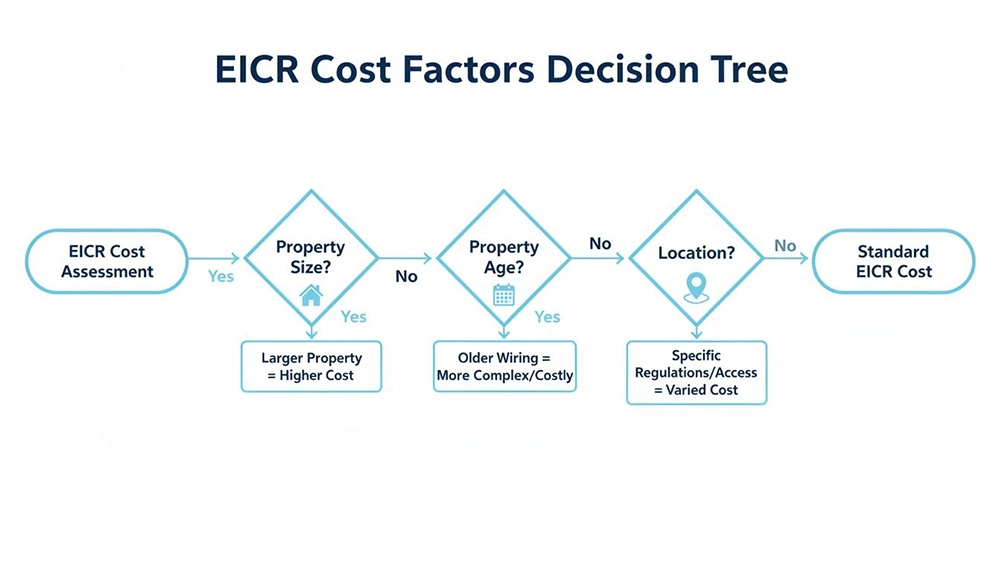
As you can see, it stands to reason that larger and older properties need a more in-depth inspection, which naturally means the final price will be higher.
Understanding the Observation Codes
The most important part of your report is the list of observations and the codes they’ve been given. These codes are your at-a-glance guide to how urgent any problems are.
A "Satisfactory" EICR means no C1 or C2 codes were found. An "Unsatisfactory" result means at least one C1 or C2 issue was identified, and you are legally required to arrange remedial work within 28 days.
Here’s a simple translation of the codes:
- C1 (Danger Present): This is the most serious. It means there's an immediate risk to safety, like exposed live wires. The electrician has a duty to make this safe right there and then.
- C2 (Potentially Dangerous): This highlights a problem that could become a real danger down the line. A classic example is a lack of proper earthing. It needs sorting out urgently.
- C3 (Improvement Recommended): Think of this as an advisory. It’s a recommendation, not a legal requirement. For instance, they might suggest updating an older consumer unit that’s still safe but doesn’t meet the very latest regulations.
Once you understand these codes, you can read your report with confidence, line up any necessary repairs, and rest easy knowing your property is a safe, compliant home for your tenants.
How To Find A Qualified Electrician
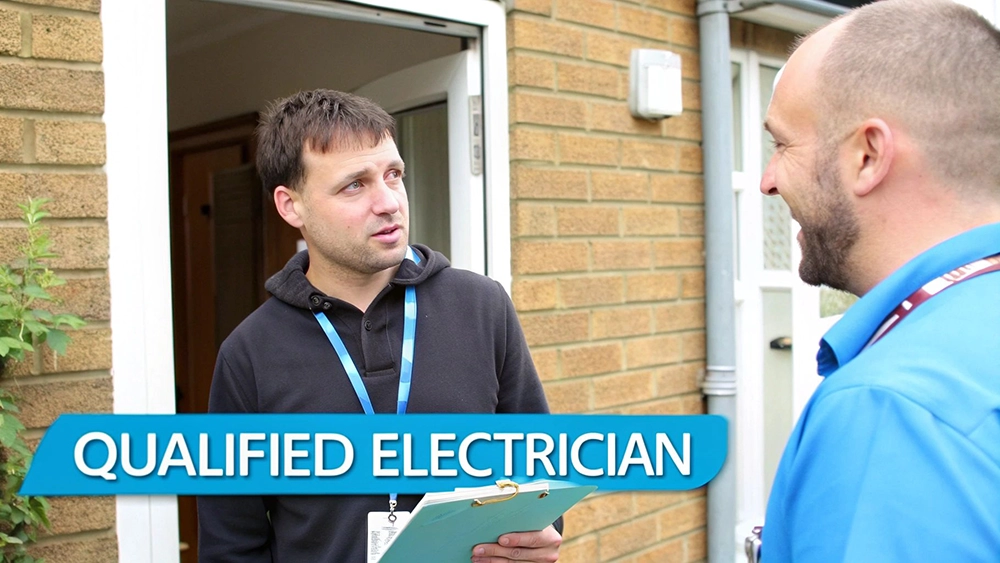
Choosing the right person for your EICR isn’t just about ticking a box or managing your landlord electrical safety certificate cost. It’s about making sure your property is genuinely safe for the people living in it. A certificate from someone who isn’t properly qualified is worthless—both in the eyes of the law and for your own peace of mind.
So, where do you start? Your first and most critical step is to check that any electrician you’re thinking of hiring is registered with a government-approved Competent Person Scheme. This isn't just a recommendation; it's a non-negotiable for anyone carrying out an EICR in a rental property.
Checking Essential Credentials
Before you even get to talking about prices, you need to confirm the electrician is a member of a recognised professional body. This is your proof that they’ve been properly assessed, are competent to do the work, and adhere to the BS 7671 safety standard.
Keep an eye out for registration with one of these main schemes:
- NICEIC (National Inspection Council for Electrical Installation Contracting)
- NAPIT (National Association of Professional Inspectors and Testers)
- ELECSA
These organisations make sure their members hold the right insurance, have their work checked regularly, and are actually capable of completing the certification you need. You can usually verify an electrician's membership directly on the scheme's website.
A rock-bottom quote from an unregistered electrician should set alarm bells ringing. It often leads to rushed, incomplete inspections, pressure to approve unnecessary repairs, or a certificate that simply won’t stand up to scrutiny from your local council.
Key Questions To Ask Potential Electricians
Once you’ve got a shortlist of registered professionals, it's time to dig a little deeper with the right questions. This helps you understand exactly what’s included in their quote and gives you a feel for their experience with rental properties like yours.
- Are you experienced with EICRs for rental properties? Someone who works with landlords regularly will be up to speed on the specific legal requirements you face.
- What is included in your quoted price? Get them to confirm that the price covers the full inspection and testing process, as well as the final report in both digital and physical formats.
- How long do you expect the inspection to take? This gives you a good idea of how thorough they plan to be. A quick 30-minute look-around isn't enough.
- What are your charges for any remedial work? It's smart to ask for their hourly rate or typical pricing for common fixes, like replacing a faulty socket or upgrading a fuse board connection.
Understanding how good electricians market themselves can also point you towards established local professionals; there's a lot to be learned from solid digital marketing strategies for electricians. Ultimately, being informed allows you to make a smart, safe, and cost-effective decision.
If you ever need more guidance on your landlord duties, the team at Rooms For Let is always here to help. Just get in touch with us through our contact page.
Of course. Here is the rewritten section, crafted to sound like it was written by a human expert, following all your specific instructions and examples.
Practical Ways To Manage EICR Costs
The EICR is a non-negotiable legal requirement for landlords, but that doesn’t mean you’re stuck with the first price you're quoted. Savvy property owners know there are smart ways to manage this expense without ever cutting corners on safety. A little strategic thinking can significantly reduce your outlay and even turn a mandatory check into a valuable investment for your property.
One of the simplest and most effective tactics is to bundle your services. Many electrical firms will offer a decent discount if you book your EICR at the same time as other essential checks, like Portable Appliance Testing (PAT) for any appliances you provide. Just by asking, you can often knock 10-15% off the total bill.
Get Multiple Quotes And Compare
As a rule of thumb, never just accept the first quote that lands in your inbox. You should aim to get at least three detailed quotes from different qualified and registered electricians. The goal here isn't to find the absolute rock-bottom price—an unusually low figure can be a major red flag for a rushed or incomplete inspection.
Instead, comparing quotes is all about finding the best value. It gives you a realistic benchmark for the fair market rate in your area and helps you choose a professional who is both competent and competitively priced. You can learn more about optimising all aspects of your property management by exploring the various topics on our blog.
It's helpful to see the landlord electrical safety certificate cost as a preventative investment rather than just another expense. Proactive electrical maintenance protects your property, builds trust with your tenants, and ultimately safeguards your long-term rental income.
Be Proactive With C3 Recommendations
When your EICR report comes back, pay close attention to any C3 (Improvement Recommended) observations. While you’re not legally required to fix these immediately, addressing them proactively is often a very smart financial move.
For instance, an electrician might recommend upgrading an older-style consumer unit. It might be working fine for now, but leaving it could easily see it flagged as a more serious and expensive C2 issue at the next inspection.
By tackling these minor points between EICRs, you stop small problems from escalating into big ones. This approach not only keeps your property in top condition but also helps you avoid nasty, unexpected repair bills down the line, solidifying your reputation as a responsible landlord.
Answering Your EICR Questions
When it comes to EICR inspections, a few questions pop up time and time again. Getting your head around the specifics helps you plan properly, ensuring the whole process runs without any unexpected hiccups or costs.
How Long Does An Electrical Inspection Take?
For an average two or three-bedroom house, you should set aside between two to four hours for the inspection. This is far more than a quick glance; the electrician has to be methodical, testing every circuit, taking a close look at all the fittings, and properly assessing the consumer unit.
A small studio or one-bedroom flat might be done and dusted in under two hours, but a larger HMO with more complex wiring will naturally take a fair bit longer.
What Happens If My Property Fails?
First off, don't panic. If your EICR report comes back marked as "Unsatisfactory," it simply means the electrician has found a C1 (Danger present) or C2 (Potentially dangerous) issue. This is actually quite common, especially with older properties.
You then have a legal responsibility to get the required remedial work sorted by a qualified electrician within 28 days of receiving the report. Once the fixes are complete, you'll be given written proof that the installation is now safe and you're fully compliant.
Do I Need A New EICR For Every New Tenant?
No, you don't. A landlord's electrical safety certificate is valid for a full five years from the day it’s issued, no matter how many tenants come and go in that time.
Your only job is to give a copy of the current, valid EICR to any new tenant before they move in. You'll only need a fresh inspection when that five-year period is up, or if you decide to have any major electrical work done on the property.
Is PAT Testing Included In The EICR Cost?
Usually, no. Portable Appliance Testing (PAT) is a completely separate check for any movable electrical items you provide – think kettles, microwaves, lamps, or TVs. The EICR is only concerned with the fixed installation itself: the wiring, sockets, light fittings, and consumer unit.
That said, many electricians will offer a handy discount if you book both services at the same time, so it's always worth asking about a bundled price.
At Rooms For Let, we help landlords stay informed and compliant. Advertise your spare rooms for free and connect with thousands of potential tenants across the UK. Find your next tenant with Rooms For Let today.