You’ve probably opened five tabs already. One room to rent looks cheap but has no details, another says “students only”, a third looks perfect until you spot the commute, and the best listing has already gone quiet. That’s what rooms to rent coventry feels like when you search without a plan.
Coventry moves fast because demand comes from several directions at once. Students want to be close to campus, graduates want decent transport, contractors want flexibility, and local workers still need something affordable. The result isn’t chaos exactly, but it does reward people who search in a structured way, ask the right questions, and know how to spot a room that’s good value instead of just available.
Starting Your Search for a Room in Coventry
Coventry is one of those cities where timing matters almost as much as budget. The city’s rental market is driven by over 60,000 students annually across its two major universities, and rental activity peaks seasonally, especially in October, while the city averages around 765 new rental listings per month in a market that remains tight post-pandemic, according to Coventry rental market coverage from Elite Property.
That matters because a room search here isn’t just about finding something you can afford. It’s about finding something that fits your route to work or uni, suits the kind of house share you want to live in, and passes basic legal and safety checks.
A lot of renters make the same early mistake. They search too broadly, message too slowly, and judge listings only by the bedroom photos. In Coventry, that usually leads to wasted viewings, avoidable stress, or a rushed decision on a poorly managed house share.
Practical rule: pick your target area, your true maximum monthly budget, and your non-negotiables before you message a single landlord.
Start with three filters in your head:
- Location first: Do you need to be near Coventry University, Warwick routes, the station, the city centre, or a business park?
- Household type: Are you happier in a student HMO, a mixed professional house, or a quieter lodger arrangement with a live-in owner?
- Contract shape: Do you need a full academic year, a rolling arrangement, or something shorter and simpler?
If you sort those out early, your search gets sharper very quickly. You stop chasing every listing and start focusing on rooms you’d take if the viewing goes well.
Coventry Neighbourhoods and Rental Budgets
The area you choose changes everything. Two rooms at similar prices can give you very different day-to-day lives, depending on whether you value walkability, nightlife, parking, green space, or a quick bus route.
Coventry still appeals to renters looking for relative value. As of February 2026, the average monthly private rent in Coventry is £1,020, with a room in a shared four-bedroom house averaging £365 and a one-bedroom property averaging £759, according to Coventry rent data reported by Payne Associates. That broader affordability is one reason room demand stays firm.
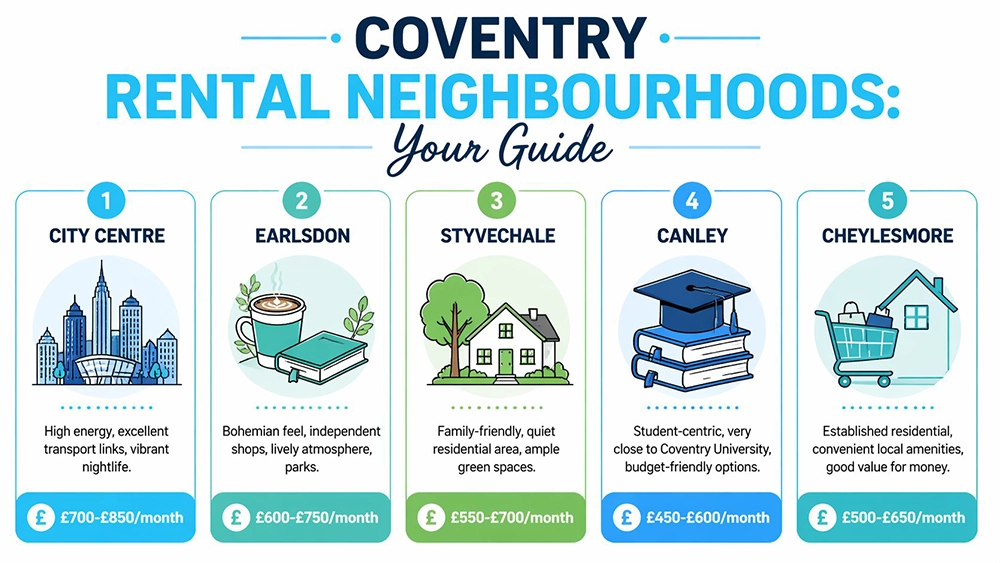
Neighbourhoods at a glance
| Neighbourhood | Average Room Rent (pcm) | Best For | Vibe |
|---|---|---|---|
| City Centre | £700 to £850 | Professionals, students who want everything nearby | Busy, convenient, social |
| Earlsdon | £600 to £750 | Postgrads, young professionals, students who like local character | Lively, independent, walkable |
| Styvechale | £550 to £700 | Professionals wanting quieter streets | Residential, greener, calmer |
| Canley | £450 to £600 | Students and budget-focused renters | Practical, campus-oriented |
| Cheylesmore | £500 to £650 | Renters wanting value and everyday convenience | Established, local, balanced |
These ranges are useful as a planning tool, not a promise. Condition, furnishings, en-suite access, parking, bills, and the standard of communal space can shift what counts as good value.
City Centre
If your priority is convenience, the city centre is hard to beat. You’ve got direct access to transport, shops, nightlife, gyms, and plenty of day-to-day services within walking distance.
The trade-off is straightforward. You often pay more for less space, and some city-centre house shares feel transient. That’s fine if you want energy and short commutes. It isn’t ideal if you need quiet evenings or reliable parking.
Rooms here tend to suit:
- Young professionals: especially if you commute by rail or work centrally
- Students with bigger budgets: particularly those who want a simple walk into campus life
- Short-stay renters: where convenience matters more than a garden or large communal room
Earlsdon
Earlsdon remains one of the most consistently popular areas for shared living because it balances character with practicality. It has the café-and-pub feel many renters want, but it also works well for getting around the city.
It’s a good area for people who want a social neighbourhood without living in the thick of the centre. The best shared houses go quickly because they attract both students and professionals, particularly renters who want a house share that feels settled rather than purely transactional.
A strong Earlsdon listing usually disappears quickly if it combines decent room size, clean communal areas, and a landlord who answers clearly.
The downside is that “popular” can lead to overpricing. Some landlords try to charge premium money for average stock just because of the postcode. If the room is small, storage is poor, or the kitchen looks tired, don’t pay for the idea of Earlsdon. Pay for the actual standard.
Styvechale
Styvechale suits renters who want peace, not drama. Streets are generally more residential, and many people choose it because they’d rather come home to a quieter house than a social free-for-all.
This area often works well for professionals who drive or who don’t need city-centre nightlife on the doorstep. It can also suit mature students who want space to work and sleep without constant turnover in the household.
The trade-off is obvious. You may lose some of the spontaneity and social ease you get in more student-led areas. If you enjoy walking to cafés, bars, or late-night food, it can feel less lively.
Canley
Canley is the practical choice for many student renters. It’s usually more budget-friendly and often chosen for proximity and ease rather than charm.
That doesn’t make it a bad option. It just means you need to be honest about what matters most. If keeping costs controlled and staying close to university routes matters more than having a polished neighbourhood feel, Canley deserves to be on your shortlist.
Watch for variation in stock quality. Some houses are well set up for sharers and work perfectly well. Others feel tired, cramped, or badly managed. In Canley, the viewing matters more than the listing description.
Cheylesmore
Cheylesmore often gets overlooked by renters who search too narrowly around the obvious student zones. That can be a mistake. It offers good everyday value, useful amenities, and a more established residential feel.
For professionals, especially those wanting a straightforward routine and decent local services, it’s often a sensible middle ground. You’re not paying city-centre rates, and you’re not committing to a fully student-dominated environment either.
How to match area to budget
If your budget is tight, don’t start with the “best” neighbourhood on paper. Start with the best fit for your daily life.
Use this quick decision framework:
- Choose Canley if budget and access matter more than atmosphere.
- Choose Earlsdon if you want a social area with personality and can stretch a bit further.
- Choose Styvechale if your priority is quiet.
- Choose Cheylesmore if you want balanced value.
- Choose City Centre if time-saving and access trump space.
A good room in the right area beats a nicer room in the wrong one. That’s where many renters in Coventry get caught out.
A Smarter Search Workflow with Rooms For Let
Searching well is mostly about speed and filtering. If you wait until you’ve seen a listing three times on social media, you’re late. The better approach is to narrow your criteria, react quickly, and present yourself clearly.
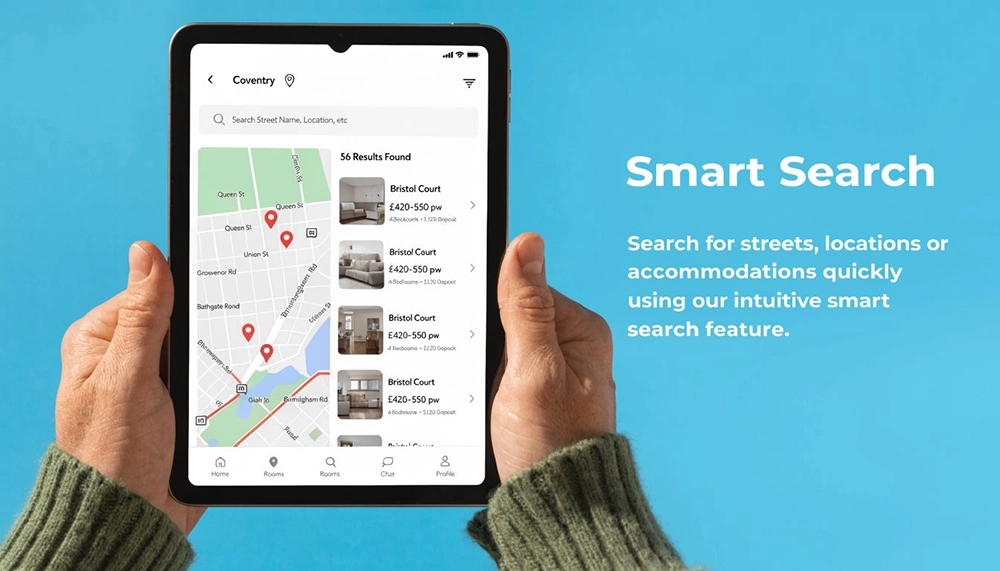
A strong workflow starts with one focused search, not endless browsing. If you want a practical base, use the Coventry room search on Rooms For Let and treat it like a shortlist builder rather than a scrolling exercise.
Step one, tighten the brief
Most renters waste time because their search brief is too vague. “Anything under budget” isn’t a brief. It’s how you end up booking viewings you never meant to take.
Write down:
- Your move date
- Your top two areas
- Your maximum monthly all-in figure
- Your deal-breakers, such as no desk, no lock on bedroom door, no bills included, no parking, or no mixed households
- Your contract preference, whether fixed term, flexible, or lodger-style
That list will cut out half the dead-end messages.
Step two, search for fit not fantasy
When people search rooms to rent coventry, they often click the prettiest room first. A cleaner method is to compare the whole offer.
Check these details together:
- Bills position: included, partly included, or separate
- Furniture: bed, wardrobe, desk, chair, storage
- Bathroom setup: shared, en-suite, or unclear
- Household profile: students, professionals, mixed, live-in landlord
- Availability date: immediate, upcoming, or vague
- Photos of communal space: kitchen and bathroom photos tell you more than bedroom styling
If a listing hides the kitchen, gives weak wording, or avoids basic practical details, be cautious.
The best listings usually answer boring questions before you ask them.
Step three, set alerts and reply fast
Alerts matter because the strongest rooms don’t hang around. Set up notifications for your preferred area and price band, then treat any good match as something to respond to the same day.
When you message, don’t send “is this available?”. That gets ignored all the time. Send a short introduction that shows you’re organised and easy to place.
A better message includes:
- Who you are
- Why you’re moving
- Your move date
- Work or study status
- How long you want to stay
- When you can view
That single message saves back-and-forth and helps landlords decide quickly.
Step four, create a room wanted profile that sounds real
A good room wanted advert does one job. It makes a landlord think, “This person sounds straightforward.”
Avoid writing a life story. Avoid trying to sound overly polished. Just be specific and calm.
Include:
- the areas you’ll consider
- whether you need furnished accommodation
- your routine, such as early starts, home working, or placement hours
- whether you prefer social or quiet households
- any essential requirements, such as parking or short-term flexibility
After you’ve set your search up, this walkthrough helps with the practical side of comparing options and contacting advertisers efficiently:
Step five, track listings like a serious renter
Once your search is active, keep a simple notes file. Nothing fancy. Just enough to remember which rooms are worth pursuing.
Use four columns:
| Listing | Area | Good signs | Concerns |
|---|---|---|---|
| Room A | Earlsdon | Bills included, clear photos | No lounge shown |
| Room B | City Centre | Fast reply, near station | Small room |
| Room C | Canley | Budget works, furnished | House condition unclear |
That prevents duplication, rushed decisions, and confusion between similar listings.
Your Essential Viewing and Vetting Checklist
A viewing is where glossy wording meets reality. Some rooms look fine online and feel neglected in person within thirty seconds. Others are better than the listing suggested. The trick is to inspect systematically instead of letting the landlord lead you straight to “do you want it?”.

What to check when you walk in
Start with the parts people overlook because they’re trying to be polite.
Look at:
- Windows and ventilation: open the window if you can, and check whether the frame feels secure
- Signs of damp: corners, behind furniture, around window reveals, and near the ceiling
- Bedroom door and lock: especially in a shared house
- Furniture condition: wobbling frames, broken drawers, stained mattresses, missing storage
- Heating: ask how the room is heated and whether you control it
- Noise: stand still for a moment and listen to the house and street
Communal areas tell you even more. A tired kitchen, overloaded bins, poor cleaning, and broken appliances usually mean one of two things. The landlord is hands-off, or the house culture is poor.
Questions that save you trouble later
You don’t need to interrogate anyone. You do need answers.
Ask direct questions such as:
- Who lives here now, and what are their routines like?
- How are repairs reported, and how quickly are they normally handled?
- What exactly is included in the rent?
- How is cleaning managed in communal areas?
- Is the contract for a tenancy or a lodger arrangement?
- If someone leaves early, what happens?
If the answers are vague, inconsistent, or defensive, take that as useful information.
A landlord who manages a house well rarely struggles to explain how the house works.
HMO safety checks that matter
Shared houses in Coventry aren’t all managed to the same standard, so you need to pay attention to compliance, not just décor.
Coventry City Council’s HMO assessment approach highlights core safety requirements. Compliant HMOs must have adequate fire risk assessments, which are a statutory requirement under the Housing Act 2004, and 28% of failed HMO licence applications are due to missing fire safety documentation, as noted in Coventry City Council’s additional licensing feasibility report.
During the viewing, check for:
- Interlinked smoke alarms: not just a single cheap detector stuck on a landing
- Clear fire exit routes: no blocked hallways or jammed back doors
- Fire doors where appropriate: especially in larger shared houses
- A general sense of management: labelled meters, maintained communal areas, sensible notice placement
If something feels makeshift, ask about it. A legal HMO shouldn’t feel improvised.
For broader help with tenancy basics, shared housing guidance, and practical renting advice, use the Rooms For Let resources hub.
Red flags you shouldn’t rationalise
Renters often talk themselves into avoidable problems because the room is available and they’re under pressure. That’s understandable. It’s still a mistake.
Walk away if you find several of these together:
- The landlord can’t explain paperwork clearly
- No one seems sure who is responsible for repairs
- The house smells damp or heavily masked
- Bedroom security is poor
- Communal areas look overcrowded
- The listing and the room don’t materially match
A room can be basic and still be safe, honest, and well run. That’s very different from cheap and chaotic.
Securing Your Room Paperwork Deposits and Costs
Once you’ve found a room you want, the pressure changes. You’re no longer comparing options. You’re trying to secure one without making an expensive mistake. At this point, calm, boring admin wins.
Read the agreement for the parts people skip
Most renters skim the first page, check the rent, and assume the rest is standard. Don’t.
Focus on the clauses that affect daily life:
- Length of agreement: fixed term, rolling, or lodger arrangement
- Notice terms: what you must give, and what happens if you need to leave early
- Bills wording: included isn’t always unlimited
- Use of communal areas: especially if the landlord lives in the property
- Guest rules and quiet use provisions
- Inventory references: what’s meant to be in the room at move-in
If anything seems unclear, ask for clarification before you pay. Verbal reassurance is weak protection if the written agreement says something else.
Understand the difference between a tenant and a lodger
This matters more than many renters realise. A room in a live-in landlord’s home often works very differently from a room in a fully shared HMO.
A lodger arrangement can suit someone who wants simplicity, lower friction, and a shorter commitment. It may not suit you if you want the independence that comes with a more formal house share setup.
The key point is to know what you’re signing. Don’t rely on the advert title alone.
Deposits and deposit-free offers need careful comparison
Deposit-free and low-deposit offers attract attention because upfront costs are a real hurdle. That’s understandable, especially when affordability is already stretched. According to Coventry room rental commentary on Gumtree’s no-deposit market, Coventry’s average room rent is already 15% above the West Midlands average, and the 2024 Renters Reform Act is set to change deposit rules, making alternatives such as rent guarantee insurance more relevant.
That doesn’t mean every no-deposit offer is good value.
Compare the trade-offs properly:
| Option | What helps | What to watch |
|---|---|---|
| Traditional deposit | Familiar structure, clear upfront amount | Bigger move-in cost |
| Low-deposit model | Smaller initial payment | Terms may still leave you liable for damage or arrears |
| Deposit-free insurance style product | Lower cash barrier at move-in | Ongoing fees may not be refundable |
The rule is simple. If a landlord says “deposit free”, ask what replaces it and what you still owe if things go wrong.
Don’t judge an offer by the first payment alone. Judge it by the total exposure if the tenancy ends badly.
Costs to confirm before sending money
Before you transfer anything, get the full payment picture in writing.
Check:
- First rent payment date
- Any holding arrangement
- Deposit or replacement product terms
- Bills split if not included
- Council tax position if applicable
- Whether keys, cleaning, or other charges are mentioned in the agreement
This avoids the classic problem of thinking you’ve budgeted correctly, then finding extra obligations after you’ve committed.
Register early if you’re serious
The best way to avoid rushed payment decisions is to be ready before the right room appears. If you want to move quickly once a suitable room comes up, set up your details in advance through the tenant registration page on Rooms For Let.
That way, you’re not scrambling to organise yourself after the room has already attracted competing interest.
One last legal check
Paperwork and payment aren’t separate from compliance. If the property should be run as an HMO, licensing and management standards matter because they affect how stable the arrangement really is.
You don’t need to become a housing lawyer. You do need enough confidence to ask direct questions, read what you’re sent, and pause when something doesn’t add up. Most room rental problems don’t start with catastrophe. They start with a renter ignoring one small inconsistency because they don’t want to lose the room.
Tailored Rental Tips for Your Situation
Different renters fail for different reasons. Students often decide too late. Professionals sometimes focus too narrowly on “nice area” and forget commute friction. Short-term renters can end up paying for flexibility they never use. A better strategy is to search according to your real pattern of life.

If you’re a student
Prioritise access and contract clarity. Don’t take a room just because the bedroom looks modern. Check the route to campus, the household mix, and whether the contract lines up with your academic year and plans outside term.
Students usually do best when they choose one of two paths. Either go close to what you use most often, or go cheaper and make peace with the travel. The messy middle tends to disappoint because you overpay and still feel inconveniently placed.
If you’re a young professional
Treat your room search like a lifestyle decision, not just a budget exercise. A cheap room that adds stress every weekday isn’t cheap in any meaningful sense.
Look hard at these points:
- Commute shape: train, bus, driving, or walking
- Household compatibility: home workers, shift workers, sociable house, quiet house
- Storage and desk space: especially if you work partly from home
- Local essentials: supermarket, gym, pharmacy, coffee, takeaway, parking
If you’re relocating and juggling the move itself, a practical planning list helps. This ultimate moving checklist is useful for keeping the boring but important jobs in one place.
If you need a short-term room
Flexibility is the main priority, but don’t let that become an excuse for weak standards. Short lets can be convenient, especially for contractors, placement workers, or people in between longer arrangements, but they still need clear house rules and clear payment terms.
A live-in landlord setup can work well for shorter stays because it’s often more straightforward and faster to agree. It can also feel more restrictive. If you keep unusual hours, take regular calls, or need guests occasionally, ask those questions upfront.
The shorter the stay, the more important it is to remove ambiguity before move-in.
If you’re moving with affordability at the top of the list
Be disciplined. Search lower-cost areas first, compare what’s included, and don’t assume the cheapest monthly figure is the cheapest room overall.
A room with bills included, decent heating, practical furniture, and a responsive landlord can beat a lower headline rent every time. Cheap on paper often becomes expensive once you add transport, poor heating, replaceable furniture, or repeated hassle.
Frequently Asked Questions About Renting in Coventry
How can I tell if a shared house might need an HMO licence
If several unrelated people are living there as a house share, ask the landlord directly about the property’s licensing position. If the answer feels evasive, verify it with the council before committing. Coventry has an estimated 1,247 licensed HMOs as of March 2026, but that covers less than 40% of the city’s shared lets, and non-compliance can lead to disputes and evictions, according to Coventry shared-let licensing coverage noted via Spareroom market commentary.
Is it better to rent with bills included
For many room renters, yes. It makes budgeting easier and reduces arguments between housemates. But you still need to ask what “included” means in practice, especially around heating, broadband, and any caps or fair-use wording.
Should I avoid a room if the landlord replies slowly
Not automatically, but treat it as a warning sign. Slow, vague communication before move-in often becomes even slower once repairs or paperwork issues appear. Good management usually shows up early.
What matters more, the room or the house
The house. A decent room in a badly run house becomes frustrating very quickly. Kitchen condition, bathroom standards, storage, safety features, and who you live with will shape your experience more than a nice bedspread in the photos.
Is a live-in landlord arrangement a bad idea
Not at all. For the right renter, it can be simpler, quieter, and more stable. It just suits some personalities better than others. If you value independence above all else, you may prefer a standard shared house.
If you want to cut through the noise and find better-matched shared accommodation faster, Rooms For Let is a strong place to start. You can search rooms across Coventry, set alerts, and connect directly with advertisers without wasting time on listings that don’t fit how you live.