You’re probably in one of two positions right now. You’re trying to find a decent room to rent in Hull without wasting evenings on poor listings, awkward viewings and vague promises about “bills included”. Or you’ve got a spare room, house share or HMO bed to fill, and you want it occupied by the right person without weeks of drift.
Hull is usually easier to crack than larger UK cities, but that doesn’t mean it’s simple. The stock is mixed, neighbourhoods change quickly from street to street, and the best rooms disappear fast because good tenants and switched-on landlords both know value when they see it. The people who do well in this market aren’t necessarily the ones with the biggest budget. They’re the ones who know what to check, what to ignore, and how to move at the right speed.
Navigating Hull's Rental Market in 2026
Hull’s room market works because it sits in a sweet spot. It’s large enough to offer choice of rooms to rent, but still affordable enough that tenants can usually find practical options without London-level rents. For landlords, that means steady demand. For tenants, it means there’s room to be selective if you search properly.
The broad numbers back that up. Official 2021 Census data from Hull City Council shows 23.9% of households in Hull, or 27,593 households, rented privately, up from 20.4% or 22,984 in 2011. ONS data for March 2026 also puts average private rent in Hull at £684 per month, up 7.1% from £639 in March 2025 according to Hull rental market data and census figures. That tells you two things straight away. Private renting is well established here, and rents have kept moving.
For tenants, the practical takeaway is simple. Don’t assume every cheap listing is good value, and don’t assume a slightly higher rent is overpriced. In Hull, the gap between a poorly managed room and a well-run one often comes down to how the property is presented, what’s included, and who else lives there.
For landlords, this is not a market where lazy advertising works well for long. There’s demand, yes, but there’s also enough competition that tenants compare details closely. Room adverts that are thin on information, unclear on bills, or vague about house rules tend to attract the wrong enquiries first.
A sensible starting point is to compare live options in one place through the Hull room search page. That gives both sides a realistic picture of what’s on the market, rather than what people think should be available.
Practical rule: In Hull, speed matters, but clarity matters more. A good room with a clear advert usually lets faster than a cheaper room with missing details.
Hull's Top Neighbourhoods for Renters
Hull isn’t one uniform rental patch. That’s the first thing tenants often realise after a few viewings. One area suits students who want to walk to lectures. Another suits hospital staff, city-centre workers or people commuting across the east side. Another works better for short-term contractors who care more about parking, access roads and flexible terms than nightlife.
The most common mistake is choosing by postcode alone. The better approach is to match the area to your daily routine, then judge the individual house.
Student and young professional room rents in Hull sit at £310 to £580 pcm, and utility-inclusive deals have driven 25% higher occupancy in HU5 postcodes. Demand is strengthened by the University of Hull’s 15k+ enrolments. Short-term contractor demand has also grown with offshore wind developments such as Hornsea Project Three, which employs over 2,500 contractors annually and has boosted temporary rental needs by 25%, based on Hull student and contractor room market data.
Hull neighbourhoods at a glance
| Neighbourhood | Vibe | Best For | Average Room Rent (pcm, bills inc.) | Key Features |
|---|---|---|---|---|
| The Avenues and HU5 | Leafy, social, established shared housing area | Postgraduates, young professionals, mature students | Often within the £310 to £580 range | Character houses, strong shared-house culture, easy access to Beverley Road and university routes |
| Newland area | Student-led, busy, practical | Undergraduates, first-time renters | Commonly within the same £310 to £580 range | Fast access to campus, takeaways, local shops, regular turnover of house shares |
| City Centre HU1 | Compact, modern, convenient | Professionals, relocators, some short-term renters | Varies by finish and building | Walkable for offices, rail links, newer flats, less of a classic houseshare feel |
| Victoria Dock HU9 | Quieter, residential, more contained | Professionals, people wanting calmer evenings | Varies by property type | Waterfront feel, modern developments, useful road access |
| East Hull | More budget-led, mixed stock | Tenants prioritising cost and space | Often competitive where house shares are available | Value-led options, easier parking on some streets, mixed neighbourhood quality |
| Beverley Road corridor | High-activity, mixed tenant base | Students, younger workers, contractors | Often strong for bills-included rooms | Good bus routes, retail strip, plenty of room turnover |
The Avenues and wider HU5
If someone asks me where to start for a solid room search in Hull, HU5 is usually near the top of the list. It catches students who want a better-quality houseshare than the most basic student streets, and it also suits young professionals who still want a social house rather than a quiet lodge-style arrangement.
The appeal is straightforward. Many properties are already set up for shared living, local amenities are easy to reach, and the area feels familiar to people moving into Hull for the first time. You’ll find more houses with character here than in newer blocks, but that comes with variation. One street can feel settled and well kept, while the next has heavy turnover and more patchy management.
The numbers matter here too. Utility-inclusive deals have driven 25% higher occupancy in HU5 postcodes in the source above, which fits what many local agents and landlords see on the ground. If a tenant can understand the monthly outgoings at a glance, they’re more likely to book the viewing and commit.
Bills-included rooms in HU5 often move well because tenants can budget quickly and compare like for like.
Newland and the university orbit
Newland is a different proposition. It’s more openly student-facing, more seasonal, and usually less subtle about it. If you’re an undergraduate and want convenience above everything else, this area makes sense. You’re close to campus routes, there’s plenty of familiar student stock, and housemates are more likely to be on the same timetable as you.
That same advantage can be a drawback for non-students. A young professional working early mornings may not enjoy a property in a street where tenant turnover is high and lifestyles change year to year. The room might be cheap enough, but the fit can still be wrong.
When looking in Newland, ask sharper questions than you might elsewhere:
- Who lives there now: Students, graduates, mixed households or short-term tenants?
- How are bills handled: Fully included, capped, split monthly, or left to tenants?
- What happens in summer: Does the house empty out, or is it occupied year-round?
- Who manages repairs: A local landlord, a managing agent, or a remote owner?
City Centre and HU1
City-centre rooms aren’t always the cheapest, but they can be the cleanest answer for the right tenant. If you work in central Hull, use the station regularly, or want a more self-contained lifestyle, HU1 can save you time every day. That matters more than people think. A cheaper room stops being cheap if the commute eats money and patience.
The trade-off is character and supply type. Shared accommodation in the centre can lean more towards converted flats or modern blocks, rather than the classic multi-storey houseshare. Some tenants prefer that because it feels less transient. Others find it less sociable.
Landlords targeting professionals in this area should present the room accordingly. Don’t market a city-centre room like a student let if the obvious audience is someone relocating for work.
Victoria Dock and HU9
Victoria Dock tends to attract tenants who want less noise, cleaner surroundings and a more predictable evening environment. It appeals to professionals, couples looking at temporary room options, and people who drive to work. If you’re the sort of renter who values peace over being near late-night takeaways, this area has a clear edge.
The downside is that it can feel less flexible if you rely entirely on spontaneous walking access to everything. It suits organised renters better than casual ones. That’s not criticism. It’s just the right fit for a particular lifestyle.
For landlords, the strongest angle here is often quality of living rather than bargain rent. If the room is in a tidy, stable property with straightforward parking and sensible house rules, say that plainly.
East Hull and value-led areas
East Hull often gets overlooked by renters who start with the university side of the city and never look beyond it. That’s a mistake. There are room options here that work well for tenants who care more about budget, space and practical access than trendier postcodes.
This side of the market rewards proper viewing discipline. Stock quality can vary a lot. You may find a good, straightforward room in a clean house with sensible housemates, then view another nearby property that’s clearly been under-managed for years. Area knowledge helps, but so does refusing to be dazzled by one decent photo.
The contractor angle landlords often miss
Short-term workers are a genuine part of Hull’s room market now, especially around energy-sector activity. They don’t search the same way students do, and they don’t always need the same things. They’re more likely to ask about:
- Length of stay: One to six months is often the deciding factor.
- Parking and access: Especially for vans or early starts.
- Bills certainty: They want one clear monthly figure.
- Furnishing: They need move-in-ready, not half-finished.
- Location practicality: Travel time to work matters more than being near nightlife.
If you’re a landlord and your advert only says “close to uni”, you’re narrowing your own market unnecessarily.
Budgeting for Your Room in Hull
Most tenants fixate on the rent and forget the rest. That’s how decent-looking room deals turn into stressful months. A proper budget for rooms to rent Hull should start with the room price, then move immediately to what isn’t included.

A useful benchmark comes from wider private rent figures across property sizes. ONS data for February 2026 shows average monthly private rent in Hull at £487 for a one-bedroom, £604 for a two-bedroom and £723 for a three-bedroom. The same source places the UK-wide average at £1,374, which you can review in Hull housing and rent data. Those figures aren’t room rents, but they help you judge whether a room price feels sensible in relation to the broader market.
What bills included usually means
In Hull, “bills included” often covers gas, electricity, water and broadband. Sometimes it includes council tax. Sometimes it doesn’t. That one point causes more confusion than almost anything else.
Never assume the phrase means unlimited everything with no conditions. Ask whether there’s a fair usage cap on energy, whether broadband is already active, and whether cleaning of shared areas is included or merely promised.
A safer way to compare rooms is to separate listings into three groups:
- Fully bundled rooms: Rent and most household costs are rolled together. Best for simple monthly budgeting.
- Part-included rooms: Some costs are covered, others are shared. Fine if the advert is specific.
- Rent-only rooms: Usually look cheaper first, but can work out less predictable.
A workable way to set your limit
Start with the maximum monthly figure you can pay without relying on overtime, borrowed money or family support. Then strip that down into essentials. Rent comes first. Travel comes next. Food, phone and basic personal spending follow.
If a room is right at the edge of your affordability before bills, it isn’t affordable. Hull is comparatively accessible, but that doesn’t protect you from poor budgeting.
Budget check: If two rooms are close in price, the one with clearer terms is often the safer deal.
Costs people forget
Tenants regularly overlook the small but important items that affect the first month most.
- Deposit and upfront rent: Ask exactly what’s due before move-in and on what date.
- Travel costs: A cheaper room further out can cost more over time if you’re using buses or driving daily.
- Furnishing gaps: Some “furnished” rooms still need basics like bedding, lamps or storage.
- Laundry and cleaning: Shared houses vary widely on what’s provided and what you’ll need to buy.
If you’re comparing several options, make a simple side-by-side note for each property. Rent, bills, deposit, travel, furnishing gaps, and move-in date. Tenants who do this usually make better decisions than tenants who rely on memory.
For anyone planning beyond the first month, it also helps to review practical guidance on tenant finance and affordability tools. The point isn’t paperwork for its own sake. It’s to avoid taking a room that looks manageable on day one and feels tight by week three.
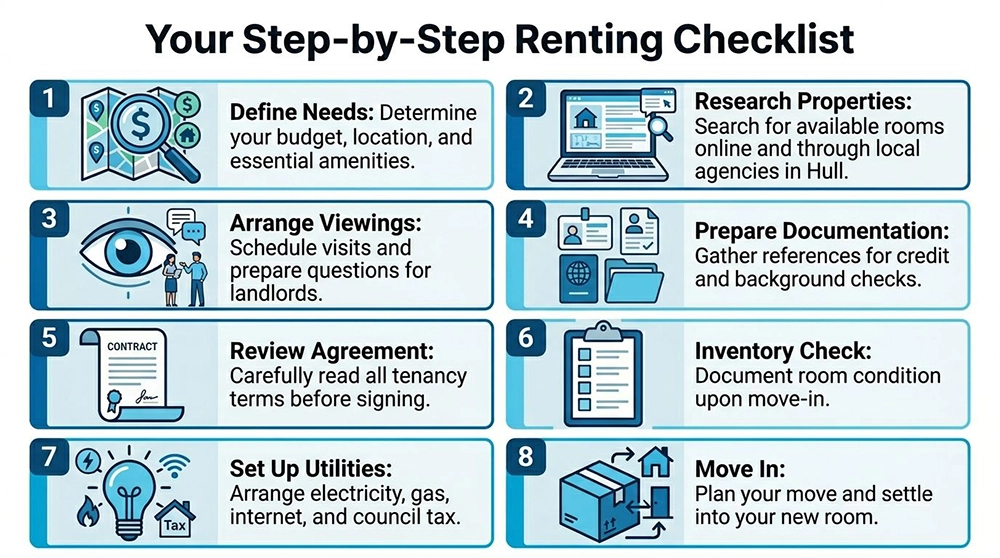
Your Step-by-Step Renting Checklist
Good tenants don’t just look for a room. They test the whole arrangement. That means the advert, the viewing, the paperwork and the house itself. If one part is off, pay attention.
Start with a proper shortlist
Don’t enquire on everything. Enquire on the rooms that match how you live. If you work shifts, say so. If you need bills included, say so. If you need short term, don’t pretend you want a long stay just to secure a viewing.
Before you message anyone, pin down these points:
- Your core requirements: Location, budget, move-in date, minimum furnishing level.
- Your preferred household type: Students, professionals, mixed, live-in landlord, quieter house, social house.
- Your deal-breakers: No lock on bedroom door, vague bill arrangements, obvious overcrowding, poor communication.
When you’re ready to formalise your search and receive matched alerts, it’s sensible to register as a tenant.
Treat the viewing like an inspection
A viewing isn’t a courtesy visit. It’s your chance to see how the property is run. Photos tell you almost nothing about smell, noise, damp, heating, storage or how people share the space.
Use the viewing to inspect the practical parts first:
- Kitchen condition: Cleanliness, fridge space, cupboard space, cooker condition.
- Bathroom pressure and upkeep: Not glamorous, but important.
- Bedroom basics: Window opening properly, working heating, enough plugs, usable storage.
- Locks and access: Front door, bedroom door where relevant, and how keys are handled.
- Shared space reality: Does the lounge exist as advertised, or has it effectively become another bedroom?
Then ask about the people. A good room in the wrong household still becomes a bad let.
Ask current occupiers what the house is like on a normal Tuesday night, not just whether they “like living there”.
Check the paperwork before money changes hands
Never send money because someone says the room is “definitely yours” without written terms. Read the agreement in full. Confirm the amount due, what it covers, when the tenancy or licence starts, and what notice rules apply.
You also need to know what sort of arrangement you’re entering. A tenant in a separate rented property doesn’t have the same legal position as a lodger living in the landlord’s home. If you’re unsure which applies, ask directly before signing.
Watch for these red flags:
- Pressure to pay immediately: Especially before a viewing or document check.
- Missing agreement details: Start date, payment terms, deposit handling, notice period.
- No safety information offered: A responsible landlord or agent should be able to discuss this clearly.
- Inconsistent story: The advert says one thing, the viewing reveals another.
A lot of move-in problems come from rushing the last twenty-four hours. Slow down there, even if you moved fast to secure the viewing.
Here’s a useful explainer if you’re moving into an unfurnished or partly furnished place and need to prioritise the essentials for a room or shared house setup: how to furnish a new home. It’s a practical way to avoid overspending on the wrong items in your first week.
Move-in day is still part of the job
After securing a room, tenants often switch off because they’re relieved the search is over. Don’t. Your move-in check protects you later if there’s any dispute about condition or missing items.
Take photos of the room, note marks or damage, and confirm what furniture is staying. If anything important was promised during the viewing but isn’t there, raise it straight away in writing. That includes repairs, extra keys, deep cleaning, or appliances that don’t work.
A simple move-in list usually covers:
- Condition of walls, flooring and furniture
- Meter and key details where relevant
- Any missing items promised in the advert
- Immediate repair issues
- Confirmation of house rules and bin collection arrangements
Tenants who do these checks calmly and early usually avoid most of the trouble that later gets called “a rental nightmare”.
A Landlord's Guide to Letting Rooms in Hull
Landlords in Hull don’t usually struggle because there’s no demand. They struggle because the advert is weak, the room isn’t presented properly, or the terms are muddled. In a shared accommodation market, tenants compare fast and reject faster.

The current environment is competitive. Hull has around 218 to 240 room listings across major platforms, and using a platform with strong daily visitor traffic can reduce average vacancy periods by 20% to 30% compared with local classifieds. Listings that specify features such as “ensuite” or “bills included” also boost match rates by 40%, according to Hull room listing performance data. That should shape how you market the room from the start.
Write the advert tenants actually need
A room advert is not a teaser. It’s a screening tool. The more precisely you describe the room and the house, the fewer wasted viewings you’ll get.
Strong room adverts usually make these points clear:
- What the tenant is paying for: Room only, bills included, part included.
- Who the property suits: Student, professional, contractor, mature tenant, quiet house, social house.
- What the room includes: Bed size, wardrobe, desk, ensuite or shared bathroom.
- How the house functions: Number of occupiers, cleaning arrangements, parking, internet, outdoor space.
The strongest wording is plain wording. “Large double room with bills included in a tidy professional houseshare near Beverley Road” will outperform fluffy copy every time if it’s accurate.
Presentation beats promise
Many landlords lose good tenants before the viewing even happens. Dark photos, unmade beds, random clutter and poor angles make a decent room look second rate. You don’t need magazine styling, but you do need order, light and honesty.
Open curtains. Turn on lamps. Photograph the full room, not one corner. Show the kitchen and bathroom as they are on a normal good day, not after a rushed tidy where the problems are cropped out.
A tenant can forgive basic decor. They rarely forgive a listing that feels misleading.
Match the room to the right market
Often, landlords leave money and time on the table. A room near the university isn’t automatically a student room. A well-kept house with parking and a simple all-in monthly rate may suit a contractor better. A quieter owner-occupied spare room may suit a weekday lodger or NHS worker better than a social houseshare tenant.
Think in tenant types, not just property type:
- Student lets: Clear furnishing, strong broadband, straightforward bills.
- Young professional lets: Clean finish, reliable appliances, sensible shared rules.
- Contractor lets: Flexible terms, parking, easy move-in, inclusive pricing.
- Lodger setups: Clear boundaries, shared-space expectations, compatibility.
If you’re targeting contractors, say so. Mention practical travel access, term flexibility and whether bedding, towels or weekly cleaning can be discussed. Generic adverts miss this audience.
Compliance is not the boring bit
Landlords who treat safety and compliance as box-ticking usually end up with avoidable problems. Tenants notice when a property is managed properly, and better tenants often ask more questions before committing.
Electrical safety is a good example. If you want a clear primer on inspection expectations in plain English, this guide on how often electrics should be tested is worth reading alongside your formal obligations. It helps landlords understand what should be checked and why it matters in shared accommodation.
You should also be clear on:
- Whether the property falls under HMO rules
- How occupancy is being managed
- What paperwork the tenant receives
- How deposits, references and right to rent checks are handled where applicable
- How quickly repairs are reported and resolved
The practical point is simple. Compliance supports lettings. It isn’t separate from them.
Vetting without overcomplicating it
There’s no prize for filling a room in one day if the tenant is wrong for the property. Good vetting is less about box-ticking and more about consistency. Ask everyone the same core questions. Confirm work or study status. Check move-in date. Understand why they’re leaving the current place.
Then compare that against the house, not just the room. A quiet professional house can be unsettled quickly by one unsuitable occupant. Equally, a sociable student property can become awkward if you place someone who expected complete silence.
A better standard for landlords is this: advertise clearly, respond promptly, verify properly, and never oversell the room. Hull tenants are value-conscious. If the property is fair, clean and accurately described, that’s usually enough to let it well.
Conclusion - Finding Your Place in Hull
Hull remains one of the more workable room rental markets in the UK because it still offers a genuine mix of affordability, choice and flexibility. That helps tenants, but it doesn’t remove the need for care. The best rooms are usually the ones with clear terms, sensible house setups and landlords who communicate properly.
For tenants, the winning approach is to search with a plan. Know your budget, know your preferred area, inspect the property carefully and don’t confuse low headline rent with overall value. If the room, the housemates and the paperwork all make sense, you’re far more likely to settle well.
For landlords, the basics still decide the outcome. Good photos, honest descriptions, realistic pricing and proper management beat vague advertising every time. Hull has enough room supply that tenants compare quickly, and enough demand that well-run rooms still attract strong interest.
There’s also a clear opening in the market for better short-term room options. Students and young professionals are an established part of the city, but contractor demand deserves more attention than it often gets. Landlords who package rooms properly for that audience can stand out without reinventing the whole property.
The main point is straightforward. Whether you’re looking for rooms to rent hull or trying to fill one, success usually comes from getting the practical details right early. Do that, and Hull is a far easier market to deal with than many people expect.
Frequently Asked Questions about Renting in Hull
What counts as an HMO in practice
An HMO is generally a property rented by multiple people who are not all from one household and who share facilities such as a kitchen or bathroom. In practical terms, many standard houseshare setups fall into this territory. For landlords, the key issue isn’t the label. It’s whether the property’s occupancy, layout and management trigger licensing or additional duties under local and national rules. If you’re unsure, check Hull-specific requirements before advertising the room.
What’s the difference between a tenant and a lodger
A tenant usually rents part or all of a property with stronger possession rights under a tenancy agreement. A lodger normally rents a room in the landlord’s own home and shares living space with them. That difference affects notice, privacy, access and how the arrangement is managed day to day. If you’re moving into an owner-occupied home, ask whether you’re signing a lodger licence rather than a tenancy agreement.
Are short-term contractor rooms common in Hull
They’re not as common as they should be, but demand is there. Contractors looking at Hull often want furnished rooms with simple monthly pricing, flexible lengths of stay and practical access to work sites. Many existing adverts still lean too heavily towards students or generic professional tenants. That creates an opening for landlords who can offer short, clear, all-in arrangements and for tenants who need something ready to move into without a long setup period.
If you’re ready to find a room or advertise one, Rooms For Let gives you a practical way to move quickly, compare real options and connect directly with the right people across Hull.