If you're staring at an empty bedroom and wondering whether it should be earning its keep, or you're trying to move to Ipswich without committing to a full flat on day one, you're in the same market from opposite sides. One person wants a reliable lodger. The other wants a room to rent that feels safe, fair, and liveable. Both usually want the same thing in the end. A straightforward arrangement with no nasty surprises.
That matters more in Ipswich than many people realise. Demand for single-let rooms in Ipswich has risen by 86% in inquiries relative to available listings, making it the top UK town outside London on that measure, ahead of Warrington and Northampton, according to SpareRoom's Ipswich listings data. In practical terms, good rooms move quickly, weak adverts get ignored, and both landlords and tenants need to be organised before they start.
Your Guide to the Ipswich Spare Room Market
Ipswich has become one of those places where a spare room isn't just a side option. It's a core part of the local housing picture. That applies to homeowners taking in a lodger, landlords filling a room in a shared house, and tenants who want flexibility without the cost and commitment of renting a whole place.
The biggest mistake I see is people treating room lets casually. Landlords think, "It's only one room, I'll put up a few photos later." Tenants think, "I'll message a few adverts and see what comes back." In a busy local market, that approach wastes time.
What the current market means in practice
An 86% surge in inquiries relative to available listings means the market is active, but activity isn't the same as ease. For landlords, it means there is opportunity if the room is priced sensibly, the advert is clear, and the household setup is honest. For tenants, it means the best rooms often go to the person who replies properly, turns up on time, and has their paperwork ready.
Practical rule: Before you advertise or enquire, decide what kind of arrangement you actually want. Live-in landlord, professional houseshare, quieter home, shorter stay, or something more social. Clarity saves more trouble than clever wording.
Start with fit, not speed
The smart approach is to work backwards from daily life. Ask basic questions first.
- For landlords: Who suits the household best. A commuter, student, contractor, or young professional?
- For tenants: Do you want privacy above all else, or are you happy with a more sociable setup?
- For both: Are expectations around guests, kitchen use, cleaning, and working from home clear?
In Ipswich, rooms do get attention quickly. But the fastest deal isn't always the best one. The right match beats the rushed match every time.
Understanding Ipswich Neighbourhoods and Rents
Ipswich isn't one uniform rental patch. A room near the Waterfront attracts a different tenant from one near Christchurch Park, and a practical room close to the station works differently from one in a quieter residential road. If you're searching for a spare room ipswich option, or trying to let one, area fit matters almost as much as price.
What stands out locally is momentum. Room rents in Ipswich increased by 5% year on year in early 2025, while London saw rents fall by 1%, according to the Q1 2025 SpareRoom rental index summary. That tells you two useful things. First, Ipswich isn't being treated as a fallback market anymore. Second, tenants are paying closer attention to value, commute, and quality of life.
How locals usually think about areas
Most room hunters don't search by postcode first. They search by lifestyle.
The Waterfront tends to appeal to people who want newer-looking developments, easier access to bars and restaurants, and a more modern feel. Central Ipswich suits people who want to walk to shops, offices, and transport without relying too much on a car. Areas around Christchurch Park usually attract renters who prefer a calmer street scene and a more settled residential feel.
Then you've got the practical-choice areas. Around the station, convenience matters more than charm. In more suburban parts of town, tenants often accept a longer trip into the centre in exchange for a larger room, easier parking, or a quieter household.
Ipswich neighbourhood rent guide 2026
The figures below are best treated as a working local guide rather than a promise for every room. Actual asking rent depends on furnishings, bills, parking, condition, and whether the arrangement is a lodger setup or a room in a larger shared property.
| Neighbourhood | Vibe & Best For | Average Rent (pcm) | Key Features |
|---|---|---|---|
| Waterfront | Modern, lively, good for young professionals and tenants who like being near cafes and bars | Higher end of local room pricing | Newer blocks, riverside feel, walkable social spots |
| Town Centre | Practical, well-connected, useful for workers who want everything close by | Mid to upper local range | Shops, bus routes, easy day-to-day convenience |
| Christchurch Park area | Quieter, more residential, good for people who want a calmer base | Mid to upper local range | Green space, established streets, less transient feel |
| Ipswich Station area | Functional choice for commuters and contractors | Mid range | Fast rail access, useful for London-facing travel |
| East Ipswich | Mixed stock, often good for value-focused renters | Mid local range | Traditional housing, bus links, neighbourhood feel |
| West Ipswich | Broad appeal for tenants balancing price and space | Mid local range | Residential roads, easier parking in some spots |
| North Ipswich | Quieter and more settled, often better for longer stays | Mid to lower local range | Family-style streets, less central foot traffic |
| South Ipswich | Can suit budget-conscious renters depending on exact street and setup | Lower to mid local range | Variable stock, more important to inspect carefully |
What landlords should take from that
Pricing isn't about picking the highest figure you've seen online and hoping someone pays it. A room on a smart road near Christchurch Park can underperform if the house feels tired, the advert is vague, or the bathroom situation is awkward. A simpler room in a less fashionable spot can let quickly if it feels clean, well run, and accurately described.
A landlord's real advantage is knowing the tenant profile for the area. Near the station, mention train convenience early. Near the Waterfront, highlight lifestyle and walkability. In quieter neighbourhoods, sell calm, storage, and household stability.
Good local pricing starts with competing against similar rooms, not against whole flats and not against the best-presented room in the best street.
What tenants should watch for
Tenants often focus too hard on the room and not enough on the surrounding routine. A room can look fine online, then become a daily nuisance because the parking is impossible, the walk back at night doesn't suit you, or the nearest shop isn't where you thought it was.
Use viewings to test the area, not just the mattress.
- Walk the immediate street: See how it feels in person.
- Check transport in real time: Don't rely on a landlord's estimate of the commute.
- Look at practicals: Where will you buy food, park, work, or exercise?
- Ask about the household rhythm: Quiet evenings in North Ipswich can feel very different from a more active central setup.
When people say they want "a good area", they usually mean a place that fits their week. That's the standard to use.
A Landlords Guide to Letting Your Spare Room
A spare room can produce dependable income, but only when the basics are done properly. In Ipswich, there is clear evidence of market acceptance for room-based accommodation. Private rooms make up 33.3% of active short-term listings in the local accommodation market, according to AirROI's Ipswich market snapshot. That doesn't mean every room will let itself. It means renters are already comfortable with the format.
Prepare the room like a product
Landlords often think in terms of "available space". Tenants judge "liveable space". Those are not the same thing.
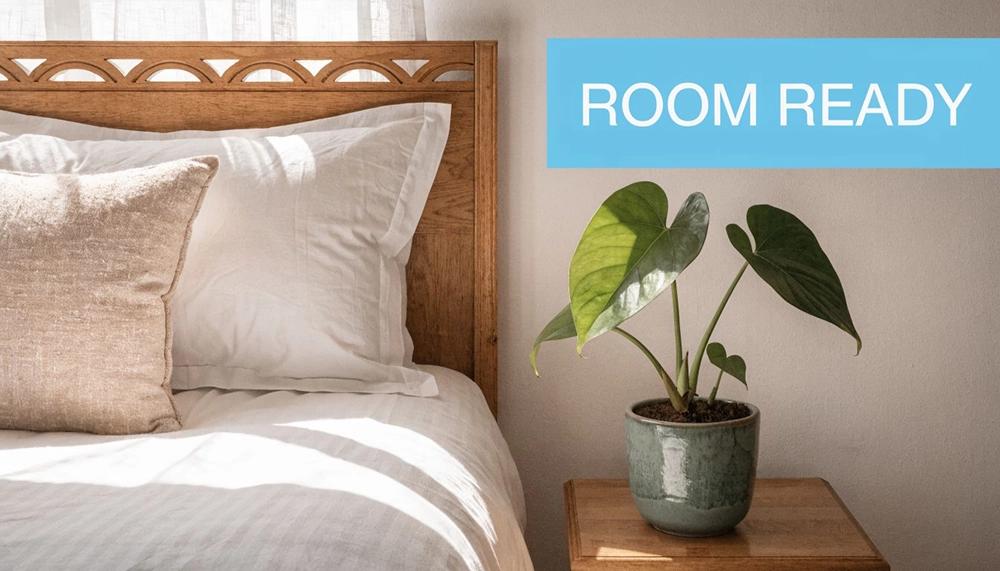
A room lets more easily when the furniture layout makes sense. The bed shouldn't block wardrobe access. There should be a usable surface for a laptop. Curtains should block light. If the room is small, don't cram in oversized furniture just to make it look fully furnished.
Start with the practical essentials:
- Bed and mattress: Clean, supportive, and in good condition.
- Storage: A wardrobe or hanging rail, plus somewhere for folded clothes.
- Workable lighting: One ceiling light and one softer task light is usually enough.
- Reliable Wi-Fi: Tenants expect to work, stream, and call without constant dropouts.
- Heating and ventilation: A warm room that can also air out properly matters more than decorative extras.
The best-presented rooms feel easy to imagine living in. That usually means less clutter, not more styling.
Decide what sort of arrangement you're offering
Many room adverts fail to communicate effectively. The landlord knows what they mean. The tenant doesn't.
If you're a live-in owner taking a lodger, say so clearly. If the room is in a larger house share, say how many people live there and what the atmosphere is like. If you're happy with Monday-to-Friday lets, couples, or short stays, put that in from the start. If you're not, say that too.
A weak advert tries to appeal to everyone. A strong one filters.
Well-written room adverts do one job first: they help unsuitable applicants rule themselves out.
Write the advert tenants actually respond to
Most room adverts fail for one of three reasons. They are too vague, too defensive, or too flattering about things tenants will discover for themselves.
Don't write "lovely room in lovely home in lovely area". It says nothing. Write what the tenant needs to know to make a decision about messaging.
Good adverts usually include:
- Who the room suits
- Whether bills are included
- Furnished or unfurnished
- Bathroom arrangements
- Parking or permit situation
- Household style and working patterns
- Availability date
- Whether a live-in landlord is present
Here's the sort of advert structure that tends to work well.
Bright furnished double room in a clean, quiet Ipswich home near the station. Suitable for a professional lodger looking for a calm base during the week or full time. Bills included. Fast Wi-Fi, use of kitchen, shared bathroom with one other person, and on-street parking nearby. The house suits someone tidy, respectful, and comfortable in a low-drama household. Available now.
That works because it gives enough detail to prompt the right enquiry. It doesn't try too hard and it doesn't hide the setup.
Get the photos right
Photos don't need to look expensive. They need to look truthful and bright.
Open curtains fully. Turn lamps on. Take the photos in daylight. Remove laundry baskets, extension leads, half-empty toiletries, and anything stored under the bed if it's visible. Take one full-room shot from the doorway, one from the opposite corner, one of the bathroom, and one of the kitchen if the tenant will use it.
Avoid two common mistakes:
- shooting too close, so the room looks cramped and suspicious
- editing too heavily, so the viewing feels disappointing on arrival
A room that photographs accurately tends to produce better-quality viewings.
Price for response, not pride
Landlords get into trouble when they anchor to what they want the room to earn rather than what local tenants will accept for that exact setup. The asking figure has to match the room, the area, the household arrangement, and whether bills are included.
For landlords comparing advertising options, it's worth checking the current room advert pricing choices on specialist platforms before you list, so you know how much visibility and flexibility you need.
If enquiries are poor, don't just blame timing. Review the whole package:
- Is the room price too ambitious for a shared bathroom?
- Are your photos making the space look darker than it is?
- Does the advert sound fussy or unclear?
- Have you hidden an important drawback that viewers only discover later?
Screen for fit, not just availability
The quickest "yes" isn't always the best lodger or tenant. A room let can still become a bad arrangement if the personalities, routines, or expectations clash.
Ask sensible questions early. What hours do they keep. Do they work from home. How long are they hoping to stay. Have they lived in shared accommodation before. None of that needs to be confrontational. It just needs to be direct.
A short call before a viewing often saves everyone time.
Use viewings to test the arrangement
The viewing isn't only for the applicant to assess you. It's where both sides decide whether daily life will work.
Pay attention to how the person communicates. Do they ask practical questions? Do they seem clear about move dates and budget? Are they trying to understand the home, or only trying to secure anything quickly? People often reveal more in a ten-minute viewing than in a long message thread.
This quick walkthrough is useful for landlords who are new to room lets:
What usually works and what usually doesn't
Some letting decisions reliably improve outcomes.
- Works well: Being honest about the home. If you have one bathroom, say so plainly.
- Works well: Setting expectations on cleaning and guests before anyone moves in.
- Works well: Replying quickly with a short, human message rather than a copied script.
- Doesn't work: Leaving the room half-finished and promising to sort it after move-in.
- Doesn't work: Advertising low, then adding surprise charges later.
- Doesn't work: Choosing the first applicant who can move immediately without checking household fit.
Landlords who treat a spare room as a proper arrangement usually get better tenants and fewer headaches.
A Tenants Guide to Finding Your Ideal Room
Room hunting in Ipswich goes better when you stop browsing randomly and start filtering hard. Tenants who struggle most usually have one of two problems. Their criteria are too loose, so every advert looks possible. Or their criteria are unrealistic, so nothing ever feels right.
A good search starts with deal-breakers. Not preferences. Not nice-to-haves. The things that would make you reject a room even if the photos look good.
Set your search rules before you contact anyone
Decide these first:
- your true monthly limit
- how far you're willing to travel each day
- whether you want a live-in landlord or a standard houseshare
- how much privacy you need
- whether bills included is essential
If you don't decide these upfront, you'll waste evenings messaging rooms that were never right for you.
For active searches, use a specialist room search page for current listings and set alerts so you're not manually checking every few hours. Good room searches are part speed, part discipline.
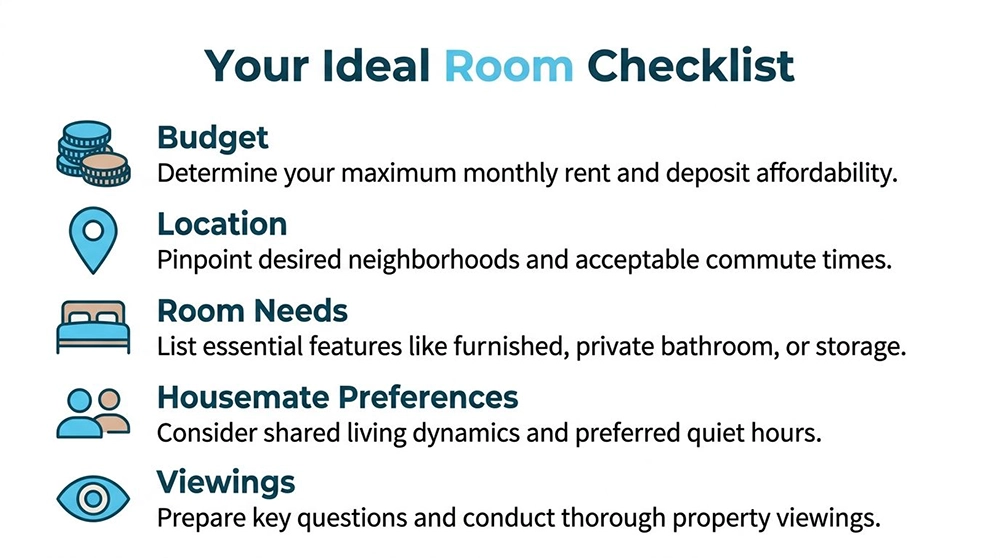
Your ideal room checklist
Use this before you book viewings, not after.
- Budget: Decide what feels comfortable month to month, including the deposit, travel, food, and the inevitable extras.
- Location: Think in commute time, not in map distance.
- Room needs: Be clear on furniture, storage, desk space, and whether natural light matters to you.
- Housemate preferences: Some people want a sociable kitchen. Others want a quiet base. Neither is wrong.
- Viewings: Go prepared with questions so you don't leave remembering only the decor.
If you're moving from halls, a first flatshare, or a very bare setup, it can also help to think about how you'll make the room feel like your own once you move in. A practical guide to cosy dorm room decor ideas can give you some simple ideas that work just as well in rented rooms where space is tight and you don't want to overbuy.
How to message landlords properly
Short messages that say only "Is this available?" usually get weak responses, if they get one at all. You don't need to write an essay, but you do need to sound like a real person who has read the advert.
A better first message includes:
- who you are
- what you do
- when you need the room
- why the room suits you
- when you can view
For example:
Hi, I'm relocating to Ipswich for work and looking for a furnished room close to the station. I work regular weekday hours, don't smoke, and I'm looking for somewhere quiet and tidy. I could view on Tuesday evening or Thursday after work if the room is still available.
That gives the landlord enough to decide quickly whether to continue the conversation.
What to inspect at the viewing
Many tenants concentrate on appearance and forget function. A room can look neat for twenty minutes and still be a frustrating place to live.
Check the room itself:
- Storage: Is there enough for your actual belongings?
- Noise: Can you hear the main road, other bedrooms, or the boiler?
- Signal and internet: Test your mobile signal while you're there and ask where the router is.
- Temperature: Cold rooms and stuffy rooms become bigger issues after week one.
- Locks and privacy: Ask what internal security is in place, if appropriate.
Then check the shared areas. Kitchens tell you a lot. If the fridge is chaotic, the bins are overflowing, and there's no space in cupboards, that's not just a bad day. It's often how the house is run.
Questions worth asking
Tenants sometimes avoid direct questions because they don't want to seem awkward. Ask them anyway. This is your home, not a hotel booking.
Good questions include:
- Who lives here now, and what are their routines like?
- How are bills handled?
- What's the usual approach to guests?
- How is cleaning managed in shared spaces?
- Is working from home fine?
- What's the minimum stay?
- How is the deposit handled?
- If something breaks, who fixes it and how quickly?
You are not being difficult by asking for clarity. You're being sensible.
When to walk away
Not every room deserves a second thought. Leave politely if the advert and reality don't match.
Common warning signs:
- the landlord can't explain the agreement clearly
- the room shown isn't the room advertised
- house rules appear only at the viewing
- current occupants seem tense or uncomfortable
- you feel pressured to pay before paperwork is discussed
If the viewing leaves you confused, the tenancy usually won't become clearer after move-in.
Negotiate carefully and realistically
You can negotiate, but do it on terms that make sense. Asking for a lower rent with no reason rarely works. Asking whether the landlord can include a desk, improve storage, or confirm bills in writing is often more productive.
Tenants get better results when they sound prepared rather than pushy. If a room suits you, say so. If you can move quickly, mention it. If you need one detail clarified before committing, ask directly and then stop talking. Over-negotiating a decent room in a busy market can cost you the room entirely.
Securing Your Let Paperwork and Safety Checks
This is the point where many room arrangements either become solid or start drifting into confusion. A good viewing and a friendly conversation are not enough. Once both sides want to proceed, the paperwork and safety side needs to be handled cleanly.
The first thing to pin down is what kind of legal arrangement this is. That changes the rights, responsibilities, notice expectations, and deposit handling.
Lodger agreement or tenancy agreement
If the landlord lives in the property and shares living space with the person renting the room, the arrangement is often a lodger agreement. If the landlord does not live there and the occupier has a room in a rented property, the arrangement is more likely to be a tenancy or a room let within a shared tenancy structure.
That distinction matters.
A lodger setup is usually more flexible, but it still needs clear written terms. A tenancy arrangement usually carries more formal legal protections and stricter process requirements. Problems start when landlords use the wrong paperwork because they assume "it's just one room".
What both sides should have ready
Landlords need to verify identity and complete required checks. Tenants should be ready to provide documents promptly, because delays here can slow everything down and make a landlord nervous about proceeding.
A sensible file for both sides should include:
- Proof of identity: Passport or other accepted ID.
- Right to Rent evidence: Landlords must complete the required checks before occupation where applicable.
- References: Employer, previous landlord, or another credible referee if requested.
- Written agreement: Even for a lodger arrangement, get terms in writing.
- Move-in record: Inventory, meter details if relevant, and key handover notes.
For practical guidance on room letting documents and flatshare basics, landlord and tenant readers can both use the shared accommodation resources library.
Deposits and written condition records
Deposits cause an outsized amount of friction because people leave details vague at the start. The cleaner the move-in record, the easier the move-out conversation.
If the arrangement is a tenancy, landlords need to follow the legal rules that apply to tenancy deposits. If it's a lodger arrangement, the handling is different, but clear written terms still matter. Either way, both sides should know:
- what the deposit covers
- what counts as damage versus wear
- how cleaning standards will be judged
- when repayment should happen
Tenants should take dated photos on move-in. Landlords should do the same. It avoids the usual "it was like that already" argument later.
For tenants who want a practical move-out mindset, this guide on how to get your bond back is useful because the core habits are universal. Clean thoroughly, document condition, and don't leave avoidable disputes behind you.
Safety checks are not optional
Room lets can feel informal, especially in owner-occupied homes, but safety obligations aren't optional because the arrangement is small.
Landlords should make sure the property is safe before move-in and remains so during the let. That means paying proper attention to gas safety where gas appliances are present, smoke alarms, carbon monoxide protection where appropriate, safe electrics, and clear access arrangements.
Tenants should not feel awkward asking:
- when the last gas safety check was done
- whether smoke alarms are tested regularly
- who to contact if something urgent fails
- how to report maintenance issues
A tidy room is reassuring. A safe room is essential. One doesn't replace the other.
Keep the final stage boring
That sounds odd, but it's the right goal. The closer the move-in process feels to an uneventful checklist, the better the arrangement usually starts.
A smooth final stage usually looks like this:
- The room and terms are confirmed in writing.
- Identity and Right to Rent checks are completed.
- Deposit and first payment terms are clearly stated.
- Move-in date is agreed.
- Inventory and keys are handled properly.
- House rules are explained once, clearly, without adding new surprises on the day.
If either side feels rushed, stop and clarify. Most disputes don't begin with dramatic dishonesty. They begin with assumptions nobody bothered to write down.
Tips for a Harmonious Housesharping Experience
A successful room let isn't measured only by whether rent arrives on time. It's measured by whether people can live together without low-level irritation turning into weekly tension. In shared homes, the small things matter most. Washing up, noise, bathroom timing, fridge space, overnight guests. That's where good arrangements hold or wobble.
Set the tone early
The best shared homes are not always the friendliest on day one. They're the clearest.
If you're the landlord or lead tenant, explain the practical house rules early and calmly. If you're moving in, ask for those expectations before something awkward happens. It's much easier to say, "Let's agree how guests work," than to deal with resentment after the third unannounced overnight stay.
A simple written house note can cover:
- cleaning expectations
- bin day
- kitchen storage
- quiet hours
- guest arrangements
- bathroom routines where needed
Deal with small issues while they're still small
Most houseshare tension grows because people hint instead of speaking plainly. One person leaves pans overnight. Another gets irritated but says nothing. A week later, the disagreement isn't about pans at all. It's about respect.
Say the awkward thing politely at the first sensible moment. That usually prevents the genuinely difficult conversation later.
A live-in landlord has to strike the same balance. Be available, but don't hover. Tenants want responsiveness, not supervision. Likewise, lodgers and tenants should remember that shared living means adjusting habits, not behaving as if every shared area is private space.
A few common flashpoints and fixes
- Noise at night: Agree what "late" means in that household. It varies.
- Cleaning drift: Use a basic rota or assign informal responsibilities.
- Fridge politics: Label shelves or at least agree the rough split.
- Bathroom bottlenecks: Morning routines matter more than people admit.
- Guests: Clarify frequency and notice expectations, not just whether they're "allowed".
Good shared living isn't about everyone becoming close friends. It's about predictability, respect, and not making other people's day harder in the place they live.
Your Next Step in the Ipswich Rental Market
Ipswich gives both sides something useful. Landlords have a market where spare rooms attract real attention when they're presented and managed properly. Tenants have a town where room lets can still offer flexibility, value, and a workable route into a good area without taking on a full-property budget.
The people who do best usually aren't the lucky ones. They're the prepared ones. They know what sort of arrangement they want, they ask direct questions, and they put the agreement in writing before assumptions creep in.
If you're looking at the spare room ipswich market now, treat it like a real decision rather than a casual stopgap. That's how you get a better result.
If you're ready to advertise a room or start searching seriously, Rooms For Let is a practical place to do it. Landlords can reach people actively looking for spare rooms and shared accommodation, while tenants can search current listings and set alerts for new matches. It keeps the process simple, which is exactly what most room lets need.