Taking on a lodger means you’re essentially inviting a paying guest to share your home, and a lodger agreement is the contract that sets out the ground rules for this arrangement. It’s a specific type of agreement for live-in landlords here in the UK, making it much less formal than a typical tenancy.
Think of the person renting your room not as a tenant, but as a long-term houseguest who pays for their space. This distinction is key, as it gives you far more flexibility and control over your own property.
So, What Exactly is a Lodger Agreement?
At its heart, a lodger agreement is a straightforward contract that stops small issues from becoming big problems. It’s used when you, the homeowner, live in the property and share common spaces like the kitchen, bathroom, or living room with your lodger.
This is a world away from letting a separate, self-contained flat where the renter would be a legal tenant with a whole host of rights. The primary job of a lodger agreement is to put everything in writing, providing clarity and protection for both of you. It covers the important stuff – rent, house rules, and how either of you can end the arrangement – so there are no awkward misunderstandings down the line.
Why a Lodger's Legal Status is Different
This is the most crucial part to get your head around. A lodger is legally classed as an 'excluded occupier'. This special status is what makes the whole setup so different from a standard tenancy, like an Assured Shorthold Tenancy (AST).
Being an 'excluded occupier' means your lodger has fewer legal rights. For you, the homeowner, this translates to:
- You do not need a court order to ask them to leave.
- The strict rules on protecting deposits do not apply.
- You only need to give 'reasonable notice' to end the agreement (usually the length of one rental period, like a month).
This simplified legal footing is what gives you more control and makes the whole process far less daunting than becoming a traditional landlord.
A quick but important warning: a lodger agreement is only for situations where you live in the property and genuinely share living accommodation. If you rent out a self-contained flat, even if it’s an annex in the same building, you would likely be creating a tenancy, not a lodging arrangement.
This simple contract is also a fantastic financial tool. The UK's Rent a Room Scheme lets homeowners earn up to £7,500 a year completely tax-free from letting out a furnished room. It’s an incredibly attractive way to bring in extra income with very little fuss. To see how this fits into the bigger picture, it's worth checking out the latest rental property market review from Landlord Zone.
Lodger Agreement vs Tenancy Agreement: A Crucial Distinction
It’s one of the most common mistakes people make, but confusing a lodger with a tenant can land you in some serious legal hot water. On the surface, they look similar—someone pays you money to live in your property. But underneath, their legal foundations are worlds apart.
Getting this distinction right is the single most important step for any homeowner thinking about renting out a room.
Think of it this way: a tenant has a lease that grants them exclusive possession of a space. They are, for all intents and purposes, renting a private home, and you, the landlord, have to give them formal notice just to enter. A lodger, on the other hand, is more like a paying guest. You're granting them a licence to occupy a room in your home, meaning you retain control and can enter as needed. That one difference changes everything.
The Power of Being an "Excluded Occupier"
Legally, a lodger is known as an ‘excluded occupier’. This isn't just a bit of jargon; it's the principle that frees you from the complex, time-consuming laws built for traditional tenancies.
This special status only applies because you are a live-in landlord who shares key facilities—like the kitchen or bathroom—with the person renting the room. It's this shared living arrangement that stops a formal tenancy from ever being created, keeping the power dynamic firmly on your side as the homeowner.
This simple flowchart helps spell out whether your situation qualifies.
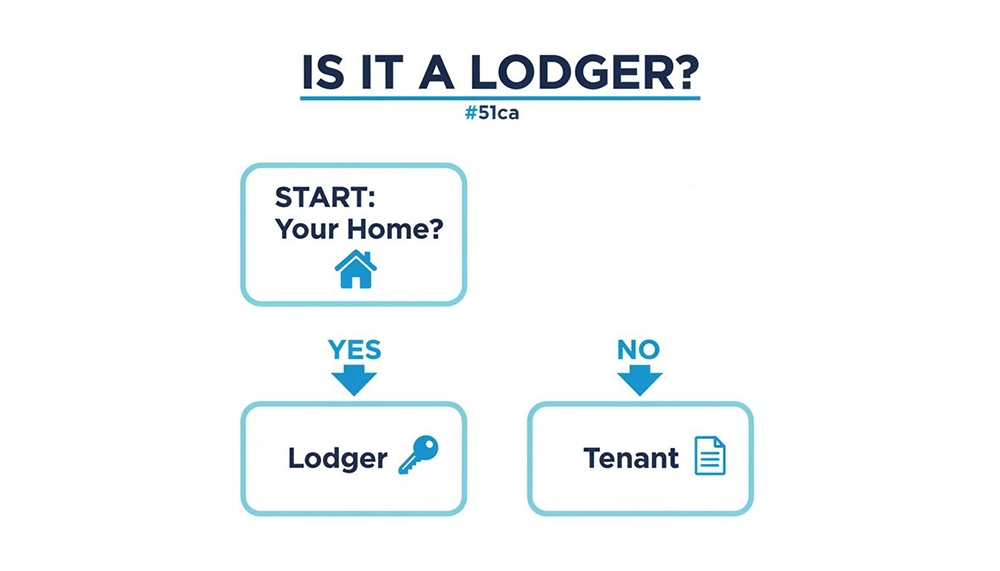
As you can see, the dealbreaker is whether the room is in your main home. If it is, you've got yourself a lodger.
Lodger vs Tenant At a Glance
The practical differences between a lodger and a tenant touch everything from handling deposits to ending the arrangement. With a lodger agreement, UK homeowners keep far more control because lodgers are excluded occupiers with very limited rights compared to full-blown tenants. Recent data shows just how appealing this is: average UK rental yields recently hit 7.11%, with Wales leading at 8.40% and the North/North East at 7.90%. Taking on a lodger allows homeowners to tap into these returns without taking on the full burden of being a landlord. To dig deeper into the specifics, it's worth exploring the latest guidance on excluded agreements from the NRLA.
Let's break down the biggest differences side-by-side.
| Feature | Lodger Agreement | Assured Shorthold Tenancy (AST) |
|---|---|---|
| Legal Status | Excluded Occupier (Licensee) | Tenant with exclusive possession |
| Your Home | You must live in the property | You do not live in the property |
| Access Rights | You can enter the lodger's room | Requires 24 hours' written notice to enter |
| Deposit Protection | No legal requirement for a scheme | Mandatory to use a government scheme |
| Ending the Agreement | Give 'reasonable notice' (e.g., one month) | Must follow a strict legal process (e.g., Section 21) |
| Eviction Process | No court order needed | Requires a court order for possession |
This table really drives home why a lodger agreement offers so much more flexibility. You can end the arrangement with 'reasonable notice' without getting the courts involved, and you aren’t tied up by the strict deposit protection rules that apply to tenants. It’s a much simpler, less risky way for homeowners to make some money from their spare space.
Crafting an Agreement That Protects You
Let's move from theory to action. A well-drafted lodger agreement is your single most important tool for a peaceful and clear arrangement. It isn't just a formality; it's the practical roadmap that prevents misunderstandings by setting expectations in stone from day one.
Think of it as the instruction manual for your shared living space.
This document doesn’t need to be crammed with complicated legal jargon to be effective. In fact, its real strength lies in its clarity. By outlining the essential rules and responsibilities upfront, you create a foundation of mutual respect that protects both your home and your peace of mind. Without one, you're relying entirely on memory and goodwill, which can easily fray over time.

Core Clauses Every Agreement Needs
A strong lodger agreement is built on a few non-negotiable clauses. These are the pillars that support the entire arrangement, ensuring there is absolutely no room for confusion on the most critical aspects of sharing your home.
At a minimum, your agreement must clearly state:
- Rent Amount and Due Date: Specify the exact amount of rent, the date it must be paid each month (e.g., the 1st), and your preferred payment method.
- Notice Period: Define how much notice either you or the lodger must give to end the agreement. This is typically aligned with the rental period, such as one month.
- Deposit Details: Even though it isn't legally required to be protected in a scheme, you must state the deposit amount and the conditions under which it will be returned in full.
These core details form the financial and legal backbone of your agreement.
Key Takeaway: The goal of your agreement is to anticipate potential friction points and address them before they happen. A clause that feels minor now can prevent a major headache later.
Defining House Rules and Boundaries
Beyond the finances, your agreement must set clear boundaries for daily life. This is where you translate your expectations into concrete house rules that your lodger agrees to follow. The more specific you are here, the better.
Consider including rules on:
- Guests: Can the lodger have overnight guests? If so, how often and for how long?
- Noise Levels: Are there specific quiet hours, particularly on weeknights?
- Shared Spaces: Outline the rules for using the kitchen, bathroom, and living room, including expectations for cleanliness.
- Utilities: Explain how bills for gas, electricity, and internet will be handled—whether they are included in the rent or paid as a separate contribution.
By detailing these points, you ensure everyone understands how to live together respectfully from the get-go.
If you're ready to find a lodger, you can even register as a landlord for free on Rooms For Let to start your search with confidence. A solid agreement makes the entire process smoother for everyone involved.
Navigating Your Rights and Responsibilities
As a live-in landlord, you operate under a unique set of rights and responsibilities that are far more straightforward than those governing a traditional tenancy. Getting to grips with this balance is the key to managing the arrangement confidently, ensuring you stay on the right side of the law while protecting your home.
Your biggest advantage is your right of access and control. Unlike a tenant who has exclusive use of their space, a lodger lives in your home under a licence. This means you can enter their room when you need to—for things like inspections or repairs—without the formal 24-hour written notice required for a tenancy. Of course, giving some friendly, informal notice is always good practice for keeping things amicable.
Ending the Agreement Fairly
One of the most significant benefits of a lodger agreement is how simple it is to bring it to an end. All you’re legally required to provide is 'reasonable notice' to ask your lodger to leave.
So, what does ‘reasonable notice’ actually mean in practice? It’s not some vague concept; it’s a practical guideline directly linked to how often rent is paid.
- If your lodger pays rent weekly, one week's notice is considered reasonable.
- If they pay monthly, then one month's notice is the standard.
You should always give this notice in writing. It creates a clear paper trail and prevents any arguments down the line about when the notice period officially started.
Your Legal Duties as a Homeowner
While you have more flexibility, you also have some non-negotiable legal duties to make sure your property is safe for anyone living in it. These responsibilities boil down to basic safety and showing respect for your lodger’s wellbeing.
You absolutely must:
- Ensure Gas Safety: Get an annual gas safety check done by a Gas Safe registered engineer. You must also give a copy of that certificate to your lodger.
- Maintain Electrical Safety: All the wiring, sockets, and any electrical appliances you provide must be safe to use.
- Install Safety Alarms: You are legally required to have working smoke alarms on every floor and carbon monoxide detectors in any room with a solid fuel appliance, like a wood-burning stove.
- Respect Their Peace: Your lodger has a right to live in your home peacefully without you constantly interfering.
Fulfilling these duties isn't just about ticking legal boxes; it's fundamental to being a responsible landlord and building trust. For anyone looking for a room, knowing their landlord takes these responsibilities seriously is a huge plus. You can get a better sense of what people are looking for and make sure your property hits the mark by exploring resources for those looking to find a spare room to rent.
Unlocking the Benefits of the Rent a Room Scheme
Beyond the simplicity of a lodger agreement, one of the biggest incentives for UK homeowners is the government's Rent a Room Scheme. This is a fantastic financial perk that can make renting out your spare room incredibly worthwhile, letting you earn a significant income completely tax-free.
The scheme was specifically designed to encourage people like you to make their spare rooms available. It’s a straightforward and very attractive way to boost your household income without the usual tax headaches that come with earning extra money.

How You Can Earn £7,500 Tax-Free
The headline benefit of the Rent a Room Scheme is its generous tax-free threshold. You can earn up to £7,500 per year from your lodger without paying a single penny of tax on it. If you share the ownership of your home with a partner, this allowance is split down the middle, giving you each a tax-free limit of £3,750.
Let’s put that into a real-world example. Say your lodger pays you £600 per month.
- Monthly Income: £600
- Annual Income: £7,200 (£600 x 12)
- Tax Payable: £0
Because your total earnings of £7,200 fall comfortably below the £7,500 threshold, the entire amount is yours to keep. You don’t even have to declare it on a tax return.
The Rent a Room Scheme automatically applies if you earn less than the threshold. You only need to do something if your income from a lodger goes over £7,500 in a single tax year.
Who Is Eligible for the Scheme?
Getting in on this fantastic scheme is simple and designed for the exact situation we’ve been talking about. To qualify, you must:
- Be a resident landlord: This is the most important bit – you have to live in the property yourself.
- Rent out a furnished room: The space you’re letting must be furnished and located within your main home.
The scheme applies whether you own your home or you're a tenant yourself (with permission from your landlord to take in a lodger, of course). If you do happen to earn more than the £7,500 limit, you get a choice. You can either pay tax just on the excess amount, or you can opt out of the scheme entirely and declare your income and expenses like any other rental business.
How to End a Lodger Agreement Correctly
Bringing a lodging arrangement to an end should be just as straightforward as starting one. The key difference between a lodger and a tenant is that a lodger is legally classed as an ‘excluded occupier’.
This status is a game-changer. It means you can bypass the complex, court-led eviction processes required for tenants, giving you a simple way to regain control of your home.
Giving Reasonable Notice
The entire process really just boils down to one thing: giving your lodger ‘reasonable notice’ to leave. This isn’t some vague legal term; it’s a practical timeframe that’s directly linked to their rent payment cycle.
The rule of thumb is wonderfully simple:
- If your lodger pays rent monthly, you need to give them one full month’s notice.
- If they pay you weekly, then one week’s notice is all that’s required.
Whatever you do, make sure you give this notice in writing. A simple, dated letter or even an email is perfect. This creates a clear paper trail and avoids any arguments down the line about when the notice was officially given. It’s a small step that keeps everything professional and legally sound.
The flexibility of lodger agreements makes them a brilliant solution for homeowners, and there's huge demand for rooms right across the UK. Regional room rents really highlight this, with average monthly prices hitting £666 in the South West, £563 in the West Midlands, and £675 in Scotland. You can find more of the latest insights on UK regional rent trends.
What to Do If Your Lodger Does Not Leave
Nine times out of ten, a lodger will pack up and leave peacefully once their notice period is up. But what if they refuse to go?
Don't panic. Because they are an excluded occupier, the law is firmly on your side. Once the notice period has officially ended, you are legally entitled to change the locks to their room and the property. This is sometimes known as 'peaceable re-entry'.
Of course, you still have a duty of care over their belongings. You’ll need to make fair arrangements for them to collect their things at a convenient time. The key is to act calmly and reasonably, but you can rest assured that the law allows you to regain possession of your home without getting tied up in lengthy court proceedings.
Common Questions About Lodger Agreements
Even when you've got the basics down, a few specific questions always seem to pop up. Think of this as the FAQ section for homeowners, designed to give you quick, clear answers to those lingering queries so you can move forward with confidence.
Do I Need to Protect a Lodger's Deposit?
In a word, no. You're not legally required to place a lodger's deposit into a government-backed protection scheme. That particular rule is reserved for Assured Shorthold Tenancies (ASTs), and since your lodger is what’s known as an 'excluded occupier,' the process is much more straightforward for you.
That said, it’s still best practice to provide a written receipt for any deposit you take. Your lodger agreement should also spell out exactly what conditions they need to meet to get their deposit back in full. This simple step can prevent a world of headaches and disagreements when it's time for them to move on.
Can I Have More Than One Lodger?
Yes, you absolutely can, but this is where you need to be careful. Once you take in three or more lodgers who aren't part of the same family, your home could be reclassified as a House in Multiple Occupation, or HMO.
Becoming an HMO isn't just a change in name; it means you'll be subject to much stricter safety rules and will likely need a special licence from your local council. Before you even think about having multiple lodgers, you must check your local council’s specific HMO regulations to avoid getting caught out.
What If I Don’t Have a Written Agreement?
Relying on a verbal agreement is a huge gamble. While it might technically be legally binding, trying to prove what was actually agreed upon is nearly impossible if a dispute arises over things like rent, notice periods, or house rules.
A written lodger agreement isn't just paperwork; it’s your safety net. It provides crystal-clear clarity and legal protection for both you and your lodger, making it the single best way to ensure a smooth, conflict-free arrangement.
A simple document transforms a vague "I think we said..." into a clear, agreed-upon set of terms.
Should I Inform My Mortgage Lender or Insurer?
Yes, and this one is non-negotiable. You must inform both your mortgage lender and your home insurer before your lodger moves in. Most mortgage deals include a clause that requires you to get their permission before you let out any part of your property.
Likewise, your standard home insurance policy could be completely invalidated if you have a paying guest living with you. You'll almost certainly need to upgrade your policy to one designed for landlords or home-sharing to make sure you’re fully covered. For more practical advice on renting out your room, you can find a wealth of information over on the Rooms For Let landlord advice blog.
Ready to find the perfect lodger for your spare room? With Rooms For Let, you can advertise your room for free and connect with thousands of potential lodgers across the UK. Find your ideal lodger today!