Finding landlords who accept DSS used to be a real uphill battle, but thanks to some crucial legal shifts, that’s all changed. Discriminatory ‘No DSS’ policies have been outlawed, meaning landlords now have to look at your application based on affordability, not where your income comes from. This has opened up a huge number of rental opportunities for people receiving Universal Credit or Housing Benefit.
The New Reality of DSS Tenancies in the UK
The term ‘DSS’ has stuck around for years, long after the Department of Social Security it stood for was replaced. Today, it’s just shorthand for tenants who get help with their rent, which is mostly paid through Universal Credit. For a long time, that label came with a heavy stigma, often resulting in a flat-out rejection from landlords and agents.
But the ground beneath the rental market has completely shifted.
Think back to the early 2010s. Landlords could freely advertise ‘No DSS’ on their listings, turning away benefit claimants without a second thought. Fast forward to today, and the landscape has been flipped on its head by landmark court rulings. A key decision confirmed that blanket ‘No DSS’ policies are discriminatory and breach the Equality Act 2010.
This forced the big property portals like Rightmove and Zoopla to scrap their ‘No DSS’ filters, instantly making thousands more properties accessible. You can discover more insights about this shift for UK landlords and tenants to get the full picture.
A Fairer Market for Everyone
This legal shake-up is about more than just ticking boxes; it’s about making the private rental sector a fairer place for everyone. For tenants, it finally dismantles a massive barrier to finding a safe, stable home. It means your application gets judged on whether you can actually pay the rent, not on outdated and unfair stereotypes.
For landlords, this change unlocks a much wider pool of potential tenants. With more people able to apply, you can fill your properties faster, reduce those costly void periods, and find reliable, long-term occupants. Many landlords are discovering that tenants receiving benefits are often looking for stability and tend to stay in a property for longer—a massive plus for any property owner.
This shift forces landlords to look beyond the income source and focus on what really counts: a tenant's ability to pay and their reliability. It's a move towards a more professional, evidence-based approach to letting.
This new reality has changed how the market works. We've summarised the most important shifts below.
Key Legal and Market Shifts for DSS Tenancies
Recent court rulings and changing attitudes have transformed the landscape for both tenants and landlords. Here’s a quick breakdown of what these changes mean for you.
| Change | What It Means for Tenants | What It Means for Landlords |
|---|---|---|
| Outlawing 'No DSS' Bans | You can no longer be automatically rejected just because you receive benefits. Your application must be considered on its financial merits. | You cannot advertise with "No DSS" restrictions. Doing so is unlawful discrimination and could lead to legal action. |
| Focus on Affordability | The key question is now "Can you afford the rent?", not "Where does your money come from?". You have the right to a fair assessment. | You must assess all applicants based on their ability to pay the rent, regardless of their income source. Standard affordability checks still apply. |
| Removal of Portal Filters | Major property sites like Rightmove and Zoopla have removed 'No DSS' filters, giving you access to a far wider range of properties. | Your property is now visible to a larger audience, potentially reducing void periods and increasing your pool of suitable applicants. |
| Increased Legal Awareness | You are now empowered with the knowledge that the law is on your side, giving you more confidence when applying for properties. | It is crucial to understand your legal obligations under the Equality Act 2010 to operate a compliant and fair letting business. |
These changes represent a significant step towards a more equitable and professional rental market for everyone involved.
How This Affects Your Search
This is where platforms like Rooms For Let come in. They are central to this new environment, connecting you directly with landlords and HMO managers who get their legal obligations and welcome applications from all backgrounds.
Ultimately, this new reality empowers tenants, knowing the law supports them. At the same time, it gives landlords the chance to run a more inclusive—and often more profitable—business. The focus has rightly moved from automatic exclusion to fair assessment, which is a win for everyone on the rental journey.
How Tenants Can Secure a DSS-Friendly Home
Finding a new place to live when you're receiving benefits means being proactive and organised. Even though the law now prevents landlords from issuing blanket "No DSS" bans, you still need to make sure you stand out as a reliable and trustworthy applicant. It all comes down to solid preparation and clear communication, making it easy for a potential landlord to say "yes".
Fine-Tuning Your Search Strategy
The first step is to get smart with your search. Instead of just browsing general room listings, think like a landlord who is open to accepting benefits and use the keywords they're likely to use in their adverts.
On platforms like Rooms For Let, try plugging in phrases such as:
- "Benefits considered"
- "Housing benefit accepted"
- "Universal Credit welcome"
- "All income sources considered"
Using these specific terms acts as a filter, immediately bringing properties from landlords who already understand the system to the top of your list.
This approach saves you a huge amount of time and connects you with landlords who are already on your wavelength.
The legal landscape has shifted dramatically in recent years, moving away from discriminatory practices towards a much fairer system for tenants.
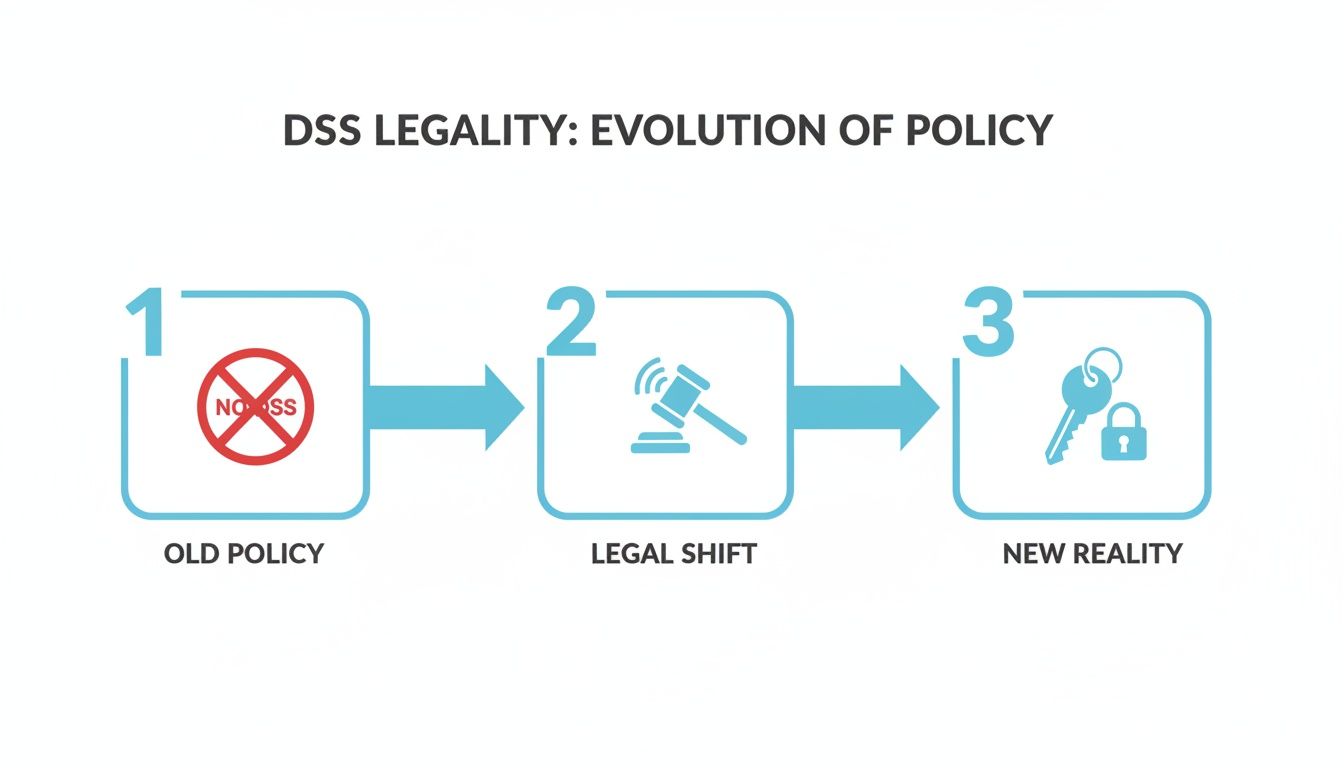
As the infographic shows, the journey from outright bans to a legally required fair assessment process is complete. This knowledge empowers you, confirming you have rights that protect you from unfair discrimination.
Building a Standout Application
Once you've zeroed in on a promising property, it's your application that needs to do the heavy lifting. At the end of the day, landlords are running a business. Their two main concerns are simple: will the rent be paid on time, and will the tenant look after the property? Your job is to tackle these concerns head-on.
Get ahead by creating a "rental CV" or a simple folder with all your key documents scanned and ready to send. Having everything prepared from the get-go shows you're serious, organised, and makes a fantastic first impression.
A well-prepared application pack does more than just provide information—it builds trust. It signals to a landlord that you're on top of your responsibilities, which is exactly the kind of person they want in their property.
Your application pack should contain:
- Proof of Identity: A clear copy of your passport or driving licence.
- Proof of Income: Your most recent Universal Credit or Housing Benefit award letter. If you work part-time, include recent payslips too.
- Bank Statements: The last three months of statements to show your financial management.
- References: Contact details for a previous landlord and an employer, if you have one. A glowing reference is pure gold.
- Guarantor Details: If you're using a guarantor, have all their information ready to go. This can massively strengthen an application.
Opening a Positive Dialogue
When you first make contact with a landlord or letting agent, be confident and transparent from the outset. Frame your situation in a positive light. Instead of simply saying "I'm on benefits," present it as having a dependable, government-backed income source to cover the rent.
You could try something like this:
"I'm very interested in your property. My rent will be covered by my Universal Credit award, which guarantees a consistent and reliable monthly payment. I have all my documentation prepared and ready for your review."
This professional approach immediately puts the landlord at ease. It shows you understand their position and are a dependable candidate, shifting the conversation away from outdated stigmas and onto the practicalities of a secure and successful tenancy.
Why Smart Landlords Are Welcoming DSS Tenants

The conversation around accepting tenants on benefits is changing, moving away from outdated ideas of risk and towards a sharp business strategy. For experienced landlords and HMO managers, looking at applicants on benefits with a fresh perspective reveals a fantastic pool of reliable, long-term tenants who can slash your void periods and build a truly stable income stream.
Think about it. Letting to tenants on benefits often leads to longer, more secure tenancies. Many are looking for stability and are far less likely to move on a whim. For you, that means fewer marketing costs, less time spent on viewings, and a whole lot less hassle. A consistent, occupied property is the absolute foundation of a profitable rental business, and this group of tenants frequently provides exactly that.
Guaranteed Rent and Less Admin
One of the biggest draws is the potential for incredibly consistent rental payments. While direct payments from the council aren't the default anymore, there are still solid mechanisms in place. An Alternative Payment Arrangement (APA) can be set up to have the housing part of Universal Credit paid directly to you.
This is a game-changer if a tenant has a history of arrears or simply finds managing their finances a challenge. It gives you a level of security that very few other tenant types can offer, effectively guaranteeing a large chunk of your rent lands in your bank account every month without fail. That kind of reliable cash flow is gold dust for any landlord looking to manage a property portfolio effectively.
Your Legal Obligations Explained
Let’s be clear: fairly considering all applicants isn't just good practice, it’s a legal requirement. The Equality Act 2010 makes it unlawful to issue a blanket ‘No DSS’ ban on your properties. Why? Because it amounts to indirect discrimination against protected groups, like women or disabled people, who are more likely to be receiving benefits.
The rules are only getting tighter. The upcoming Renters' Rights Act 2025 is set to cement this from May 2026, explicitly banning discriminatory ads like 'No DSS' right across the UK. Councils will be given new powers to hand out fines of up to £7,000 for landlords who don't comply, so it pays to get your processes in order now.
Conducting Fair Affordability Checks
Proper, fair screening all comes down to one simple question: can this person afford the rent? Where their income comes from is irrelevant. Your job is to apply a robust and consistent affordability check to every single person who applies.
Here’s what a fair assessment actually looks like:
- Calculate Total Income: Add up everything—benefits, part-time work, any other verifiable income streams.
- Establish the Rent-to-Income Ratio: A healthy, sustainable ratio is usually where the monthly rent makes up no more than 30-40% of their total monthly income.
- Review Financial History: Take a look at their bank statements. You're not judging their spending habits; you're looking for evidence of consistent payments for past rent or important bills. This is a brilliant indicator of reliability.
By focusing on the numbers rather than old stigmas, you open your doors to a much wider market of potential tenants. This isn't just about staying on the right side of the law; it's about finding the best possible person for your property and securing your investment for the long haul.
Crafting a Listing That Attracts Great Tenants

Think of your property listing as your first handshake with a potential tenant. To keep those void periods short and find someone reliable, your advert needs to be welcoming, clear, and written in a way that pulls in the widest possible pool of great applicants.
The language you choose is incredibly important. A few simple tweaks to your phrasing can make a huge difference in the number and quality of enquiries you get, especially from the huge market of tenants receiving housing benefits.
Using Inclusive Language in Your Ad
Embracing inclusive language isn’t just about ticking a legal box; it’s just smart marketing. It immediately signals that you're a fair and professional landlord who assesses people on their individual merit, not on outdated stereotypes.
Try working phrases like these into your property description:
- "All income sources considered"
- "Universal Credit applicants welcome"
- "Guarantors accepted"
- "Affordability checks apply"
This simple approach instantly opens your doors to a massive slice of the rental market. It’s worth remembering that over 33% of all private renting households in the UK claim housing benefits, a figure that jumps to 39% in London. These are often long-term, stable tenants who are actively searching for a secure place to call home.
Highlighting Key Property Features
Beyond the text, really think about what makes your property a brilliant long-term home. Don’t just list the number of bedrooms; sell the lifestyle and convenience it offers. These are the details that really resonate with tenants looking to put down roots.
A great listing focuses on benefits, not just features. Instead of saying 'two bedrooms', try 'two spacious double bedrooms, perfect for a small family or home office setup'. It helps people actually picture themselves living there.
Make sure you mention attractive local amenities that add real value:
- Excellent local school catchments
- Close to parks or green spaces
- Reliable public transport links (bus stops, train stations)
- Nearby supermarkets, GP surgeries, and other essentials
For a bit more inspiration, you can explore various property description sample styles that are proven to grab attention and turn views into genuine enquiries.
By crafting an open and detailed advert from the start, you tap into a motivated audience that's ready to move. When you're ready to get your vacancy filled, you can create your free landlord advert on Rooms For Let and start connecting with potential tenants today.
Navigating Common Challenges and Misconceptions
Let's be honest, there are a lot of myths floating around about renting with benefits. The best way to move forward is to tackle these worries head-on, building confidence for both landlords and tenants.
Many landlords hesitate because they've heard horror stories about reliability and rent payments, while tenants often fear they’ll be treated unfairly from the outset. It’s time to clear the air with some practical, real-world solutions.
For a landlord, the number one concern is almost always the risk of rent arrears. The thought of payments being missed is a massive hurdle, but it's one with solid fixes. This isn't about taking a blind leap of faith; it's about using the right tools to secure your investment.
Securing Your Rental Income
One of the strongest safety nets you can have is Rent Guarantee Insurance (RGI). Plenty of insurers offer policies that cover you if a tenant can't pay their rent, no matter where their income comes from. Yes, some policies might have slightly higher premiums for tenancies involving benefits, but the peace of mind is often well worth the small extra cost.
Another brilliant tool at your disposal is the Alternative Payment Arrangement (APA). If your tenant is already in arrears, or you have genuine concerns they might struggle with budgeting, you can apply for the housing element of their Universal Credit to be paid directly to you. This simple step creates a secure, reliable income stream, tackling the biggest perceived risk head-on.
An APA isn't just an informal agreement; it's a formal, government-backed mechanism. It transforms Universal Credit from a tenant's benefit into a landlord's guaranteed payment, designed to provide security and stop arrears from getting out of hand.
It’s also vital we bust the myth that tenants on benefits are automatically 'high-risk'. Proper affordability checks should focus on the numbers, not the source of the income. A tenant with a guaranteed government income stream can often be more financially stable than someone in a precarious job. Many landlords who welcome tenants on benefits find they are looking for long-term stability and turn out to be excellent, reliable people to have in their property.
What Tenants Can Do About Discrimination
Even with stronger laws in place, tenants can still, unfortunately, face discrimination. If you feel a landlord or agent has rejected your application simply because you receive benefits, there are clear steps you can take.
It's illegal for them to have a blanket ban like "No DSS". Any refusal has to be based on affordability criteria that are applied fairly to every single applicant.
If you think you've been treated unfairly, here’s what to do:
- Keep Records: This is crucial. Save every email, screenshot text messages, and make notes of any phone calls where the refusal was mentioned.
- Seek Advice Immediately: Get in touch with organisations that offer free, expert housing advice. They can quickly tell you if you have a genuine case for discrimination.
- Find Support: Reputable charities are your strongest allies in this situation.
Key organisations that can help are Shelter and Citizens Advice. They provide invaluable guidance on your rights and can support you in challenging an unfair decision. Dealing with these issues can feel overwhelming, but you don't have to do it alone. For more practical guidance, you can also check out our regularly updated Rooms For Let blog.
Your DSS Questions Answered
The world of renting can feel full of tricky questions, especially when benefits are part of the picture. Whether you're a tenant trying to find a home or a landlord looking to fill a room, it's easy to feel a bit uncertain.
Let's clear things up. Here are some straightforward answers to the most common questions we see about DSS tenancies in the UK.
Can a Landlord Legally Refuse a Tenant on Benefits?
In short, no. A landlord can't have a blanket policy that says "no DSS" or "no benefit recipients." This is now widely seen as indirect discrimination under the Equality Act 2010, because it unfairly penalises protected groups, such as disabled people or single mothers, who are more likely to receive benefits.
What landlords must do is assess every single application on its own merits. The real question should always be about affordability—can this specific person afford the rent? It doesn't matter where their income comes from. A fair assessment isn't just good practice; it's the law.
What Is an Alternative Payment Arrangement?
An Alternative Payment Arrangement (APA) is a brilliant tool within the Universal Credit system that gives landlords some extra peace of mind. It allows the housing element of a tenant’s Universal Credit to be paid directly to the landlord.
This arrangement can be set up by either the tenant or the landlord, particularly if there are worries about the tenant falling behind on rent or if they find managing their money a struggle. It’s a simple, practical way to make sure the rent is always paid on time, protecting the landlord's income and securing the tenant's home.
An APA is one of the most effective ways to remove the perceived risk of accepting tenants on benefits. It creates a reliable, direct payment stream that works for everyone.
Are There Special Insurance Policies for DSS Tenancies?
Most standard landlord insurance policies do cover tenancies where the occupant is on benefits, but you absolutely must tell your insurer. Being upfront and transparent is the only way to make sure your policy stays valid should you ever need to make a claim.
If you want an extra layer of security, look into Rent Guarantee Insurance (RGI). This is a specific policy designed to cover your rental income if a tenant stops paying, no matter why. It’s a fantastic safety net that many landlords find invaluable.
What Documents Should a Tenant on Benefits Prepare?
Making a great first impression is half the battle. If you're a tenant, arriving organised and prepared shows you're a serious applicant who means business. I always recommend putting together a simple "rental pack."
Have these documents ready to go:
- Proof of Identity: A passport or driving licence.
- Proof of Income: Your official Universal Credit or Housing Benefit award letter.
- References: Contact details for a previous landlord are gold dust.
- Guarantor Details: If you have someone willing to act as a guarantor, get their details ready.
Turning up with everything organised shows you're reliable and makes it easier for a landlord to choose you.
Finding the right tenant or the perfect room is all about making the right connections. Join the thousands of landlords and tenants who use Rooms For Let every day to find their ideal match. Start your search or advertise your room for free today!