The UK’s new Renters Rights Bill is set to be one of the biggest shake-ups to the private rental market in a generation. It’s designed to fundamentally rebalance the relationship between landlords and tenants, aiming for a fairer, more stable system for everyone involved.
At its heart, the bill is about giving renters more security and predictability, mainly by getting rid of the controversial 'no-fault' evictions and bringing in clearer, stricter rules about how and when rent can be increased.
Why Do We Need a New Renters Bill Now?
Anyone who has tried to rent a room or a flat in recent years knows the market is under immense pressure. Sky-high demand, soaring rents, and fierce competition have left many tenants feeling like they’re walking on eggshells, never truly secure in their own homes.
The Renters Rights Bill is the government's answer to these long-standing problems. Think of it as a complete reset of the rental rulebook, designed to modernise tenancy laws that haven't kept pace with the reality of renting in the UK today.
It picks up where previous attempts, like the watered-down Renters (Reform) Bill 2023, left off, finally delivering on promises to give tenants a stronger footing. The need for this is stark when you look at the numbers. In the year to July 2024, private rents in England shot up by a staggering 8.6%, with London seeing an even steeper 9.7% hike. Add to that the fact that, according to Rightmove, there are now 17 households competing for every single rental property on the market. It’s no wonder students, young professionals, and contractors are finding it almost impossible to find a room in cities like Manchester and Cardiff. You can read more about the history that led to this point on Wikipedia's page on UK rent control.
This guide will be your roadmap through these changes. We'll break down exactly what’s happening, making sure both landlords and tenants know what to expect.
What Is the Bill Trying to Achieve?
At its core, the bill wants to create a rental experience that’s more stable and predictable. It’s tackling this from a few different angles:
- Proper Security for Tenants: The big one. By getting rid of Section 21 'no-fault' evictions, the law will give tenants the peace of mind that they can't be asked to leave their home without a legitimate, proven reason.
- A Fairer Deal on Rent: New rules will mean rent can only be increased once per year. It also aims to stamp out rental bidding wars, which often push prices up artificially.
- Better Quality Homes: A legally binding Decent Homes Standard is coming. This will force all rental properties to be safe, warm, and in a decent state of repair, holding landlords to a clear standard.
- Holding Bad Landlords to Account: A new national database of landlords and an official Ombudsman service will be created. This will make it much easier to track down and deal with rogue landlords who don't play by the rules.
This isn't about punishing good landlords. It's about professionalising the sector and creating a clearer system where everyone understands their rights and responsibilities. In fact, the bill gives good landlords stronger, more specific grounds to get their property back when they have a genuine reason, like dealing with tenants who are in serious rent arrears or causing anti-social behaviour.
Ultimately, the Renters Rights Bill is about making the private rented sector work better for everyone. By giving tenants stronger protections and landlords clearer guidelines, the goal is to create a more balanced and sustainable market for the long term.
The End of Section 21 Evictions and Fixed-Term Tenancies
Let's start with the biggest headline-grabber in the Renters Rights Bill: the complete abolition of Section 21. This isn't just a minor tweak; it's a fundamental rewrite of the rules that have governed private renting for decades, tipping the scales towards much greater tenant security.
For years, Section 21 has been the landlord's go-to tool for regaining their property. It allowed them to issue a 'no-fault' eviction notice, meaning they didn't have to give any reason at all to end a tenancy once a fixed term was over. As long as the paperwork was correct, tenants could be asked to leave with just two months' notice, even if they’d paid their rent on time every single month.
This created a huge amount of uncertainty for renters, making it hard to put down roots or feel truly secure in your home. The new bill gets rid of this entirely.
A New Era of Periodic Tenancies
The bill doesn't just scrap Section 21; it overhauls the very nature of tenancy agreements themselves. Going forward, all new private tenancies will be periodic tenancies right from the start.
So, what does that mean? The whole idea of a fixed-term contract – like the common 6 or 12-month agreement – is being phased out for new lets. Instead, your tenancy will simply roll from one month to the next, creating a far more flexible, open-ended arrangement for everyone involved.
This flowchart illustrates the core idea behind the bill: creating a balanced system where security for tenants and fairness for landlords are intertwined.
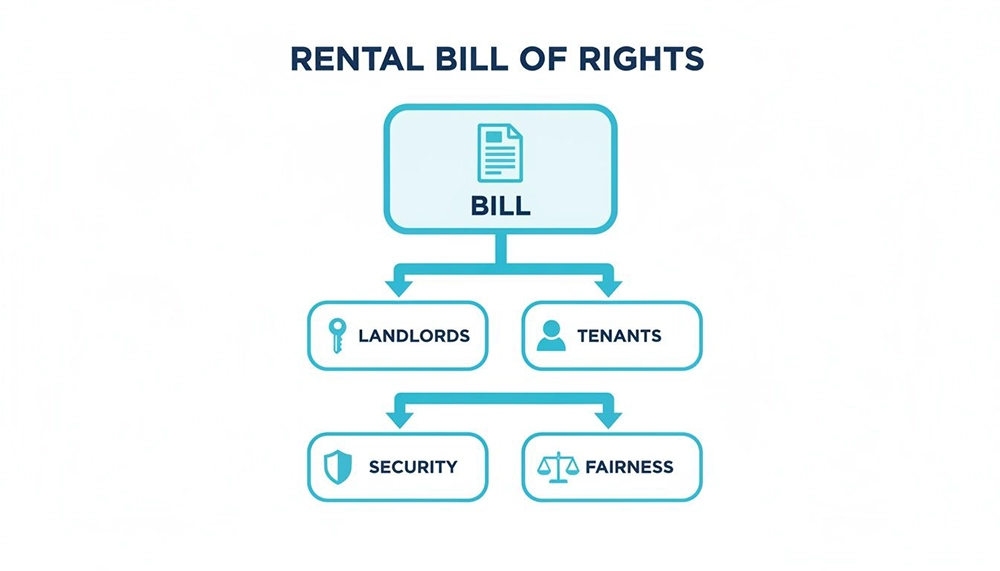
For tenants, this change brings a welcome sense of stability. You can settle in, knowing you can't be asked to pack your bags without a legitimate, legally recognised reason. If your plans change, you can give two months’ notice to leave at any point.
For landlords, this is a major operational shift. You can no longer rely on the fixed term ending to regain your property. Instead, you'll need to use the strengthened grounds for possession under Section 8 of the Housing Act.
To make these changes clearer, here’s a side-by-side look at how tenancy agreements are set to change.
Tenancy Agreements Before and After the Renters Rights Bill
| Feature | Current System (Assured Shorthold Tenancy) | New System (Periodic Tenancy) |
|---|---|---|
| Contract Type | Starts with a fixed term (e.g., 6 or 12 months), then can become a rolling periodic tenancy. | Starts as a rolling periodic tenancy from day one. No fixed terms. |
| Ending a Tenancy (Landlord) | Can use a 'no-fault' Section 21 notice after the fixed term ends, or a Section 8 notice if there are specific grounds. | Must use a strengthened Section 8 notice with a valid, specified reason. Section 21 is abolished. |
| Ending a Tenancy (Tenant) | Usually must wait until the end of the fixed term. After that, typically one month's notice is required. | Can give two months' notice to leave at any point during the tenancy. |
| Tenant Security | Lower security due to the risk of 'no-fault' evictions. Renters can feel unstable. | Higher security. Tenants can only be evicted if the landlord has a legitimate, legal reason. |
This table highlights the move away from temporary contracts towards more secure, open-ended agreements where both sides have clear rights and responsibilities.
Understanding the Strengthened Section 8 Grounds
With Section 21 gone, landlords need a reliable way to get their property back when there's a genuine need. To ensure this, the bill strengthens the existing Section 8 grounds for possession, making them clearer and more comprehensive.
These grounds provide specific, legal pathways for eviction when the situation calls for it.
Key grounds for landlords will include:
- Moving In or Selling: Landlords can regain possession if they or their close family need to move into the property, or if they intend to sell it.
- Serious Rent Arrears: The rules are being tightened to make it more straightforward to evict tenants who fall significantly behind on their rent.
- Anti-Social Behaviour: Landlords will have stronger powers to tackle tenants engaging in disruptive or criminal behaviour.
- Repeated Breaches: New provisions will help landlords deal with tenants who persistently breach the terms of their agreement, even if the individual breaches are minor.
The aim here isn't to stop landlords from ever being able to evict tenants. It's about making sure every eviction is justified and transparent, ending the anxiety that 'no-fault' notices created for millions of renters.
This new system means landlords must become more diligent with their record-keeping and communication. If you need to regain possession, you'll have to serve a Section 8 notice stating the precise grounds and be prepared to provide evidence in court if it's challenged. It professionalises the process, shifting it from a simple notice period to a reason-based legal procedure.
New Rules on Rent Increases and Bidding Wars
Beyond just overhauling evictions, the Renters Rights Bill is set to make some big changes to the financial side of renting, bringing a welcome dose of stability and clarity. For most tenants, the looming threat of a sudden, sharp rent hike is a constant source of anxiety. This new legislation takes that issue head-on.
The days of landlords springing unexpected rent demands on tenants are numbered. Under the new rules, landlords will only be able to increase the rent once per year. And they'll have to give you a solid two months' written notice before the new rate kicks in. This simple tweak is a game-changer, giving tenants the breathing room to budget, plan ahead, or challenge the increase if it feels unfair.

This new structure stops landlords from chipping away with frequent, smaller increases to nudge tenants out. A rent review will now be a proper, considered, annual event.
Challenging Unfair Rent Hikes
So, what happens if you get a notice for a rent increase that seems way over the top? The bill gives tenants a clear process for fighting back. If you believe the proposed rent is well above the going market rate for similar places in your area, you can take your case to a First-tier Tribunal.
This isn't just an informal chat; it’s a formal legal body that will look at the facts. The tribunal will objectively assess your property, its condition, and what similar properties are renting for locally to decide what a fair market rent should be.
The tribunal’s decision is binding, but it can be a double-edged sword. If they find the market rent is even higher than what the landlord proposed, they can set the rent at the landlord's figure. Crucially, though, they cannot set it any higher than what the landlord originally asked for.
This acts as a powerful brake on landlords trying their luck with unreasonable hikes, forcing them to make sure any proposed increase is genuinely in line with the local market.
The End of Rental Bidding Wars
In hot rental markets, we’ve all heard stories of letting agents encouraging a 'bidding war'. This is where potential tenants are pushed to offer more than the advertised rent just to secure a property. It's a stressful and murky process that artificially inflates prices.
The Renters Rights Bill slams the door on this practice, making it illegal. Landlords and agents will be banned from encouraging bids above the advertised price. The rent you see on the advert is the rent you should pay.
This change levels the playing field, making sure properties are let at their advertised price, not auctioned off to the highest bidder.
- For landlords: This means pricing your property correctly from day one is more critical than ever. The price you advertise must be the rent you genuinely expect.
- For tenants: You can no longer be pressured into offering more cash. If an agent tries to start a bidding war, they will be breaking the new rules.
The bill also cracks down on huge upfront payments. Landlords will be banned from asking for more than one month's rent in advance, ending those demands for six or even twelve months' rent upfront that created a massive financial hurdle for so many. It’s all part of making the private rented sector a fairer and more transparent place for everyone.
Understanding the National Landlord Database and Property Standards
The Renters Rights Bill is bringing in two major new tools set to professionalise the private rental sector and lift standards right across the board. You can think of them as the twin pillars of this new era of compliance: a mandatory national landlord database and a legally binding Decent Homes Standard. These aren’t just about creating more red tape; they're designed to build a far more transparent and accountable system for everyone involved.
For the very first time, every private landlord in the UK will have to register themselves and their properties on a single, central database. This isn't just a simple list. It's a proper register that will hold landlords accountable, making it much harder for the rogue operators to simply disappear and pop up elsewhere.

The plan is to roll this database out in stages, kicking off in late 2026, and it will eventually be a public-facing portal. This is a game-changer. It means tenants will be able to quickly check if their prospective landlord is legitimate and registered before they even think about signing an agreement, bringing a welcome new level of confidence to the market.
What Is the National Landlord Database?
The new national database will essentially work like a digital MOT for landlords. To get on it, you’ll need to sign up and pay a fee. It will also link landlords to a new Private Rented Sector Ombudsman, creating a clear, straightforward path for sorting out disputes without having to go through expensive and lengthy court battles.
For landlords who already do things by the book, this will be a simple box-ticking exercise. But for those who don’t, it’s a firm signal that the industry is getting serious about compliance.
To prepare, landlords should start getting their paperwork and property details organised and easy to access. If you're looking to get a head start on streamlining your processes, making sure your property is listed correctly is a great first move. You can see how this works when you register as a landlord on our platform.
But this isn't just about catching the bad apples. The database is also designed to provide really useful data on the private rented sector. This will help local authorities get a much clearer picture of the rental landscape in their area and target enforcement action where it's needed most.
It’s all part of a carefully phased implementation plan, designed to make the transition as smooth as possible for both landlords and tenants. The new system will also give councils stronger inspection powers and the ability to issue rent repayment orders against landlords who don't comply, making sure these new rules have real teeth.
The New Legally Binding Decent Homes Standard
Alongside the database, the bill takes the Decent Homes Standard from a loose set of guidelines and makes it a strict legal requirement for every single private rental property. This is a huge step forward in making sure every tenant has a right to a safe, warm, and reasonably modern home. The standard lays out clear, enforceable criteria that all properties must meet.
The standard will focus on key areas to ensure properties are genuinely fit to live in:
- Property Condition: The building must be in a reasonable state of repair, free from serious hazards like dodgy wiring or structural problems.
- Safety and Security: It must have the right fire safety measures, secure doors and windows, and be free from health threats like severe damp and mould.
- Modern Facilities: The property has to provide reasonably modern facilities, including a proper kitchen and bathroom that are fit for purpose.
- Thermal Comfort: It must have effective insulation and efficient heating to ensure it can be kept warm without costing a fortune.
What this means in practice is that some landlords may need to invest in upgrades to get older properties up to scratch. For tenants, it provides a solid benchmark to judge whether their home is acceptable and gives them a legal footing to demand improvements if it falls short. As landlords adjust, showing off properties that meet these new standards will be vital; using tools like virtual staging for rental properties can be a smart way to present them in their best possible light.
How the Bill Affects HMOs, Lodgers and Short-Term Lets
The Renters Rights Bill is set to shake things up, but it’s not a one-size-fits-all piece of legislation. Its impact lands very differently depending on the kind of rental you’re dealing with.
The rules for a bustling House in Multiple Occupation (HMO) are a world away from those for a homeowner letting a spare room to a lodger, or someone offering flexible short-term lets. Getting these distinctions wrong could lead to some costly legal headaches, so let’s break down exactly what the new landscape looks like for each of these setups.
New Realities for HMO Landlords
For landlords running HMOs, the changes are significant. The big headlines—the end of Section 21 and the shift to rolling periodic tenancies—will apply directly to your tenants. This creates more security for them but demands a new mindset from you, especially around managing tenancy turnover.
The days of relying on fixed-term contracts to align with things like the academic year are over for new lets.
On top of that, the legally binding Decent Homes Standard is going to hit HMOs particularly hard. This isn’t just about a lick of paint; it covers property condition, modern facilities, and safety, all of which are common flashpoints in shared houses.
HMO managers need to be on the ball with several key areas:
- Safety and Repair: All shared spaces and individual rooms must be kept free of hazards. Robust fire safety measures are non-negotiable.
- Adequate Facilities: Communal kitchens and bathrooms have to be modern, in good working order, and sufficient for the number of people living there.
- Thermal Comfort: The entire property needs to be properly insulated with an efficient heating system. This is a crucial point for the older, larger houses often used as HMOs.
The bottom line? HMO landlords have to be more diligent than ever. Proactive maintenance and crystal-clear communication are the only ways to meet these higher standards and manage the new, more flexible tenancy structures.
The Critical Difference for Live-in Landlords and Lodgers
If you’re a homeowner who lets out a room and shares a kitchen or bathroom with your renter, the rules are completely different. In this situation, the person living with you is a lodger, not a tenant.
This isn’t just semantics; it’s a crucial legal distinction. A lodger has a ‘licence to occupy’ rather than a tenancy agreement, which puts them outside many of the Bill's most powerful protections.
Here’s the most important takeaway for live-in landlords: the abolition of Section 21 does not apply to lodgers. You don’t need a specific reason to end a lodger agreement. You just need to give ‘reasonable notice’, which is usually the same length as their rental payment period (for example, one month).
That said, you can't ignore all the new rules. Aspects of the Decent Homes Standard around safety will still apply, as you have a duty to ensure the room you're letting is safe and habitable.
Short-Term and Contractor Lets Under Review
The implications for short-term lets are a bit more complicated. The Bill is laser-focused on creating secure, permanent homes, which clashes with the flexible, temporary nature of many short-term arrangements.
The move to rolling tenancies from day one completely upends the model for rentals designed around a fixed, predictable period. Landlords who cater to contractors or professionals needing a place for a few months will lose the ability to guarantee when their property will be vacant again.
While a tenant can still give two months' notice to leave whenever they choose, the landlord has to rely on the strengthened Section 8 grounds if they need the property back. This introduces a new layer of uncertainty that might make traditional short-term lets a less appealing business model for some property owners.
To really get your head around the new Renters Rights Bill, it helps to see it not as some sudden, out-of-the-blue change, but as the next chapter in a story that’s been unfolding for over a century. The balance of power between UK landlords and tenants has always been a bit of a seesaw, with laws swinging back and forth over the decades. Understanding this history makes the current reforms much easier to grasp.
The whole thing kicked off more than a hundred years ago, during the First World War. Rent control in England actually started with the Increase of Rent and Mortgage Interest (War Restrictions) Act 1915. It was meant to be temporary, just a way to stop landlords from exploiting factory workers during a national crisis, but it set a huge precedent for the government stepping into the rental market. You can follow the whole legislative journey on Wikipedia's history of UK rent control page.
This move towards protecting tenants kept gaining momentum for decades, hitting its absolute peak with the famous Rent Act of 1977.
The Peak of Tenant Security
The 1977 Act gave tenants a level of security that’s almost hard to believe today. It locked in ‘fair rents’ that were often way below what the market could get, and it gave tenants security of tenure that was practically for life. This was obviously amazing for the renters who had these tenancies, but it had a disastrous effect on the rental market.
From a landlord's point of view, the system was so stacked against them that letting property just wasn't worth the hassle anymore. So, they sold up and got out.
By 1988, the private rented sector had shrunk to just 6-7% of all households in the country. The very laws designed to protect tenants had accidentally choked the supply of rental homes, making it incredibly difficult for anyone new to find a place to live.
This massive market squeeze set the stage for a complete U-turn in policy, leading to the system we've all been living with for the past thirty-odd years.
The Shift to a Flexible Market
Margaret Thatcher's government flipped the script entirely with the Housing Act 1988. This was a game-changing piece of legislation aimed at breathing life back into the private rented sector by making it a much more attractive investment. It brought in two key ideas that have defined the market ever since:
- Assured Shorthold Tenancies (ASTs): These new fixed-term contracts gave landlords a predictable endpoint to a tenancy.
- Section 21 'No-Fault' Evictions: This gave landlords a simple, straightforward way to get their property back without having to prove the tenant had done anything wrong.
And it worked. The private rented sector exploded over the next thirty years, growing into the massive market it is today. But all that flexibility for landlords came at a price for tenants – a lack of security. And that’s exactly what the new Renters Rights Bill is now trying to fix.
When you see this long cycle—from extreme protection to market freedom and now back towards a middle ground—the new bill makes perfect sense. It’s all part of the ongoing effort to find that sweet spot. For more articles on the current state of the rental world, have a look through the Rooms For Let blog.
Your Questions Answered: The Renters Rights Bill
It’s completely normal to have questions about a piece of legislation as significant as the Renters Rights Bill. To help you get to grips with what's changing, here are some clear, straightforward answers to the questions we're hearing most often from landlords and tenants.
When Does the Renters Rights Bill Take Effect?
Don't expect everything to change overnight. The new rules are being brought in gradually, starting with all new tenancies from summer 2025.
Existing tenancies will be brought into the new system later on, but the government hasn't confirmed the exact date for that just yet. Other major parts of the bill, like the new national landlord database, are expected to go live in late 2026, so it will be a phased transition.
Can Landlords Still Evict Tenants for Not Paying Rent?
Yes, absolutely. One of the biggest myths doing the rounds is that the bill stops all evictions. While it is true that 'no-fault' Section 21 evictions are being scrapped, the legitimate grounds for eviction under Section 8 are actually being made stronger.
This means landlords will have more solid and straightforward grounds to regain their property for things like significant rent arrears or persistent anti-social behaviour. The aim is to put a stop to arbitrary evictions, not to tie a landlord’s hands when they have a genuine reason to act.
I Rent a Room in My Landlord's Home. Does This Bill Apply to Me?
This is a really important point to understand. If you're a lodger sharing a kitchen or bathroom with a landlord who lives in the property, you almost certainly have a 'licence to occupy,' not a tenancy agreement.
The bill's headline changes, especially the end of Section 21, do not apply to lodgers. While you'll still be covered by general rules on property safety and standards, the core eviction reforms won't affect your arrangement. It’s vital to be clear on your legal status, and if you have any specific queries about your situation, you can always get in touch with our team for advice.
Key Takeaway: The Renters Rights Bill is really focused on tenants with Assured Shorthold Tenancies (which will become periodic tenancies). The rules for live-in landlords and their lodgers are staying largely separate from these major reforms.
What Can I Do If My Landlord Proposes an Unfair Rent Increase?
The new bill gives you a proper tool to challenge this. If you receive a rent increase notice that you feel is way above the going rate for your local area, you will have the right to take it further.
You can formally appeal the increase at a First-tier Tribunal. This is an independent body that will look at your property and compare it to local rental market data to decide on a fair price. It's a new protection designed to stop landlords from imposing unreasonable hikes.
At Rooms For Let, we're here to help landlords and tenants make sense of the evolving rental market. Whether you have a spare room to advertise or you’re looking for your next home, discover how we can help at https://www.roomsforlet.co.uk.